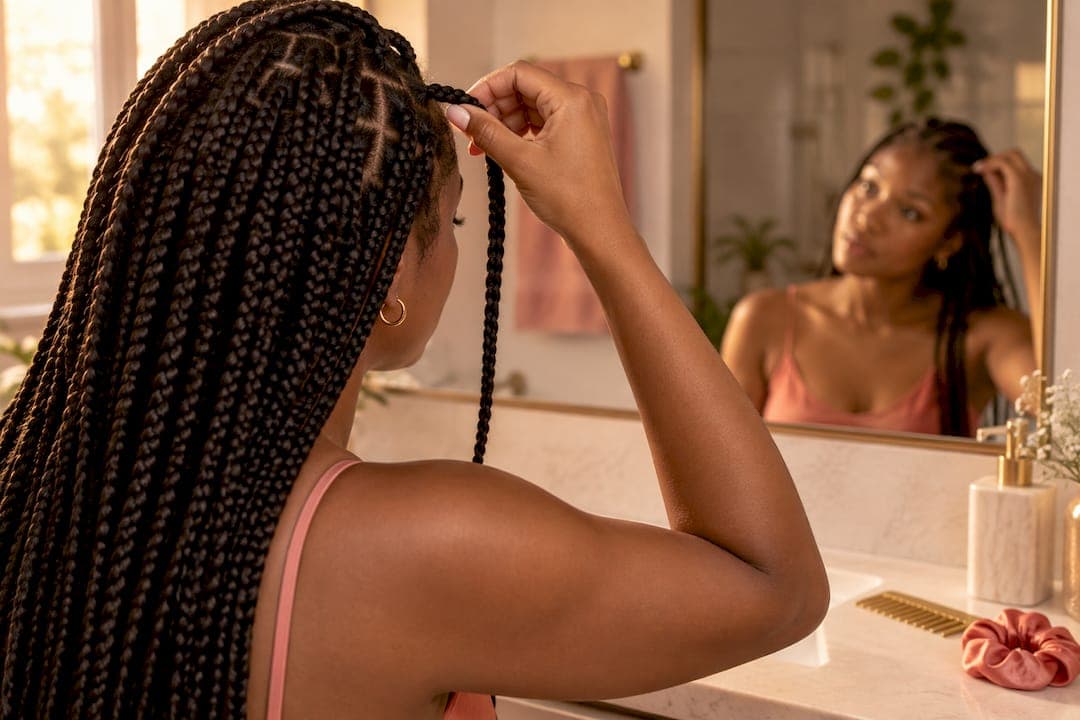
Box braids typically last 4 to 8 weeks, and stretching them past that window means fighting your own scalp. Some wearers push to 2 to 3 months with disciplined care, but any pain, persistent tenderness, sores, or thinning at the hairline means it is time to remove the style right away. Getting to the safe long end requires consistent scalp cleansing, thorough drying, and regular moisturizing, not just patience.
TL;DR:
- Wearing box braids beyond 8 weeks increases the risk of scalp trouble, including thinning, sores, and traction alopecia, especially if discomfort or damage signs appear.
- Smaller and lighter braids with even tension can last closer to 6 to 8 weeks, while heavier or larger styles tend to require removal sooner to prevent damage.
- Proper maintenance involves biweekly washing, thorough drying, light moisturizing, and tension checks, with immediate removal if tightness or pain occurs.
- Long styles or extended wear demand careful attention to scalp health, but pushing past 8 weeks usually compromises hair integrity.
- Choosing a stylist who monitors tension during installation and performs regular tension checks reduces damage and extends style lifespan safely.
Table of Contents
- How Long Do Box Braids Typically Last?
- What Factors Change How Long Your Box Braids Will Last?
- How Do You Maintain Box Braids Between Salon Visits?
- What Are the Warning Signs You Should Remove Your Braids Now?
- How Should You Remove Box Braids and Recover Afterward?
- Salon-Backed Tips From Afromagicbraiding
- Style Longevity Versus Hair Health: Finding the Balance
- Book a Tension-Aware Install With Afromagicbraiding
- Sources
- FAQ
How Long Do Box Braids Typically Last?
Ask ten braiders and you will hear ten slightly different answers, but the range clusters tighter than you might expect. Most stylists and community threads land on 4 to 6 weeks as the comfortable norm, with 6 to 8 weeks treated as the widely recommended ceiling. The American Academy of Dermatology backs that upper limit, recommending styles stay in no longer than 6 to 8 weeks to keep traction risk in check.

Some wearers do push to 2 to 3 months. Reddit's natural hair community discusses this often, and the consensus there mirrors what stylists say in person: longer wear is possible but comes with a higher maintenance burden and a real chance of scalp trouble showing up around week 8 or 9.
The trade-off is straightforward:
- Shorter wear (4 to 6 weeks) means more frequent salon visits and higher cumulative cost, but lower risk to your hairline.
- Longer wear (8 to 12 weeks) saves money and time up front but raises the odds of new-growth matting, buildup, and tension you cannot see until damage has already started.
- Every extra week past week 8 shifts the math from "protective style" toward "a style that needs protecting you from."
Our guide on long-lasting braid styles breaks down which techniques hold up best across that full range.
What Factors Change How Long Your Box Braids Will Last?
No two heads of hair wear braids the same way. A handful of variables decide whether you land at the 4-week mark or genuinely make it to 8.
Braid size and weight matter more than most people assume. Smaller, lighter braids distribute tension across more sections, which usually means less pull per strand and often longer safe wear. Jumbo braids look striking and install faster, but their added weight shortens the safe wear window because each braid carries more pull on the root. Our post on jumbo braid styles covers those trade-offs in more depth.

Installation tension is the single biggest variable in your control. Pain during or immediately after install is not something to "wait out." It is a direct sign of follicular stress, and the fix is loosening the style right then, not toughing it out for a week.
Other factors that shift your timeline:
- Hair condition and history: relaxed or chemically treated hair, or hair with a history of breakage, tolerates tension less well.
- Braid and hair length: longer braids add leverage and pull harder on each follicle.
- Extension type: synthetic hair can feel heavier over time as it absorbs product and sweat; human hair extensions often wear lighter.
- Method: knotless or feed-in techniques distribute tension more evenly than traditional knotted box braids. Our comparison of box braids versus knotless braids walks through why that matters for retention.
- Lifestyle: frequent sweating from workouts speeds up buildup at the roots and shortens how long the style stays comfortable.
Pro Tip: If your scalp feels tight for more than a day or two after your appointment, call your braider back. A quick loosening session around the hairline is far cheaper than repairing traction damage later.
How Do You Maintain Box Braids Between Salon Visits?
Box braids maintenance is what actually determines whether you hit the 8-week mark comfortably or end up removing them early out of frustration. Here is the routine that works:
- Wash every two weeks, or weekly if you exercise often or sweat heavily. Focus the cleanse on your scalp and roots rather than soaking the full length of the braids, a technique TheSkimm recommends specifically to protect scalp health without unraveling your style.
- Dry thoroughly, every time. Trapped moisture at the root is where trouble starts. Allure's guidance is to limit water on the lengths and finish with a blow-dryer on a cool or low setting to get the scalp fully dry.
- Moisturize lightly. A few drops of lightweight oil or a braid spray keeps the scalp from drying out, but heavy butters and creams build up fast at the roots and attract lint and dust.
- Protect braids at night. A satin bonnet or scarf, or a satin pillowcase paired with a loose pineapple, cuts down on friction that frizzes edges and loosens knots prematurely.
- Watch your hairline tension weekly. If anything feels tighter than it did on install day, that is your cue to call the salon for a touch up, not to wait for your next scheduled visit.
Why drying matters more than most people think: damp roots left under braids for extended periods create the exact environment mold and bacteria need to thrive, which is precisely why stylists push blow-drying over air-drying whenever possible.
Our full breakdown on how to maintain braids expands on each of these steps if you want a deeper routine.
What Are the Warning Signs You Should Remove Your Braids Now?
Traction alopecia does not announce itself with drama. It starts quietly, and that is exactly why the warning signs matter so much. The condition results from prolonged or repeated tension on the hair follicle, and it can move from reversible thinning to permanent scarring if that tension continues unaddressed.
Here is what to watch for:
- Persistent pain or tenderness that does not fade within a few days of installation
- Small bumps or pimple-like sores along the hairline or part lines
- Noticeably more shedding than usual when you touch or brush your edges
- Visible thinning or a receding hairline, especially at the temples and nape
"Even modest tension sustained over a long duration can carry a similar risk to a shorter but more intense pull," according to clinical reviews on the condition. Duration and intensity work together, not separately.
If you notice any of these signs, loosen or remove the braids immediately. If tenderness, bumps, or thinning persist after removal, see a dermatologist before your next install. Chemically relaxed hair and repeated high-tension installs both raise your risk, so if either applies to you, treat these warning signs as non-negotiable rather than something to monitor a little longer. Our piece on scalp tension in box braids goes deeper into what early-stage traction actually feels like.
How Should You Remove Box Braids and Recover Afterward?
Taking braids out the wrong way undoes a lot of the good care you put in during the wear. Do it slowly and gently, in this order:
- Detangle from the ends up, never starting at the root, to avoid pulling on stressed follicles.
- Apply oil or a light conditioner to any stubborn knots before working them loose, rather than tugging them out dry.
- Clarify your scalp once braids are fully out to lift weeks of product buildup and dead skin.
- Deep condition immediately after, and skip heat styling or chemical treatments for at least a week or two while your scalp settles.
- Rest for 6 to 8 weeks before your next high-tension protective style. This window gives follicles time to recover, and research on repeated braiding and combing shows that cumulative mechanical stress raises damage scores when styles are rotated back too quickly.
Pro Tip: If shedding after takedown seems heavier than normal or you notice patchy thinning, do not book your next install yet. See a dermatologist first. Scarring alopecia does not reverse the way ordinary shedding does.
Salon-Backed Tips From Afromagicbraiding
At Afromagicbraiding, tension checks happen at every installation, not just at the finish. We favor knotless and feed-in techniques where they fit the style, since they distribute pull more evenly across the scalp than traditional knotted methods. For braid size, we guide clients toward proportions that balance the look they want against how much weight their hairline can comfortably carry over 6 to 8 weeks.
Between visits, we tell clients to wash every two weeks, dry thoroughly at the root, and come back in if anything feels tighter than it did on install day. Our healthy, long-lasting styling tips cover the same checklist we walk through in the chair.
Style Longevity Versus Hair Health: Finding the Balance
Wanting braids to last longer makes sense. Salon visits cost money and time, and a style that looks fresh at week 8 feels like a win. That instinct is not wrong, but it has a ceiling.
The non-negotiables stay the same regardless of budget or schedule: pain, sores, or a receding hairline mean removal now, not next week. Partner with a braider who checks tension honestly, and build a 6 to 8 week recovery window into your styling calendar the same way you would budget for the install itself. Every braid tells a story, and the healthiest ones are the styles you can repeat for years, not just wear once.
— Afro
Book a Tension-Aware Install With Afromagicbraiding
You have read the science on tension and timing. The next step is choosing a braider who applies it in the chair, not just in a blog post. Afromagicbraiding installs knotless and traditional box braids with tension checks built into every appointment, so you get a style that holds up for the full 4 to 8 week window instead of one you are nervous to sleep on.

You can browse the full range of protective styles available in the braiding portfolio for pricing and options before you book. If you already know the look you want, head straight to scheduling your appointment and tell us your hair history so we can size and tension the style around what your scalp can actually handle.
Sources
- How Long Do Box Braids Last, by Size | PopSugar
- How to wash box braids (TheSkimm)
- Hairstyles that pull can lead to hair loss | American Academy of Dermatology
- Traction alopecia: clinical review | NCBI Bookshelf
- How to wash braided hairstyles | Allure
FAQ
What Type of Braids Last the Longest?
Smaller, lighter braids installed with a tension-even method like knotless or feed-in technique tend to hold up longest without pulling on the hairline. Jumbo braids look bold but carry more weight per strand, which usually means a shorter comfortable wear window.
Can I Shower With Box Braids?
Yes, but focus the water and cleanser on your scalp rather than soaking the full length of the braids, as TheSkimm recommends. Dry thoroughly afterward, ideally with a blow dryer on a low setting, to avoid trapping moisture at the roots.
Do Box Braids Make Hair Grow Faster?
Box braids do not speed up hair growth directly, but they protect your ends from daily manipulation, which reduces breakage and can improve length retention over time. Growth rate itself depends on genetics, health, and scalp care rather than the braids themselves.
Is 3 Months Too Long for Box Braids?
For most people, yes. Dermatologists generally recommend no longer than 6 to 8 weeks, and wearing braids for a full 3 months significantly raises the risk of traction alopecia, buildup, and matting. Some wearers do report going that long with exceptional care, but any pain or thinning at the hairline means the style needs to come out immediately, regardless of how much time has passed.