
Braid maintenance is defined as the ongoing practice of cleansing your scalp, managing moisture, monitoring tension, and protecting your style to preserve both hair health and braid longevity. Knowing how to maintain braids correctly is what separates a style that lasts 6 weeks and looks great from one that causes breakage, scalp irritation, or traction alopecia. Experts at NBC News confirm that braids feel low-maintenance but require consistent shampooing and conditioning on a 1–2 week schedule to keep your scalp healthy underneath. Every braid tells a story, and the story you want is one of strong, thriving hair.
How to maintain braids: washing for a healthy scalp
Your scalp is the main maintenance surface when you wear braids. The braid lengths themselves matter far less than what is happening at the roots and skin beneath them.
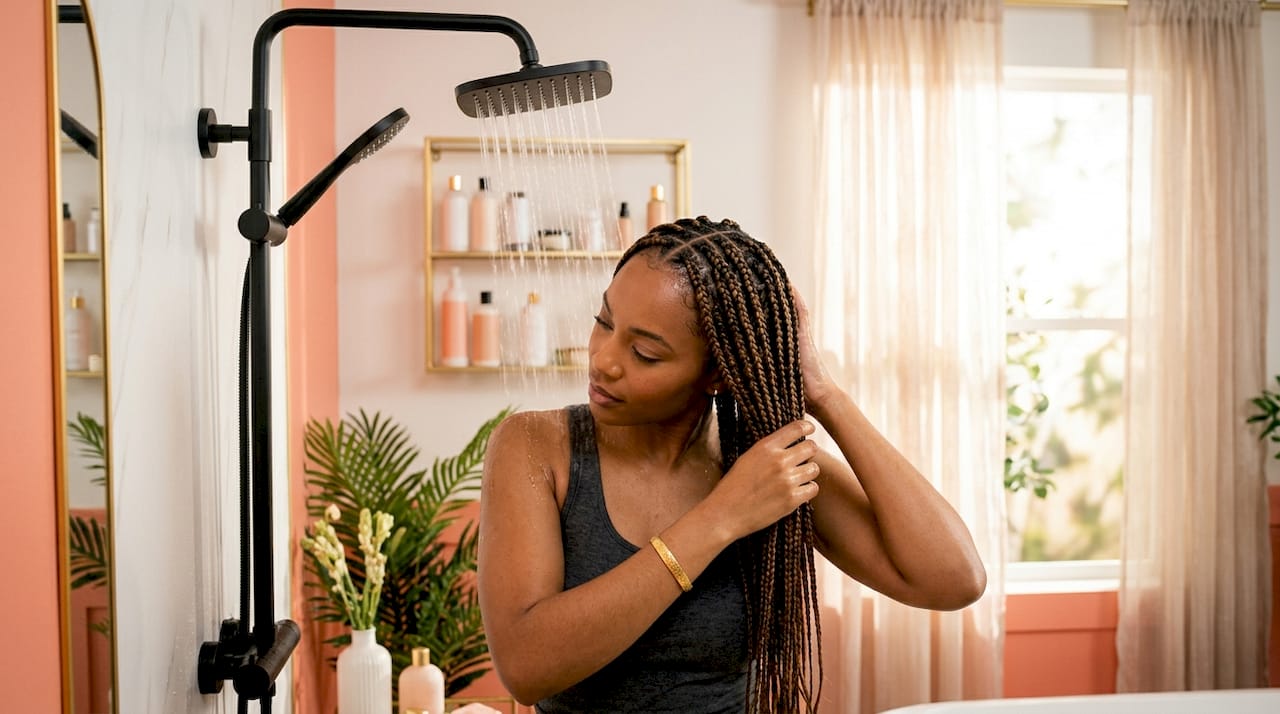
Experts recommend cleansing the scalp at least once a week, with a full wash ideally every two weeks. Waiting longer than four weeks creates product buildup, dryness, and a real risk of mold forming inside damp braids. That timeline is not a suggestion. It is the outer limit of what your scalp can tolerate.
The right washing technique
The goal is to clean the scalp without soaking the braid lengths. Use a handheld shower attachment to direct water at your roots only, keeping the braid lengths raised and away from the stream. This approach reduces frizz and mold risk significantly compared to dunking your whole head under the faucet.
For product selection, reach for shampoos containing active ingredients like zinc pyrithione, ketoconazole, or selenium sulfide. These compounds deep-cleanse the scalp and control dandruff without stripping your natural oils. After washing, blot the roots with a microfiber towel and use a hooded dryer or a low-heat blow dryer to make sure no moisture lingers inside the braids.
Pro Tip: Slip a loose wig cap over your braids before washing. It holds the lengths together, reduces friction, and cuts down on frizz at the roots.
| Washing Frequency | Scalp and Hair Outcome |
|---|---|
| Weekly scalp cleanse | Prevents buildup, controls dryness and odor |
| Full wash every 2 weeks | Optimal balance of cleanliness and style preservation |
| Full wash every 3–4 weeks | Acceptable minimum; monitor for buildup closely |
| Beyond 4 weeks | High risk of mold, scalp irritation, and braid damage |
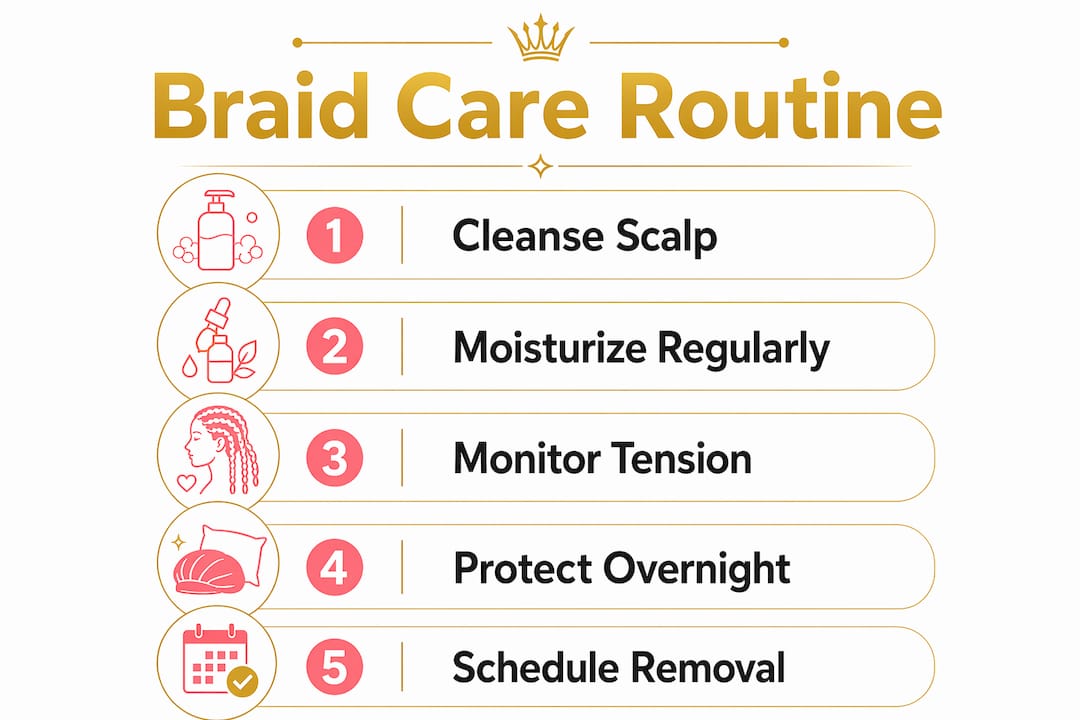
How to moisturize braids without causing buildup
Moisture management is one of the most misunderstood parts of braid upkeep. Many people apply heavy conditioners directly to the braid lengths, which creates white residue, buildup, and eventually weakens the style. The correct approach focuses almost entirely on the scalp and roots.
Leave-in conditioners and lightweight oils keep the scalp hydrated without weighing down the braids. Jojoba oil and grapeseed oil are two of the best options because they absorb quickly and do not leave a greasy film. Apply them directly to the scalp using a nozzle applicator bottle for precision.
Do's and don'ts for moisturizing braided hair
Do:
- Apply water-based leave-in conditioners to your scalp and roots 2–3 times per week
- Use lightweight oils like jojoba or grapeseed to seal in moisture after your leave-in
- Focus product application at the parts and edges where dryness shows first
- Drink enough water daily. Internal hydration supports scalp health from the inside out
Don't:
- Apply thick butters or heavy conditioners along the braid lengths
- Overload your scalp with product between washes. Less is more
- Skip moisturizing entirely because your braids "look fine." Dryness builds silently
- Use alcohol-based products that strip moisture rather than add it
Pro Tip: Set a reminder to moisturize your scalp every two to three days. Consistency matters more than the amount you apply in any single session.
Why braid tension matters for your scalp health
Braid tension is defined as the amount of pulling force applied to the hair follicle during and after installation. Excessive tension is one of the leading causes of traction alopecia, a form of gradual hair loss caused by repeated stress on the follicle. Understanding what braid tension is and how to monitor it protects your hairline and your long-term hair density.
Persistent soreness, headaches, redness, and bumps along the hairline are all signs that your braids are too tight. These symptoms are not normal. They are your scalp's warning system. Waiting for the pain to "settle down on its own" is one of the most damaging mistakes braid wearers make.
Signs your braids are too tight
- Soreness that lasts more than 24 hours after installation
- Headaches that start at the hairline or temples
- Visible redness, bumps, or pimples along the parts
- Follicle pain when you gently press on the scalp
- Small white bulbs at the base of braids, which signal follicle stress
Scalp irritation like redness or bumps is a direct warning sign that braids should be loosened or removed before permanent damage occurs. The longer you wait, the greater the risk to your follicles.
"Perform a comfort audit during the first 48 hours after installation. Press gently along your parts, move your head side to side, and check for any pulling sensation at the hairline. Catching tension early is far easier than treating traction alopecia later." — Byrdie
Pro Tip: Before your appointment, tell your stylist your tension limit clearly. A skilled braider will respect that boundary. If they dismiss your discomfort, that is a signal to find a different stylist.
You can also explore scalp care strategies specifically designed for braided protective styles to build a stronger post-installation routine.
How to keep braids fresh between wash days
Refreshing your braids does not mean redoing the whole style. Small, targeted touch-ups extend the life of your look without adding stress to your scalp or hair. The front rows and edges are usually the first areas to show wear, so that is where you focus your attention.
Touching up front rows after two to three weeks and applying a light mousse to smooth flyaways keeps the style looking intentional and neat. Avoid heavy gels or wax-based products. They create buildup that is hard to remove without a full wash and can dull the appearance of your braids over time.
Overnight protection steps
- Wrap your braids in a silk or satin scarf before bed
- If a scarf feels uncomfortable, switch to a satin bonnet that covers all the lengths
- Use a satin pillowcase as a backup on nights you skip the bonnet
- Gently smooth any loose edges with a soft-bristle brush before wrapping
- In the morning, spritz your scalp lightly with a water and leave-in conditioner mix to restore moisture lost overnight
Silk and satin coverings reduce friction against the pillow, which is the primary cause of overnight frizz and braid unraveling. Cotton pillowcases absorb moisture and create drag. Satin does neither.
| Styling Option | Longevity Impact |
|---|---|
| Light mousse on flyaways | Extends neat appearance by 1–2 weeks |
| Heavy gel or wax | Creates buildup; shortens style life |
| Silk or satin bonnet nightly | Reduces frizz and unraveling significantly |
| Cotton pillowcase, no covering | Accelerates frizz and edge damage |
| Front-row touch-up at week 3 | Refreshes overall look without full redo |
For more detailed care routines, the box braids tips guide at Afromagicbraiding covers practical steps for extending style life safely.
When should you take your braids out?
The ideal braid lifespan is 4–8 weeks. That range accounts for different braid sizes, hair types, and maintenance habits. Smaller braids like micro box braids may hold up closer to 8 weeks with proper care. Larger styles may start showing significant wear by week 4 or 5.
Pushing past 8 weeks is where real damage begins. Hair sheds naturally every day, and inside braids that shed hair tangles around the braid base. Over time, this creates matting that is difficult to detangle without breakage. Buildup also accumulates faster in the later weeks, making the scalp environment less healthy.
Checklist: when to remove your braids
- You have reached or are approaching the 8-week mark
- Scalp itching, redness, or bumps have not resolved with washing
- You notice significant new growth that is tangling at the braid base
- Braids feel heavy or smell despite regular washing
- Edges or hairline feel tender or look thinner than before installation
- You can see visible lint, buildup, or matting at the roots
Plan your takedown as part of your maintenance schedule, not as a reaction to a problem. Scheduling removal at week 6 or 7 gives you time to detangle carefully, deep condition, and let your scalp breathe before your next install.
Key takeaways
Consistent scalp care, moisture management, and tension monitoring are the three pillars that determine how long your braids last and how healthy your hair stays underneath them.
| Point | Details |
|---|---|
| Wash on a schedule | Cleanse your scalp weekly and do a full wash every 2 weeks to prevent buildup and mold. |
| Moisturize the scalp, not the braids | Use lightweight oils and leave-in conditioners at the roots; avoid heavy products on braid lengths. |
| Monitor tension from day one | Perform a comfort audit within 48 hours of installation and address soreness immediately. |
| Protect your style overnight | Use a silk or satin bonnet or pillowcase every night to reduce friction and preserve the style. |
| Plan your takedown | Remove braids by week 6–8 to prevent matting, buildup, and traction-related hair loss. |
What years of braid care taught me about priorities
Most people focus on how their braids look. The real work happens at the scalp level, and that is where most maintenance routines fall short.
The single most common mistake I see is skipping washes because someone is afraid of frizz. Frizz is manageable. A damaged scalp is not. When you let buildup sit for five or six weeks, you are not protecting your style. You are trading short-term neatness for long-term scalp health problems.
The second thing I have learned is that tension conversations with your stylist are non-negotiable. A good installation should not hurt. If you leave the chair with a headache, speak up before you walk out the door. Loosening braids on day one is simple. Treating traction alopecia is not.
The third insight is about realistic scheduling. Most people install braids and then react to problems as they come up. The better approach is to plan your wash days, your mid-style refresh, and your takedown date before you even sit in the chair. That structure removes the guesswork and keeps your hair in the best possible condition throughout the wear period.
Scalp health is the foundation. Moisture and protection are the daily habits that support it. Everything else, the styling, the refreshes, the products, builds on that base. Get the foundation right and the rest follows naturally.
— Afro
Let Afromagicbraiding handle the hard part
Knowing the theory is one thing. Having a skilled stylist execute it with care is another. At Afromagicbraiding, every install is approached with tension-aware technique and a genuine commitment to your scalp's health, not just the finished look.

Whether you are looking for knotless braids, a professional touch-up, or guidance on building a braid care routine that actually works for your hair type, the team at Afromagicbraiding is ready to help. Browse the full range of braiding styles and services to find the right fit for your next appointment. Every client leaves with a style that is uniquely theirs and a care plan to match. Book your appointment and let us take it from here.
FAQ
How often should i wash my braids?
Cleanse your scalp at least once a week and do a full wash every two weeks. Waiting longer than four weeks increases the risk of buildup, dryness, and mold inside the braids.
What products work best for moisturizing braids?
Use lightweight, water-based leave-in conditioners and oils like jojoba or grapeseed directly on the scalp and roots. Avoid heavy butters or thick conditioners on the braid lengths, as they cause buildup.
How do i know if my braids are too tight?
Soreness lasting more than 24 hours, headaches, redness, or bumps along the hairline are all signs of excessive tension. Address tight braids immediately rather than waiting for the discomfort to pass on its own.
How long should i keep braids in?
The recommended wear time is 4–8 weeks. Going past 8 weeks raises the risk of tangling, scalp buildup, and hair breakage at the braid base.
Does sleeping with braids uncovered cause damage?
Yes. Cotton pillowcases create friction that accelerates frizz and unraveling overnight. A silk or satin bonnet or pillowcase protects the style and reduces moisture loss while you sleep.