
Braids have always been more than a hairstyle. They carry culture, heritage, and a sense of pride that runs deep. But here's the truth that often gets lost in the excitement of a fresh set: braids are only as protective as the care that goes into them. Without a consistent scalp care routine, even the most beautifully installed knotless or box braids can quietly work against your hair's health. This article walks you through the real risks, the foundational care practices, edge protection strategies, and the clinical knowledge you need to keep every braid doing exactly what it should.
Table of Contents
- Why scalp care matters when wearing braids
- The pillars of effective scalp care with braids
- Protecting vulnerable areas: Edges and hairline
- Night protection and wear-time: Preventing damage beyond the basics
- When prevention isn't enough: Clinical guidance for scalp issues
- Our expert view: What most guides miss about scalp care with braids
- Discover professional braid care and styling
- Frequently asked questions
Key Takeaways
| Point | Details |
|---|---|
| Braids require scalp care | Proper scalp maintenance is essential to prevent tension-related hair loss and keep braids protective. |
| Cleanse and hydrate regularly | Regular, gentle cleansing and moisture balancing help avoid buildup and discomfort during braided wear. |
| Edge protection is crucial | Edges and hairline are especially vulnerable while braided, so prioritize gentle care and targeted monitoring. |
| Night routines prevent damage | Using silk or satin covers at night reduces friction and of mechanical stress, maintaining scalp health. |
| Seek clinical help for symptoms | If you notice scalp irritation, redness, or hair loss, consult a dermatologist for specialized care. |
Why scalp care matters when wearing braids
Many people assume that once braids are in, their hair is safe. The braids are installed, the style looks gorgeous, and the thinking goes that nothing else needs to happen for the next six to eight weeks. That assumption is where the trouble starts.
Braids create prolonged tension on the scalp. That tension, when it's too tight or maintained for too long, sets off a mechanical process that gradually damages hair follicles. The result is traction alopecia, a hair loss pattern driven by repeated mechanical stress from tight hairstyles, including braids and cornrows. Early stages are often nonscarring, which means the damage is reversible. But chronic tension without proper care can progress to scarring alopecia, where the follicle is permanently destroyed and hair regrowth becomes impossible.
"Traction alopecia is a mechanically driven hair loss pattern. Early disease is often nonscarring, but chronic traction can progress to scarring alopecia with irreversible follicle damage." — StatPearls
The misconception that all braids are automatically protective is genuinely harmful. It leads people to skip scalp checks, ignore early warning signs, and wear styles too tightly for too long. Protective styling is real and beneficial, but the word "protective" refers to the potential of the style, not a guaranteed outcome. Your braid style choices matter, and so does the care that follows installation day.
The risks without proper scalp care include:
- Scalp buildup that blocks follicles and causes itching, flaking, and inflammation
- Breakage along tension points, especially at the hairline and nape
- Fungal growth from trapped moisture between unwashed braids
- Progressive follicle damage that can become permanent over time
Understanding these risks doesn't mean you should avoid braids. It means you should wear them with intention and knowledge.
The pillars of effective scalp care with braids
Now that we understand the risks, let's look at the core practices that keep your scalp healthy throughout your braid wear.
The foundation of scalp care during braided wear is consistent, targeted cleansing. Scalp cleansing during braided wear helps prevent the buildup that leads to discomfort and scalp issues. The goal isn't to scrub the braids aggressively. It's to cleanse the scalp itself using gentle, diluted products applied directly to the roots, then rinsing carefully to avoid unraveling or frizzing the style.
Here's a step-by-step approach to scalp cleansing with braids installed:
- Dilute a gentle, sulfate-free shampoo in a spray bottle with water for easier application.
- Apply directly to your scalp in sections, using your fingertips (not your nails) to work the product in.
- Rinse thoroughly with lukewarm water while keeping braid movement minimal.
- Follow with a lightweight, non-greasy conditioner applied only to the mid-lengths and ends of the braids, not the scalp.
- Dry your scalp completely using a hooded dryer or diffuser. Leaving braids damp can lead to mildew.
Moisture balance is the second pillar. A dry scalp beneath braids leads to itching, flaking, and a compromised moisture barrier. Using moisturizing creams for scalp formulated for sensitive or braided scalp conditions helps maintain the protective lipid layer that keeps your skin and follicles healthy.
| Care type | Recommended frequency | Products to use |
|---|---|---|
| Scalp cleansing | Every 1 to 2 weeks | Diluted sulfate-free shampoo |
| Scalp moisturizing | Every 2 to 3 days | Lightweight oil or scalp serum |
| Braid refreshing | As needed | Braid spray, anti-frizz mist |
| Scalp tension check | Daily | No product needed, just feel |
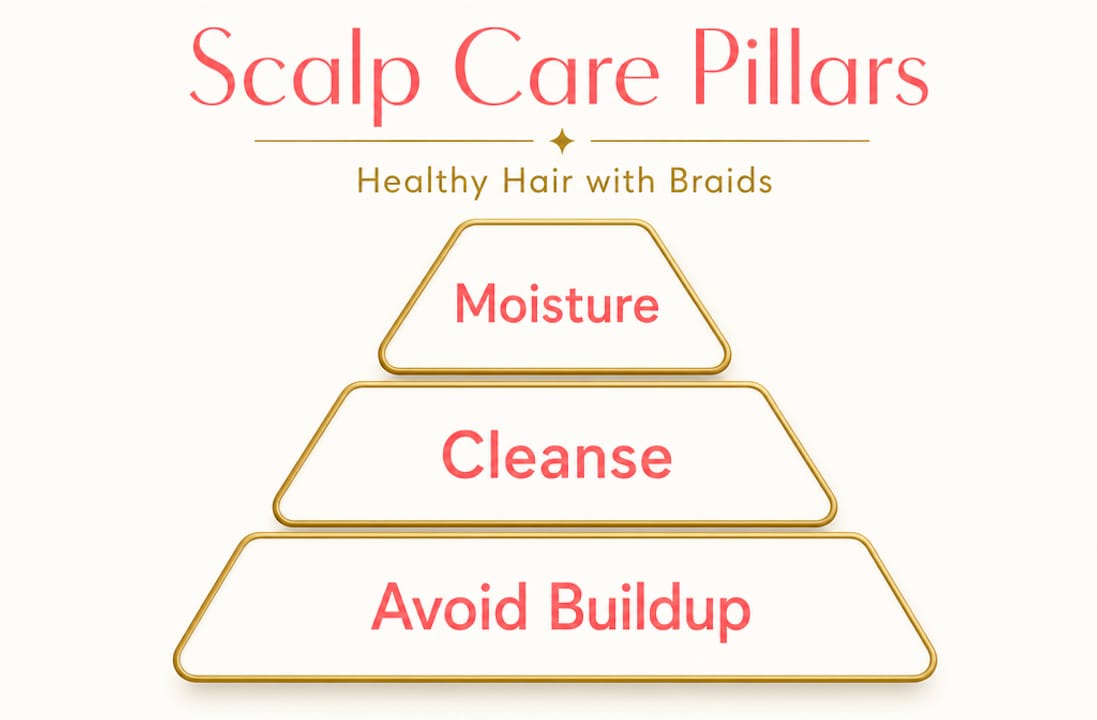
Avoiding product buildup is the third pillar. Heavy butters, thick creams, or excessive dry shampoo applied directly to the scalp with braids in place can clog follicles faster than you'd expect. Opt for lightweight oils like jojoba, tea tree, or peppermint diluted in a carrier oil for daily scalp maintenance. Review the box braid care steps that professional stylists recommend for detailed guidance on product layering.
Pro Tip: Apply scalp oil using a dropper bottle or applicator tip so product goes directly onto your scalp, not onto the braids themselves. This reduces frizz and ensures your follicles get exactly what they need.
Protecting vulnerable areas: Edges and hairline
With the basics of scalp care covered, let's focus on the areas that need the most attention.
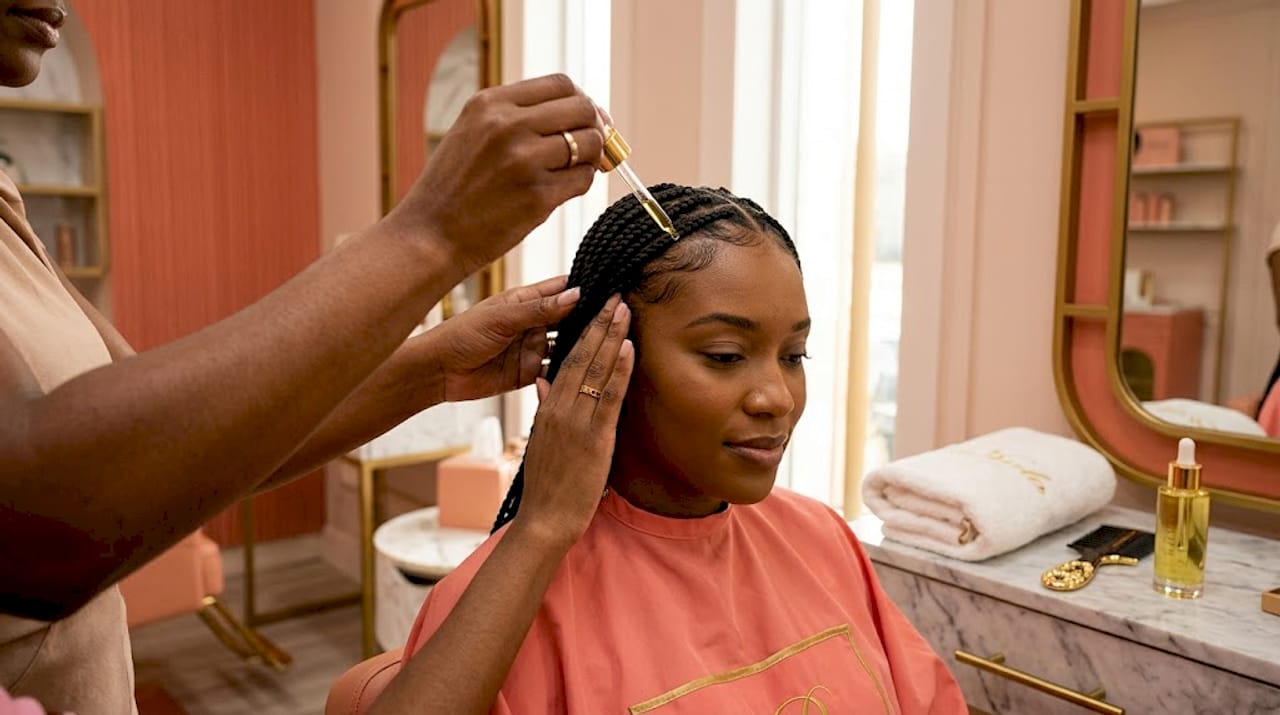
Your edges, the fine baby hairs and hairline around your face and temples, are the most vulnerable zones during braided wear. The hair in these areas is naturally thinner, shorter, and more fragile. When braids are installed with too much tension at the perimeter, the stress is concentrated on follicles that are already less resilient than those deeper in the scalp.
Research confirms that edge and temporoparietal areas are especially vulnerable in traction alopecia cases. This makes hairline protection a non-negotiable part of any scalp care routine during braided wear.
Signs of early edge damage to watch for include:
- Redness or tenderness directly at the hairline
- Tiny broken hairs that seem shorter than they used to be
- A visible receding effect at the temples or forehead
- Bumps or pimples along the hairline caused by follicular stress
| Zone | Risk level | Key care practice |
|---|---|---|
| Temples and hairline | High | Loose installation, daily moisturizing |
| Nape of neck | High | Avoid tight baby hair-laying, gentle edges |
| Crown | Medium | Monitor tension from updo styles |
| Mid-scalp | Lower | Regular cleansing and moisture |
Daily edge maintenance is simple but powerful. Massaging a small amount of a lightweight edge oil like castor oil mixed with a carrier oil gently into the hairline for one to two minutes each morning increases blood circulation to the follicle. This supports nutrient delivery to fragile roots and signals early warning signs when something feels off.
Pro Tip: Never apply edge control products with strong hold directly to braided edges overnight. The drying agents in those products can dehydrate already stressed follicles. Instead, use a pure oil or aloe vera gel at night and save the styling products for daytime.
If you want to see what healthy braid edges look like when installation and care are done right, our gallery shows real client results from styles installed with edge-first thinking.
Night protection and wear-time: Preventing damage beyond the basics
Edge care isn't the only concern. Your nightly routine and how long you wear your braids have a major impact on overall scalp and hair health.
Sleeping without protection is one of the most common and underrated causes of scalp stress with braids. Cotton pillowcases create significant friction against braided hair, leading to frizz, breakage, and mechanical pulling at the scalp during sleep. Night protection using satin or silk reduces this friction and protects the hair and scalp boundary from repetitive micro-stress through the night.
Here's what a solid nighttime routine looks like:
- Loosely gather braids into a high or loose ponytail before bed to reduce weight pulling at the roots
- Wrap your hair in a satin scarf or use a satin-lined bonnet that fully covers your edges
- Apply a small amount of lightweight oil to your hairline before covering
- Sleep on a satin pillowcase as a backup if your bonnet comes off
Beyond nightly habits, wear-time matters more than most people realize. Risk increases with higher tension and longer continuous wear without giving your scalp a rest. This doesn't mean braids should only be worn for two weeks. It means your scalp needs to be assessed regularly throughout the wear period, and tension levels should inform how long a particular set stays in.
Signs your scalp is telling you it's time for a break:
- Persistent soreness or headaches that don't resolve after the first few days
- Noticeable thinning or hair shedding when you remove the braids
- Scalp bumps, scabs, or inflammation that don't clear with your usual routine
- Excessive itching that doesn't improve with cleansing
Explore boho braid style tips if you want a style that leans into a looser, lower-tension aesthetic while still giving you a full, beautiful look.
When prevention isn't enough: Clinical guidance for scalp issues
Night routines and wear-time practices minimize risk, but it's vital to recognize when a stylist's advice isn't enough and professional medical evaluation is needed.
There are specific symptoms that signal a move from preventable scalp stress to clinical concern:
- Persistent hair loss along tension-bearing areas, particularly at the temples, hairline, or nape, that doesn't regrow after a rest period
- Redness, folliculitis (pimple-like bumps at the follicle opening), or crusting along the scalp
- An itchy, burning, or painful scalp that continues even after removing the braids
- Patchy bald spots along areas where braids consistently sit
- Scarring or shiny, smooth patches of skin where hair no longer grows
When these symptoms appear, clinical evaluation for traction alopecia is the appropriate next step. Dermatologists can assess the scalp clinically and, when needed, through biopsy to distinguish between early nonscarring and more advanced scarring stages. Medical therapy beyond just changing your hairstyle may be required, including topical or intralesional corticosteroids, minoxidil, or antibiotics if infection is present.
"If symptoms suggest traction alopecia or complications, prevention alone may not be enough. Seek dermatology evaluation; traction alopecia is assessable clinically and may require medical therapy beyond hairstyle changes." — Dermatology Advisor
The most important thing to remember here is that early intervention leads to better outcomes. If you notice the early warning signs we discussed in this article, acting quickly, whether that means removing braids, adjusting your care routine, or visiting a dermatologist, makes a real difference in whether that hair grows back. If you're looking for lower-tension style alternatives during a recovery period, braided wig options offer a beautiful way to maintain your look without direct scalp stress.
Our expert view: What most guides miss about scalp care with braids
We've seen a lot of scalp care guides that cover the basics well enough. Cleanse your scalp. Use oil. Wear a bonnet. But there's a gap between basic guidance and what actually prevents damage in real-world braid wear, and that gap is mostly about consistency and honest self-assessment.
Most guides focus entirely on what to do at installation and forget that scalp care is a daily, ongoing practice. The protection in a protective style doesn't come from the braid itself. It comes from what you do between wash days, how you handle your edges every morning, and whether you actually take the time to check your scalp each week. Every client who has experienced edge thinning or scalp soreness that worsened over time shares the same story: they noticed the early signs, dismissed them as normal, and kept the braids in anyway.
The other piece most guides miss is this: the stylist's role doesn't end at installation. A skilled braider should be asking questions about your scalp health before sitting you down. They should be assessing your edge density, recommending installation tension appropriate for your hair type, and talking to you about a care plan before you leave the chair. That's not extra service. That's the standard.
Our experience at Afro Magic Braiding has taught us that the clients with the healthiest scalps and the most beautiful long-term results are the ones who treat their care routine as seriously as their style choices. They follow detailed braid style advice that includes post-installation guidance. They ask questions. They check in with us between appointments. They understand that confidence in your style comes from knowing your hair is genuinely healthy underneath it.
Protection is never automatic. It's earned through attention, consistency, and the willingness to listen to what your scalp is telling you.
Discover professional braid care and styling
Scalp health and stunning style aren't in competition. They belong together, and getting both right is exactly what professional braiding is designed to deliver.

At Afro Magic Braiding, our stylists are trained to install every style with scalp health at the center of every decision, from the tension at your edges to the products used throughout your service. Whether you're drawn to knotless braids, box braids, Fulani-inspired styles, or boho looks, we help you wear your culture beautifully and safely. Browse our braid portfolio to see real client transformations, then take the next step and book a braiding session with a stylist who cares about your scalp as much as your style.
Frequently asked questions
How often should I cleanse my scalp while wearing braids?
Cleanse your scalp at least once a week using gentle, diluted products to prevent buildup and discomfort throughout your wear period. Focus product application on the scalp itself rather than working heavily through the braids.
What signs indicate early traction alopecia with braids?
Early signs include thinning around the hairline, redness, soreness, and broken hairs along tension areas, especially at the temples and nape. Acting on these signs early gives your follicles the best chance of recovery.
Do knotless braids lower scalp risk compared to traditional box braids?
Knotless braids generally reduce tension at the root, and risk increases with higher tension, so they are a lower-risk option. That said, consistent scalp care is essential regardless of the braid style you choose.
Should I give my scalp breaks between braid installations?
Yes. Longer continuous wear without scalp rest increases risk of follicle damage, and dermatologists recommend periodic breaks to allow the scalp and follicles to recover between sets.
What nighttime routine best protects my scalp with braids?
Sleeping with a satin bonnet or on a satin pillowcase is the most effective nightly habit, as reducing friction with satin or silk minimizes mechanical stress at the hair and scalp boundary. Adding a light oil to your edges before covering them overnight provides extra protection.