
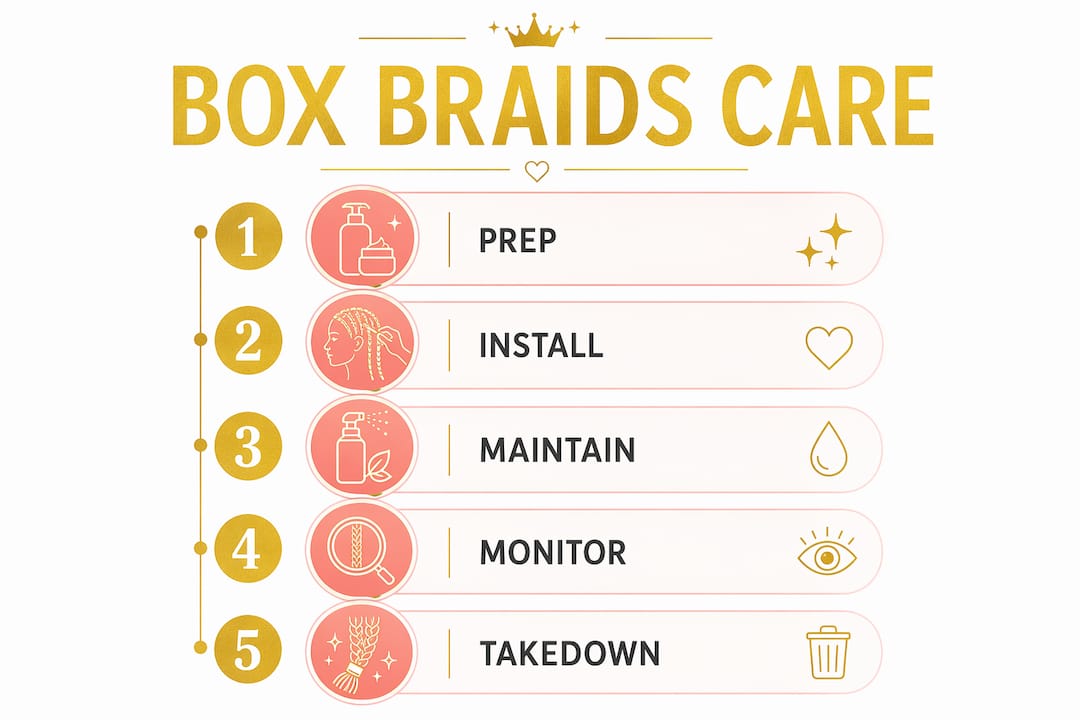
Box braids can absolutely support length retention — but they do not speed up biological hair growth. The real win is preservation: when installed with care and maintained consistently, box braids reduce the daily manipulation and breakage that steal your length before it ever shows up in the mirror. The single most important rule is tension control. Too tight at the root, and you trade retention for traction alopecia.
Here is what box braids protect and where they can go wrong:
- What they protect: Your ends stay tucked, shielded from friction, heat, and environmental stress. Daily detangling and styling are eliminated, which cuts the most common cause of breakage.
- Top way they cause harm: Excessive tension at installation — or from repeated tight updos while braided — puts chronic stress on the follicle, especially along the hairline.
The sections below walk you through everything: how hair growth actually works, how to prep before your appointment, what to do daily while braided, and how to take braids down without losing the length you worked to keep.
Table of Contents
- Do box braids actually help with hair retention and growth?
- How box braids protect your hair: the real mechanisms
- How box braids can damage your hair if you are not careful
- What to do before your braiding appointment: a pre-install checklist
- Your practical maintenance routine while wearing box braids
- How long should you keep box braids in?
- Step-by-step takedown to protect the length you kept
- Red flags that your box braids are harming your hair
- Key Takeaways
- A salon perspective on what box braids can and cannot do
- Afromagicbraiding: retention-focused braiding in Southfield, Michigan
- Useful sources and further reading
Do box braids actually help with hair retention and growth?
Your hair grows at a biologically fixed rate of roughly 0.5 inches per month, regardless of what style you wear. Box braids do not change that number. What they change is how much of that growth you actually keep.
Length retention is the difference between how much hair grows and how much breaks off before you see it. Most people lose significant length to everyday friction, heat styling, and aggressive detangling — not because their hair stopped growing. Protective styles for hair retention work by removing those stressors from the equation. Over an 8-week install, minimizing breakage can translate to 1–2 inches of visible length that would otherwise have snapped off, thanks to consistent retention rather than accelerated biological growth.
Pro Tip: Take a photo of your hair at install and again at takedown, using the same parting and lighting. Measuring from a consistent reference point — like your natural hairline to a fixed landmark — gives you an honest read on how much length you retained, not just how much your hair grew.
Afromagicbraiding documents part size and photographs each install for exactly this reason: it creates a baseline that makes every future appointment more precise and every retention outcome easier to track.
How box braids protect your hair: the real mechanisms
The protective benefits of box braids come from a few specific, physical changes to how your hair experiences the world each day.
- Reduced manipulation: No daily combing, brushing, or detangling means far fewer opportunities for the hair shaft to snap. This is the single biggest retention driver.
- Protected ends: Your most fragile, oldest hair is tucked inside the braid. Ends are the first to split and break; keeping them enclosed slows that process considerably.
- Reduced heat and chemical exposure: When your hair is braided, the temptation to flat iron or color fades. That break from heat and chemicals lets the cuticle recover.
- Moisture retention (when done right): Braids slow moisture evaporation from the hair shaft, particularly when you seal ends before install and maintain a light hydration routine while braided.
Braid variation matters here. Knotless braids increase scalp airflow and make cleansing easier than knotted methods, with less bulk at the root that can trap buildup and create tension. Smaller sections also tend to last longer and distribute weight more evenly than jumbo braids, which concentrate stress on fewer follicles. For active lifestyles — swimming, working out, outdoor work — braids also protect hair from sweat saturation and UV exposure that would otherwise accelerate dryness and breakage.
How box braids can damage your hair if you are not careful
The same style that protects can harm, and the mechanism is almost always tension.
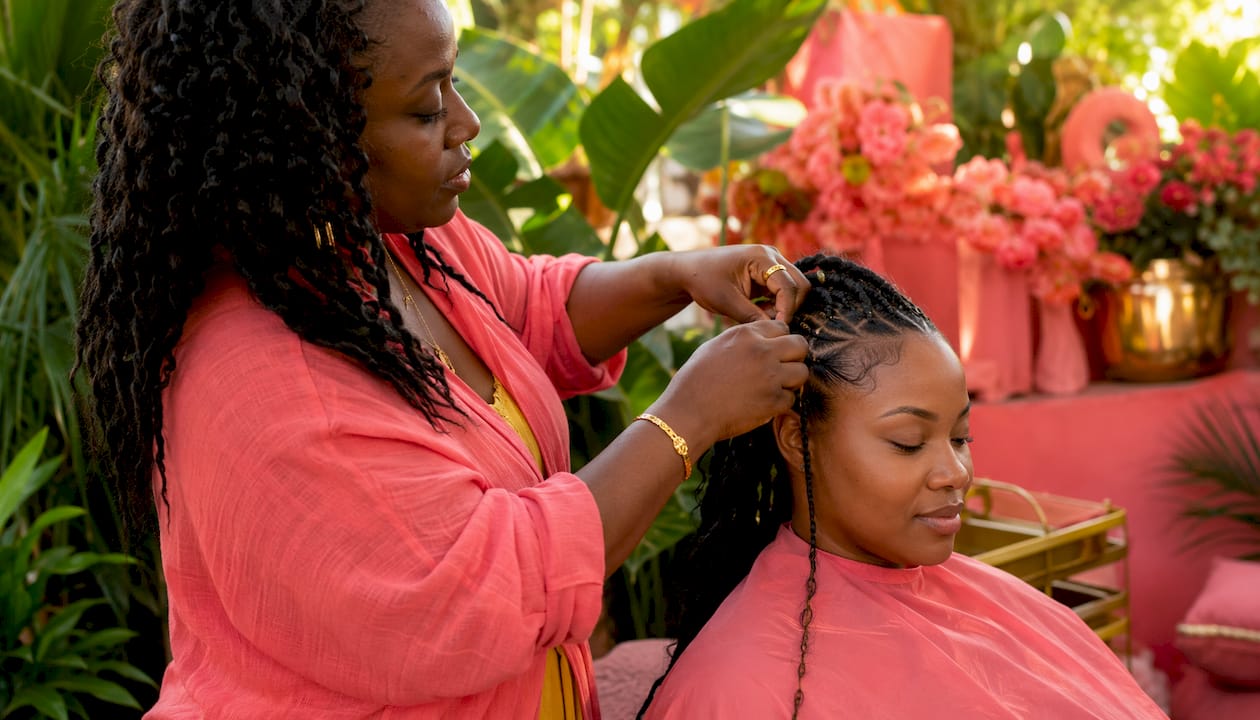
Traction alopecia develops when chronic pulling stress on the follicle causes it to stop producing hair. It starts at the hairline and temples — the most vulnerable perimeter zone — and progresses from temporary thinning to permanent follicle damage if the stress continues. Tight installation is the most common trigger, but repeated high-tension styling (tight ponytails, slicked-back looks) while braided compounds the problem daily.
Weight-driven breakage is a separate but related risk. Longer, heavier extensions increase tensile stress on each braid's anchor point. The hair at the root bears that load for weeks, and if the extensions are too heavy for your hair's density, the shaft can snap at the root rather than at the end.
Watch for these warning signs while braided:
- Persistent soreness or pain at the scalp that does not ease within 48 hours of installation
- Visible scalp sores, bumps, or pustules along the hairline
- A receding or thinning hairline, especially at the temples
- Excessive shedding immediately after removal (beyond normal shed hair)
- Braids that feel unusually heavy or pull noticeably when you move your head
Perimeter hair carries the highest risk. Professionals recommend looser parting and fewer consecutive tight styles on the front two inches of the hairline, and limiting perimeter re-braids to no more than three re-twists before a full takedown.
What to do before your braiding appointment: a pre-install checklist
The 48–72 hours before your appointment set the foundation for everything that follows. Skipping this prep is one of the most common reasons a protective style causes more damage than it prevents.
- Assess your hair honestly. If your ends are split or severely dry, a light trim before install prevents those weak points from breaking further under the braid's weight.
- Deep condition. A pre-install deep conditioning treatment strengthens the hair shaft and reduces shedding during takedown. Use a moisturizing mask for 20–30 minutes under heat.
- Apply protein if your hair is weak. If your strands stretch and snap rather than stretch and spring back, a light protein treatment before install restores structure. Do not overdo it — protein overload makes hair brittle.
- Seal your ends. A butter or oil sealant on your ends before braiding slows moisture loss while the style is in.
- Clarify your scalp. A clean scalp before install means less buildup accumulation during wear. Use a clarifying shampoo or diluted apple cider vinegar rinse.
- Choose lighter extensions. Heavier synthetic hair adds weight that stresses roots. Ask your stylist about lightweight options, and consider knotless installation to reduce root tension.
- Communicate your tension tolerance. Tell your stylist if anything feels tight during installation. A skilled braider will adjust. Silence during a painful install is how traction alopecia starts.
Pro Tip: Ask your stylist about braid installation technique and part size before they begin. Smaller parts distribute tension more evenly; knotless feed-in reduces root stress from the first braid. These choices matter more than the extensions you pick.
For product categories, bring a moisturizing leave-in, a lightweight oil (jojoba or argan), and your preferred deep conditioner to your appointment or use them the night before. Your stylist can advise on what works with their installation method.
Your practical maintenance routine while wearing box braids
One of the most persistent myths about protective styling is that braids mean a hair-care vacation. Stylists consistently push back on this: ongoing scalp and hair care are non-negotiable while a style is installed. Neglect is what turns a protective style into a damaging one.
Daily habits that protect your edges and scalp
Your daily routine while braided should take under five minutes. Apply a light scalp spray or diluted leave-in to your scalp (not the braids themselves) to keep the skin hydrated without clogging follicles. Avoid heavy pastes and thick butters directly on the scalp — product buildup causes itching and visible flakes and can accelerate scalp irritation. For edges, use a small amount of lightweight edge gel or oil, and avoid pulling them into tight styles more than once or twice a week.
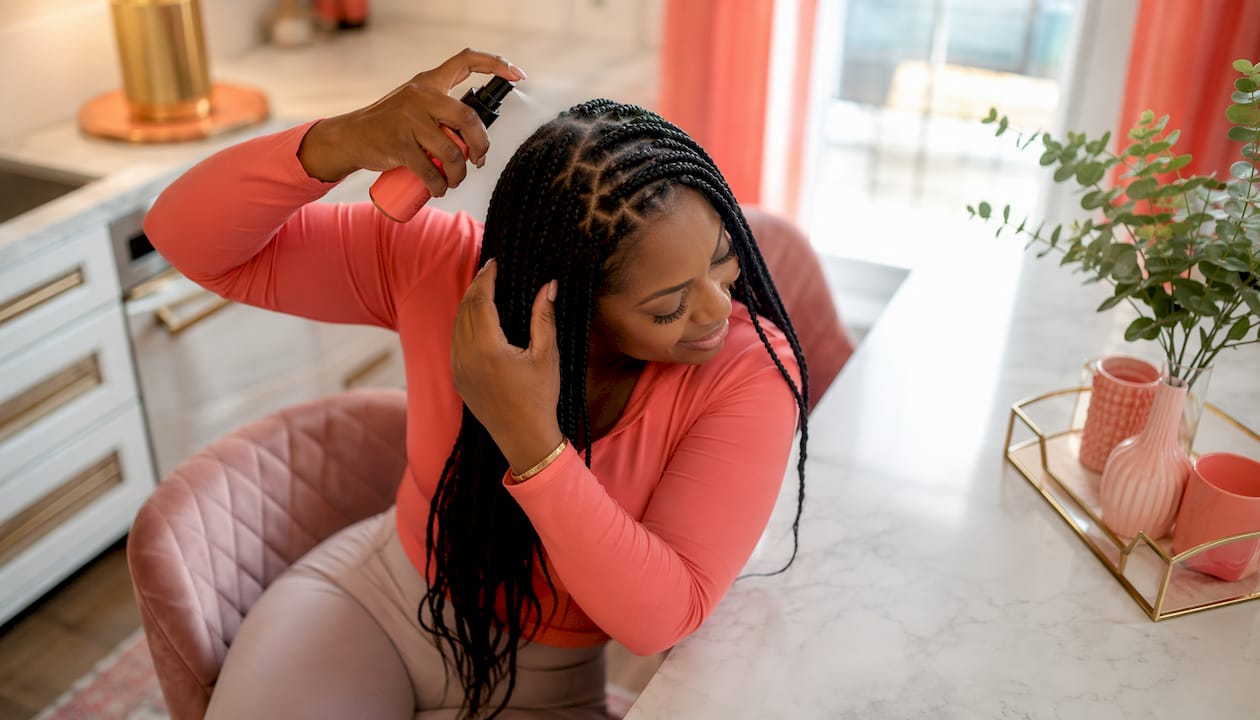
Nighttime protection with a silk or satin bonnet or pillowcase is non-negotiable. Friction from cotton pillowcases frizzes braids, dries out hair, and stresses edges every single night. A bonnet takes ten seconds and extends both the style's life and your hair's health.
Pro Tip: Swap heavy oils for water-based leave-ins under your braids. Water hydrates the hair shaft; oil seals that moisture in. Applying oil alone without a water base just coats dry hair in grease. Spritz first, seal second.
Weekly and biweekly scalp care
| Action | Frequency | Purpose |
|---|---|---|
| Scalp spray or diluted leave-in | Daily | Hydrate scalp, prevent dryness and itching |
| Edge care (lightweight gel or oil) | Daily | Protect hairline, reduce friction stress |
| Silk/satin bonnet at night | Every night | Reduce friction, preserve moisture, extend style |
| Scalp cleanse (spray-on or diluted shampoo) | Every 1–2 weeks | Remove buildup, prevent irritation and odor |
| Lightweight oil on braids | Weekly | Maintain sheen, slow moisture loss from braid shaft |
| Style rotation (loose bun, half-up) | Limit to 1–2x/week | Reduce perimeter tension from repeated updos |
Washing your scalp every one to two weeks prevents oil and sweat buildup that leads to itchiness and inflammation. Use a spray bottle with diluted shampoo or a dedicated braid cleanser, apply directly to the scalp in sections, and rinse thoroughly. Squeeze water out gently and allow braids to air dry completely — sitting with wet braids for hours invites mildew and scalp odor.
For a scalp care routine that goes deeper, including massage techniques compatible with braided styles, Afromagicbraiding's blog covers the full protocol.
How long should you keep box braids in?
The safe wear window for most people is 4–8 weeks. Traditional knotted box braids typically hold well for 4–6 weeks; knotless braids often last 6–8 weeks because the reduced root bulk means less early loosening. Beyond 8 weeks, the risks outweigh the convenience: matting at the root, edge stress from accumulated new growth tension, and scalp buildup all increase.
Several factors shift that window:
- Hair density: Thicker, denser hair holds braids longer and handles weight better than fine or low-density hair.
- Braid weight and length: Longer, heavier braids stress roots faster. Jumbo braids on fine hair may need removal closer to the 4-week mark.
- Maintenance level: Consistent scalp cleansing and moisture management extend a style's healthy life; neglect shortens it.
- Scalp sensitivity: If your scalp is prone to irritation, buildup, or dermatitis, err toward the shorter end of the range.
| Hair density / braid weight | Recommended wear time |
|---|---|
| High density + lightweight braids | 6–8 weeks |
| High density + heavy/long braids | 4–6 weeks |
| Low density + lightweight braids | 4–6 weeks |
| Low density + heavy/long braids | 4 weeks or less |
Use this as a starting point, not a guarantee. If you notice any of the red flags listed earlier, remove the style regardless of where you are in the timeline.
Step-by-step takedown to protect the length you kept
How you remove box braids matters as much as how you install them. Rushing takedown is one of the fastest ways to undo weeks of retention work.
- Clip the extension hair first. Use small scissors to cut the extension portion of each braid below where your natural hair ends. This removes most of the weight and makes unbraiding far easier.
- Unbraid from ends to roots. Work each braid loose from the bottom up, never pulling or yanking from the root. Use your fingers, not a comb, for the first pass.
- Apply a detangler or leave-in as you go. Saturate each section with a slip-rich detangler before you try to separate shed hair from the braid. This prevents the shed hair (which accumulated during wear) from matting against your natural strands.
- Soak stubborn sections. If a section has started to mat or lock, apply conditioner or oil generously and let it sit for 10–15 minutes before attempting to separate. Never force it.
- Detangle gently with a wide-tooth comb. Work in small sections from ends to roots after the braid is fully open.
- Clarify and deep condition immediately. Wash with a clarifying shampoo to remove weeks of buildup, then follow with a deep conditioning mask for at least 20–30 minutes. Your hair needs this reset.
- Assess and trim if needed. Check your ends after conditioning. If they feel rough or look split, a light trim now prevents further damage during your recovery period.
Pro Tip: If you find large sections that are severely matted or have started to lock together, stop and see a professional. Forcing matted hair apart causes more breakage than the braids ever would have. A post-takedown scalp massage with a nourishing oil also stimulates circulation and supports recovery.
After takedown, give your hair a 2–3 week recovery period before reinstalling. Use this window for deep conditioning treatments, a light protein treatment if needed, and gentle styles that keep tension off the hairline. A hair growth serum applied to the scalp during this recovery window can support follicle health between installs.
Red flags that your box braids are harming your hair
Some discomfort in the first 24–48 hours after installation is normal as your scalp adjusts. Pain that persists beyond that, or any of the following signs, means the style is causing damage and needs attention now.
- Persistent pain or tightness beyond 48 hours post-install
- Open sores, bumps, or pustules on the scalp or along the hairline
- Progressive receding hairline, especially at the temples and nape
- Large patches of thinning or visible scalp where hair should be
- Excessive shedding immediately after removal, beyond the normal amount of shed hair accumulated during wear
- Braids that feel unusually heavy or cause a pulling sensation when you turn your head
If you see any of these, remove the style as soon as possible. Apply a soothing, anti-inflammatory scalp oil (tea tree or peppermint diluted in a carrier oil), avoid any tight or high-tension styles during recovery, and give your scalp time to breathe.
When thinning at the hairline does not recover within 4–6 weeks of removing the style and adopting gentle care, consult a dermatologist or trichologist. Traction alopecia caught early is often reversible; left untreated, follicle damage can become permanent. A clinician can assess whether the hair loss is traction-related or has another underlying cause that needs separate treatment.
Avoid aggressive DIY touch-ups that involve re-wrapping new growth around existing braids. Re-wrapping repeatedly can cause severe matting that requires professional detangling or, in extreme cases, chemical loosening.
Key Takeaways
Box braids support length retention by reducing breakage, not by accelerating growth — and every step from prep to takedown determines how much length you actually keep.
| Point | Details |
|---|---|
| Retention, not growth | Box braids preserve length by cutting breakage; hair still grows at about 0.5 inches per month regardless, and careful retention can yield 1–2 inches of visible growth over an 8-week period. |
| Tension is the top risk | Tight installation and repeated high-tension styling cause traction alopecia, especially at the hairline. |
| Wear time: 4–8 weeks | Remove braids by 8 weeks maximum; longer wear raises matting, buildup, and edge stress. |
| Maintenance is mandatory | Cleanse the scalp every 1–2 weeks, hydrate daily, and protect edges with a satin bonnet every night. |
| Afromagicbraiding's approach | Retention-focused installs with knotless options, documented part sizes, and pre-install protocols to protect your hair from the first braid. |
A salon perspective on what box braids can and cannot do
Here is what gets missed in most guides: box braids are a tool, not a treatment. They work beautifully as one part of a thoughtful rotation — installed properly, maintained consistently, removed on time, and followed by a real recovery period. What they cannot do is compensate for a damaged foundation. Hair that is severely dry, over-processed, or already thinning at the edges needs restoration before a protective style, not instead of it.
The clients who see the best long-term retention outcomes are the ones who treat the recovery period between installs as seriously as the install itself. Two to three weeks of deep conditioning, gentle handling, and scalp care between braiding appointments is where the real length accumulates. Skipping that window and going straight back into a new install is the pattern that leads to progressive thinning, even when each individual style looks fine.
Braids also cannot fix tension applied by someone who does not listen. If a stylist dismisses your discomfort during installation, that is a signal worth acting on. The best braid installation for healthy hair is one where you never feel pain, your edges lie flat without force, and the stylist documents the work so it can be replicated safely next time.
At Afromagicbraiding, the approach starts before the first braid is placed: a pre-install assessment, a conversation about your hair's current condition, and a knotless option for clients whose edges need extra protection. Every braid tells a story, and the goal is always to make sure that story ends with more length, not less.
Afromagicbraiding: retention-focused braiding in Southfield, Michigan
Clients who want box braids that actually protect their length need more than a skilled pair of hands. They need a stylist who understands the relationship between tension, texture, and time. At Afromagicbraiding, every install begins with a pre-install protocol: hair assessment, tension consultation, and knotless options for clients prioritizing edge health. The result is a style that looks stunning and leaves your natural hair in better shape than it found it.

Browse the style portfolio to see retention-focused installs and knotless work across a range of textures and lengths. When you are ready, book your appointment directly online. Afromagicbraiding also carries a curated selection of premium braiding hair and accessories, so you can source everything for your install in one place.
Results vary based on individual hair health and maintenance. If you are experiencing hair loss or scalp concerns, consult a dermatologist or trichologist before booking a braiding appointment.
Useful sources and further reading
- Box Braids Guide: Everything You Need To Know — Black Hair Care 101: Comprehensive overview of box braid basics, wear time, and protective styling benefits for natural hair.
- How to Wash Box Braids and Care for Protective Styles — L'Oréal Paris: Practical washing and moisture guidance for maintaining braids without disturbing the install.
- How Long Do Box Braids Last: 7 Tips To Extend Their Wear — StyleCraze: Covers factors affecting braid longevity including hair type, braid size, and maintenance habits.
- Do Box Braids Make Your Hair Grow Faster? — Necole Bitchie: Trichology-informed explainer on the growth vs. retention distinction and how to maximize protective styling outcomes.
- How to Maintain Braids, According to Experts — NBC News Select: Expert-sourced scalp cleansing frequency and product recommendations for braided styles.
- Box Braids Hairstyles: Ideas, Care, Install Tips, and More — Marie Claire: Stylist perspectives on knotless vs. knotted installation and nighttime protection practices.
- How to Care for Your Natural Hair While Wearing Box Braids — Beautycon: Pre-install deep conditioning, wear-time guidance, and recovery period recommendations from professional stylists.
- How to Keep Your Box Braids Looking Fresh — Allure: Edge care, product buildup prevention, and refresh techniques for extending braid life safely.
- The Pros and Cons of Box Braids — TRESemmé: Balanced look at traction alopecia risk, tension management, and styling behavior changes to protect the hairline.
- Scalp Care Strategies for Healthy Hair with Braids — Afromagicbraiding Blog: Salon-sourced scalp care methods for keeping the scalp clean and healthy under protective styles.
- Hair Health Before Your Braiding Visit — Afromagicbraiding Blog: Detailed pre-appointment checklist covering deep conditioning, trims, and sealing for retention-focused installs.
- Hair Growth Bundle — LIVDOR: Post-takedown recovery supplement bundle for supporting scalp health between braiding appointments.