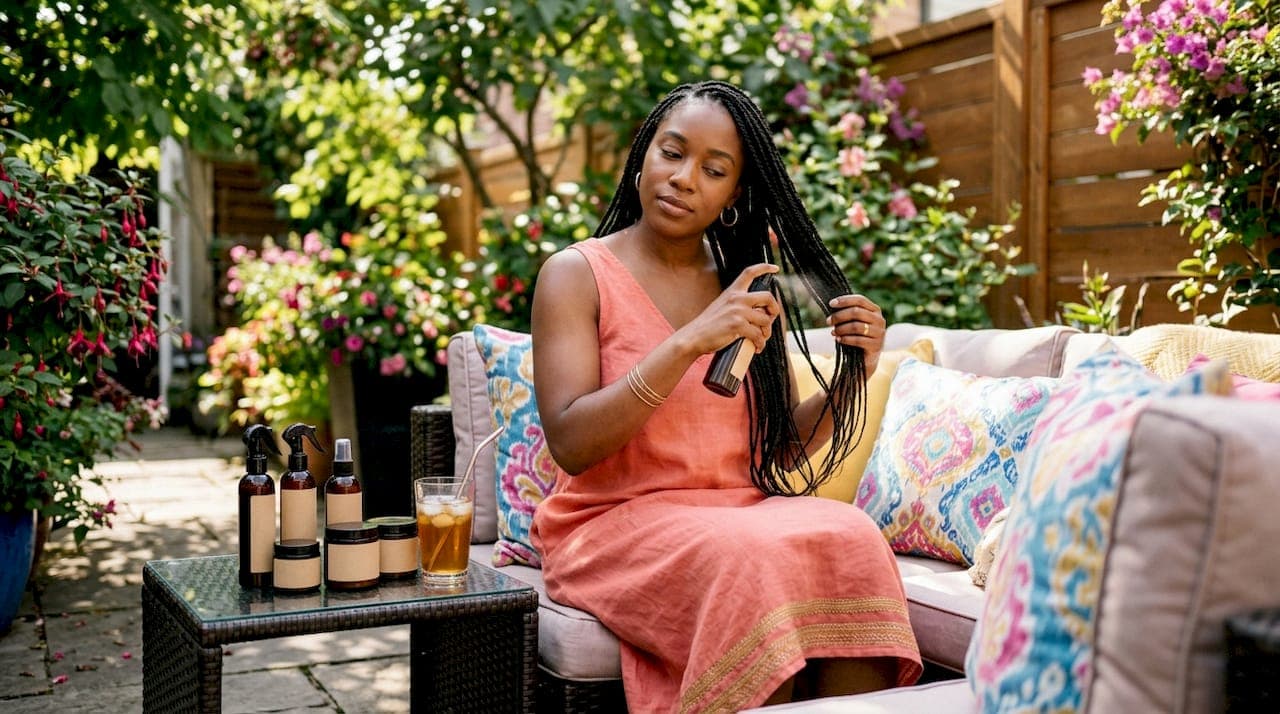
Moisture is the single most important factor in keeping knotless braids healthy and long-lasting. The role of moisture in knotless braids goes beyond comfort. It determines whether your natural hair emerges from a protective style stronger or more damaged than before. Knotless braids typically last 4–8 weeks, and consistent hydration throughout that entire period is what separates a style that protects your hair from one that quietly destroys it. Every braid tells a story, and yours should be one of retention, strength, and care.
Why is moisture critical before and during knotless braid installation?
Preparation is where most women lose the battle before it starts. Braiding dry hair traps dehydration inside the braid structure, where it cannot escape for weeks. The result is brittleness, breakage, and a style that looks tired far too soon.
Moisturizing scalp and hair before installation with a clarifying shampoo and deep conditioning treatment is the foundation of a lasting, healthy braid set. The clarifying shampoo removes product buildup that blocks moisture absorption. Deep conditioning then floods each strand with hydration before it gets locked inside the braid.
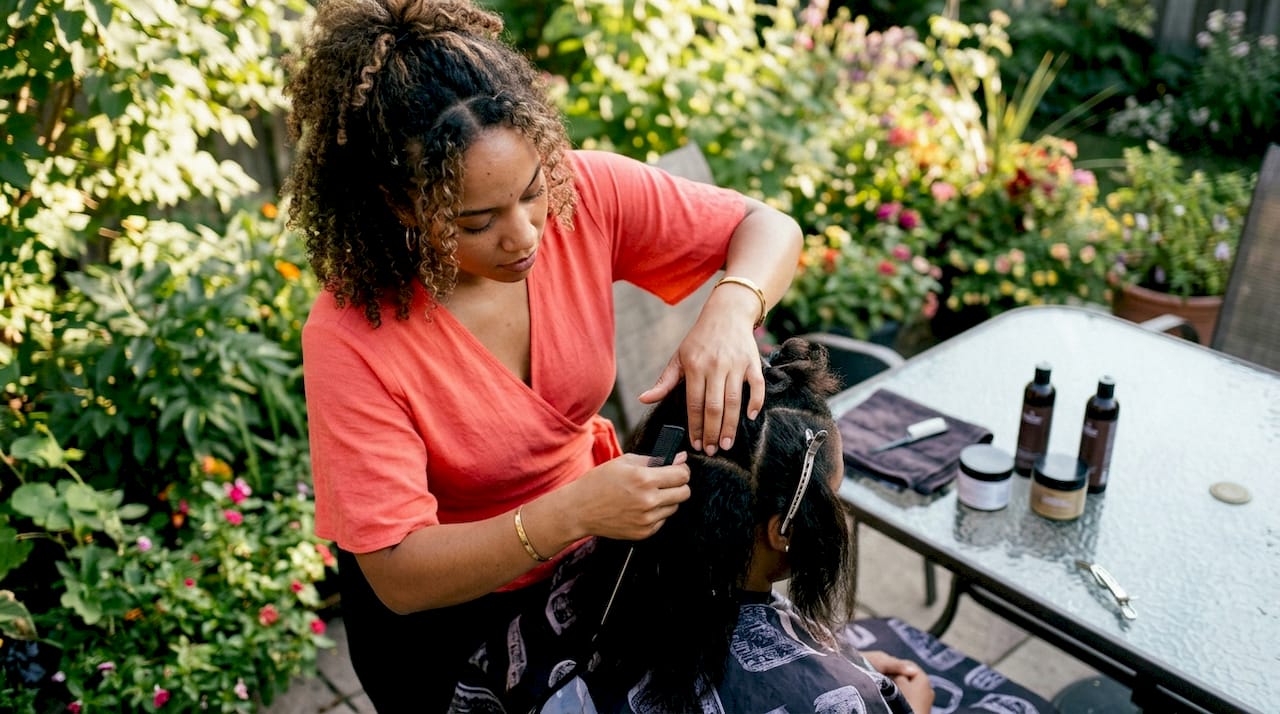
The feed-in technique reduces root tension compared to traditional box braids, which means your scalp and edges are already under less stress. Starting with well-moisturized hair amplifies that benefit. Fragile or thinning edges especially need this preparation step.
Follow these steps before your installation appointment:
- Clarify first. Wash with a clarifying shampoo to remove all buildup and open the hair shaft for moisture absorption.
- Deep condition for at least 20 minutes. Use a protein-free deep conditioner if your hair is already brittle, or a protein-moisture balance formula if your strands feel weak.
- Apply a leave-in conditioner. Work it through each section before braiding begins. This creates a moisture layer that stays active under the braid.
- Seal with a lightweight oil. Jojoba oil or sweet almond oil seals the moisture in without creating heavy buildup.
- Never braid soaking wet hair. Damp is ideal. Soaking wet hair swells and then contracts as it dries, which stresses the braid structure from the inside.
Pro Tip: Schedule your wash and deep conditioning session the evening before your appointment. Hair that has had time to absorb moisture overnight braids more smoothly and holds the style longer.
How should you maintain moisture in knotless braids throughout the wearing period?
Daily hydration is the habit that protects your hair for the full 4–8 weeks your braids are in. Most women either skip it entirely or use the wrong products. Both mistakes lead to the same outcome: dry, brittle hair hiding under a style that looks fine on the outside.
Daily application of a light water-based spray is the professional standard for preventing environmental dehydration under knotless braids. Water is the only true hydrator. Oils and butters seal moisture in, but they cannot create it. Your spray bottle is your most important maintenance tool.
Heavy products cause buildup and shorten braid lifespan. Thick greases and heavy butters coat the braid extensions and attract lint, dust, and debris. They also block the scalp from breathing, which leads to itching and flaking. Lightweight, water-based hydration is the professional recommendation for a reason.
Here is what a strong daily moisture routine looks like:
- Morning spritz. Fill a spray bottle with water or a water-based leave-in conditioner diluted with water. Mist your braids and scalp lightly each morning.
- Scalp oil application. Follow the spritz with a few drops of a lightweight oil like tea tree oil mixed with jojoba oil. Apply directly to the scalp, not the braid length.
- Nighttime protection. Wrap your braids in a satin scarf or sleep on a satin pillowcase every night. Cotton pulls moisture out of your hair while you sleep.
- Weekly scalp check. Part your braids and inspect your scalp for dryness, buildup, or irritation. Address any issues before they worsen.
Pro Tip: Use a fine mist spray bottle rather than a standard spray nozzle. Fine mist distributes water evenly without soaking the extensions, which prevents frizz and keeps the braid texture intact.
Avoid the three most common maintenance mistakes: using heavy hair grease on the scalp, skipping moisture for days at a time, and over-wetting the extensions. Each one shortens your style's life and stresses your natural hair underneath. For a deeper look at scalp care with braids, consistent attention to the scalp is what separates a healthy protective style from a damaging one.
What are the benefits of moisture retention for knotless braids vs. traditional braids?
The construction of knotless braids gives them a structural advantage that traditional box braids simply cannot match. That advantage only pays off when you use it.
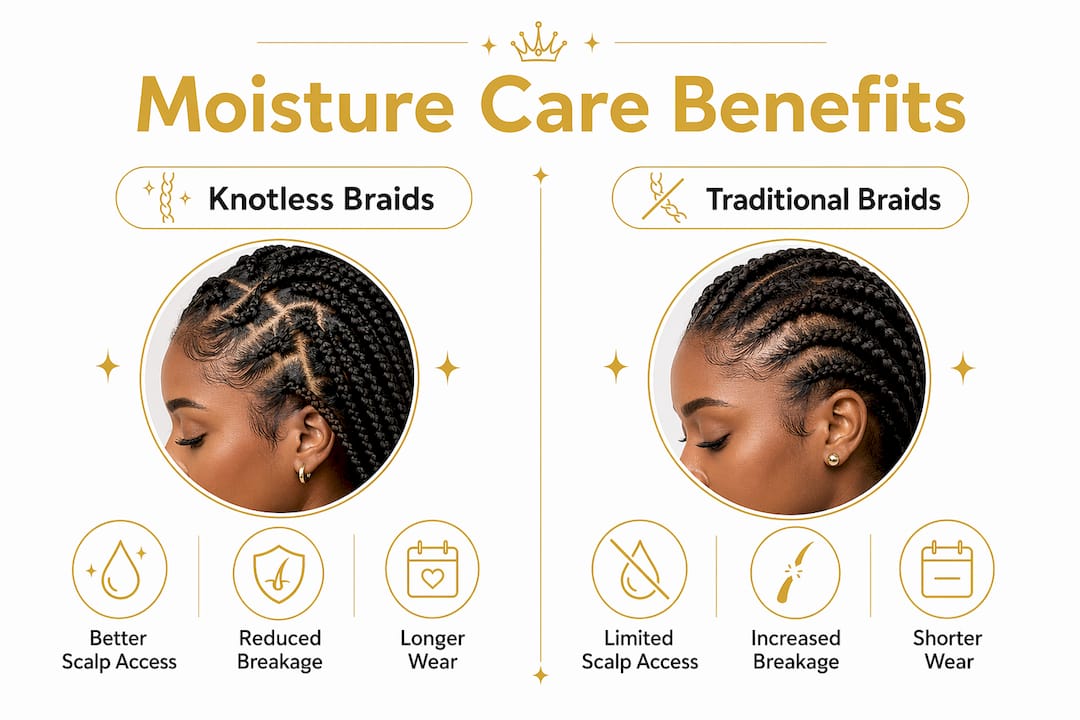
Knotless braids allow better scalp access for moisturizing and washing than traditional box braids. Celebrity stylist Susan Oludele specifically highlights this scalp accessibility as one of the defining benefits of the knotless style. With traditional braids, the knot at the root sits directly on the scalp and blocks direct product application. With knotless braids, you can reach the scalp between each part and apply moisture exactly where it is needed.
Knotless braids protect existing hair to support length retention through minimized manipulation. They do not intrinsically grow new hair, but they create the conditions for your hair to retain the length it already has. Moisture is what makes that retention possible. Dry hair breaks. Hydrated hair bends.
| Feature | Knotless braids | Traditional box braids |
|---|---|---|
| Scalp access for moisture | Direct, open access between parts | Limited by knot at the root |
| Root tension | Low, due to feed-in technique | Higher, knot pulls at the base |
| Moisture absorption | Even distribution possible | Blocked at root by knot |
| Scalp health | Better airflow and product reach | More prone to buildup at root |
| Length retention | Higher with consistent moisture | Moderate, tension increases breakage risk |
For a full breakdown of how these two styles compare, the box braids vs. knotless braids guide covers the structural differences in detail.
How does moisture care affect takedown and hair recovery?
Takedown is the moment when weeks of good or bad moisture habits reveal themselves. Hair that has been consistently hydrated comes out of braids smoothly. Hair that has been neglected comes out in pieces.
Moisturized hair reduces breakage during takedown and improves manageability after the style is removed. Hydrated strands have elasticity. They stretch under tension instead of snapping. Dry strands have no give, and the mechanical stress of unbraiding breaks them at their weakest points.
Matting is the other major risk. When natural hair sits dry inside a braid for weeks, the strands tangle around each other and form knots that are nearly impossible to separate without damage. Daily moisture prevents this by keeping each strand supple and separate within the braid structure.
Follow these steps for a safe, low-damage takedown:
- Apply a detangling conditioner or oil the night before. Saturate the length of each braid and your scalp. Let it absorb overnight.
- Work in small sections. Unravel one braid at a time from the bottom up. Never pull from the root down.
- Finger-detangle before using a comb. Your fingers feel knots before a comb does. Work through tangles gently with your fingers first.
- Rinse with cool water. After removal, rinse your hair with cool water to close the cuticle and reduce frizz before shampooing.
- Deep condition immediately after. Your hair has been in a protective style for weeks. It needs a full reset with a deep conditioning treatment before any heat or styling.
Consistent braid maintenance habits throughout the wearing period make every one of these takedown steps easier and less damaging.
Key Takeaways
Moisture is the foundation of every healthy knotless braid experience, from installation through takedown.
| Point | Details |
|---|---|
| Pre-installation prep is non-negotiable | Clarify, deep condition, and apply leave-in before braiding to prevent trapped dryness. |
| Daily water-based spritz protects hair | Light mist application each morning keeps natural hair hydrated without causing buildup or frizz. |
| Knotless braids offer better scalp access | The feed-in structure allows direct moisture application to the scalp, unlike traditional box braids. |
| Moisture prevents takedown damage | Consistently hydrated hair retains elasticity, reducing breakage and matting during removal. |
| Heavy products shorten style life | Thick greases and butters cause buildup, attract debris, and block scalp breathing. |
What I've learned from years of working with knotless braids
The most common misconception I see is that knotless braids are low-maintenance because they look neat. They are low-tension, but they are not low-care. That distinction matters enormously for your hair health.
Clients come in after 6 weeks with dry, matted roots and wonder why their hair feels damaged. The braid style did not cause that. The absence of a moisture routine did. Knotless braids give your natural hair the best possible environment to thrive, but only if you show up for your hair every single day.
The subtlest thing I have learned is that the scalp and the hair length need different products. Your scalp needs a lightweight oil applied directly to the skin. Your hair length needs a water-based mist to stay hydrated. Applying heavy oil to the length weighs the braids down and causes frizz. Applying water directly to the scalp without oil means the moisture evaporates before it absorbs. Separate the two steps, and your results will change immediately.
One more thing: do not wait until your braids look dry to moisturize. By the time you can see dryness, the damage is already happening underneath. Treat moisture like a daily habit, not a reaction to a problem. Every braid tells a story. Make yours one of intention and care.
— Afro
Afromagicbraiding: professional knotless braid care in Southfield
Knowing the right moisture routine is one thing. Having a stylist who builds that care into every installation is another.

At Afromagicbraiding, every knotless braid set starts with proper preparation, including scalp assessment and tension-free feed-in technique, so your hair is protected from the first stitch to the final takedown. The team in Southfield, Michigan, specializes in styles that honor your hair's health as much as its beauty. Browse the braid portfolio to see the quality of work firsthand, or book your appointment and let the experts set your hair up for a full, healthy wearing period. Your hair deserves a foundation built on expertise and care.
FAQ
What is the role of moisture in knotless braids?
Moisture prevents natural hair from drying out and breaking while locked inside the braid structure. Consistent hydration keeps strands supple, reduces breakage, and supports healthy length retention throughout the 4–8 week wearing period.
How often should you moisturize knotless braids?
Daily moisture application is the professional standard. A light water-based spritz each morning, followed by a lightweight scalp oil, keeps both the hair and scalp hydrated without causing buildup.
What products work best for hydrating knotless braids?
Lightweight, water-based sprays and diluted leave-in conditioners are the best products for braids. Heavy greases and thick butters cause buildup, attract lint, and shorten the style's lifespan.
Can knotless braids damage your hair if you skip moisture?
Yes. Braiding dry hair traps dehydration inside the braid, and neglecting daily hydration leads to brittleness, matting, and breakage during takedown. Moisture is what makes knotless braids a genuinely protective style.
How does moisture help during braid takedown?
Moisturized hair retains elasticity, which means strands bend under the mechanical stress of unbraiding instead of snapping. Applying a detangling conditioner or oil the night before removal significantly reduces breakage and simplifies detangling.