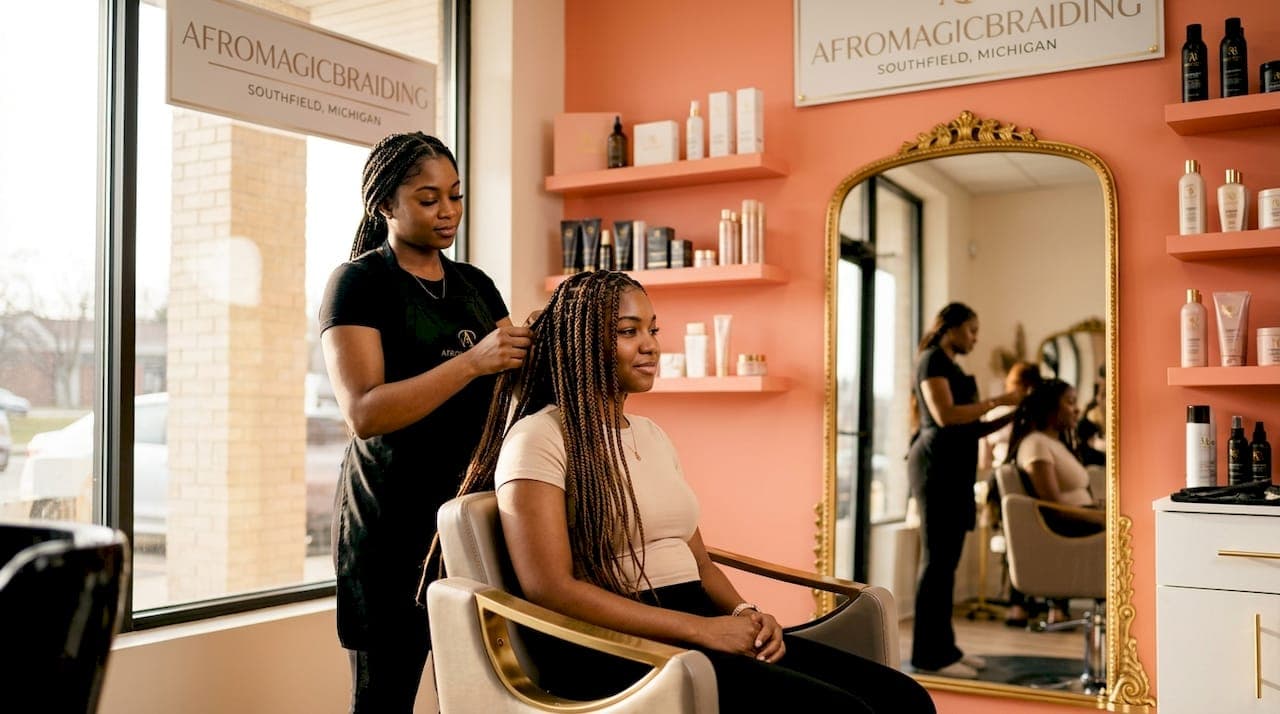
The difference between box and knotless braids comes down to one thing: how the extension hair is attached at the root. Box braids use a tight knot anchored directly to the scalp to secure synthetic hair, while knotless braids use a tension-free feed-in technique that gradually introduces extension hair after braiding one to two inches of your natural hair first. That single distinction drives every other difference you'll notice, from how your scalp feels on day one to how much you pay at the salon and how long your style holds up.
How is installation different between box braids and knotless braids?
The installation method is the defining technical difference between these two protective styles, and understanding it helps you set realistic expectations before you sit in the chair.
Box braid installation follows a straightforward sequence:
- The stylist sections your hair into uniform square or rectangular parts.
- Extension hair is folded in half and looped around the base of the section, creating a visible knot directly at the scalp.
- The natural hair and extension hair are braided together from root to tip.
- The process repeats across the entire head, typically taking three to six hours.
Knotless braid installation requires more precision:
- Hair is sectioned the same way, but no knot is tied at the root.
- The stylist braids one to two inches of your natural hair alone first.
- Small amounts of extension hair are fed in gradually as the braid progresses downward.
- The result is a smooth, flat root with no visible anchor point. Installation runs four to eight hours because the feed-in technique demands consistent tension management throughout each individual braid.
The longer chair time for knotless braids is not inefficiency. It reflects the precision required to keep the feed-in even. Uneven tension during the feed-in process can cause discomfort even without a knot, so a skilled stylist makes all the difference.
Pro Tip: Ask your stylist to braid a small section of your natural hair before adding any extensions, even if you are requesting traditional box-sized braids. This knotless-inspired approach reduces hairline stress and protects your edges without changing the overall look.
What are the scalp comfort and tension differences?
Scalp comfort is where knotless braids earn their reputation, and the science behind it is straightforward. The knot in traditional box braids creates an immediate concentration of weight and tension directly at the root. That pressure is felt most acutely in the first 48 hours after installation, when the scalp is still adjusting to the added weight of the extensions.
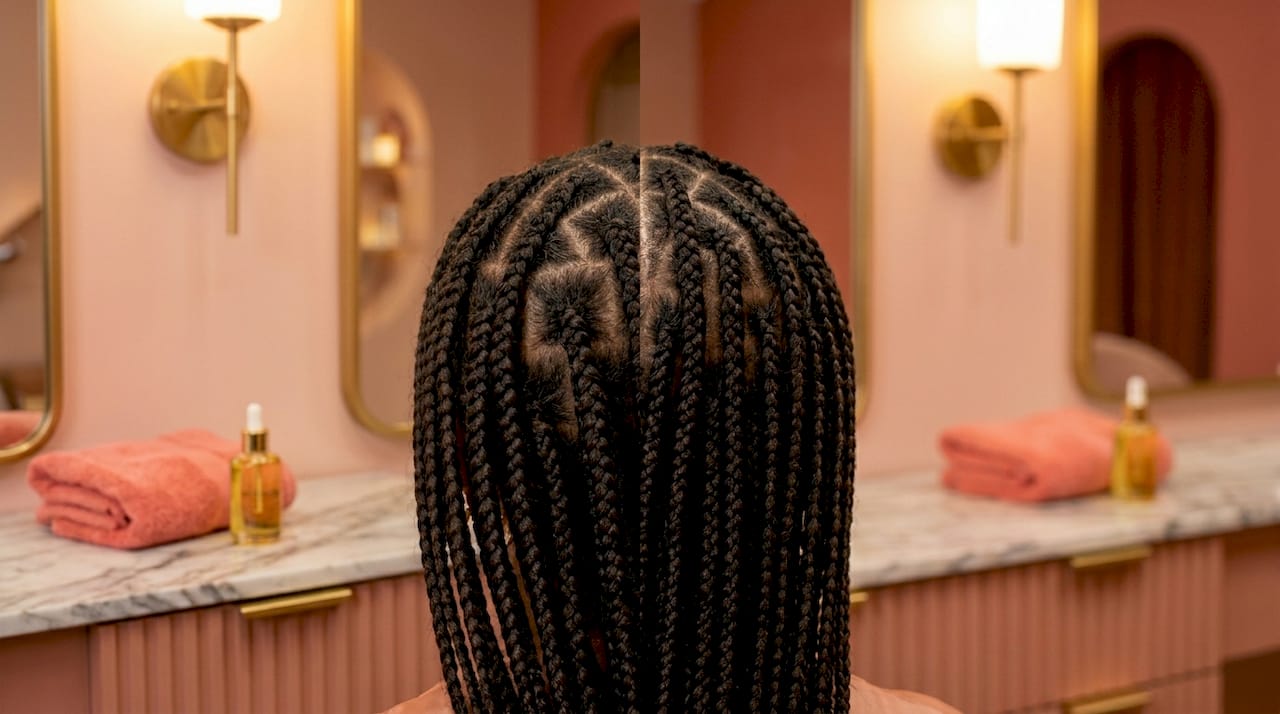
Knotless braids distribute weight gradually along the length of the braid rather than concentrating it at one anchor point. The result is noticeably lighter tension from the moment you leave the salon. For women with sensitive scalps, fragile edges, or a history of traction alopecia, this difference is not cosmetic. It is a genuine health consideration.
Here is who benefits most from choosing knotless braids:
- Women with naturally fine or fragile edges prone to breakage
- Anyone who has experienced traction alopecia or is in recovery
- Those with scalp conditions like psoriasis or seborrheic dermatitis that are aggravated by pressure
- Women who want to wear updos or high buns immediately after installation without discomfort
"High tension and tight knots in box braids can increase the risk of traction alopecia if installation is too tight. Knotless braids reduce this risk, but daily styling habits also impact hair health significantly."
That last point matters more than most people realize. Wearing tight ponytails or high buns every day places repeated tension on your hairline regardless of which braid method you chose. No installation technique fully protects against styling-induced traction alopecia. Varied styling and proper care are non-negotiable for both styles.
Pro Tip: Apply a lightweight scalp oil like jojoba or tea tree oil along your parts every three to four days. This keeps your scalp moisturized without the heavy buildup that clogs follicles and shortens the life of your braids. For more on keeping your scalp healthy under protective styles, read Afromagicbraiding's guide on scalp care strategies.
How do box braids and knotless braids compare in longevity and style?
Both styles are legitimate protective options, but they age differently and offer different aesthetic starting points.
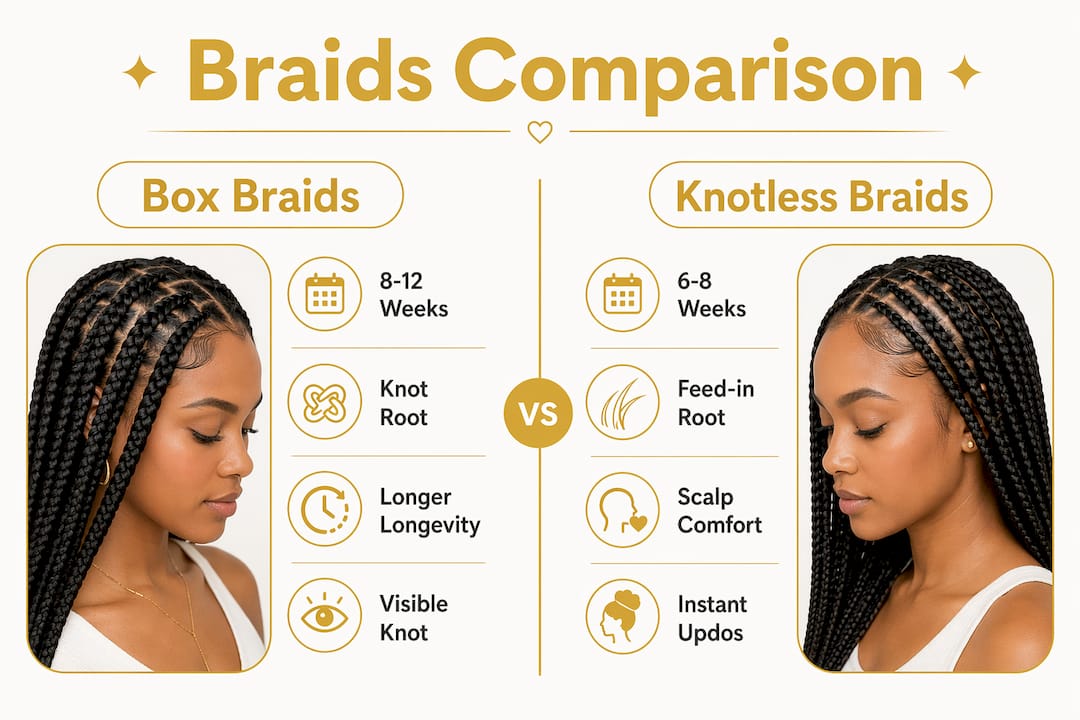
| Feature | Box Braids | Knotless Braids |
|---|---|---|
| Average longevity | 8 to 12 weeks | 6 to 8 weeks |
| Root appearance | Visible knot at base | Smooth, flat, natural-looking root |
| Initial stiffness | Stiffer due to knot anchor | Lies flat immediately |
| Updo readiness | Requires 1 to 2 weeks to loosen | Ready for updos on day one |
| Frizz timeline | Slower at root | Faster at root due to no anchor |
Box braids last longer because the knot at the root holds the extension hair more firmly in place as your natural hair grows. Knotless braids, without that anchor, tend to show new growth and frizz at the root sooner, which is why their average lifespan is shorter.
The aesthetic difference is equally significant. Box braids have a visible knot at the base that becomes noticeable when the scalp is exposed, particularly in parted styles or updos. Knotless braids have a smooth, natural-looking root that mimics the look of hair growing directly from the scalp. This makes knotless braids the preferred choice for Fulani-inspired braids, boho braids with curly ends, and any style where the root detail is visible.
Knotless braids also offer immediate styling freedom. Because the roots lie flat without a bulky knot, you can pull your hair into a high bun or updo on the same day as your appointment. Box braids typically need one to two weeks before the roots soften enough for comfortable updos. For knotless braids styling ideas, accessories like gold cuffs, cowrie shells, and beads integrate beautifully at the roots without the interference of a knot base. The role of accessories in braids is actually more pronounced with knotless styles because the clean root gives decorative pieces a cleaner surface to sit against.
Maintenance practices are nearly identical for both styles. Washing every seven to ten days, using a satin bonnet at night, and avoiding heavy products at the root apply equally to box and knotless braids. The difference is that knotless braids may need refreshing slightly sooner due to faster root frizz.
What are the cost and time differences between the two styles?
Budget is a real factor in choosing between these two styles, and the price gap reflects genuine differences in labor.
| Style | Typical Cost Range | Typical Installation Time |
|---|---|---|
| Box braids | $100 to $250 | 3 to 6 hours |
| Knotless braids | $150 to $350 | 4 to 8 hours |
Knotless braids cost more because the feed-in technique requires more time and skill per braid. A stylist installing knotless braids cannot rush the process without compromising tension consistency, which directly affects your comfort and the style's longevity. The premium you pay is for precision, not just time.
Braid thickness affects both styles significantly. Jumbo box braids can be completed in three hours and cost toward the lower end of the range. Medium or small knotless braids on a full head can push past eight hours and reach the top of the pricing scale. Waist-length braids in either style add cost due to the volume of extension hair required.
The value calculation depends on your priorities. If you want maximum longevity and a lower upfront cost, box braids deliver. If you want immediate comfort, styling flexibility, and a sleeker root appearance, the extra investment in knotless braids pays off quickly. Women who wear their braids for the full duration of their lifespan often find that knotless braids, despite costing more upfront, require fewer touch-up appointments due to their gentler impact on the hairline.
Pro Tip: Book your appointment on a weekday when possible. Many salons, including Afromagicbraiding, offer more flexible scheduling mid-week, which means your stylist has more time to dedicate to a precise knotless installation without the pressure of a fully booked weekend.
Key takeaways
The core difference between box and knotless braids is the root attachment method, and that single choice shapes your comfort, cost, styling freedom, and hair health outcomes.
| Point | Details |
|---|---|
| Root attachment method | Box braids use a knot; knotless braids use a gradual feed-in with no anchor at the scalp. |
| Scalp comfort | Knotless braids create lighter tension immediately, making them better for sensitive scalps and fragile edges. |
| Longevity vs. styling freedom | Box braids last 8 to 12 weeks; knotless braids last 6 to 8 weeks but allow updos from day one. |
| Cost and time | Box braids run $100 to $250 in 3 to 6 hours; knotless braids run $150 to $350 in 4 to 8 hours. |
| Maintenance | Both styles benefit equally from washing every 7 to 10 days, satin bonnets, and lightweight scalp oils. |
What I've learned from years of watching women choose between these styles
Here is the honest truth: most women who come in asking about the difference between box and knotless braids already know which one they want. They just want permission to choose the more comfortable option without feeling like they are being impractical about cost.
My experience at Afromagicbraiding has shown me that scalp sensitivity is consistently underestimated. Women who have worn box braids for years and accepted the first-day tightness as normal are often genuinely surprised by how different knotless braids feel. That immediate comfort is not a luxury. For anyone with a history of edge thinning or scalp tenderness, it is a protective necessity.
That said, I would push back on the idea that box braids are the inferior choice. They last longer, cost less, and when installed by a skilled stylist who feeds in extensions gradually rather than knotting aggressively, the tension difference narrows considerably. The professional installation technique matters as much as the style itself.
What I always tell clients: talk to your stylist about your scalp before you decide. If your edges are already stressed or you have a big event the week after your appointment, knotless braids are the clear choice. If you want maximum longevity and your scalp handles tension well, box braids installed with care will serve you beautifully. Every braid tells a story. Make sure yours starts with a conversation.
— Afro
Book your braids at Afromagicbraiding in Southfield, Michigan
Whether you are ready to commit to knotless braids or still weighing your options, professional installation makes the difference between a style that protects your hair and one that stresses it.

Afromagicbraiding's team of expert stylists in Southfield, Michigan specializes in both box and knotless braids, with a focus on scalp health, precise tension management, and styles that are uniquely yours. Browse the braid style portfolio to see the full range of protective styles available, from classic box braids to boho knotless looks with curly ends and accessories. When you are ready, book your appointment online and get a personalized consultation before your session. Your hair deserves expert hands.
FAQ
What is the main difference between box and knotless braids?
Box braids attach extension hair with a knot tied directly at the scalp root, while knotless braids gradually feed in extension hair after braiding one to two inches of natural hair first, creating a knot-free, flatter base.
Which style is better for sensitive scalps?
Knotless braids are better for sensitive scalps because they distribute tension gradually along the braid rather than concentrating it at a root knot, reducing immediate discomfort and the risk of traction alopecia.
How long do knotless braids last compared to box braids?
Box braids typically last eight to twelve weeks, while knotless braids last six to eight weeks. The knot anchor in box braids holds extensions more firmly as natural hair grows, giving them a longer average lifespan.
Can I wear my hair up right after getting knotless braids?
Yes. Because knotless braids have no bulky knot at the root, the braids lie flat immediately and allow instant updos on the same day as installation. Box braids typically need one to two weeks to soften before comfortable updos are possible.
How do I remove knotless braids without damaging my hair?
Cut each braid below the point where your natural hair ends, then carefully unravel the remaining extension hair downward. Apply a detangling conditioner or oil to your natural hair before combing through to minimize breakage. Never pull or rip braids out from the root.