
Choosing the right braid style shouldn't feel like a guessing game. With so many options available, from knotless box braids to Fulani and crochet, it's easy to feel overwhelmed before you even sit in the chair. Protective styling is no longer just about keeping your hair tucked away. It's a statement of culture, identity, and smart hair care. This guide breaks down the most popular braid types, their key features, health benefits, and what to consider before your next appointment, so you can walk in confident and walk out glowing.
Table of Contents
- How to choose the right braid style for you
- Knotless box braids
- Fulani braids: Cultural roots and modern trends
- Cornrows: The classic foundation
- Crochet braids: Fast, flexible, and gentle
- Micro braids: Small size, big impact
- Summary comparison of braid types
- The truth most stylists won't tell you about braids
- Ready for a new look? Book your expert braiding appointment
- Frequently asked questions
Key Takeaways
| Point | Details |
|---|---|
| Protective styles matter | Braiding protects your natural hair and can be both stylish and nourishing when installed correctly. |
| Choose low-tension braids | Knotless and crochet braids are ideal for sensitive scalps because they use gentler techniques and lighter weight. |
| Personalize your look | Add beads and accessories to Fulani or box braids or select braid size and style that fits your lifestyle and hair needs. |
| Installation technique counts | A skilled stylist and the right installation method are just as important as the braid type you select. |
| Compare before booking | A side-by-side look at braid types makes it easier to find your ideal match for protection, style, and convenience. |
How to choose the right braid style for you
Before you fall in love with a look on social media, it's worth pausing to ask a few practical questions. The right braid style for you depends on more than just aesthetics. Your scalp sensitivity, hair density, lifestyle, and long-term hair goals all play a role in finding your best match.
Here are the key criteria to consider:
- Scalp sensitivity and tension tolerance: If you experience headaches or edge thinning after installs, low-tension styles are non-negotiable.
- Hair length and texture: Some styles work best on longer hair, while others are designed to protect shorter or fine strands.
- Maintenance commitment: Some braids require weekly moisturizing and edge care, while others are more hands-off.
- Lifestyle and activity level: If you swim, work out frequently, or have a demanding schedule, you need a style that holds up without constant upkeep.
- Styling goals: Are you after length retention, a bold fashion statement, or a low-maintenance look for the next few weeks?
When it comes to braid extension types, the variety can feel endless. But narrowing your focus using these criteria makes the decision much clearer. For protective styles, low tension installations that match section sizes to your hair density are essential, and knotless and crochet braids offer gentler alternatives for women with edge concerns or active lifestyles.
Pro Tip: Always consult with a professional stylist before choosing your braid size. A skilled braider will assess your hair density and recommend the right sectioning to protect your edges and maximize retention.
Now that you've set your criteria, let's dive into the most popular braid types and what makes each unique.
Knotless box braids
Knotless box braids have taken the protective styling world by storm, and for good reason. This modern technique prioritizes both scalp health and a polished, natural-looking finish that traditional box braids simply can't match.
The key difference lies in the installation method. Knotless box braids use a feed-in method starting with your natural hair and gradually adding extensions, creating a flat, lightweight base with significantly less scalp tension compared to traditional box braids, which start with a knot at the root. That knot might seem small, but it creates a pressure point that can cause discomfort, breakage, and even hairline recession over time.
Here's why knotless braids stand out:
- Reduced scalp tension: The feed-in start means no tight knot pulling at your roots from day one.
- Lighter weight: Extensions are added gradually, so the braid weight is distributed more evenly along the strand.
- Cleaner, more natural look: The braid appears to grow directly from the scalp, giving a sleeker, more seamless finish.
- Longer wear comfort: Many clients report significantly less itching and soreness compared to traditional styles.
- Versatile sizing: Knotless braids work beautifully in small, medium, and jumbo sizes depending on your preference.
Knotless braids reduce risk of traction alopecia, headaches, and edge damage compared to traditional box braids due to lower tension and lighter weight. They are preferred for sensitive scalps, though they do take longer to install. Budget extra time in your schedule for this style, typically between six and nine hours for a full head.
"Every braid tells a story. With knotless braids, that story starts gently, honoring your hair from the very first strand."
For a deeper look at sizing, styling, and care, our knotless braid guide walks you through everything you need to know before booking.
Fulani braids: Cultural roots and modern trends
For a blend of modern artistry and rich African heritage, Fulani braids are a standout choice. Every element of this style carries meaning, from the intricate cornrow patterns to the decorative accessories woven throughout.
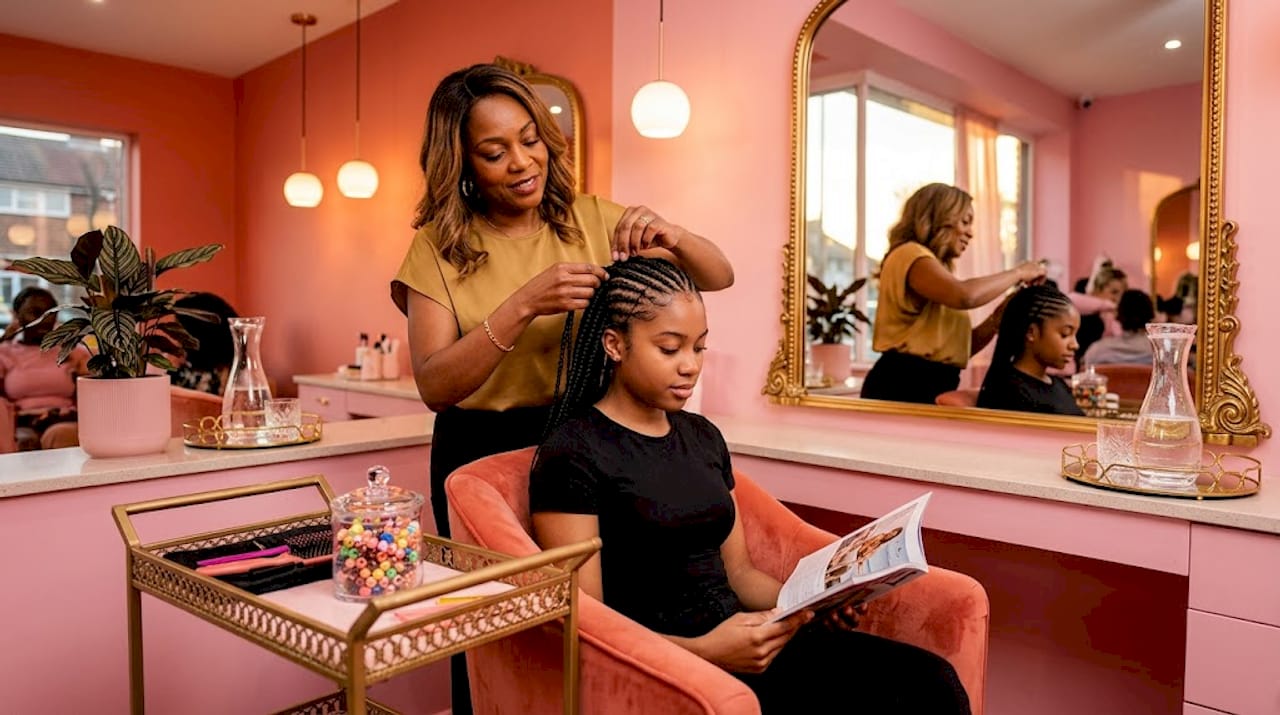
Fulani braids combine central and side cornrows at the front with loose individual box or knotless braids in the back, often decorated with beads, cowrie shells, or rings. This style is rooted in the West African Fulani tradition, where hair adornment has long been a symbol of identity, status, and beauty. Honoring that heritage while wearing a style that turns heads today is something truly special.
What makes Fulani braids so appealing in 2026:
- The signature cornrow pattern: A center part with cornrows feeding into the sides creates a structured, eye-catching frame for the face.
- Decorative elements: Gold cuffs, wooden beads, and cowrie shells add personality and cultural depth.
- Versatility in the back: The loose braids in the back can be styled in updos, half-up looks, or worn fully down.
- Customizable length and thickness: You can go bold with thick braids or opt for a delicate, fine finish.
- Suitable for most hair types: Fulani braids work well on natural hair and can be adapted for relaxed or transitioning hair.
"Fulani braids are more than a style. They are a celebration of where we come from and a statement of where we're going."
If you love the look of Fulani braids but prefer a no-commitment option, our braided wig options include Fulani-inspired designs that let you switch up your look without a full install.
Cornrows: The classic foundation
Cornrows are the foundation for many styles, and their versatility matters more than most people realize. This ancient style, practiced across African cultures for thousands of years, remains one of the most practical and protective options available today.
Cornrows are underhand three-strand braids laid flat against the scalp in patterns, serving as standalone sleek styles or as bases for sew-ins, wigs, or crochet installations. They require precise tension control to avoid damage, particularly along the hairline and nape.
Key things to know about cornrows:
- Pattern variety: Straight back, curved, geometric, and freestyle designs offer endless creative possibilities.
- Multi-purpose base: Cornrows are the foundation for crochet braids, braided wigs, and sew-in extensions.
- Scalp visibility: Because they lie flat, cornrows allow easy access for scalp moisturizing and oiling.
- Duration: A clean cornrow install typically lasts four to six weeks with proper care.
- Edge protection: When installed with appropriate tension, cornrows can actually protect your edges rather than stress them.
"Cornrows are the roots of braiding culture. Simple in structure, powerful in purpose, and timeless in beauty."
For ideas on how cornrows pair with various braid extension uses, explore how this foundational style opens the door to dozens of creative looks.
Crochet braids: Fast, flexible, and gentle
If you're after flexibility and speed, crochet braids offer a modern alternative to traditional techniques. This method has grown massively in popularity because it combines the protective benefits of cornrows with the styling freedom of pre-made extensions.
Crochet braids involve braiding natural hair into cornrows as a base, then using a latch hook or crochet needle to loop and secure pre-styled synthetic or human hair extensions through the cornrows. The result is a full, voluminous style that looks just as polished as a traditional braid install, often in a fraction of the time.
Here's a quick breakdown of the pros and cons:
Pros:
- Installs in two to six hours, much faster than most traditional braid methods
- Huge variety of textures available, from box braids to locs, twists, and curly styles
- Easy removal without excessive manipulation of your natural hair
- Lower tension on the scalp compared to individual braids
Cons:
- Knots at the base can be visible if the wrong extension is used
- Over-tightening the cornrow base can cause tension-related damage
- Pre-styled extensions limit some customization options
Crochet braids install faster than traditional braids but may show knots if the extensions aren't seamless. Tight cornrow bases can cause issues if over-tensioned, so always communicate your comfort level to your stylist during the install.
| Feature | Crochet braids | Traditional box braids |
|---|---|---|
| Install time | 2 to 6 hours | 6 to 10 hours |
| Scalp tension | Low to moderate | Moderate to high |
| Average cost | $100 to $200 | $150 to $350 |
| Texture options | Very high | Moderate |
| Removal ease | Easy | Moderate |
For the best results, pair crochet installs with quality extension choices for crochet that blend seamlessly with your natural hair texture.
Micro braids: Small size, big impact
Speaking of size, let's talk about the impact of sectioning on braid safety, starting with micro braids. These ultra-fine braids create a stunning, almost hair-like effect that many women love for their delicate, natural appearance. But they come with real risks that are worth understanding before you commit.
Micro braids are created using very small sections of hair, typically no wider than a pencil tip. The result is hundreds of tiny braids that move freely and mimic the look of natural hair. The aesthetic appeal is undeniable, but the health implications require careful consideration.
Key points about micro braids:
- Aesthetic appeal: The fine, flowing look is unique and incredibly versatile for updos and loose styles.
- High tension risk: Small sections mean each braid carries a disproportionate amount of weight relative to the hair it's anchored to.
- Traction alopecia concern: Micro or tiny braids increase traction alopecia risk because small sections cannot support heavy extensions. Medium to large sizes are recommended for protective benefits with proper installation.
- Time investment: A full micro braid install can take eight to twelve hours or more.
- Not ideal for fragile hair: Women with fine, thinning, or chemically treated hair should consider medium-sized braids instead for better protection and less stress on the follicle.
Pro Tip: If you love the micro braid look, limit your wear time to four to six weeks maximum. Give your scalp and edges at least two weeks of rest between installs to allow the follicles to recover and reduce cumulative tension damage.
Summary comparison of braid types
To help you decide at a glance, here's a quick comparison of the main braid types covered above.
| Braid type | Install time | Tension level | Style options | Best for |
|---|---|---|---|---|
| Knotless box braids | 6 to 9 hours | Low | High | Sensitive scalps, edge concerns |
| Traditional box braids | 6 to 10 hours | Moderate to high | High | Thicker, denser hair |
| Fulani braids | 4 to 7 hours | Low to moderate | Very high | Cultural expression, versatility |
| Cornrows | 1 to 3 hours | Low to moderate | Moderate | Base styles, low-maintenance |
| Crochet braids | 2 to 6 hours | Low | Very high | Active lifestyles, quick changes |
| Micro braids | 8 to 12 hours | High | Very high | Aesthetic preference, strong hair |
Use this table as your starting point. Pair it with the criteria from the first section and you'll have a clear picture of which style truly fits your hair, your schedule, and your goals.
The truth most stylists won't tell you about braids
Here's something we've learned from years of working with clients across all hair types and lifestyles: the best braid style isn't always the most popular one. Social media trends move fast, and it's easy to book an appointment based on a look you saw online without asking whether that style is actually right for your hair.
The honest truth is that scalp health, hairline integrity, and hair density matter far more than trend status. A style that looks incredible on someone with thick, dense hair may cause significant damage on someone with fine or fragile strands. A great stylist will tell you that before you sit down, not after the damage is done.
We've seen clients come in after years of micro braids with noticeable thinning along the temples, or after tight box braid installs with visible edge recession. These outcomes aren't inevitable. They're preventable with the right technique, the right style choice, and honest communication between client and stylist.
Expert installation matters just as much as the style itself. Tension control, proper sectioning, and scalp prep are skills that take years to develop. A rushed install or a stylist who prioritizes speed over technique can turn any style into a damaging one.
Our perspective at Afro Magic Braiding is this: the best style is the one that protects your hair today and leaves it healthier for tomorrow. That might mean choosing braided wig benefits over a full install during a period of hair recovery. It might mean going with medium braids instead of micro, or knotless instead of traditional. A stylist who truly cares about your hair will always give you that honest guidance, even if it means steering you away from the trending look of the moment.
Ready for a new look? Book your expert braiding appointment
Once you've decided which style works for you, partner with a licensed pro to bring your vision to life.
At Afro Magic Braiding, our experienced stylists are passionate about delivering safe, beautiful results that honor your hair's health and your personal style. We take the time to assess your hair density, discuss your lifestyle, and recommend the perfect protective style for you, whether that's knotless box braids, Fulani, crochet, or something uniquely yours.
Browse our portfolio of braid styles for inspiration and see the quality of work our clients love. When you're ready to transform your hair into art, book your appointment online and let us take care of the rest. Every braid we create is crafted with care, precision, and pride.
Frequently asked questions
Which braid type is best for sensitive scalps?
Knotless and crochet braids are the gentlest options because they use lower tension and lighter bases. For sensitive scalps with edge concerns, these styles prioritize low-tension installation and appropriate section sizing to minimize stress on the follicle.
How long should you keep micro braids in?
Wear micro braids for no longer than four to six weeks to reduce breakage and scalp tension. Tiny braid sections increase traction alopecia risk, so medium to large sizes are a safer long-term choice for length retention.
Do Fulani braids always require beads and accessories?
No, Fulani braids can absolutely be worn without beads for a cleaner, more understated look. The signature cornrow and loose braid structure is beautiful on its own and can be fully customized to suit your personal style.
Are crochet braids less damaging than box braids?
Yes, when installed on a properly prepared cornrow base, crochet braids are generally gentler and cause less scalp tension. The latch hook installation method means your natural hair experiences far less direct manipulation than with individual braid installs.