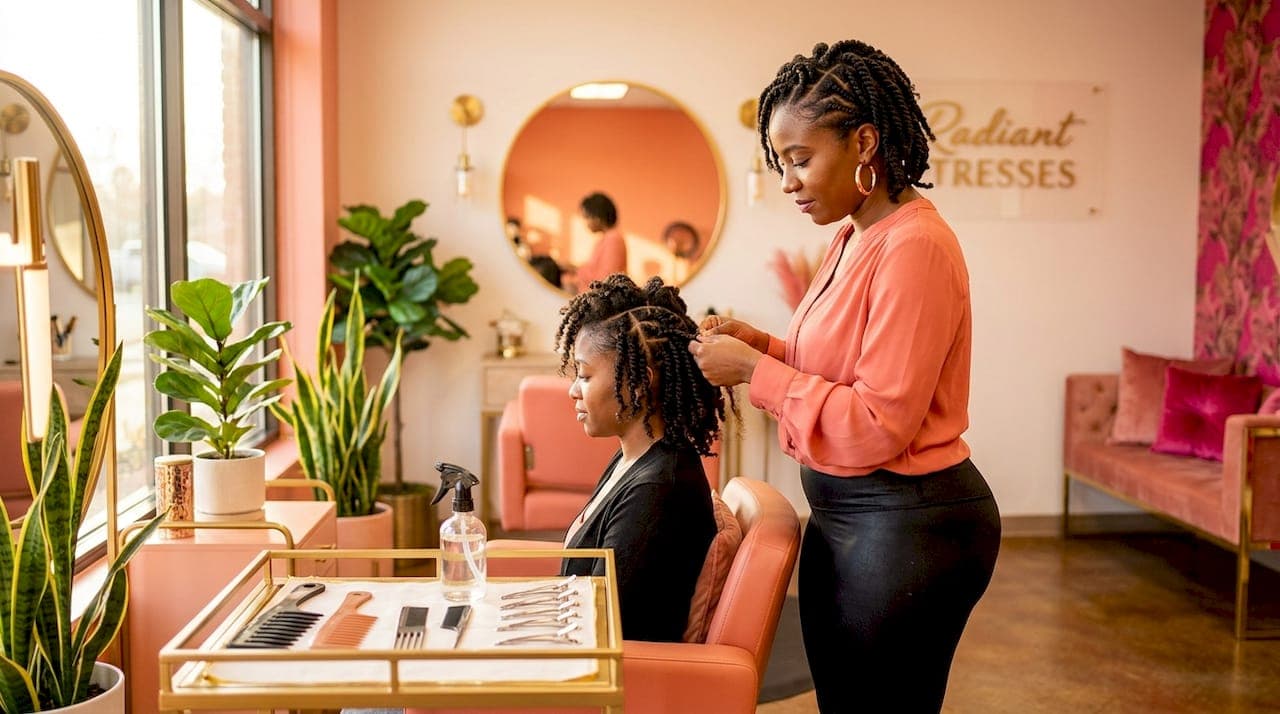
Choosing who braids your hair is one of the most consequential styling decisions you make. Understanding why select professional braid services matters goes far beyond getting a pretty style. Your scalp health, hair density, and long-term protective results all hinge on the skill and knowledge of the person holding that needle and thread. Not every braider who takes clients delivers the same outcome. The difference between a trained specialist and an untrained one can be the difference between thriving edges and preventable hair loss. Here is exactly what you need to know before your next appointment.
Table of Contents
- Key takeaways
- Why professional braid services protect your hair and scalp
- Knotless vs. box braids: understanding the cost and comfort difference
- Health and safety considerations only professionals manage well
- Protecting your edges: preventing traction alopecia through expert care
- How to choose and work with a professional braider
- My honest take on why expertise is non-negotiable
- Experience the Afromagicbraiding difference
- FAQ
Key takeaways
| Point | Details |
|---|---|
| Skill protects your scalp | Professional braiders manage tension and sanitation to prevent lasting hair and scalp damage. |
| Style choice affects risk | Knotless braids reduce traction stress compared to box braids, but technique matters more than style alone. |
| Chemical safety is real | Braiding hair products can contain heavy metals; trained stylists know how to minimize your exposure. |
| Traction alopecia is preventable | Experts recommend removing braids after 6 to 8 weeks and choosing looser styles to protect follicles. |
| Consultations save your hair | A trial or consultation with your braider aligns expectations and catches red flags before damage happens. |
Why professional braid services protect your hair and scalp
The benefits of professional braiding go well beyond aesthetics. Every braid tells a story, and a trained specialist reads your hair's story before the first extension goes in. Professionals evaluate your natural hair texture, density, scalp condition, and styling history before making a single decision about technique or materials.
Here is what separates a true expert from someone who just knows how to braid:
- Tension management. Overtightening at the root is the leading cause of traction alopecia, a condition of progressive follicle damage. A knowledgeable braider's role extends to ensuring scalp health through proper tension control during every section.
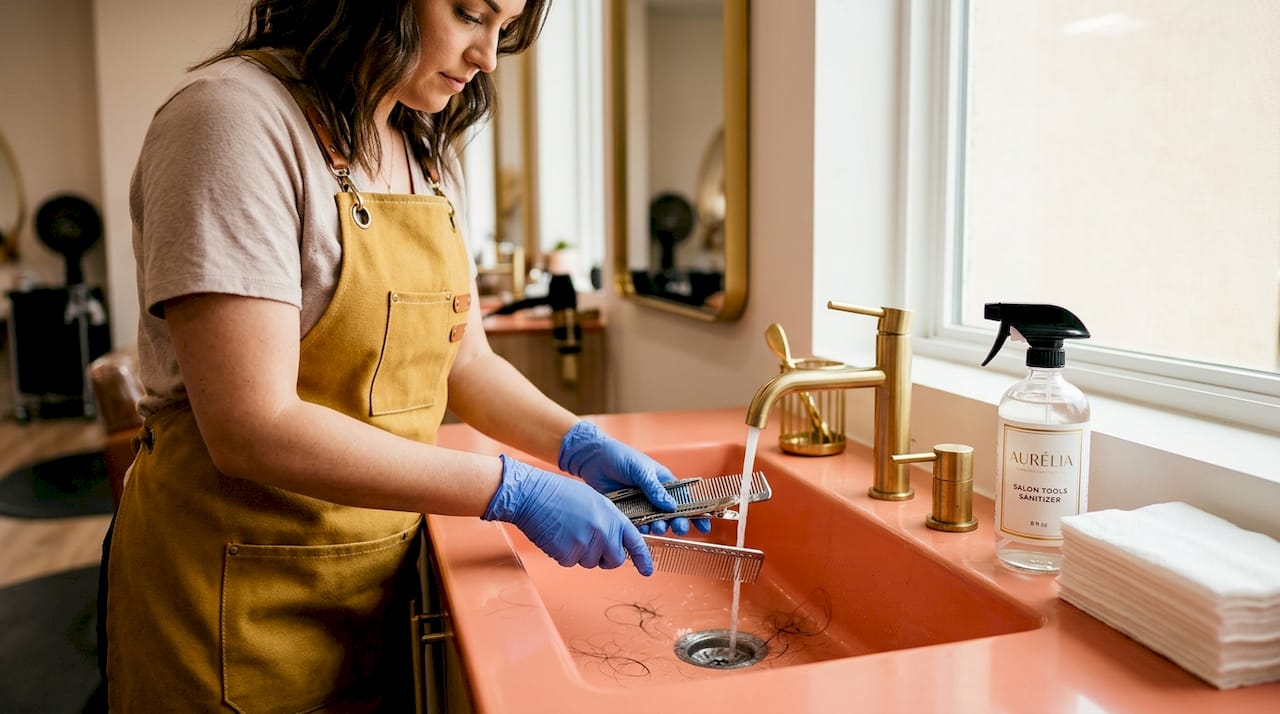
- Sanitation protocols. Shared tools, unclean workstations, and improper product handling introduce bacteria and fungi to your scalp. Professionals sanitize tools between clients and work in clean environments.
- Hair type awareness. Fine 4C hair and thick 4A hair require completely different approaches to parting size, extension weight, and braid tightness. Applying one-size-fits-all technique to either creates breakage.
- Aftercare guidance. Proper aftercare extends braid lifespan and reduces damage risks. Professionals tell you exactly how to wrap at night, how often to moisturize your scalp, and when to come back in.
Pro Tip: Ask your braider during your consultation what they do differently for your specific hair type. If they cannot answer that question, that tells you everything.
A professional is not just executing a look. They are managing a protective style that will live on your head for weeks.
Knotless vs. box braids: understanding the cost and comfort difference
One of the most common questions clients ask is whether knotless braids are worth the higher price. The answer depends on your priorities, but the technical differences are real and significant.
Knotless braids cost more than box braids due to the labor-intensive feed-in technique, but they deliver lighter scalp tension and a meaningfully reduced traction alopecia risk. Box braids anchor the extension with a knot right at the root, creating an immediate pressure point. Knotless braids begin with your natural hair and gradually feed extension hair in, distributing weight along the length of the braid rather than at the scalp.
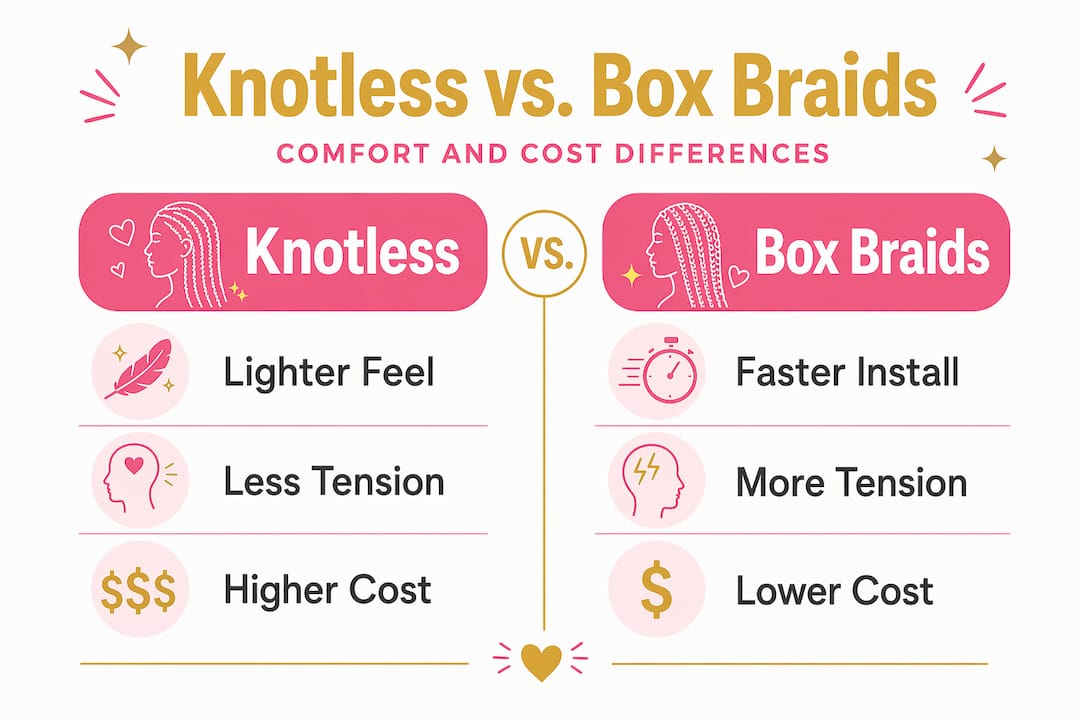
| Factor | Knotless braids | Box braids |
|---|---|---|
| Installation time | 4 to 8 hours | 3 to 6 hours |
| Average cost | $150 to $350 | $100 to $250 |
| Scalp tension | Low | Moderate to high |
| Traction alopecia risk | Lower | Higher |
| Natural appearance | Very natural | Classic, defined |
| Longevity | 6 to 8 weeks | 6 to 8 weeks |
What affects the price beyond style type? Skill level matters most. An experienced specialist who parts cleanly, manages root tension consistently, and produces uniform braids from the first section to the last commands higher rates for good reason. Style complexity, the length you request, and the quality of materials also influence final cost. Choosing a top braid types resource before your appointment helps you walk in knowing exactly what to ask for.
Pro Tip: If a knotless braid quote feels too low compared to market averages, ask how the stylist achieves that price. Cutting time usually means cutting technique.
Health and safety considerations only professionals manage well
This is where the conversation gets serious. The materials used during braid installation carry real health considerations that most clients have no idea about.
Research shows that human hair products contained the highest levels of lead among braiding hair products tested, with exposure pathways including hand-to-mouth contact and heating during installation. Synthetic braiding hair is not automatically safer. It often contains flame-retardant coatings and other chemical treatments.
Trained professionals address these risks through specific practices:
- Pre-install washing. Washing the extension hair before installation removes surface chemical residue and reduces direct scalp contact with untreated product.
- Ventilation awareness. Certain chemicals during installation pose health risks to both stylists and clients. Reputable salons work in ventilated spaces and avoid overheating hair ends with lighters or hot water more than necessary.
- Product transparency. A trustworthy braider will tell you exactly what brand of extension hair they use, where it is sourced, and why they chose it. Vague answers here are a warning sign.
- Patch awareness. Professionals watch for scalp reactions during and after installation and advise clients to contact them immediately if irritation develops.
"Exposure pathways for chemicals used during braid installation are complex; professionals mitigate risks by applying careful heat application, ventilation, and product selection, underscoring the value of expert knowledge beyond aesthetics."
The advantages of braid specialists become especially clear here. This layer of knowledge is simply not present in untrained stylists.
Protecting your edges: preventing traction alopecia through expert care
Traction alopecia is one of the most under-discussed consequences of poor braiding, and it is more common than most people realize. It is a form of progressive hair loss caused by repeated tension on the follicle, particularly around the hairline and temples. The painful part is that it is almost entirely preventable.
Here is how expert braiders prevent it:
- They assess your hairline before starting. If your edges are already thin or stressed, a skilled braider adjusts their technique or recommends a different style entirely rather than proceeding as planned.
- They use the right tension from the start. Experts recommend removing braids after 6 to 8 weeks and choosing looser styles to reduce follicle stress. A professional understands that the braid should hold without pulling.
- They recognize the warning signs mid-install. If you feel sharp pain, soreness that lasts more than 24 hours, or see small bumps forming along your hairline, a professional will stop and adjust. An untrained stylist often does not know these signals matter.
- They space installations properly. Hair loss prevention through braiding demands regular breaks between installs. Professionals advise on rest periods and scalp care strategies between styles.
- They provide honest recommendations. Sometimes your hair needs rest. A stylist who prioritizes your health over the booking will tell you that.
Pro Tip: Tell your braider immediately if anything feels tight or painful. You are not being difficult. You are protecting your follicles. A professional will welcome that feedback.
Irreversible follicular damage from traction alopecia cannot be undone with products or time. Getting expert installation from the beginning is the only real protection.
How to choose and work with a professional braider
Knowing why professional braid services matter is only half the equation. You also need to know how to find the right one. Professional standards and consistent training distinguish skilled specialists from less experienced stylists, and those differences show up in very specific ways.
What to look for when evaluating a braider:
- Consistent work across multiple sets. Visual consistency across recent sets shows expertise, not just a single perfect photo. Look at their recent portfolio, not their highlight reel from three years ago.
- Willingness to do a trial. Hair trials help confirm the desired look and client satisfaction before the full commitment. This is especially valuable for weddings, events, or first-time clients with a specific vision.
- Clear communication about safety and products. Ask directly about sanitation, the extension hair they use, and how they handle sensitive scalps. Confident, specific answers reflect professional training.
- Detailed aftercare instructions. A braider who sends you home with clear guidance on wrapping and moisturizing has thought beyond the install.
- Transparent pricing. Know what you are paying for before you sit down. A professional explains their rates and what is included.
Pro Tip: Read a braider's recent reviews specifically for mentions of scalp comfort, appointment communication, and how their work holds up after two to three weeks. Those details reveal far more than star ratings alone.
Booking your appointment through a structured process, like the one outlined in this booking guide, helps you prepare the right questions and set expectations before you arrive.
My honest take on why expertise is non-negotiable
I've seen what happens when someone chooses a braider based on price alone. The styles often look fine on day one. By week two, the edges are sore, the parts are shifting, and the client is Googling whether her hairline is supposed to look that way. That is not a style problem. That is a skill problem.
What I've learned working in this space is that clients often do not realize how much is happening beneath the surface of a braid install. Tension decisions happen in the first thirty seconds of each section. A braider who is rushing, undertrained, or simply not paying attention makes dozens of small errors that compound over six weeks of wear.
The uncomfortable truth is that your hair will not always tell you something is wrong right away. Traction alopecia develops gradually. Chemical exposure from untreated extension hair is cumulative. By the time you notice the damage, it has been building for weeks.
What actually works? Choosing a stylist who asks questions before picking up the comb. Who explains why they are recommending a specific style for your hair type. Who tells you the truth when your hair needs a rest. That kind of expertise is not a luxury. It is the minimum standard you should hold your braider to. I encourage every client to invest in a consultation before committing to a full install. That single conversation can protect years of hair growth.
— Afro
Experience the Afromagicbraiding difference
At Afromagicbraiding, every braid is about more than the style. Our specialists bring deep expertise in knotless braids, box braids, Fulani-inspired designs, and protective styles that genuinely honor your hair's health. Our clients come back not just because their braids look beautiful, but because their scalp feels cared for and their edges stay intact.
Browse our style portfolio to see consistent, real results across dozens of sets. When you are ready to book, our appointment system makes securing your consultation straightforward. Have questions first? Reach out to our team directly. We are proud to serve clients in the Southfield, Michigan area and beyond. Every braid we create is uniquely yours.
FAQ
Why does it matter who braids your hair?
The braider's skill directly affects your scalp tension, hygiene exposure, and risk of traction alopecia. Untrained stylists often lack the technique and product knowledge needed to protect your hair health over weeks of wear.
Are knotless braids actually better for your hair?
Knotless braids carry a lower traction alopecia risk because the feed-in technique distributes extension weight gradually rather than anchoring it at the root. However, technique still matters. Even knotless braids installed with poor tension management can cause damage.
How do I know if a braider is truly professional?
Look for consistent results across their recent portfolio, transparent communication about products and sanitation, and a willingness to conduct a consultation or trial. Professionals welcome your questions rather than deflect them.
How long should I wear braids before taking them out?
Experts recommend removing braids after 6 to 8 weeks to give your follicles a proper rest period. Wearing braids longer increases the risk of matting, follicle stress, and scalp buildup regardless of style quality.
Is it safe to use human hair extensions?
Human braiding hair has tested positive for elevated lead levels in independent studies, making product transparency from your braider especially important. A professional will discuss the source and preparation of any extension hair they use on your hair.
Recommended
- Best types of braid extensions for stunning styles
- Best Hair Braiding in Southfield Michigan | Afro Magic Braiding Hair - Knotless Braids Southfield
- Best Hair Braiding in Southfield Michigan | Afro Magic Braiding Hair - Knotless Braids Southfield
- Best Hair Braiding in Southfield Michigan | Afro Magic Braiding Hair - Knotless Braids Southfield