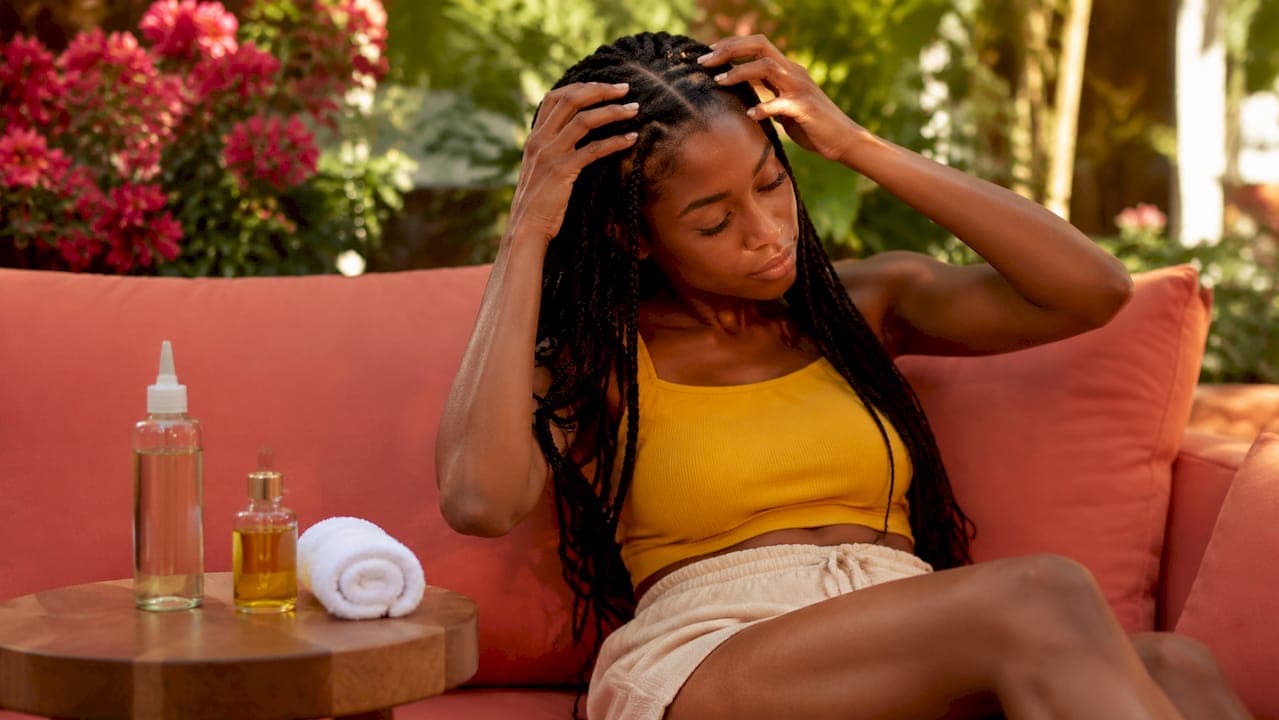
A knotless braid scalp massage is a targeted technique that stimulates blood circulation, maintains scalp health, and supports hair growth during protective style wear. Unlike traditional braids, knotless braids use a tension-free feed-in method that distributes weight more evenly from root to tip. That gentler installation makes scalp access easier and scalp massage more effective. This guide covers the right oils, step-by-step massage techniques, cleansing routines, and the most common mistakes to avoid. Whether you are new to protective styles or a seasoned braid wearer, this knotless braid scalp massage guide gives you everything you need to keep your scalp healthy and your style lasting longer.
What tools and products do you need for scalp massage?
The right products make or break your scalp care routine under knotless braids. Heavy butters, petroleum-based products, and thick creams clog pores and cause buildup along the part lines. Lightweight, non-comedogenic oils are the standard choice because they absorb quickly without suffocating the scalp.
The best oils for scalp massage under knotless braids are:
- Jojoba oil: Closely mimics the scalp's natural sebum. It absorbs fast and does not leave a greasy residue.
- Grapeseed oil: Extremely lightweight with a high smoke point. Ideal for people with fine or low-porosity hair.
- Sweet almond oil: Rich in vitamins E and D. Softens the scalp and reduces flakiness without heaviness.
Knotless braids last 6–8 weeks with routine care that includes scalp oiling every 2–3 days using these lightweight oils. Consistent oiling at that frequency keeps the scalp moisturized without triggering buildup.
Beyond oils, your tools matter just as much. A nozzle-tip applicator bottle lets you deliver oil directly to each part line with precision. Finger pads, not nails, are the only safe contact point for massaging the scalp under braids. A spray bottle filled with diluted sulfate-free shampoo rounds out your toolkit for cleansing days.
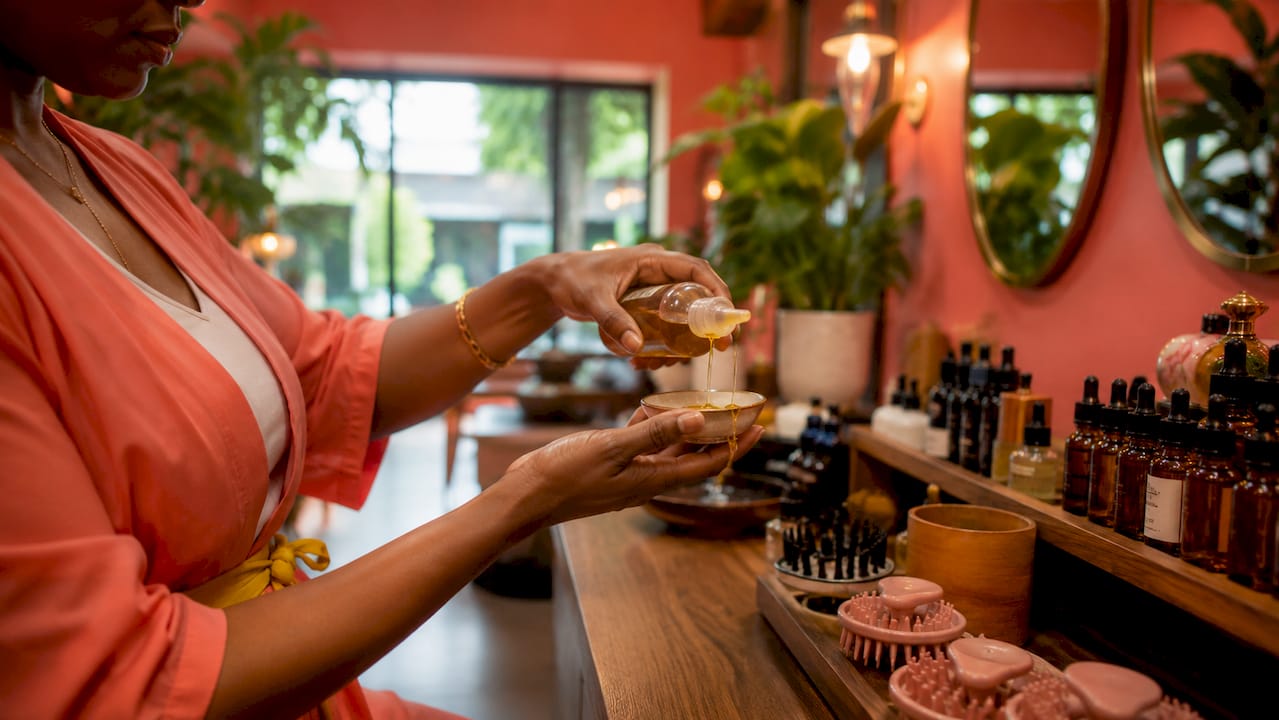
Pro Tip: Fill your applicator bottle with a blend of jojoba and grapeseed oil. The combination gives you moisture and fast absorption in one step, so you spend less time on application and more time on the massage itself.
How to perform a scalp massage with knotless braids
Scalp massage under knotless braids follows a specific method to protect both your hair and your style. Gentle circular motions with fingertips stimulate circulation and relieve tension without risking breakage or irritation. The goal is to move the scalp, not the braids.
Follow these steps for a safe and effective session:
- Part your hair mentally into sections. Work from the front hairline to the nape so you cover every part line without missing spots.
- Apply oil directly to each part line. Hold your nozzle-tip bottle close to the scalp and squeeze a small amount along each parting. Less is more here.
- Place your fingertips flat on the scalp. Use the pads of your fingers, never your nails. Nails scratch the scalp and create micro-injuries that lead to irritation.
- Massage in small, slow circular motions. Apply light pressure and move the scalp in circles roughly the size of a quarter. Spend 30–60 seconds per section.
- Work toward the nape and edges. The hairline and nape are high-tension areas. Give them extra attention, but keep the pressure gentle.
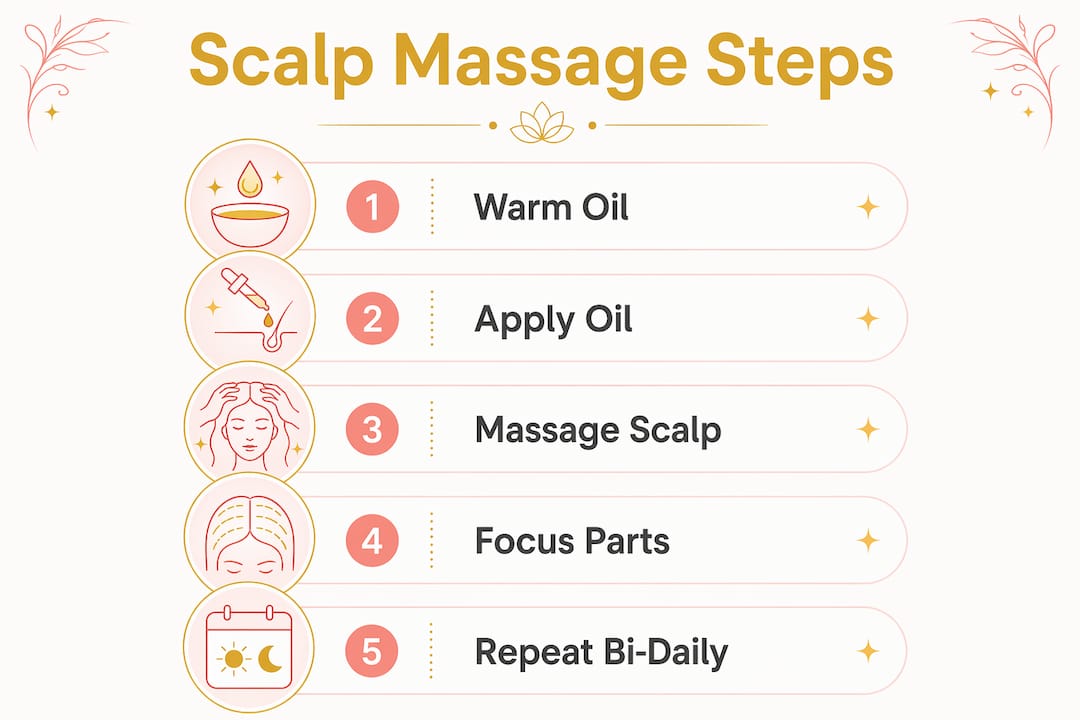
- Repeat every 2–3 days. This frequency keeps the scalp hydrated and circulation active without over-saturating the hair with product.
Precision nozzle-tip bottles preserve braid integrity while delivering oil exactly where it needs to go. Applying oil to the braid length instead of the scalp is one of the most common errors. It adds no scalp benefit and makes braids look dull and greasy.
Pro Tip: Warm your oil bottle between your palms for 30 seconds before applying. Warm oil spreads more evenly along the part line and absorbs faster into the scalp.
How does scalp cleansing support your massage routine?
Scalp massage works best on a clean scalp. Product buildup blocks the benefits of oiling and can worsen itchiness even when you are massaging regularly. Bi-weekly washing with diluted sulfate-free shampoo focused on the scalp only is the industry standard for knotless braid care.
Here is how to structure your cleansing routine:
- Dilute your shampoo. Mix sulfate-free shampoo with water in a spray or nozzle bottle at roughly a 1:3 ratio. This reduces the risk of drying out your scalp or causing frizz in the braids.
- Target the scalp only. Spray or squeeze the diluted shampoo directly onto your part lines. Do not scrub the braids themselves.
- Massage gently with fingertips. Use the same circular motion from your oiling routine. This lifts buildup without disturbing the braid pattern.
- Rinse thoroughly. Incomplete rinsing leaves shampoo residue, which causes more itching than the buildup you were trying to remove.
- Squeeze out excess water. Press gently along each braid from root to tip. Do not wring or twist.
- Air dry completely. Sitting under a hooded dryer or allowing full air drying prevents mildew and odor under the braids.
The table below shows how to distinguish between the two most common scalp complaints and what each one needs:
| Symptom | Likely Cause | Correct Response |
|---|---|---|
| Tight, flaky, itchy scalp | Dry scalp | Apply lightweight oil to part lines |
| Itchy with visible white or gray buildup | Product buildup | Cleanse with diluted sulfate-free shampoo |
| Persistent itching after oiling | Over-oiling | Skip oil, cleanse scalp thoroughly |
| Odor or dampness under braids | Incomplete drying | Air dry fully before styling or covering |
Consistent bi-weekly cleansing prevents buildup that can negate the benefits of your scalp massage and oiling routine. Skipping wash days is the fastest way to undo the work you put into daily care. For a deeper look at scalp care strategies that work alongside protective styles, Afromagicbraiding's blog covers the full picture.
What mistakes should you avoid during scalp massage?
Most scalp problems under knotless braids come from a small set of repeated errors. Catching them early protects both your scalp and the longevity of your style.
- Over-oiling. Applying too much oil traps dirt and particles on the scalp, worsening itchiness and causing buildup. A few drops per part line is enough. More is not better.
- Using your nails. Scratching with nails creates small wounds on the scalp. Those wounds become entry points for bacteria and lead to soreness or infection.
- Oiling the braid length instead of the scalp. Oil on the braid shaft adds no moisture to your scalp. It makes braids look greasy and attracts lint.
- Skipping cleanse days. Oiling without cleansing creates layers of product that sit on the scalp. After two weeks without a wash, even the best oil routine stops working.
- Confusing dry scalp with buildup. Dry scalp needs oil; a dirty scalp needs cleansing. Adding oil to a scalp full of buildup makes the problem worse, not better.
"Targeted, minimalist scalp care focused on part lines is more effective than heavy, frequent product usage." — Black Beauty Basics
If itching persists after two full cleanse and oil cycles, the braids may be installed too tightly. Excessive tension at the root is a sign that your scalp needs relief. Loosening the style or removing it early is always the right call over pushing through pain. Tension-free braiding at installation reduces this risk from the start.
Key Takeaways
Scalp massage under knotless braids works only when you pair the right lightweight oils with a consistent cleansing routine and proper fingertip technique.
| Point | Details |
|---|---|
| Oil every 2–3 days | Apply jojoba, grapeseed, or almond oil directly to part lines using a nozzle-tip bottle. |
| Use fingertip pads only | Massage in small circular motions with finger pads, never nails, to avoid scalp injury. |
| Cleanse bi-weekly | Dilute sulfate-free shampoo and target the scalp only, then air dry completely. |
| Know dry vs. buildup | Dry scalp needs oil; product buildup needs cleansing. Treating them the same worsens both. |
| Avoid over-oiling | A few drops per part line is enough. Excess oil traps dirt and causes more itching. |
What I have learned from years of braid care
After working with hundreds of clients at Afromagicbraiding, the pattern I see most often is this: people either do too much or too little. They drown their scalp in castor oil every day, then wonder why their braids look weighed down and their scalp still itches. Or they skip care entirely for two weeks and expect a single wash to fix everything.
The truth is that knotless braids are gentler on the scalp because of the feed-in technique. That gentleness gives you better scalp access than almost any other protective style. Use that access wisely. A small amount of jojoba oil and three minutes of circular massage every other day does more for your hair growth than any heavy product applied daily.
The other thing I always tell clients: your scalp care routine starts at installation. Braids installed with too much tension at the root make every massage session a battle against discomfort. When the foundation is right, the maintenance is easy. That is why I believe professional installation and at-home care are not separate things. They are two halves of the same routine.
— Afro
Healthy scalp, beautiful braids: Afromagicbraiding has you covered
Your at-home routine is only as strong as the foundation beneath it. At Afromagicbraiding, every knotless braid installation uses a tension-free feed-in technique designed to protect your scalp from day one. Our stylists work with your hair's natural texture to create styles that are both beautiful and kind to your roots.

When your braids are installed with care, your scalp massage routine becomes far more effective. You spend less time troubleshooting and more time enjoying your style. Browse our knotless braid services to see what expert installation looks like, or book your appointment and let us build the right foundation for your scalp health journey.
FAQ
How often should I oil my scalp with knotless braids?
Oil your scalp every 2–3 days using a lightweight, non-comedogenic oil like jojoba or grapeseed. Apply directly to the part lines with a nozzle-tip bottle for best results.
What is the best oil for knotless braid scalp massage?
Jojoba, grapeseed, and sweet almond oil are the top choices because they absorb quickly and do not clog pores. Avoid heavy butters or petroleum-based products under braids.
How do I wash my scalp without ruining my knotless braids?
Dilute sulfate-free shampoo with water in a spray bottle and apply it directly to your scalp every two weeks. Massage gently with your fingertips, rinse thoroughly, and air dry completely to prevent odor.
Why does my scalp still itch after oiling?
Persistent itching after oiling usually signals product buildup, not dryness. Cleanse your scalp with diluted sulfate-free shampoo before resuming your oil routine.
Can scalp massage damage knotless braids?
Scalp massage is safe when done correctly. Use the pads of your fingers in small circular motions and avoid tugging the braids or using your nails, which can cause scalp irritation and braid frizz.