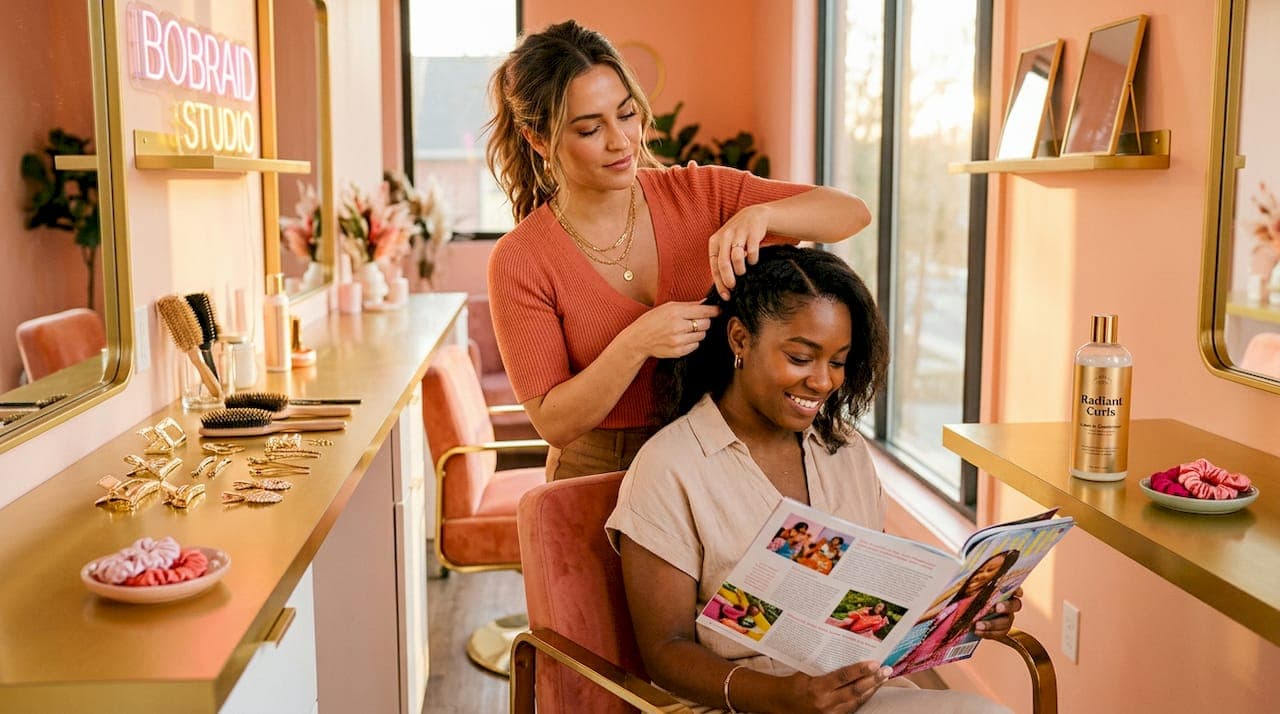
Braids have a reputation problem. Many people assume that getting braids automatically means dealing with scalp soreness, thinning edges, or hair loss down the line. That reputation is earned by tight installations, not braiding itself. What is tension-free braiding? It's the technique that separates protective styling from damaging styling. By removing the traditional tight root knot and feeding extensions in gradually, tension-free hair braiding keeps your scalp comfortable, your edges intact, and your follicles healthy. This article breaks down exactly how it works, why it matters, and what you need to do to get it right.
Table of Contents
- Key takeaways
- What is tension-free braiding?
- The real benefits of tension-free braiding
- How to tension-free braid: techniques and best practices
- Caring for your hair while wearing tension-free braids
- My experience with tension-free braiding
- Experience expert tension-free braiding at Afromagicbraiding
- FAQ
Key takeaways
| Point | Details |
|---|---|
| No root knot, less pull | The feed-in method starts with natural hair, adding extensions gradually to reduce scalp tension. |
| Traction alopecia is preventable | Choosing tension-free styles significantly lowers the risk of follicle damage from mechanical pulling. |
| Stylist skill determines results | Not all knotless braids are low-tension. Technique quality directly affects your scalp comfort. |
| Wear time matters | Plan to remove braids by 6 to 8 weeks to prevent cumulative scalp stress and breakage. |
| Scalp care extends the benefits | Daily moisturizing and monitoring for discomfort keep your hair healthy throughout the wear period. |
What is tension-free braiding?
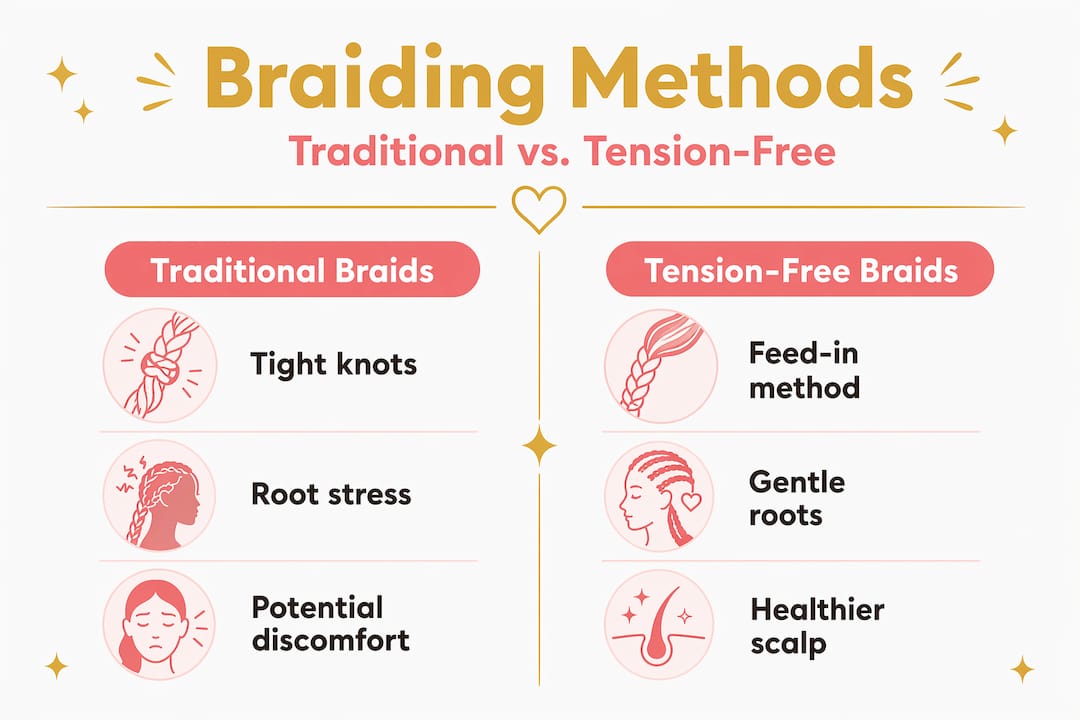
Tension-free braiding is a method of installing braids without the concentrated pulling force that traditional techniques create at the scalp. The defining feature is the absence of an anchor knot at the root. In traditional box braids, a stylist ties an extension directly to your natural hair at the base, creating a tight knot that tugs on your follicles from day one. Tension-free braiding, most commonly executed through the knotless feed-in technique, works differently from the ground up.
With the feed-in approach, your stylist begins with your natural hair and slowly incorporates small sections of braiding extension as the braid moves down its length. Because the weight is distributed gradually along the braid rather than stacked at the root, the scalp experiences far less strain. The result feels noticeably different. There is no tight bump at the base, no immediate soreness after sitting down, and no sharp pulling when you move your head.
Here is a quick comparison so you can see exactly where the difference lives:
| Feature | Traditional box braids | Tension-free braiding |
|---|---|---|
| Root foundation | Tight anchor knot | Starts with natural hair, no knot |
| Extension entry | All at once at the root | Fed in gradually along the braid |
| Weight distribution | Concentrated at scalp base | Spread along braid length |
| Scalp feel after install | Often tight, sometimes sore | Comfortable, low pressure |
| Edge stress | High, especially at hairline | Significantly reduced |
Pro Tip: Ask to touch the base of one test braid before your stylist completes a full section. If you feel a hard knot or immediate tightness, speak up before the entire install is done.
The real benefits of tension-free braiding
Understanding what is hair braiding style at its healthiest means looking at what happens to your follicles over time. Tight braids and prolonged wear contribute to traction alopecia, a form of progressive hair loss caused by repeated mechanical tension on the hair shaft and follicle. The damage can become irreversible if the tension continues without relief.
Tension-free hair braiding directly addresses this risk. The benefits go beyond simple comfort.
- Edge and hairline protection. The temples and edges are the most vulnerable areas during braiding. Without a tight anchor knot, the feed-in method dramatically reduces pulling at these delicate zones.
- Lower traction alopecia risk. Medical guidance consistently points to looser styles and timely removal as the primary prevention strategy. Tension-free techniques align directly with that advice.
- Natural scalp movement. Tight braids restrict the scalp's natural flexibility. With tension-free installations, you retain more scalp mobility, which supports healthy circulation to the follicles.
- Lightweight comfort throughout wear. Because extensions are added in smaller increments, the braid itself tends to feel lighter and move more naturally.
- Versatility in styling. The softer, more flexible base of a knotless braid makes it easier to explore protective braid types without worrying about compounding scalp stress.
"Tension-free braiding is not just a style preference. It is a preventive measure that protects your hair follicles from the mechanical damage that tight styling causes over time."
In 2026, celebrity stylists are championing effortless, lived-in braids over precision-tight installations, signaling a broader cultural shift toward honoring natural hair's needs rather than forcing it into rigid shapes. This is the direction healthy braiding has always been heading.
How to tension-free braid: techniques and best practices
Knowing what tension-free braiding is and actually getting a proper installation are two different things. The benefits of tension-free braiding only show up when the technique is executed correctly. Not all knotless braids automatically guarantee low tension. A stylist can still braid tightly even without a traditional knot, especially if they rush or add too much extension hair at once. Here is how to approach installation the right way.
-
Start with small natural hair sections at the root. Your stylist should begin the braid using only your natural hair. This is what sets the tone for the entire braid. If extensions are introduced before the braid has established itself from your roots, tension concentrates immediately.
-
Feed in extensions in thin, gradual increments. Small pieces of extension hair should be added every inch or two as the braid descends. This gradual extension feed-in is what keeps weight distributed and the scalp free from localized pulling.
-
Communicate about hairline and temple sensitivity. The hairline deserves special attention. Ask your stylist to braid the perimeter rows with lighter tension than the interior sections. Most damage begins at the edges because stylists apply uniform tightness across the entire head.
-
Choose the right braid size and extension weight. Larger braids use more extension hair, which increases overall weight at the root over time. If your hair is fine or your scalp is sensitive, pre-stretched braiding hair reduces bulk and makes tension management easier.
-
Give real-time feedback during installation. A genuine tension-free installation depends on client feedback throughout the process. If something feels tight, say so immediately. A skilled stylist adjusts as they go.
Pro Tip: Before booking, ask your stylist directly: "Do you use a root knot, and how do you adjust tension at the hairline?" Their answer tells you a lot about their approach before you sit in the chair.
Caring for your hair while wearing tension-free braids
Getting the installation right is only half the work. How you care for your hair and scalp during the wear period determines whether those benefits of tension-free braiding actually translate into healthier hair over time.
Scalp moisturizing and cleaning remain necessary even with gentler braids. Build-up, dryness, and neglect create their own set of problems regardless of how well the braids were installed. Here is what consistent care looks like:
- Cleanse your scalp every one to two weeks. Use a diluted shampoo or a scalp cleanser applied directly between the parts. Massage gently with your fingertips, never with your nails. Rinse thoroughly so no residue sits on the scalp.
- Moisturize daily. A lightweight oil like jojoba or sweet almond oil applied directly to the scalp and along the braids prevents dryness without causing build-up.
- Protect at night. Sleep in a satin or silk bonnet to reduce friction on the braids and minimize edge stress while you rest. This small habit makes a visible difference over weeks.
- Know the warning signs. Persistent tenderness, redness along the hairline, or small bumps near the roots signal that tension may be causing irritation. Early loosening or removal gives your follicles the best chance to recover.
- Plan your removal timeline. Knotless braids typically last 4 to 8 weeks. Wearing them longer, even with a gentle installation, allows natural new growth to create its own tension at the base. Build a removal date into your plan from day one.
For additional tips on keeping your scalp in top condition between appointments, the scalp care guide for braided hair at Afromagicbraiding covers exactly what you need.
My experience with tension-free braiding

I've worked with enough clients to know that the biggest misconception about tension-free braiding is that it's just a buzzword. People hear "knotless" and assume that automatically means safe. It doesn't. I've seen knotless braids installed so tightly that clients were back within two weeks with edge thinning and soreness. The technique is only as good as the hands performing it.
What I've learned is that the feed-in method, done properly, genuinely changes the relationship between braids and scalp health. Clients who had always accepted post-install soreness as normal are often surprised that it doesn't have to be that way. That shift in expectation is powerful.
The other thing I've noticed is that many people feel uncomfortable speaking up during their appointment. They don't want to seem difficult or waste the stylist's time. But tension-free braiding requires that conversation. A good stylist welcomes it. If yours doesn't, that tells you something worth knowing before the braids are finished.
Protecting your hair is not just about choosing the right style. It's about understanding how your style is put in, how long you wear it, and how you care for it between appointments. Every braid tells a story. Make sure yours is one of strength.
— Afro
Experience expert tension-free braiding at Afromagicbraiding
If you've done the research and you're ready to experience tension-free hair braiding done properly, Afromagicbraiding is where that happens. Based in Southfield, Michigan, the team specializes in knotless and tension-free braid styles, using techniques that prioritize your scalp's health from the first section to the last.
Browse the braid style portfolio to see the range of styles available, from classic knotless braids to Fulani-inspired and boho looks, all installed with care for your edges and your comfort. Real client results and honest reviews are there to show you what proper technique produces. When you're ready to book, schedule your appointment and come in for a personalized consultation. Your hair deserves an installation that protects it, not one it has to recover from.
FAQ
What is tension-free braiding in simple terms?
Tension-free braiding is a technique that installs braids without a tight anchor knot at the root. Extensions are added gradually using a feed-in method, distributing weight along the braid and significantly reducing scalp pulling.
How does tension-free braiding differ from regular box braids?
Traditional box braids use a tight knot to attach extensions directly at the scalp base. Tension-free braiding starts with natural hair at the root and feeds extensions in slowly, eliminating the concentrated tension that tight knots create.
Can tension-free braids prevent traction alopecia?
Yes. Since tight braids and prolonged wear are the primary causes of traction alopecia, tension-free installations paired with timely removal significantly reduce the risk of follicle damage.
How long should you keep tension-free braids in?
Most professionals recommend wearing them for 4 to 8 weeks. Even gentle braids can cause cumulative scalp tension if left in too long, especially as new hair growth creates pressure at the base.
Are all knotless braids the same as tension-free braids?
Not exactly. Knotless braids use the feed-in technique, but the quality of the tension still depends on the stylist's skill. A poorly executed knotless install can still be uncomfortably tight.