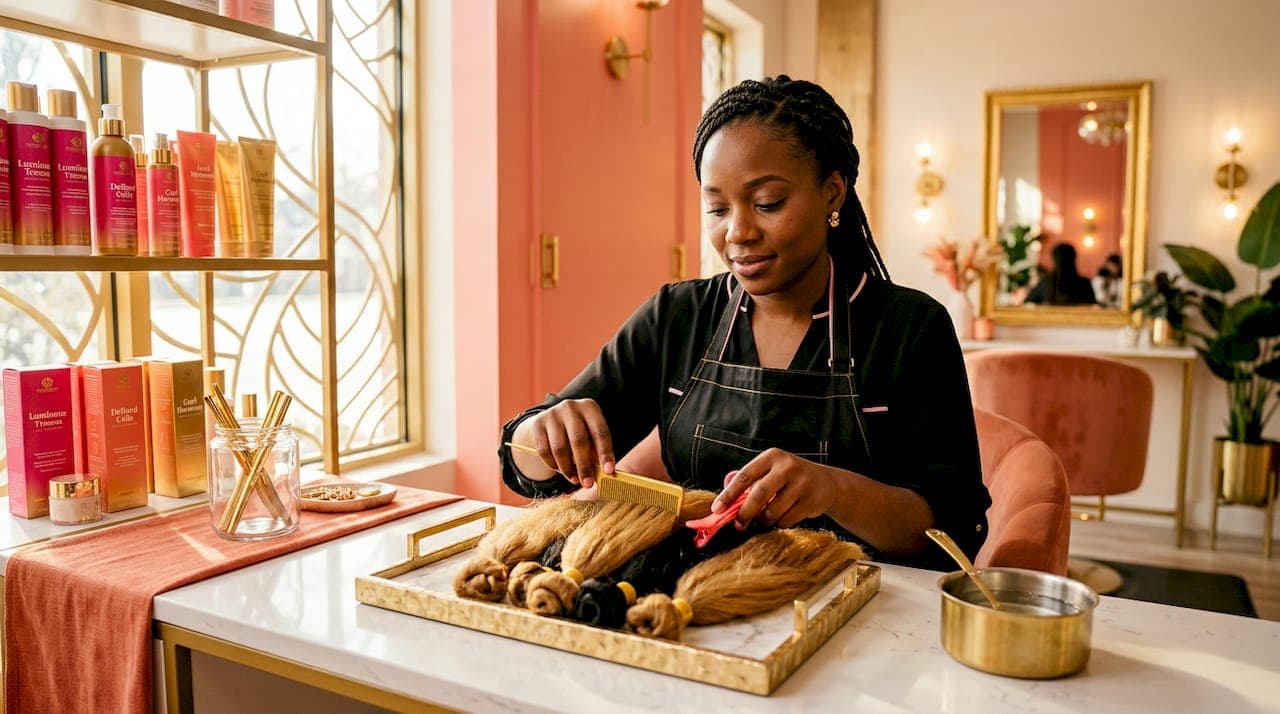
If you've ever spent an hour separating and stretching braiding hair before even starting a single braid, you already understand why the explanation of pre-stretched braiding hair matters. This hair type changes the entire prep process, and not just a little. Pre-stretched braiding hair arrives ready to use, with tapered ends and consistent texture built right in. For anyone pursuing protective hairstyles, that difference in comfort, speed, and finish quality is significant. Here's everything you need to know before your next install.
Table of Contents
- Key takeaways
- What pre-stretched braiding hair actually is
- Benefits of pre-stretched hair for protective styles
- Pre-stretched vs. regular braiding hair
- Safety considerations with synthetic braiding hair
- How to choose and use pre-stretched hair for your style
- My honest take after years of working with pre-stretched hair
- Experience professional braiding at Afromagicbraiding
- FAQ
Key takeaways
| Point | Details |
|---|---|
| Pre-stretched hair is ready to use | It comes out of the package with feathered ends and consistent texture, requiring minimal prep work. |
| Scalp comfort is a real benefit | Tapered ends and even distribution reduce pulling and tension during installation. |
| Safety is a separate conversation | Pre-stretched status does not guarantee contaminant-free hair. Always check for certified low-contaminant products. |
| Pre-stretched vs. regular has trade-offs | Regular hair offers more flexibility for certain styles but requires more manual prep time. |
| Choosing the right product matters | Fiber type, texture, and color all affect how your finished style looks and how long it lasts. |
What pre-stretched braiding hair actually is
Pre-stretched braiding hair is synthetic hair stretched in advance with feathered, tapered ends that make it ready to braid straight out of the package. That sounds simple, but it represents a real shift from what most people expect braiding hair to require.
Traditional synthetic braiding hair comes in bundles where all the strands are roughly the same thickness from root to tip. You typically need to stretch it by hand, using tension or sometimes hot water, before it integrates smoothly into your natural hair. Pre-stretched hair skips that step entirely. The manufacturer does the stretching during production, and the result is a bundle where the ends gradually thin out, mimicking the natural taper of real hair.
The fibers themselves are usually Kanekalon or Toyokalon synthetic material, both known for their lightweight feel, tangle resistance, and ability to tolerate heat up to around 250°F. These characteristics make them excellent choices for protective styling because they hold shape without weighing down your natural strands.
Here's what makes pre-stretched hair distinct from regular braiding hair:
- Tapered ends. The ends of each bundle are thinner and feathered, which creates a cleaner finish at the tips of your braids without extra trimming.
- Consistent strand thickness. The stretching process evens out the hair, so you get uniform tension across your entire install.
- Ready-to-use format. Pre-stretched hair eliminates manual stretching or hot water prepping before installation.
- Heat-resistant fiber. Many pre-stretched formulas maintain their texture after heat sealing, which keeps those feathered ends neat throughout the life of the style.
Pro Tip: When opening a new bundle of pre-stretched hair, separate the strands gently by holding the top of the bundle and shaking it downward. Pulling aggressively will disrupt the taper and undo some of the benefits.
Benefits of pre-stretched hair for protective styles
The benefits of pre-stretched hair go beyond convenience. They directly affect how your scalp feels, how long your style lasts, and how natural your braids look when they're done.
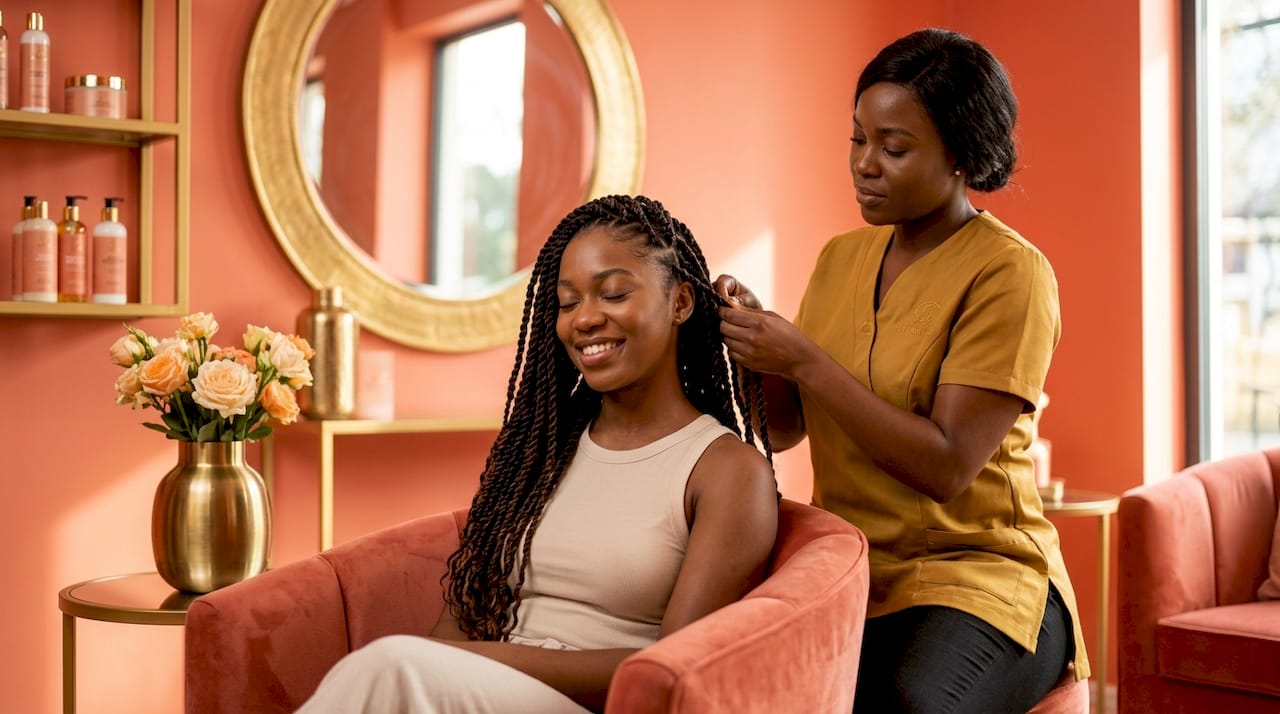
Scalp comfort is one of the biggest reasons people make the switch. Because pre-stretched hair is already even in texture and tension, there's less pulling and tugging at the roots during installation. Pre-stretched hair reduces scalp tension and discomfort compared to traditional braiding hair, and that matters a lot for people who wear protective styles frequently. Repeated tension at the hairline and edges is one of the leading contributors to traction alopecia, so anything that reduces that force is worth paying attention to.
Time savings are also real. A standard four-hour braiding session can feel significantly shorter when you're not stopping to stretch and prep every new section of hair. Professional stylists and DIY braiders both benefit from this.
The aesthetic improvements deserve mention too. Feathered ends create a softer, more natural finish at the tips of each braid. You get less of that blunt, thick-ended look that can make synthetic styles feel obviously synthetic. That subtlety makes a difference, especially for styles like knotless or feed-in braids where a seamless blend is the entire point.
Here are the key advantages to keep in mind:
- Faster installation. No manual stretching means less prep time per section.
- Softer finish. Tapered ends blend more naturally with your real hair.
- Less scalp discomfort. Even tension across the bundle reduces pulling at the root.
- Reusable potential. Quality pre-stretched hair can often be worn, removed carefully, and reused for a second install if maintained well.
- Styling versatility. Pre-stretched hair comes in textures and colors ranging from silky straight to kinky coily, plus hybrid blends that incorporate human hair for heat styling flexibility.
Pro Tip: For styles that require sealed ends like box braids, dip the tips briefly in warm water rather than using open flame. This protects the fiber and keeps the taper intact longer.
Pre-stretched vs. regular braiding hair
Choosing between the two comes down to your goals, your skill level, and the specific style you want. Neither is universally better. They just serve different purposes.
| Feature | Pre-stretched hair | Regular braiding hair |
|---|---|---|
| Prep time | Minimal, ready to use | Requires manual stretching |
| End finish | Feathered, tapered naturally | Blunt, requires trimming or shaping |
| Scalp tension | Lower, more even distribution | Can be higher if not stretched properly |
| Styling flexibility | Good for most protective styles | More customizable for specialty textures |
| Cost | Slightly higher per bundle | Generally more affordable |
| Reuse potential | Good with proper care | Varies depending on prep method |
| Best for | Beginners and time-conscious stylists | Experienced braiders with specific texture needs |
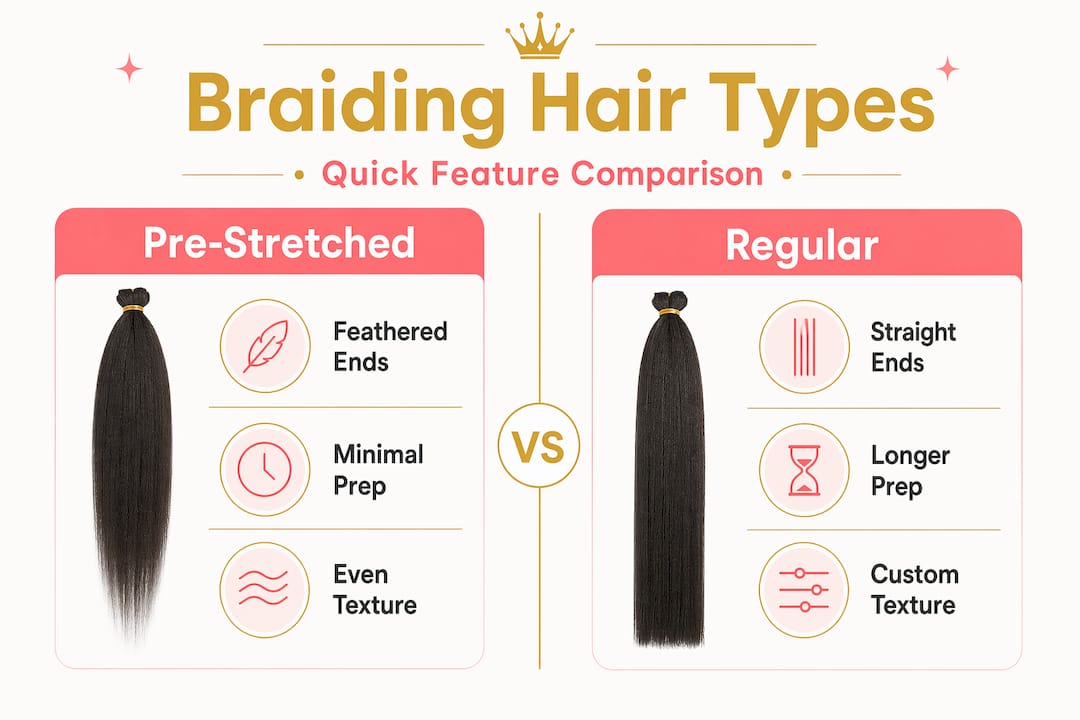
Regular braiding hair gives you more control when you need a very specific texture or want to blend multiple fiber types in a custom way. Experienced stylists often prefer it for intricate work where they want to hand-manipulate each section. Pre-stretched hair, on the other hand, is the better choice for scalp-healthy protective styling, faster installs, and cleaner-looking results with less technical effort required.
Safety considerations with synthetic braiding hair
Here's something that catches a lot of people off guard. Whether you choose pre-stretched or regular braiding hair, the fiber type carries the same potential exposure risks.
A 2026 Consumer Reports investigation found that lead was detected in 29 of 30 synthetic braiding hair products tested, and volatile organic compounds were found in all samples. That's a significant finding across the entire category, not just specific brands.
Consumer Reports researchers have called this a regulatory issue, noting that stronger industry oversight and consumer awareness are needed to address the widespread presence of contaminants in braiding hair products.
One product stood out as an exception: Dosso Beauty Hypoallergenic Kanekalon Fiber braiding hair showed no detectable heavy metals in testing. That's the kind of certified, low-contaminant option worth seeking out if scalp and skin safety are priorities for you.
You can reduce your exposure with a few practical habits:
- Work in ventilated spaces. Open windows or use a fan when installing braids to disperse any airborne particles.
- Avoid burning the hair ends. Using heat tools or open flame on synthetic fibers releases VOCs directly into the air you're breathing. Avoiding boiling water or burning hair reduces inhalation risk.
- Never hold hair in your mouth. This is a common habit during braiding but creates direct skin and mucous membrane contact with potentially contaminated fibers.
- Wash your hands after handling. Especially before touching your face or eating.
- Prioritize certified products. Look for brands that disclose testing results or specifically advertise hypoallergenic or heavy-metal-free formulations.
Scalp safety and styling convenience are two separate decisions. You can enjoy all the benefits of pre-stretched hair while still being selective about which brand you choose.
How to choose and use pre-stretched hair for your style
Getting the most out of pre-stretched braiding hair means matching the product to your specific hair type, style goal, and maintenance routine. Here's a practical sequence for making the right choices.
-
Assess your natural hair texture first. Coarser textures pair best with kinky or Afro-textured pre-stretched hair for a seamless blend. Looser curl patterns may work well with wavy or silky options. Choosing a fiber texture that mirrors your natural hair reduces the contrast between your roots and the extension hair.
-
Select the right length and color. Pre-stretched hair is available in lengths from about 24 inches to 36 inches or longer. Consider how the finished braid length will compare to the installed length since braids typically shorten the visual length by about one-third. For color, a shade or two darker than your natural hair often looks more natural than a perfect match.
-
Check the bundle before you install. Gently separate strands to confirm the taper is even throughout. Bundles with tangled midpoints or abrupt thickness changes will create uneven tension during braiding.
-
Use a light tension-free technique during install. For styles like knotless braids, feed in the pre-stretched hair gradually rather than all at once. This distributes weight more evenly and protects your edges.
-
Moisturize your scalp weekly. Pre-stretched styles can last four to eight weeks, and scalp health during that time matters. Use a lightweight oil or spray to keep your scalp hydrated without causing buildup on the fibers.
-
Store unused hair properly. Leftover pre-stretched hair stored in a cool, dry place with the bundle intact can be used for touch-ups or future installs.
Pro Tip: Before installing, do a quick test: take a small section of the pre-stretched hair and feel how it lays against your natural hair. If it blends smoothly with minimal effort, you've chosen the right texture.
My honest take after years of working with pre-stretched hair
I've worked with both pre-stretched and regular braiding hair extensively, and my perspective has shifted significantly over time.
What changed my approach wasn't the convenience, though that matters. It was watching clients come back after a style with less scalp irritation and healthier edges. That's when I realized pre-stretched hair isn't just a time-saver. It's a tool for protecting the client's actual hair health over the long term.
The mistake I see most often is people selecting pre-stretched hair based on price alone. They pick the cheapest bundle without checking fiber quality or safety disclosures. Given what the 2026 Consumer Reports braiding hair findings revealed about contamination across the category, that habit is worth changing.
My personal recommendation is to use pre-stretched hair as your default for most protective styles, but always invest in a quality brand. And for clients with sensitive scalps or known skin reactions, I specifically look for hypoallergenic or certified low-contaminant options. Every braid tells a story about how well you took care of the hair beneath it.
— Afro
Experience professional braiding at Afromagicbraiding
At Afromagicbraiding, we've built our practice around protective styles that look stunning and feel comfortable from day one. Located in Southfield, Michigan, our salon uses premium pre-stretched braiding hair across a wide range of textures and colors to give you a finish that lasts and protects.
Whether you're ready to book your next install or just want to explore what's possible, our style portfolio shows the breadth of what we create with the right products and technique. From knotless braids to Fulani-inspired styles, every service is tailored to your hair's needs. Book your appointment and let us show you what quality protective styling really feels like.
FAQ
What is pre-stretched braiding hair?
Pre-stretched braiding hair is synthetic hair that has been stretched and tapered by the manufacturer, featuring feathered ends that make it ready to use directly from the package without manual prep.
Why pre-stretch hair before braiding?
Pre-stretching reduces scalp tension, creates a more natural-looking finish, and shortens installation time by eliminating the need to manually stretch each bundle before braiding.
Is pre-stretched hair safer than regular braiding hair?
Not necessarily. A 2026 Consumer Reports study found heavy metals in the majority of synthetic braiding hair products regardless of type. Look for certified hypoallergenic or low-contaminant brands for a safer option.
How long does pre-stretched braiding hair last in a style?
With proper scalp care and gentle handling, pre-stretched styles typically last four to eight weeks before needing to be redone or removed.
Can you reuse pre-stretched braiding hair?
Yes. Quality pre-stretched hair that has been carefully removed and stored in a cool, dry place can often be used for a second install or to touch up existing styles.