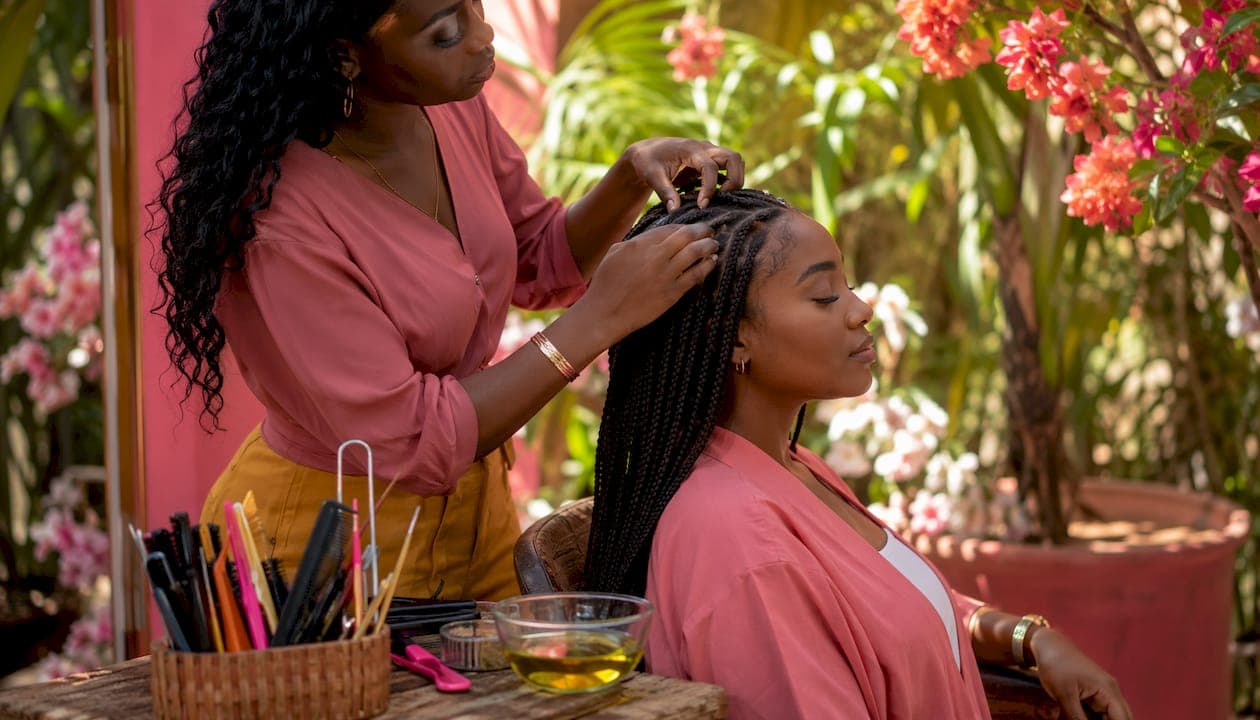
What causes scalp tension from box braids?
Box braids scalp tension is the mechanical stress placed on your hair follicles when braids are installed too tightly or weighed down by heavy extensions. Every braid anchored close to the scalp creates a pulling force on the follicle beneath it. The tighter the braid, the more sustained that force becomes, and your scalp has no way to release it on its own.
The biology is straightforward. Your hair follicles sit in a layer of tissue rich with nerve endings and small blood vessels. When a braid pulls that tissue repeatedly or continuously, it triggers inflammation, restricts circulation, and signals pain. Dermatologists confirm that tight braids cause follicular pustules, scalp sores, and, over time, traction alopecia. Knotless braids tend to reduce this risk because extensions are fed gradually into the braid rather than anchored all at once at the root.
The main causes of scalp tension during box braid installation and wear include:
- Braids pulled too tightly at the root during installation
- Heavy synthetic or human hair extensions adding downward pull on follicles
- Braids installed too close to the hairline or temples, where skin is thinner
- Wearing braids in tight buns or ponytails after installation, compounding existing tension
- Leaving braids in beyond the recommended wear period without rest
- Underlying scalp dryness or sensitivity that amplifies discomfort
Jojoba oil and similar lightweight carrier oils support scalp health during wear by maintaining moisture at the root. A hair steamer can open scalp pores and help relax braid tension after installation. Both are practical tools for managing the stress that box braids place on your scalp.
Table of Contents
- How do you recognize the symptoms of scalp tension?
- Practical ways to relieve scalp tension after getting braids
- When should you remove box braids to protect your scalp?
- How to prevent scalp tension with your next box braid install
- Expert insights on scalp health and tension-free braiding
- Scalp-safe braiding at Afromagicbraiding in Southfield, Michigan
- Key Takeaways
How do you recognize the symptoms of scalp tension?
Pain is the most direct signal, but scalp tension from box braids shows up in several ways before it becomes serious. Knowing the difference between normal post-install soreness and genuinely damaging tension can protect your follicles long term.
Common symptoms to watch for:
- Scalp pain or throbbing that persists beyond 48 hours after installation
- Tension bumps or follicular papules, which are small, raised, inflamed bumps along the hairline or scalp
- Redness, tenderness, or warmth at the braid roots
- Dry, flaky skin under the braids indicating moisture loss and irritation
- Localized headaches concentrated at the crown, temples, or nape
- A crawling or tingling sensation across the scalp
Normal soreness typically fades within one to two days as braids settle. Pain that intensifies, spreads, or produces visible bumps is a warning that tension has crossed into damaging territory.
Pro Tip: External-traction headaches from tight hairstyles feel different from common tension headaches. A traction headache is localized exactly where the hair is pulled, such as the crown or temples, and usually eases within an hour of loosening the style. A typical tension headache wraps around the whole head. If your headache disappears when you let your braids down, tight installation is the cause.

Practical ways to relieve scalp tension after getting braids
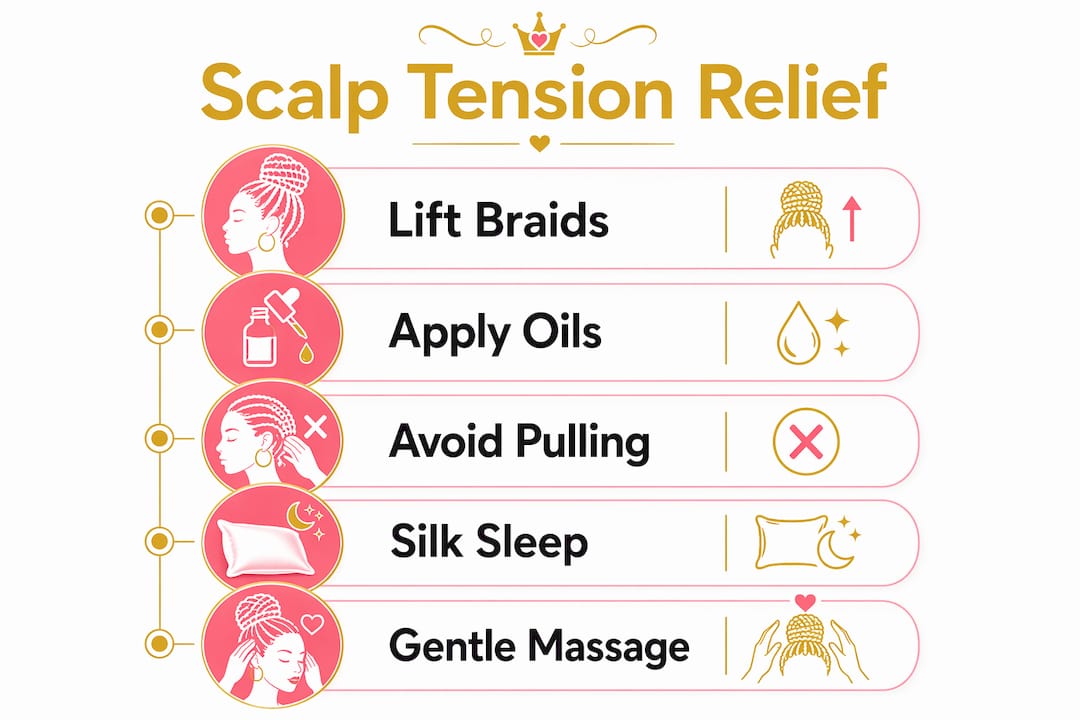
Relief starts the same day you leave the salon. The goal is to reduce the pulling force on your follicles without disturbing the style or soaking the hair so thoroughly that it risks mildew.
Effective at-home relief methods:
- Massage your scalp gently with jojoba oil or a carrier oil blended with a few drops of tea tree or lavender oil, both of which have anti-inflammatory properties that ease irritation
- Run lukewarm water over your scalp in the shower for a few minutes while massaging lightly with your fingertips to loosen tension and boost circulation
- Use a hair steamer for 10–15 minutes to open scalp pores and help braids relax without soaking them through
- Wear your braids down rather than pulling them into a bun or ponytail, which adds tension on top of tension
- Apply a lightweight, spray-on leave-in conditioner directly to the scalp to hydrate the roots and soften the pull
For targeted relief, the tail of a rat-tail comb is one of the most useful tools you have. Gently lift braid sections away from the scalp using the comb's thin end to create a small amount of space between the braid base and your skin. Work slowly and focus on the tightest spots.
Pro Tip: Never pull your braids outward to create relief. Pulling adds a second direction of mechanical stress on top of the existing downward pull, which can worsen follicular inflammation. Also, avoid soaking your braids completely. Hair that does not dry fully can develop mildew at the root, creating a new scalp problem on top of the tension.
Sleeping on a silk or satin pillowcase, or wrapping your braids in a silk scarf at night, reduces friction on already-stressed scalp tissue. For scalp care between washes, a lightweight hydrating scalp tonic applied before bed can work through the night to restore moisture.
When should you remove box braids to protect your scalp?
Timing matters more than most people realize. Dermatologists recommend wearing protective styles like box braids no more than six weeks at a time, and limiting installations to once or twice a year to reduce cumulative follicular stress. The six-to-eight-week window is the outer limit, not a target.
Remove your braids immediately if you notice any of the following:
- Persistent scalp pain that does not ease after 48–72 hours
- Visible scalp bumps, sores, or follicular pustules that are spreading
- Hairline thinning, recession, or broken hairs along the temples
- Scalp sores that feel warm or show signs of infection
- Pain so severe it disrupts sleep
Traction alopecia begins as reversible, non-scarring hair loss, but if the tension continues, it can progress to permanent scarring alopecia where follicles are destroyed and hair cannot regrow. Early removal is the single most effective intervention. After taking braids out, give your scalp a genuine rest period with a hot oil treatment or a soothing deep conditioner before your next install.
How to prevent scalp tension with your next box braid install
Prevention is far easier than recovery. The choices you make before and during installation determine how your scalp feels for the weeks that follow.
Best practices for a tension-free install:
- Request knotless braids, which feed extensions gradually into the braid and distribute weight more evenly than traditional box braids anchored at the root
- Choose lightweight, pre-stretched extensions to reduce the downward pull on follicles from the start
- Ask your stylist for medium to large braid sizes rather than very small braids, which require more individual anchor points and increase overall tension
- Tell your stylist before the appointment that you prefer looser tension, especially around the hairline and nape
- Speak up during installation. Pain during braiding is a direct signal to ease up, and it is far easier for a stylist to adjust in the moment than to redo finished sections
- Moisturize your scalp with jojoba oil or a suitable leave-in conditioner in the days before your appointment to reduce baseline dryness and sensitivity
- Avoid tight ponytails or buns for the first week after installation
Scalp health also benefits from factors beyond the salon chair. Stress causes scalp muscles to contract, which compounds the tension from braids. Regular scalp massage, stress management, and good posture all contribute to keeping your scalp loose and well-circulated between installs. For more detailed guidance on maintaining healthy braids, consistent care between appointments makes a real difference.
Expert insights on scalp health and tension-free braiding
Healthy braiding is a craft, not just a service. At Afromagicbraiding, the approach to every install centers on scalp integrity, not just the finished look.
Dermatological evidence supports a clear picture: traction alopecia is biphasic, meaning early-stage hair loss is reversible if tension is removed promptly, but chronic tension leads to scarring and permanent follicle destruction. That progression is entirely preventable with the right technique and communication.
Key expert-backed practices for healthy braiding:
- Communicate pain in real time during your appointment. Painkillers taken beforehand can mask follicular inflammation, leaving damage undetected until it is visible
- Use the rat-tail comb technique to gently lift tight sections rather than pulling braids for relief
- Apply a scalp-supporting oil blend between washes to maintain follicle health and reduce inflammation during wear
- Prioritize scalp massage after removal to restore circulation and prepare follicles for the next install
- Combine scalp care with stress management and ergonomic posture, since scalp tightness has multifactorial causes including muscle contraction from emotional stress and poor posture
- Rest the scalp fully between installs, allowing several weeks of recovery before the next appointment
Every braid tells a story, and the best ones are written with care for the scalp beneath them. Professional stylists who prioritize tension management are not just protecting your hair. They are protecting the follicles that make future styles possible.
Scalp-safe braiding at Afromagicbraiding in Southfield, Michigan
Tight braids and scalp pain should never be the price of a beautiful protective style. Afromagicbraiding in Southfield, Michigan, specializes in tension-free installation techniques, including knotless braids, that protect your scalp from the first braid to the last.

Every client at Afromagicbraiding receives a personalized consultation before installation, so your stylist knows your scalp sensitivity, preferred tension, and hair history before a single extension is added. The result is a style that looks stunning and feels comfortable from day one. Browse the braiding portfolio to see the quality of work firsthand, then book your appointment to experience scalp-safe braiding that honors both your hair and your heritage.
Key Takeaways
Scalp tension from box braids is preventable and reversible when caught early, but untreated tension can lead to permanent follicle damage.
| Point | Details |
|---|---|
| Tension source | Tight installation and heavy extensions place mechanical stress on hair follicles, causing pain and inflammation. |
| Wear duration | Dermatologists recommend wearing box braids no more than six weeks at a time, once or twice a year. |
| Relief methods | Jojoba oil massage, a hair steamer, and the rat-tail comb technique relieve tension without damaging the style. |
| Removal signals | Persistent pain beyond 48–72 hours, scalp bumps, or hairline thinning are signs to remove braids immediately. |
| Afromagicbraiding | Afromagicbraiding offers tension-free knotless braid installation in Southfield, Michigan, with personalized scalp consultations. |