
No-tension braids are protective hairstyles designed to eliminate scalp pulling by avoiding tight root anchoring and excessive extension weight. The industry term for this category is "low-tension protective styles," and understanding that distinction matters because not every braid marketed as protective actually qualifies. Your edges, hairline, and follicle health depend on the difference. This list of no-tension braids covers the most effective styles available, why each one works, and how to wear them without sacrificing the look you love.
Why choose no-tension braids: key benefits explained
Tight braids cause traction alopecia, a form of gradual hair loss triggered by repeated pulling at the root. Professional stylists confirm that low-tension braids should never cause immediate pulling or pain at installation. If your scalp hurts the same day you sit in the chair, that is a warning sign, not a sign of a thorough job.
No-tension protective hairstyles protect your edges by keeping the follicle free from constant mechanical stress. Edges are the most fragile part of your hairline because the hair there is finer and more vulnerable to breakage. Choosing styles that leave a small amount of slack at the braid base is the single most effective way to preserve them long term.
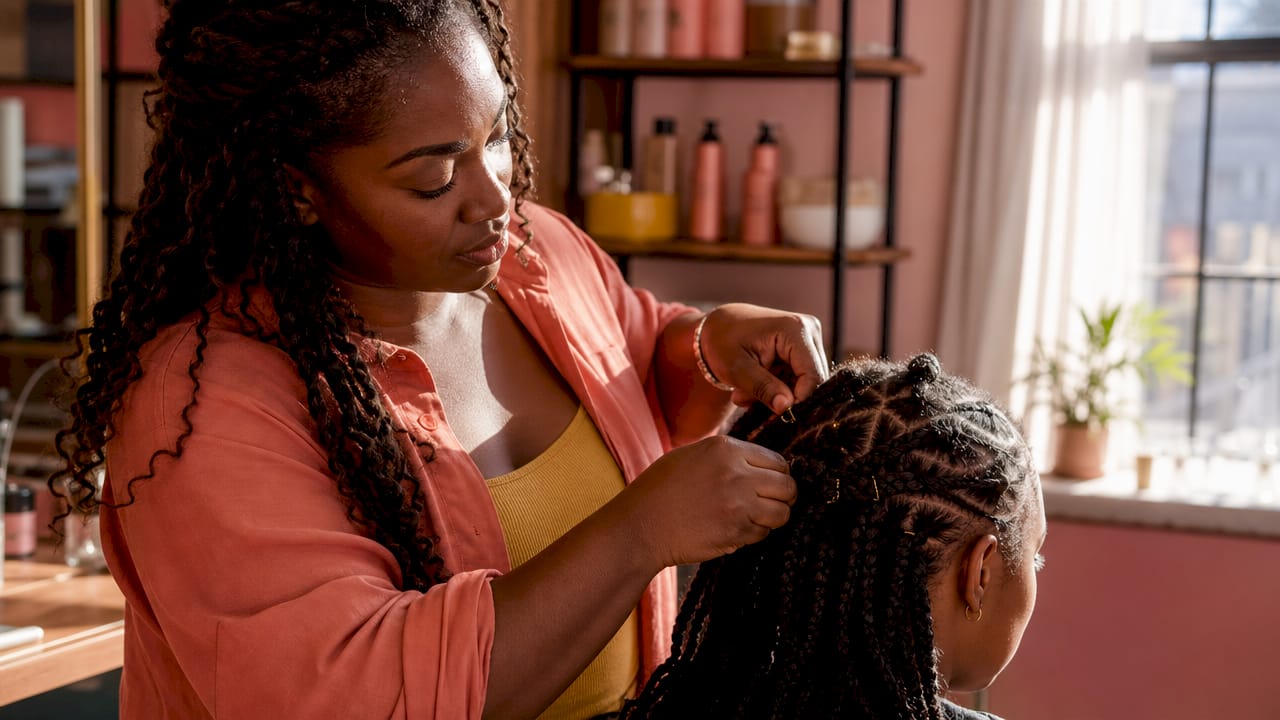
Comfort also extends wear time. Styles installed without excessive tightness are easier to sleep in, exercise in, and maintain. That translates directly to better hair retention over weeks of wear.
Benefits of no-tension braids at a glance:
- Reduced risk of traction alopecia and edge thinning
- Longer, more comfortable wear periods
- Better scalp access for cleansing and moisturizing
- Less breakage at the hairline and nape
- Improved scalp circulation when follicles are not compressed
Pro Tip: Ask your stylist to braid one section first, then check for immediate tightness before the full install begins. This simple step catches tension problems before they affect your entire head.
List of no-tension braids: top styles to try
1. Knotless braids
Knotless braids eliminate the tight root anchor of traditional box braids by feeding extension hair in gradually from the mid-shaft rather than knotting it at the scalp. That gradual feed-in technique is what makes them the gold standard of low-tension protective styles. They provide a comfortable wear time of 6–8 weeks and protect natural edges far better than their knotted counterparts. Afromagicbraiding specializes in this technique, and the difference in scalp feel is immediate.
2. Crochet braids
Crochet braids are consistently rated as having the lowest tension level among all braid styles. The method works by creating a cornrow base first, then looping pre-made extensions through with a crochet needle. Because individual strand braiding is eliminated, the mechanical stress on each follicle drops significantly. Crochet installations are also among the fastest to complete, which means less time in the chair and less cumulative scalp fatigue.
3. Loose box braids
Loose box braids follow the same sectioning pattern as traditional box braids but deliberately leave slack at the root. That small amount of give at the base is what separates a protective style from a damaging one. A neat braid does not require a tight start. Stylists who understand low-tension technique know how to keep the braid secure without pulling the follicle.
4. Passion twists
Passion twists use a soft, curly extension texture that reduces the rigidity typical of straight extension hair. Less rigid hair creates less resistance at the root, which means less pulling during installation and wear. The style also has a natural bounce that distributes weight more evenly along the length of each twist. For clients with sensitive scalps, passion twists are one of the most comfortable options available.
5. Flat twists
Flat twists use a two-strand rotation instead of the three-strand weave of traditional braids. That one-strand reduction lowers scalp strain considerably, making flat twists ideal for sensitive scalps and natural regrowth phases. They lie close to the head, which also reduces the gravitational pull of length and weight. Flat twists work especially well as a transitional style between heavier installs.
6. Loose cornrows
Loose cornrows follow the scalp in rows but are installed with deliberate lightness at the root. They rank as a low-tension protective style ideal for women with thinning edges or scalp sensitivity. The key is the stylist's hand pressure during installation. A skilled braider can create clean, defined cornrows without compressing the follicle.
7. Feed-in braids
Feed-in braids require gradual hair addition during installation to avoid lumps that mimic tight knots and create tension points. When done correctly, the braid starts with your natural hair and extension hair is added in small amounts as the braid progresses. Improper feed-in technique negates the benefits entirely by creating pressure points at the root. Choosing a stylist trained in this method is non-negotiable for getting the full protective benefit.
Pro Tip: For feed-in braids, request that your stylist start with a very small amount of extension hair at the root and increase gradually. This keeps the base flat and tension-free.
8. Half-up half-down braids
Half-up half-down braids reduce overall scalp tension by distributing weight across only part of the head at a time. Combining braided sections with loose hair lowers the total weight pulling on your hairline. This style also improves breathability and gives your scalp easier access for cleansing. It is a strong choice for active women who want a polished look without full-scalp commitment.
9. Low bun braids
Low bun braids gather braided sections into a bun positioned at the nape or lower back of the head. The low placement reduces gravitational pull on the hairline compared to high buns or ponytails. Braid weight and length matter here. Shorter styles like bobs reduce gravitational pull on hair roots significantly, and the same logic applies to keeping a bun low and compact.
10. Fulani-inspired braids
Fulani-inspired braids honor a rich West African braiding tradition and typically feature a center cornrow with side braids and decorative elements. When installed with a low-tension technique, they protect the hairline while celebrating cultural heritage. The center part distributes weight evenly on both sides of the scalp. Afromagicbraiding incorporates this style with a tension-free feed-in technique that keeps the look authentic and the scalp comfortable.
11. Bob braids
Bob braids are any braided style cut or installed to fall at chin or shoulder length. The shorter length directly reduces the weight pulling on each follicle. Stylists who work with clients experiencing edge thinning often recommend bob-length styles as a first step toward recovery. Less length means less tension, and less tension means faster regrowth.
Style comparison by tension level and wear time:
| Style | Tension level | Typical wear time |
|---|---|---|
| Knotless braids | Very low | 6–8 weeks |
| Crochet braids | Very low | 4–8 weeks |
| Flat twists | Low | 2–4 weeks |
| Loose cornrows | Low | 3–6 weeks |
| Passion twists | Low | 4–6 weeks |
| Feed-in braids | Low (when done correctly) | 4–8 weeks |
| Half-up half-down | Low | 3–5 weeks |
How installation and maintenance impact no-tension braid effectiveness
Stylist technique determines whether a low-tension style actually delivers its benefits. A knotless braid installed with too much extension hair at the root creates a lump that functions exactly like a knot, pulling the follicle just as hard. The style name alone does not guarantee a tension-free result.
Cornrow foundation tension must be adjusted in crochet styles to prevent scalp discomfort and allow long-term wear. Slightly loosened cornrows at the nape and temples improve comfort across the full 4–8 week wear period. These are the most sensitive areas of the scalp, and tight cornrows there cause the most noticeable discomfort.
Maintenance habits matter just as much as installation. Regular scalp cleansing keeps follicles clear and reduces inflammation that can make even low-tension styles feel uncomfortable over time. Learn scalp care strategies that support healthy hair while wearing braids, because a clean scalp is a comfortable scalp.
Signs your braids are too tight:
- Scalp pain or throbbing within the first 24 hours
- Small bumps or pimples along the hairline
- Visible lifting or puckering of skin at braid bases
- Headaches concentrated at the temples or nape
- Redness or tenderness when touching the scalp
Pro Tip: If your braids feel tight after installation, apply a warm towel to your scalp for 10 minutes. This relaxes the follicle and can reduce tension before it causes lasting damage. If pain persists beyond 48 hours, consult your stylist.
Proper sectioning also plays a major role in tension control. Clean, even sections distribute the weight of extensions across the scalp more evenly. Uneven sections create pressure points where more hair is anchored to a smaller patch of scalp. Read more about sectioning for tension control to understand how this step affects your overall comfort.
Selecting no-tension braids for your hair type and lifestyle
Women with sensitive scalps or thinning edges should start with flat twists, loose cornrows, or crochet braids before moving to longer or heavier styles. These options deliver the lowest tension load while still offering a polished, finished look. They also give your edges time to recover without forcing a break from protective styling entirely.
Short hair benefits most from styles that do not require heavy extension weight at the root. Feed-in braids and crochet braids both work well on shorter lengths because they build gradually rather than anchoring a full bundle of extension hair at the base. Women with longer natural hair have more flexibility but should still prioritize knotless braid lengths that keep weight manageable.
Active women need styles that hold up to sweat and movement without requiring daily re-tightening. Crochet braids and knotless braids both perform well in this context because their installation does not rely on tight anchoring to stay in place. Half-up half-down styles also work well for active wear because the loose section can be pulled back during workouts.
Seasonal comfort matters too. In warmer months, lighter styles like flat twists and loose cornrows allow better airflow to the scalp. In cooler months, fuller styles like knotless braids or passion twists provide more coverage without adding uncomfortable weight. Balancing aesthetics and hair health is not a compromise. The best no-tension protective hairstyles look just as good as tight styles and feel significantly better.
Key takeaways
No-tension braids protect hair health best when both the style choice and the installation technique prioritize low root tension and manageable weight.
| Point | Details |
|---|---|
| Knotless braids lead the category | Gradual feed-in technique removes root anchoring and allows 6–8 weeks of comfortable wear. |
| Crochet braids offer the lowest tension | Pre-looped extensions on a cornrow base eliminate individual strand braiding stress. |
| Weight matters as much as tightness | Shorter styles like bobs reduce gravitational pull and protect follicles from long-term strain. |
| Stylist technique is non-negotiable | Even low-tension styles cause damage when installed with improper feed-in or tight cornrow bases. |
| Maintenance extends protective benefits | Regular scalp cleansing and early tension checks keep no-tension styles healthy across the full wear period. |
Why I stopped chasing tight and started choosing comfortable
The biggest myth I see repeated is that a braid has to feel tight to look good. Clients come in after wearing painfully tight styles for years, convinced that the discomfort is just part of the process. It is not. A well-installed knotless braid or crochet style looks just as polished as anything tight, and your scalp will thank you for the difference.
What I have observed over time is that the women who protect their edges most effectively are the ones who shifted their mindset first. They stopped measuring quality by how much their scalp hurt and started measuring it by how their hair felt after takedown. That shift changes everything. You can read more about how braids protect natural hair and why the protective function only works when tension is genuinely low.
Comfort and style are not opposites. Every braid tells a story, and the best ones are the stories where your hair came out healthier than it went in.
— Afro
Afromagicbraiding's approach to no-tension styles
Afromagicbraiding brings professional expertise to every knotless, crochet, and loose braid install in Southfield, Michigan. The team uses a tension-free feed-in technique that keeps your edges protected and your scalp comfortable from the first section to the last.

Every style in the Afromagicbraiding portfolio reflects the balance of cultural artistry and genuine hair health care. Whether you are new to protective styles or ready to switch from tight installs, the team is ready to create a look that is uniquely yours. Book your appointment and experience the difference that low-tension technique makes from day one.
FAQ
What are no-tension braids?
No-tension braids are protective hairstyles installed without tight root anchoring or heavy extension weight. Styles like knotless braids, crochet braids, and flat twists are the most recognized examples.
How long do no-tension braids last?
Wear time varies by style. Knotless braids last 6–8 weeks, crochet braids last 4–8 weeks, and flat twists typically last 2–4 weeks with proper maintenance.
Can no-tension braids still cause hair loss?
Yes, if installed incorrectly. Even knotless braids cause tension damage when too much extension hair is fed in at the root, creating lumps that pull the follicle just like a knot.
Which no-tension style works best for thinning edges?
Flat twists and loose cornrows are the best starting point for thinning edges. They deliver the lowest tension load and give the hairline time to recover without abandoning protective styling.
Do no-tension braids work on short hair?
Feed-in braids and crochet braids both work well on shorter natural hair because they build gradually and do not require heavy extension anchoring at the root.