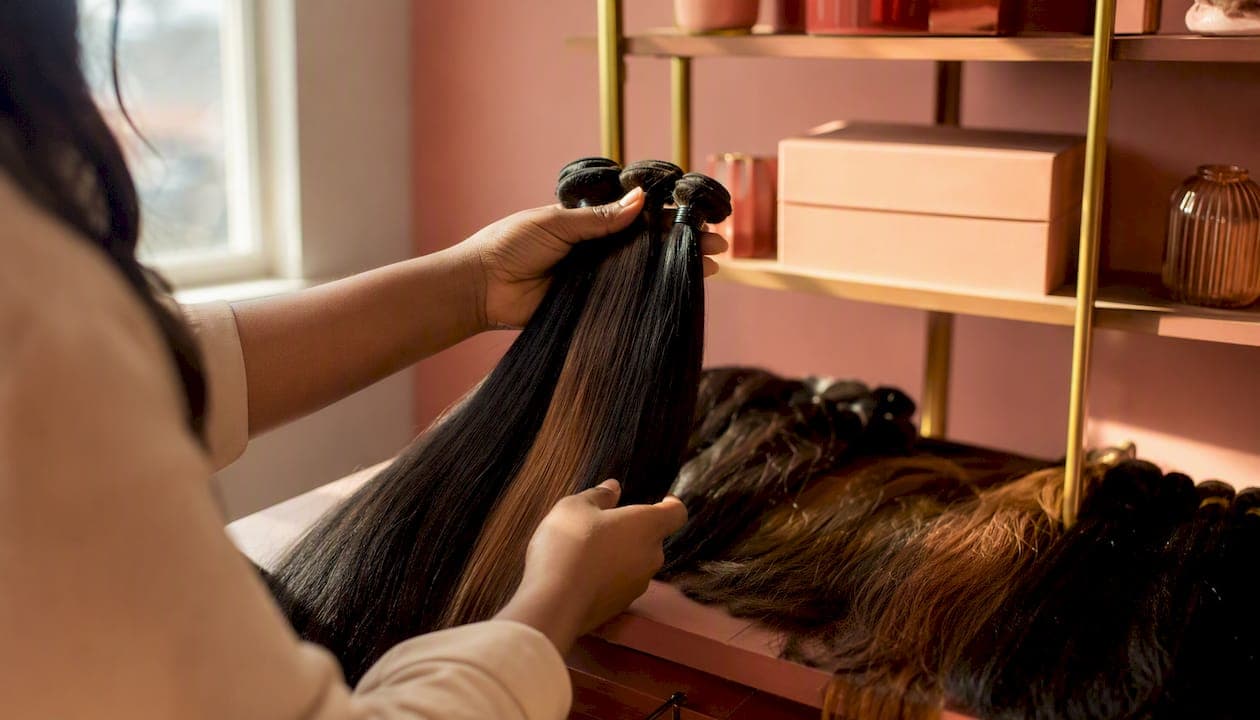
Do six quick checks in-store: cuticle direction, finger-comb tangle, gentle shed pull, weight and density feel, water absorbency, and end/length inspection. Pass four or more, and the hair is salon-ready for protective braids.
Each check proves something specific. The cuticle-direction test tells you if the strands are Remy-aligned or will mat under tension. The finger-comb pass tells you how the hair behaves under a stylist's hands for hours at a time. The shed pull flags weak weft construction before it becomes your problem three weeks into a set. Weight and water response tell you whether you're paying for real density or air. End inspection catches trimmed, over-processed lots hiding under a shiny package.
- Cuticle-direction check — smooth root to tip, slight resistance tip to root
- Finger-comb tangle test — multiple passes without knotting
- Shed/pull test — minimal loose strands under light tension
- Weight and density feel — substantial, not thin or hollow
- Water absorbency check — drinks water instead of beading
- End and length inspection — full, even ends with no stray short hairs
Pro Tip: Keep a mental scorecard as you handle the sample. Four or more passes means the pack is ready for a protective style; three or fewer means walk away or ask for a different batch.
Key Takeaways
Quality braiding hair reveals itself through six fast, non-destructive checks: cuticle direction, tangle resistance, shed behavior, weight, water response, and end condition.
| Point | Details |
|---|---|
| Run the cuticle test first | Stroke a strand root to tip, then reverse; smooth one way and slightly resistant the other signals true Remy alignment. |
| Set a shed threshold | A light pull that releases a small number of strands is normal; a visible clump means a weak weft. |
| Value pre-stretched stock | Good pre-stretched hair cuts install time and seals more naturally, but check ends and flexibility first. |
| Soak before installing | A brief warm water and apple cider vinegar soak removes coating residue and eases scalp comfort. |
| Choose a salon that tests hair | Afro Magic Braiding tests every pack in-store and offers sample testing before you buy or book. |
Table of Contents
- Step-By-Step Tests to Run Before You Buy Braiding Hair
- Why Pre-Stretched Hair Changes Your Braid Results
- Pre-Install Prep: A Simple Soak to Improve Feel
- What Should You Ask the Seller Before You Buy?
- How Do You Judge Overall Suitability for Protective Braids?
- Synthetic vs. Natural Fiber Blends: What Changes?
- How Do You Check Colorfastness Before You Braid?
- Spotting Chemical Coatings That Hurt Longevity or Comfort
- A Salon's-Eye View on Testing Every Pack
- Get Premium, Tested Hair and a Professional Install in One Visit
- Sources
Step-By-Step Tests to Run Before You Buy Braiding Hair
You don't need a lab coat to figure out how to test braiding hair quality. You need your fingers, a cup of water, and about ninety seconds per pack. Here's the order that works best in a shop, from least invasive to most revealing.
- Run the cuticle-direction test first. Hold a small strand and stroke it from root to tip, then reverse and stroke tip to root. Genuine Remy hair feels smooth going one way and slightly grabby coming back, because aligned cuticles run in one direction. If the strand feels identical both ways, the cuticles have likely been stripped or the hair isn't true Remy.
- Do the finger-comb tangle test. Take a small section about the width of two fingers, about the width of two fingers, and run several finger-comb passes through it. Count where tangles start. Quality hair combs through cleanly on all three passes; anything that knots on pass one is going to fight your stylist all day.
- Try the shed/pull test. Grip the same section near the weft and apply light, even tension, the kind you'd use pulling a sleeve. A handful of loose strands is normal. A visible clump coming away signals a weak weft or a batch nearing the end of its shelf life.
- Check weight and density by feel. Squeeze a section between your fingers. It should feel substantial without being stiff. Thin, wispy sections that look full in the package but feel hollow in your hand usually mean shorter fiber content padded out with bulk filler.
- Test water absorbency. Dip just the tip of a strand in a cup of water for a few seconds. Human hair and quality blends absorb and darken slightly. Fully synthetic or heavily coated hair tends to bead water on the surface or resist it entirely, one of the fastest definitive checks available without cutting into your only sample.
- Only test heat response if the seller allows it, and only on a spare tip. Touch a flat iron briefly to a single strand from a sample cut, never from the pack you intend to buy. Human hair singes; synthetic fiber melts into a hard bead. Skip this step entirely if no spare sample exists.
If a blend like a human/synthetic boho mix passes the tangle and shed tests but feels slightly different in texture from strand to strand; this is often intentional design, not a defect, so weigh it against the style you're going for before rejecting the pack.
Pro Tip: Never destroy your only sample to test it. Ask the seller for a cut tip or a spare inch, and reserve any burn or bleach test for that piece, keeping the rest of the pack intact in case you decide to buy.
Why Pre-Stretched Hair Changes Your Braid Results
Pre-stretched hair is worth the extra look, and often the extra dollar, because of what it saves your stylist at the chair. Non-stretched packs need to be pulled and separated by hand before a single braid goes in, which adds real time to your appointment and increases the chance of uneven tension. Pre-stretched hair reduces installation time and tends to seal more naturally at the ends, especially with hot-water finishing methods.
Not every pre-stretched label means the same quality, though. Check these before you commit to a pack:
- End-feel — ends should be soft and tapered, not stiff, puffy, or fused together.
- Uniform stretch — every strand in the section should show the same length and tension, not a mix of tightly coiled and loose pieces.
- Coating residue — rub a section between your fingers; heavy powder or waxy film usually means excess processing to fake a pre-stretched look.
- Flexibility — the hair should bend and fall naturally, not spring back stiffly like it's been heat-set into shape.
A stylist who works with genuinely good pre-stretched stock moves faster and delivers a more natural drape, which is worth confirming before you pick your pre-stretched pack.
Pre-Install Prep: A Simple Soak to Improve Feel
A short warm-water soak with a splash of apple cider vinegar can strip the alkaline coating manufacturers use to keep packs looking uniform on the shelf.
- Fill a basin with warm (not hot) water and add roughly one part apple cider vinegar to four parts water.
- Submerge the hair for 10 to 15 minutes, no longer.
- Rinse thoroughly with clean water and air-dry before installation.
This step often reduces the stiffness and mild itch some clients report right after a fresh install, since it clears manufacturing residue rather than adding anything new.
Pro Tip: Test the soak on a small cut sample first if the hair is colored or feels unusually delicate. Some dyed or fragile textures react differently to vinegar, and a spare strand tells you in minutes instead of after the whole pack is soaked.
What Should You Ask the Seller Before You Buy?
The right five questions in-store save you from a frustrating unboxing at home. Ask directly, and watch how the seller responds, not just what they say.
- Where does this hair originate, and is it labeled Remy or virgin?
- Has it been bleached, colored, or chemically processed, and if so, how?
- Is this pack pre-stretched, and can I see the ends before buying?
- What's the return policy if the pack sheds heavily after one wash?
- Can I test a small sample before committing to the full order?
Walk away if you notice any of these:
- A plasticky, overly shiny sheen that doesn't match how real hair reflects light.
- A sharp chemical smell, especially ammonia or solvent notes.
- A pack full of loose, short broken hairs mixed into the length you're paying for.
- Heavy shedding during a light pull test, right there at the counter.
- A seller who refuses any form of sample testing before purchase.
Snap a quick photo of the pack label and any answers the seller gives you about origin and processing. If something goes wrong later, you'll have a paper trail, and if the seller won't answer basic sourcing questions at all, ask for a different batch or take your business elsewhere.
How Do You Judge Overall Suitability for Protective Braids?
Length, thickness, end-feel, and texture match decide whether a pack actually works for the style you want, not just whether it passes the basic quality tests. A pack can be genuinely high quality and still be wrong for your braid plan.
Length needs to match your finished style with room for shrinkage during installation; buy slightly longer than your target length, especially for styles that involve heavy tension like knotless braids. Thickness should feel proportional to your natural density. Thin natural hair paired with an overly thick pack creates bulky, unnatural-looking roots, while fine hair paired with the wrong texture can look sparse instead of full.
End-feel matters more than most buyers realize. Run your fingers to the very tip of a few strands. Soft, tapered ends blend into a finished braid; blunt, stiff, or fused ends show at the tip of every single braid, especially with lighter colors.
Texture match is the final filter. Hold a strand next to your own hair near your hairline, where texture is often most visible. Visual inspection for consistent length and full ends helps you estimate how full the finished style will actually look once installed, rather than guessing from the packaging alone. If you're deciding between styles, matching hair choice to the demands of each option, like the tension in box braids versus a looser style, changes what "suitable" even means for your pack.
Synthetic vs. Natural Fiber Blends: What Changes?
Fully synthetic hair, human hair, and blended packs each behave differently under tension, heat, and time, and knowing which one you're holding changes how you should judge it.
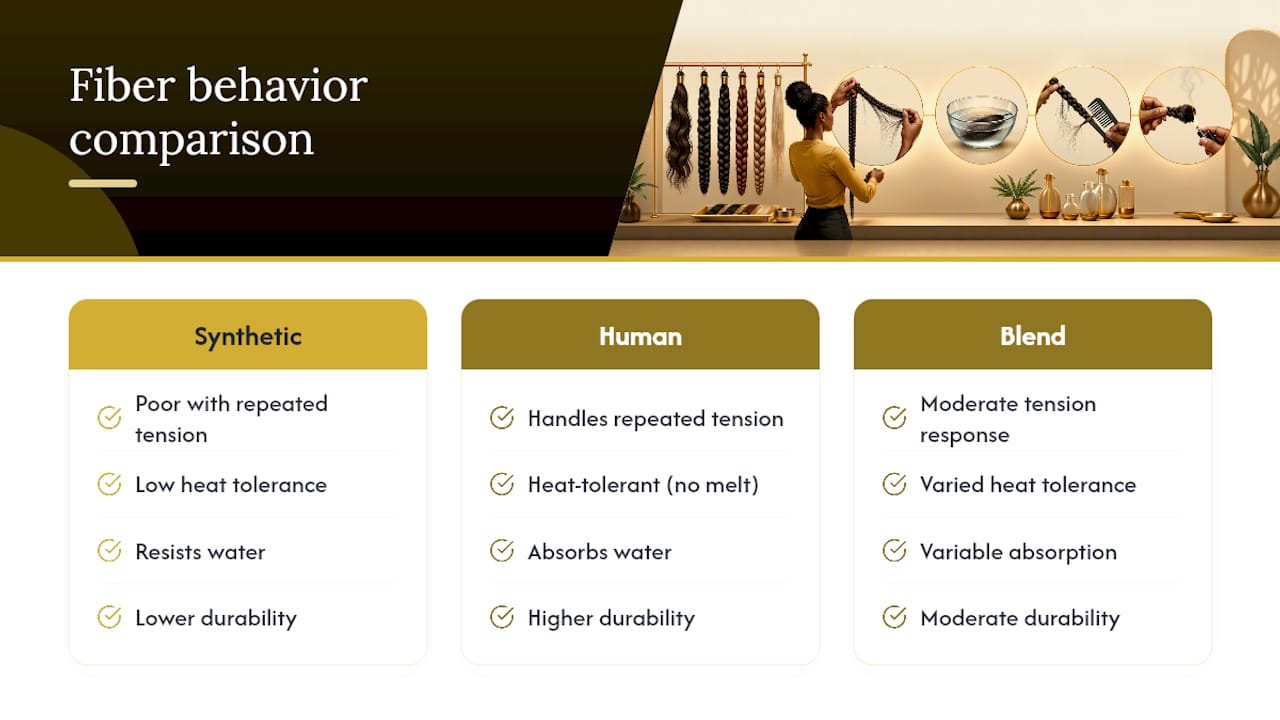
Human hair, whether Remy or a processed blend, absorbs water, responds to heat tools without melting, and tends to hold its texture through multiple wears. Fully synthetic fiber is lighter, often cheaper, and can look strikingly uniform on the shelf, but it behaves differently the moment heat or repeated tension enters the picture. Synthetics often float or resist water while human hair absorbs it, which is why the water-dip test works so well as a quick in-store filter.
Blended packs sit in between, and that's not automatically a downside. A well-made human/synthetic blend can offer a texture variation that some clients actually want for certain looks, boho styles being the clearest example. The problem comes when a blend is marketed as pure human hair when it isn't, or when the synthetic portion is low-grade fiber that will frizz and mat within a week.
Durability tracks closely with fiber type. Synthetic sections generally hold less well under repeated washing and heat exposure, while natural or Remy-aligned sections tend to keep their integrity through a full several-week wear cycle. If your stylist plans to use heat during installation or you wash your braids regularly, ask directly whether the pack is a blend, and factor that into how long you expect the style to last before a touch-up or takedown.
How Do You Check Colorfastness Before You Braid?
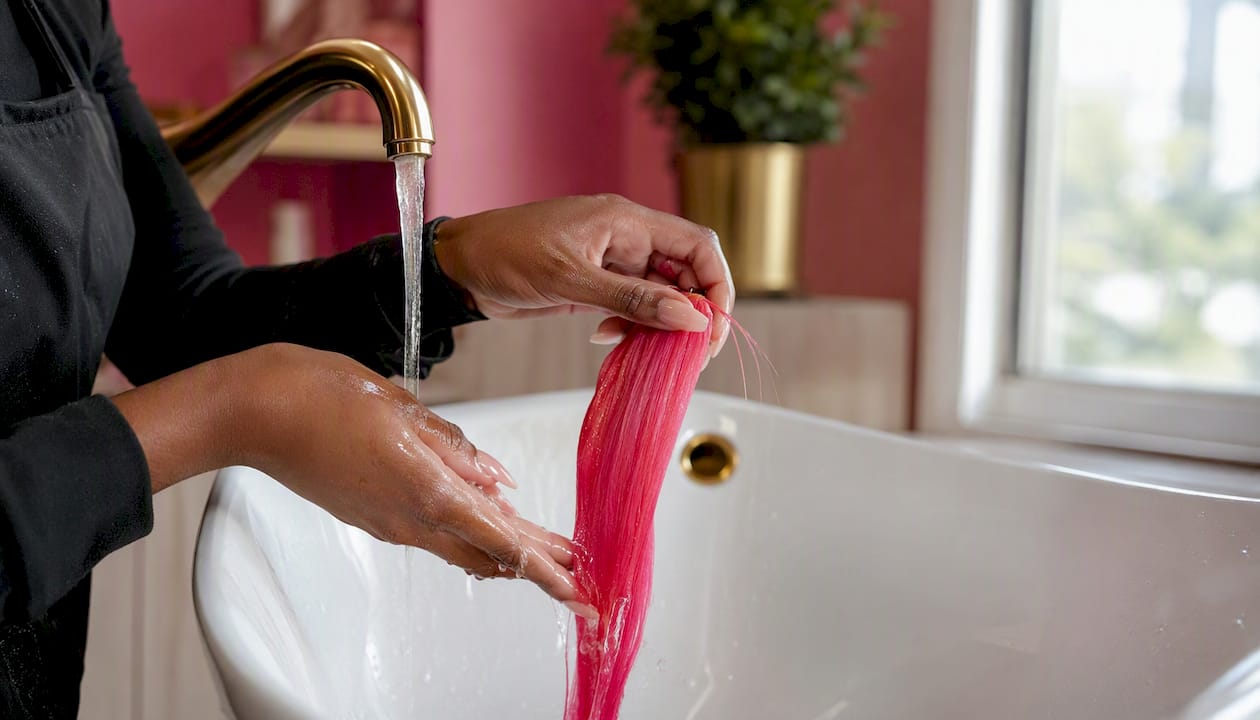
A pack that looks like a perfect match under salon lighting can shift color after the first wash, and colorfastness testing catches that before it becomes visible in your finished style.
Dampen a small section of the hair with plain water and blot it against a white paper towel or tissue. Noticeable color transfer, especially with darker or vibrant shades, means the dye wasn't set properly and will likely bleed onto your scalp, clothing, or pillowcase during regular wear. Quality dye jobs on human hair are processed to lock color into the strand rather than sit on the surface as a coating.
Styling adds a second layer of risk. If you plan to use heat tools on the installed style, ask whether the color has been heat-tested by the seller, since some fashion colors are more prone to fading or shifting under direct heat than natural shades. A quick way to check in-store: press a warm (not hot) flat iron briefly to a spare strand tip and look for any color change, smoke, or unusual smell.
Hair that maintains its original tone after a light wash and a brief heat pass is telling you something real about the quality of the dye process behind it, and that's a detail worth checking before your color choice ends up fading unevenly across a full head of braids.
Spotting Chemical Coatings That Hurt Longevity or Comfort
Many low-cost braiding hair packs get their shine and softness from a coating applied during manufacturing, not from the natural condition of the fiber underneath, and that coating can cause real problems once it's installed against your scalp for weeks.
Run a section between your fingers and pay attention to residue. A powdery film, a waxy buildup, or hair that feels slick in an artificial way usually points to a silicone or alkaline coating designed to mask lower-grade fiber. This kind of coating tends to wash out within the first week, leaving the true texture underneath, which is often stiffer and more tangle-prone than what you felt in the store.
Scalp comfort is the bigger concern for many clients. Coated hair can trap product buildup against the scalp and cause itching or irritation during a multi-week install, especially for anyone with sensitive skin or existing scalp conditions. Quality hair should maintain a soft, consistent texture from root to tip rather than relying on a surface treatment to fake that feel.
Smell is a fast, reliable clue here too. A strong chemical odor, particularly anything resembling ammonia or nail polish remover, usually means recent heavy processing that hasn't fully cured. Give any pack a close sniff before you buy, not just a visual once-over, and treat a strong smell as a reason to ask more questions or choose a different batch entirely.
A Salon's-Eye View on Testing Every Pack
At Afro Magic Braiding, we don't guess with a client's hair. Testing every batch before it reaches the shop floor is part of how we protect install time and finished results for every appointment. In-store sample testing is available for anyone who wants to feel a pack before committing to it, and we'd rather show you the strand than just tell you it's good.
Get Premium, Tested Hair and a Professional Install in One Visit
Buying a pack off a shelf and hoping it holds up is one route. Bringing your questions to a salon that already tests its stock before it ever reaches the display is another, and it's the one that saves you a second trip when a pack sheds three days into a fresh set. Afro Magic Braiding stocks premium pre-stretched hair that's already passed the cuticle, shed, and density checks covered above, so you're not running your own quality control at home.

Every pack on our shelves gets handled the same way we just walked you through, and we're glad to run a sample test with you in-store before you buy or book. Beyond the hair itself, our stylists specialize in knotless braids, box braids, boho braids, faux locs, and custom protective styles built around whatever texture and length you bring in. Browse finished results in our portfolio to see how premium hair looks once it's installed, then book your appointment and let us match the right pack to your style before a single braid goes in.
Sources
- How to Test Hair Extension Quality | HEBN
- Human Braiding Hair: The Complete Buyer's Guide
- Bulk Human Hair for Braiding: A Salon & Wholesale Buyer’s Guide | Anvi Hair
- The Do’s & Don’ts of Buying Hair for Braiding
- How to identify high-quality bulk hair before you buy?