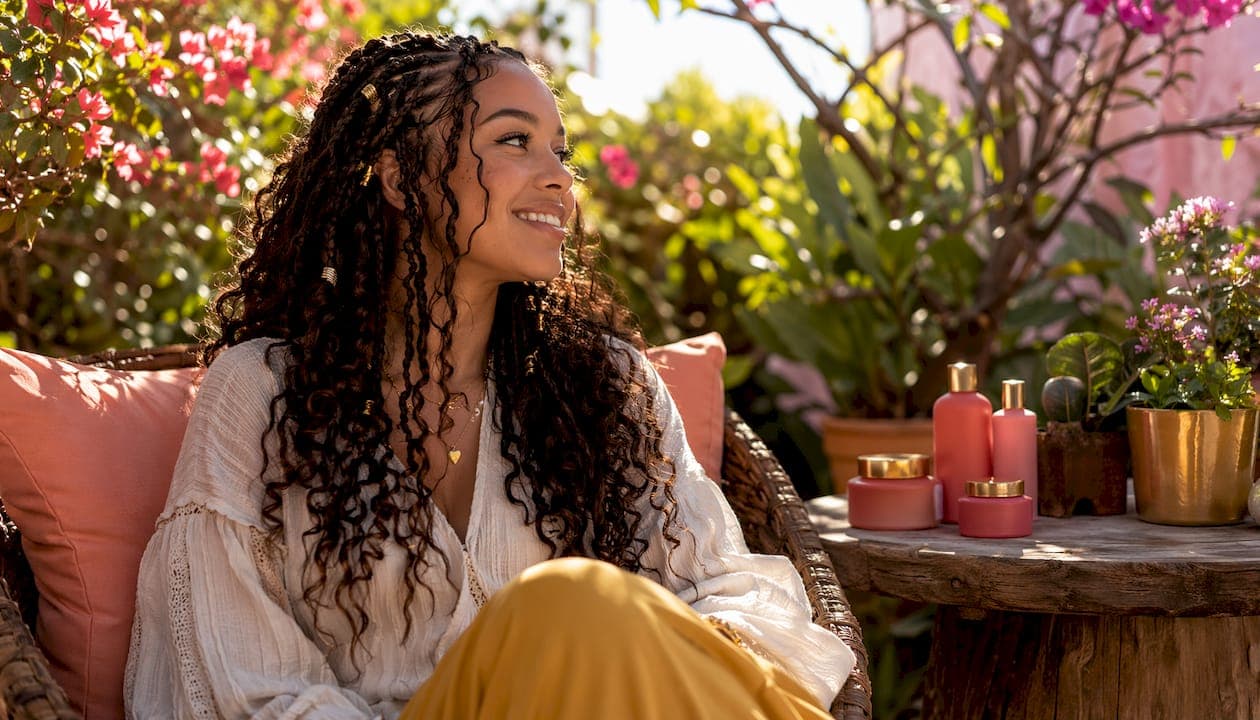
Boho braids suit all hair textures because their design is built around adaptability, not uniformity. The style combines the tension-free feed-in knotless technique with strategically placed curly or wavy extensions that blend with your natural hair, whether it's a tight 4c coil, a loose 3a curl, or even fine straight strands. That blend creates volume, softness, and a lived-in finish that works with your texture rather than against it. The result is a protective style that feels as personal as it looks.
Here is what makes boho braids genuinely texture-inclusive:
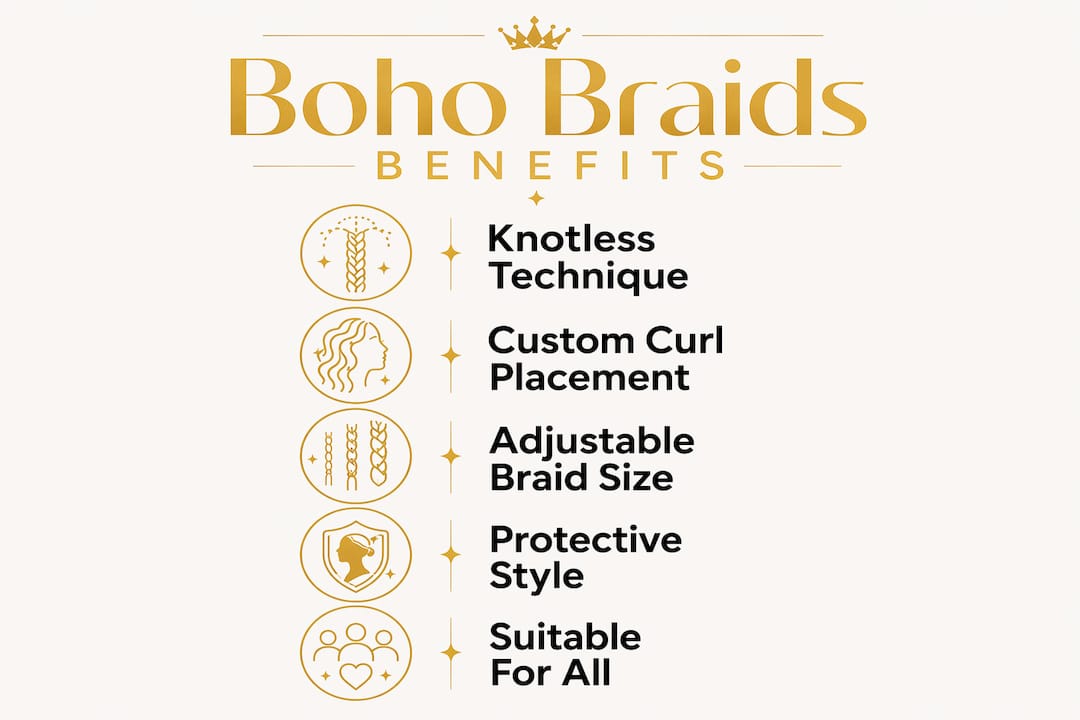
- Knotless foundation: Extensions are fed in gradually, so there is no knot pulling at the root. Weight distributes along the braid length, not at the scalp.
- Curl integration: Curly or wavy pieces woven throughout the braid blend with natural texture, softening the look for every hair type.
- Customizable density: Braid size, curl placement, and extension volume can all be adjusted to suit fine, medium, or coarse hair.
- Protective function: The style locks in moisture, reduces daily manipulation, and shields ends from environmental damage across all textures.
- Aesthetic range: From subtle curls at the ends to full curly sections throughout, the look scales from understated to dramatic without changing the core technique.
How to style boho braids for your specific hair texture
Styling boho braids is not a one-size-fits-all process. Your hair's texture determines how extensions grip, how curls blend, and how long the style holds its shape.
For coily and kinky hair (types 4a–4c): Coarse, high-density hair offers the best natural grip for braiding. Coily hair textures provide a secure foundation that holds extensions firmly, which means larger braid sections and fuller curl placements are both achievable and long-lasting. The tight coil pattern also creates a beautiful contrast against the flowing boho curls, making the style look intentionally layered.
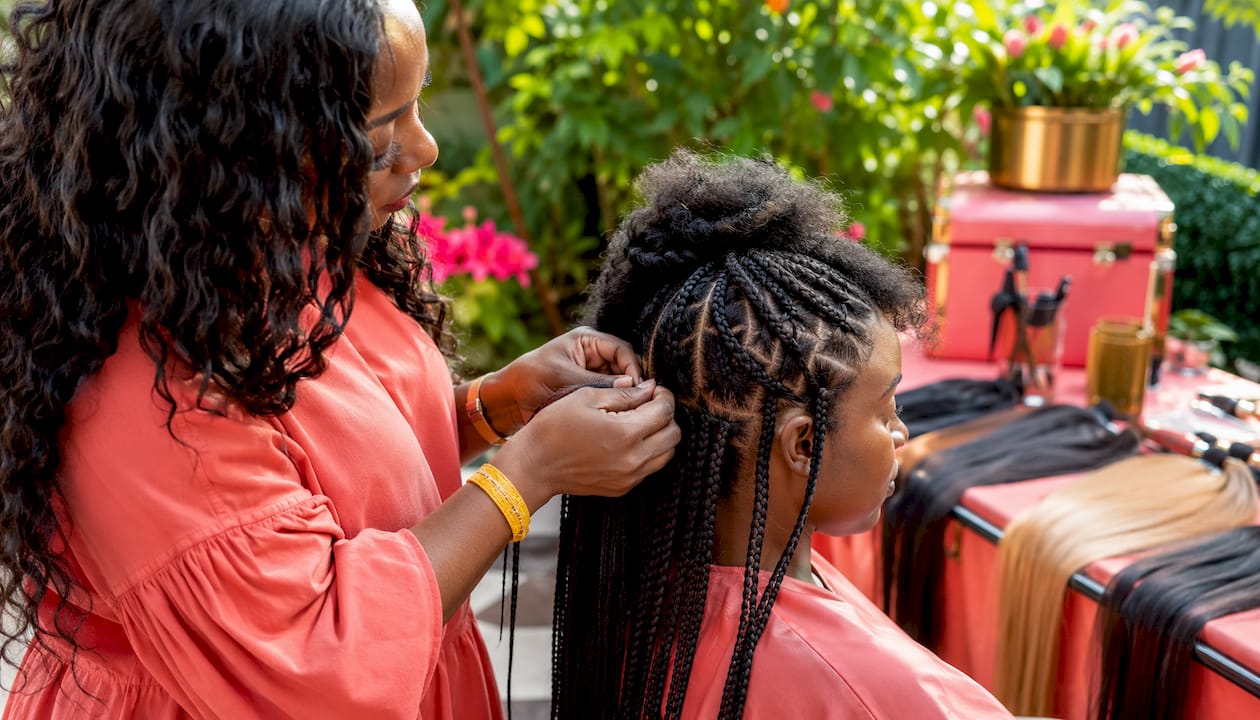
For curly hair (types 3a–3c): Curly natural hair blends almost effortlessly with the curly extension pieces used in boho styles. The key is matching the curl pattern of your extensions to your natural texture as closely as possible. Water wave or loose deep wave extensions tend to complement type 3 curls without looking mismatched or artificial.
For wavy and straight hair: Fine or straight hair has higher slip, which means extensions can slide if the braid base is not secured properly. Stylists recommend applying a light texturizing spray or mousse before braiding to create friction. Smaller braid sections also help, since they give extensions more surface area to grip.
- Use a curl-defining cream on loose boho pieces to keep them from frizzing between washes.
- Refresh curls with a light mist of water and leave-in conditioner rather than re-styling from scratch.
- For straight or fine hair, avoid heavy oils on the braid base, since they increase slip and reduce hold.
- Choose curl patterns that complement your natural texture rather than contrast sharply with it.
Pro Tip: Ask your stylist to vary curl placement, concentrating more curls near the face and ends rather than distributing them evenly throughout. This technique creates a flattering frame without adding excessive weight to the mid-shaft, which is where fine hair tends to feel the most strain.
How boho braids protect your natural hair across all textures
The protective power of boho braids comes directly from the knotless feed-in technique. Traditional box braids anchor extensions with a knot at the root, concentrating tension and weight at the most fragile point of the hair strand. Knotless braids start with your natural hair and add extensions incrementally, so the weight distributes along the braid length rather than sitting at the scalp.
That structural difference has real consequences for hair health. Traction alopecia, the gradual hair loss caused by repeated tension at the hairline and edges, is a documented risk with high-tension braiding methods. The knotless approach significantly reduces that risk by keeping the root flat and tension-free from the very first stitch.
Beyond scalp protection, boho braids reduce breakage and split ends by eliminating the daily manipulation of combing, brushing, and heat styling. Ends stay tucked and protected. Moisture stays locked in rather than evaporating through constant handling.
- Coarse hair benefits from the distributed weight system, since dense, heavy extensions can otherwise stress the scalp.
- Fine hair gains protection from over-manipulation, which is often the primary cause of breakage in thinner strands.
- Medium hair gets the full benefit of both moisture retention and reduced styling frequency.
- The loose boho curls add softness without pulling on the braid structure, keeping the style comfortable for weeks.
A well-installed set of boho braids typically lasts several weeks, giving your natural hair an extended rest from daily styling stress.
Installation and maintenance tips that make boho braids last
Getting the installation right is where long-term hair health is won or lost. The process starts with clean, well-moisturized hair. Dry or brittle strands are more prone to snapping under the tension of braiding, regardless of how gentle the technique.
Step-by-step installation priorities:
- Deep condition your hair at least 24 hours before your appointment to maximize moisture and elasticity.
- Detangle thoroughly so your stylist can work through sections without snagging.
- Communicate your preferred braid size and curl placement before the session begins.
- Request the tension-free feed-in method specifically, confirming that extensions are added gradually rather than knotted at the root.
- Ask your stylist to leave the edges slightly looser than the rest of the braids, since the hairline is the most vulnerable area.
Choosing the right extensions: Human hair extensions give the most natural finish for boho braids. They can be conditioned, heat styled, and treated with leave-in products, which extends both their life and their movement. High-quality synthetic water wave hair with a matte finish is a solid alternative at a lower price point, though it tends to tangle more easily over time.
Daily care routine:
- Wrap your hair in a silk or satin bonnet every night to minimize frizz and preserve the curl pattern.
- Mist the curly sections lightly with water and a leave-in conditioner once or twice a week to keep them soft.
- Apply a lightweight oil or serum to the scalp every few days to prevent dryness without buildup.
- Avoid heavy creams on the braid body itself, since product buildup shortens the style's lifespan.
A consistent care routine is the single biggest factor in how long your boho braids stay fresh and healthy-looking.
Hair type suitability and how you can customize boho braids
One of the most compelling reasons boho braids work across hair types is how deeply the style can be customized. There is no single "correct" version of a boho braid, which means the look adapts to your hair rather than demanding your hair adapt to it.
Hair density and its effect on the style:
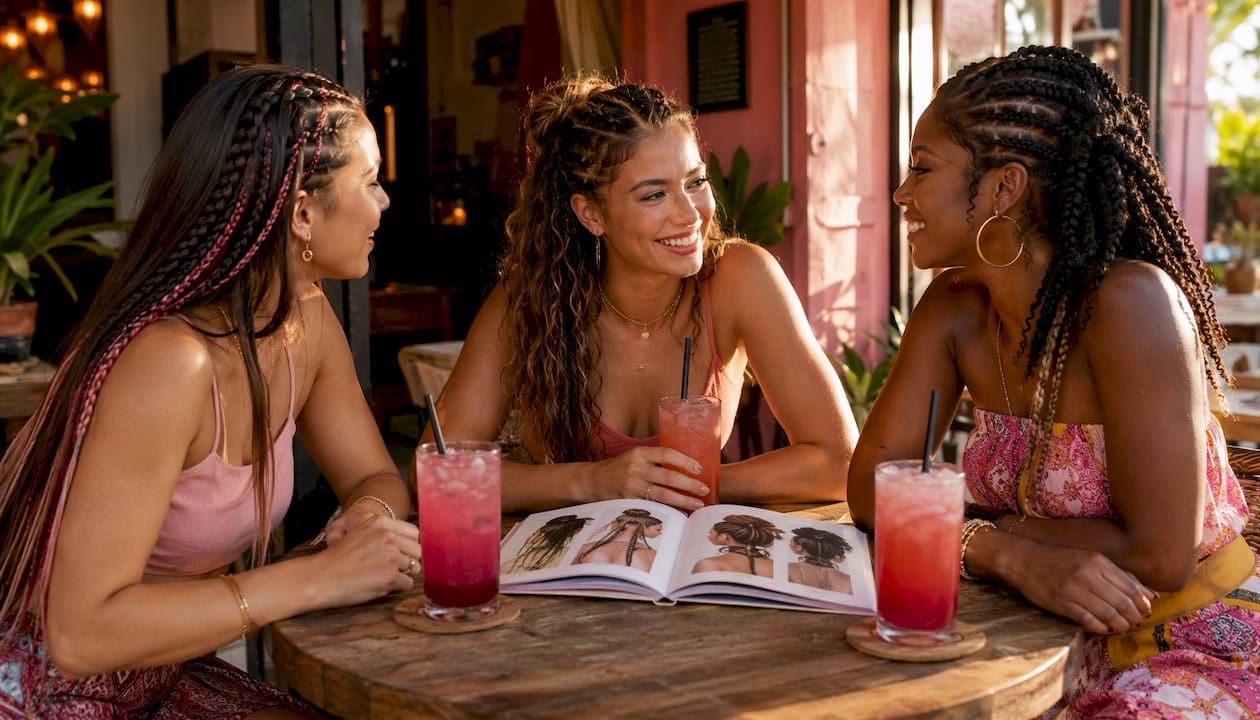
Medium to high density hair achieves the most natural volume with boho braids, since the braid base is full enough to support curly extensions without looking sparse. Fine or low-density hair can absolutely wear the style, but it typically requires more extensions to achieve comparable fullness. The trade-off is added weight, so fine-haired clients should request smaller braid sections and lighter curl placements to avoid scalp strain.
Subtle vs. full boho:
- Subtle boho concentrates curls at the ends and around the face, keeping the mid-shaft clean and structured. This works well for fine hair and professional settings.
- Full boho weaves curly sections throughout the entire braid from root to tip, creating maximum volume and texture. This suits medium to coarse hair and works beautifully for events, vacations, or anyone who wants a dramatic, statement look.
Texture compatibility by hair type:
Type 4 coily and kinky hair is the texture the style was originally designed for, and it remains the most natural fit. The braiding technique grips coarse hair securely, and the boho curls create a striking contrast with tight natural coils. Type 3 curly hair blends almost invisibly with curly extensions, producing an incredibly natural finish. Wavy and straight textures require more preparation, specifically texturizing products and smaller braid bases, but the finished look is just as beautiful when installed correctly.
You can also customize braid size and curl placement to suit your face shape, lifestyle, and personal aesthetic. Medium braids with curls at the ends are the most popular choice for everyday wear. Large braids with full curls throughout create a bolder, more dramatic effect. Small braids offer the most intricate finish and suit clients who want a delicate, detailed look.
Where boho braids come from: roots and cultural heritage
Boho braids did not appear out of nowhere. They carry a lineage rooted in African braiding traditions that stretch back thousands of years, where intricate braid patterns communicated identity, social status, and cultural belonging. Cornrows, box braids, and feed-in techniques all trace their origins to sub-Saharan African communities, where braiding was both an art form and a communal practice.
The "bohemian" aesthetic layer came later, drawing from the free-spirited, non-conformist style movements of the 1960s and 1970s that celebrated natural textures, loose silhouettes, and handcrafted beauty. When those two influences merged, the result was a style that honored the structural precision of African braiding while embracing the relaxed, undone quality of bohemian fashion.
The modern version of boho braids also draws a direct line from the pick-and-drop braids popular in the 1990s. Those styles featured short braided sections at the crown with loose waves or curls at the ends, creating the illusion of naturally flowing hair. Today's boho braids extend that concept, placing more emphasis on the braids themselves and integrating curly pieces throughout the length rather than only at the ends. The shift toward human hair extensions, which became more widely available and affordable over time, gave the style a more natural, versatile finish than the synthetic-heavy versions of the past.
Social media accelerated the style's current popularity. The combination of neat scalp sections and flowing textured curls photographs beautifully, and once content creators began showcasing the look, demand grew quickly across all hair communities.
How boho braids compare to other braiding styles for different hair types
Boho braids occupy a specific position in the braiding world: they offer more protective benefit than loose natural styles, more comfort than traditional box braids, and more visual texture than standard knotless braids. Understanding where they sit relative to other options helps you decide whether they are the right fit for your hair.
Boho braids vs. traditional box braids: Traditional box braids use a knot at the root to anchor extensions, which creates immediate tension and a slightly raised root appearance. That tension is the primary cause of traction alopecia with repeated wear. Boho knotless braids eliminate the root knot entirely, producing a flat, natural-looking scalp and significantly less strain on edges and follicles. The knotless technique is the better long-term choice for hair health across all textures.
Boho braids vs. standard knotless braids: Standard knotless braids are clean, uniform, and structured. Boho knotless braids add curly or wavy pieces throughout the braid, which introduces texture, movement, and a more relaxed aesthetic. The protective benefit is identical, but boho braids offer more styling versatility since the curly sections can be worn up, down, half-up, or accessorized for different occasions.
Boho braids vs. goddess braids: The terms are sometimes used interchangeably, but goddess braids typically feature more curls and a more glamorous, beachy finish. Boho braids tend to have a slightly more understated, organic quality. Both styles use the same foundational technique and suit the same range of hair types.
Boho braids vs. Senegalese twists: Twists use a two-strand wrapping method rather than a three-strand braid, which creates a different texture and silhouette. Twists tend to work better on hair with more natural moisture and elasticity, while boho braids are more forgiving across a wider range of textures and densities. For clients with fine or straight hair, boho braids with texturizing products often hold better than twists, which can unravel more easily on slippery strands.
A scalp care routine matters regardless of which braiding style you choose. Healthy follicles are the foundation of any protective style that actually protects.
Key Takeaways
Boho braids suit all hair textures because the knotless feed-in technique, customizable curl placement, and adjustable braid density allow the style to work with your natural hair rather than against it.
| Point | Details |
|---|---|
| Knotless technique protects all textures | Extensions are fed in gradually, distributing weight along the braid and reducing scalp tension for every hair type. |
| Curl placement is fully customizable | Subtle boho concentrates curls at the ends; full boho weaves them throughout, suiting fine to coarse hair differently. |
| Fine hair needs extra preparation | Texturizing products and smaller braid sections improve grip and prevent slippage on straight or low-density hair. |
| Protective benefits extend across textures | Boho braids reduce daily manipulation, lock in moisture, and minimize breakage for coily, curly, wavy, and straight hair alike. |
| Human hair extensions offer the best finish | Human hair can be conditioned and heat styled, extending curl life and blending more naturally with all hair types. |
Ready to wear boho braids that are uniquely yours?
Every braid tells a story, and at Afromagicbraiding, we make sure yours is told beautifully. Our stylists specialize in the tension-free feed-in technique that makes boho braids comfortable, protective, and stunning on every texture, from tight 4c coils to fine straight strands.
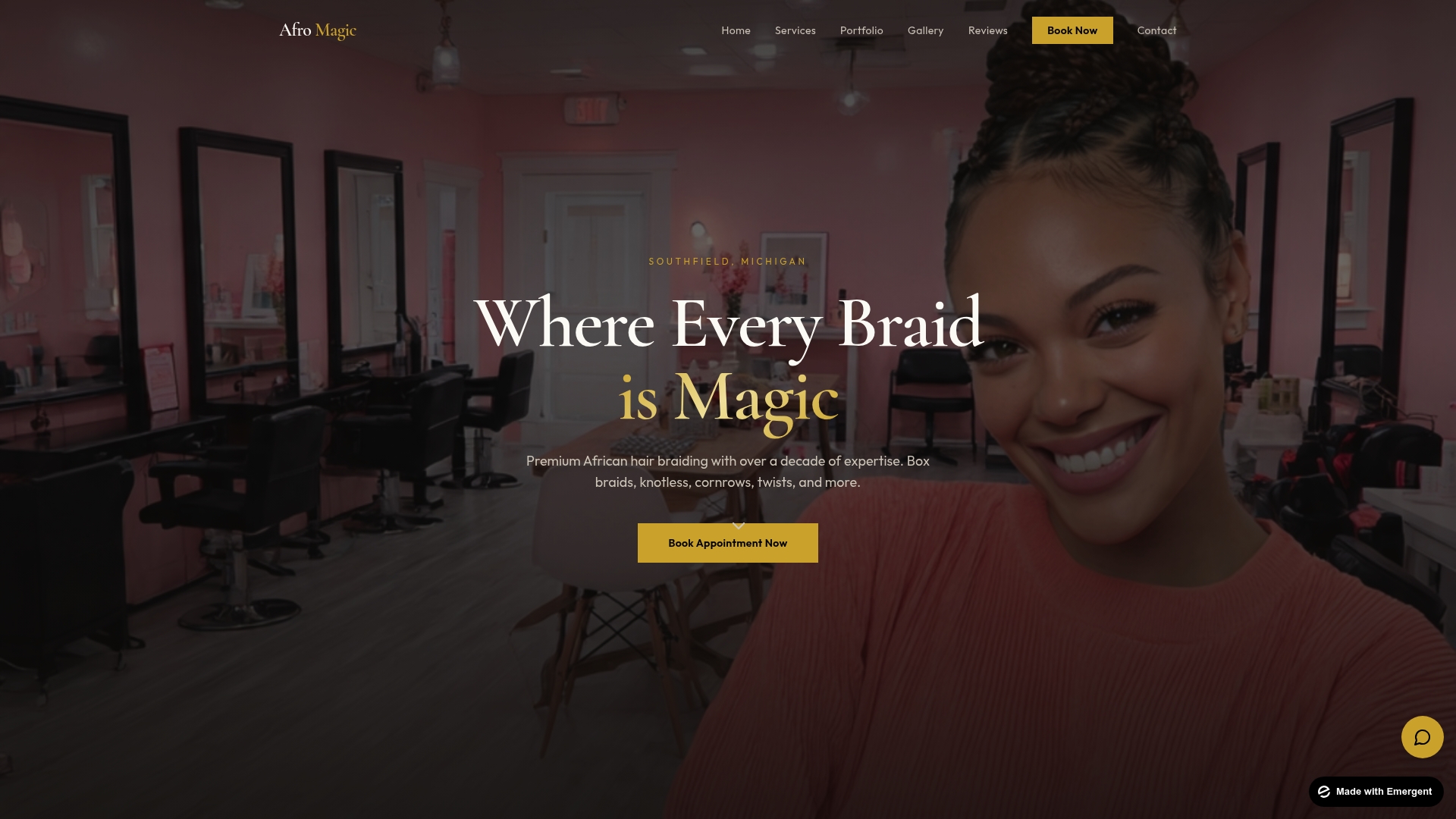
Browse our braid style portfolio to see the range of boho looks we create, then book your appointment and let us build a style that fits your hair, your lifestyle, and your vision. Afromagicbraiding is based in Southfield, Michigan, and we would love to welcome you.