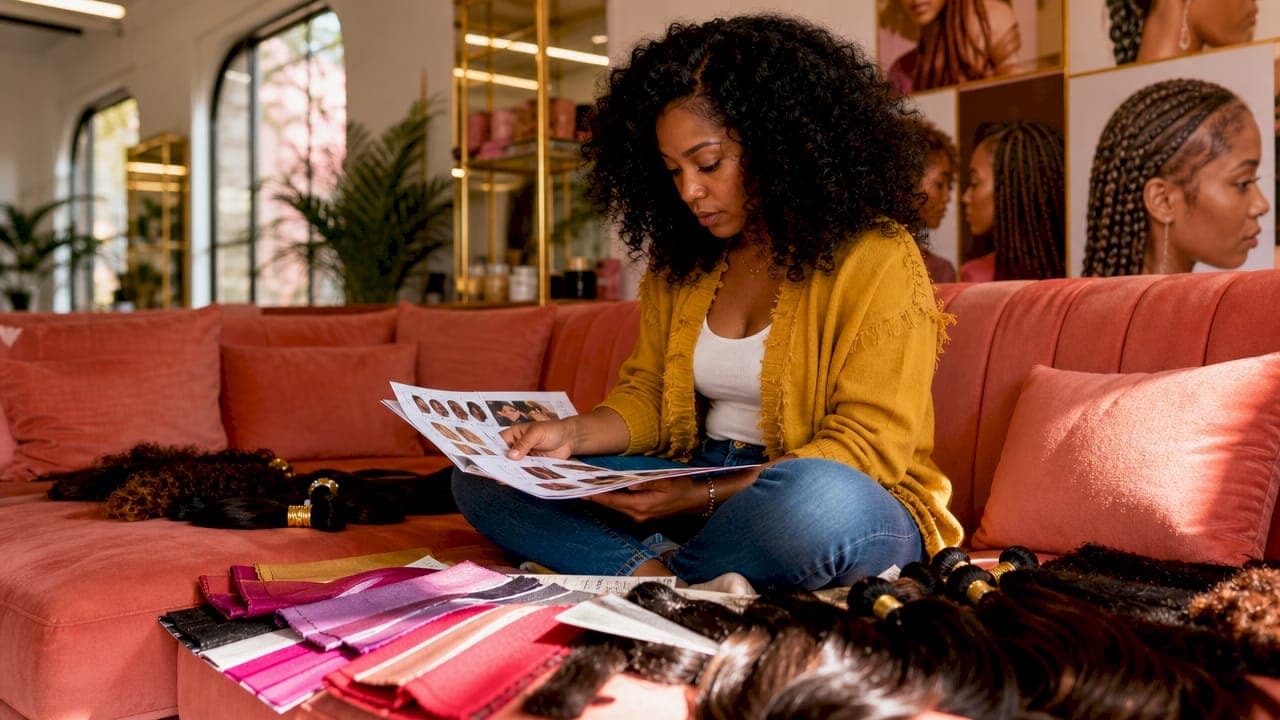
Sourcing hair for braiding is defined by direct relationships with certified manufacturers in India and Vietnam, where salon owners bypass brokers to secure cuticle-aligned, ethically harvested raw hair at wholesale prices. Understanding how braiding salons source hair separates salons that deliver consistent, beautiful results from those that struggle with shedding, tangling, and unhappy clients. The most successful salon owners treat hair procurement as a supply chain discipline, not an afterthought. This guide covers global sourcing regions, direct versus broker purchasing, logistics, ethical verification, and relationship-building strategies that keep quality high and costs predictable.
How braiding salons source hair: global regions and quality differences
The three dominant sourcing regions for braiding hair are India, Vietnam, and China, and each offers a distinct quality profile.
South Indian temple hair is widely regarded as the gold standard for raw human hair. Donors voluntarily offer hair through temple tonsure rituals, producing virgin, unprocessed strands with cuticles aligned in the same direction. That cuticle alignment is what separates premium braiding hair from commodity product. It prevents tangling, holds moisture, and braids with a natural weight that synthetic alternatives cannot replicate.
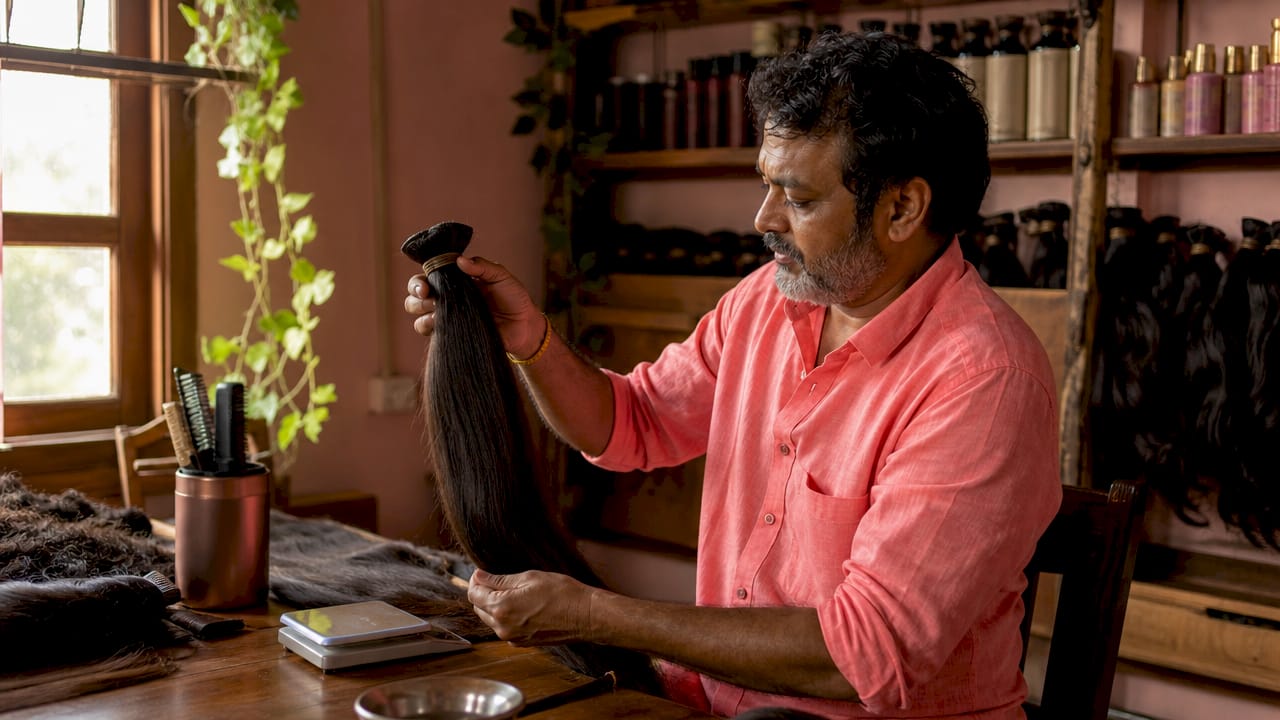
Vietnamese raw hair has grown significantly in reputation because of its fine texture, natural luster, and exceptional bleaching capability. Vietnamese suppliers often operate smaller, family-run factories with direct donor relationships, which supports ethical sourcing. The hair accepts color treatments well, making it a strong choice for salons offering colored protective styles.
Chinese-manufactured hair dominates the budget segment but requires careful scrutiny. Much of it is processed "fallen hair," meaning strands collected from brushes and floors, then chemically treated to align cuticles artificially. True Remy hair requires cuticles aligned from a single ponytail cut, not fallen hair that has been acid-washed. The distinction matters because chemically treated hair degrades faster and tangles more under braiding tension.
| Region | Hair Type | Price Range | Best For |
|---|---|---|---|
| South India | Virgin temple hair | $25–$60 per 100g | Premium natural braids |
| Vietnam | Raw, minimally processed | Mid-range wholesale | Color-treated styles |
| China | Processed/synthetic blends | Budget wholesale | High-volume, lower-cost services |
- Virgin hair: Unprocessed, no chemical treatment, cuticles intact
- Remy hair: Cuticle-aligned, sourced from ponytail cuts, longer lasting
- Non-Remy/fallen hair: Chemically treated, lower durability, prone to tangling
- Synthetic braiding hair: Kanekalon or toyokalon fiber, not human hair
Knowing these distinctions helps you ask the right questions when evaluating braiding hair suppliers and avoid paying premium prices for processed product.
Direct manufacturer vs. broker: which sourcing model wins?
Sourcing directly from manufacturers in India or Vietnam reduces hair cost by 20–40% compared to broker prices. That margin difference is not trivial. On a monthly order of 10kg, a 30% savings covers a stylist's daily wages.
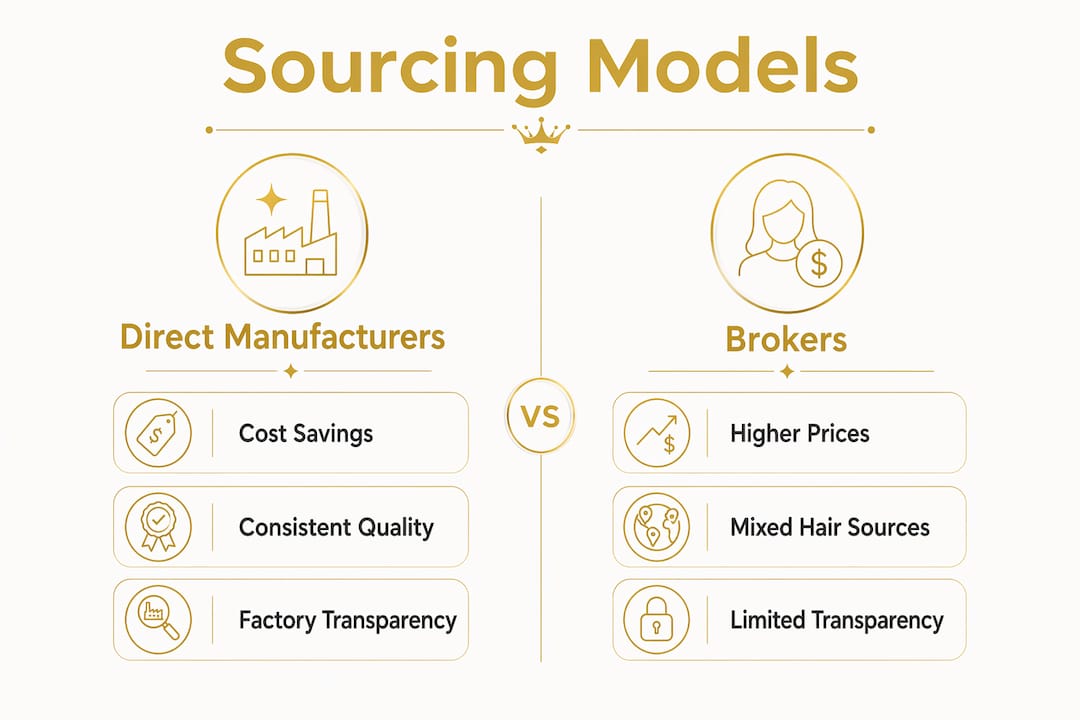
Brokers introduce two problems beyond markup. First, they often blend hair from multiple sources, which destroys texture consistency. Second, they may substitute chemically treated hair without disclosure. Salons that rely on brokers frequently report batch-to-batch variation that frustrates clients and damages reputation.
Direct manufacturers control the entire production pipeline from sourcing to finished product. Hair Extensions By Nature in India exemplifies this model, operating full in-house production with B2B service for salons worldwide. K-Hair in Vietnam similarly offers factory-direct wholesale with live factory video tours via WhatsApp, letting salon owners verify production methods before placing a single order.
Advantages of direct manufacturer sourcing:
- 20–40% lower cost per unit compared to broker pricing
- Consistent texture because hair comes from a single region and donor pool
- Flexible customization including length, texture, and packaging
- Direct communication for order adjustments and quality disputes
- Private label options for salons building their own product line
Risks of broker purchasing:
- Markup without added value
- Mixed sourcing that creates inconsistent texture batches
- Limited recourse when quality fails to match samples
- No visibility into donor practices or chemical treatment history
Pro Tip: Request a live WhatsApp video tour of the factory floor before committing to any new supplier. Legitimate manufacturers welcome this. Brokers posing as factories will deflect or offer only pre-recorded footage.
What logistics and ordering processes should salons expect?
International wholesale orders follow a predictable timeline once you know what to plan for. Production lead times run 7–14 days for standard orders, with rush production available in 3–5 days at a premium. Once shipped, major couriers including DHL, FedEx, and UPS deliver bulk orders in 3–7 business days.
Minimum order quantities have dropped significantly as factories compete for salon business. Many suppliers now accept orders as low as 1kg, which equals roughly 10 bundles. That low entry point lets you test a new supplier's product without a large financial commitment.
Standard international ordering process:
- Request samples (typically 50–100g) to test texture, shedding, and heat tolerance
- Confirm minimum order quantity and tiered pricing tiers with the supplier
- Place a test order at the 1kg minimum to validate batch consistency
- Inspect the shipment using a 5-point quality check: cuticle direction, shedding rate, color consistency, length accuracy, and packaging integrity
- Scale orders based on test results and client feedback
- Negotiate volume discounts once you establish a reliable payment and order history
| Logistics Factor | Standard Timeline | Rush Option |
|---|---|---|
| Production lead time | 7–14 business days | 3–5 business days |
| Shipping transit time | 3–7 business days | 1–3 business days (express) |
| Minimum order quantity | 1kg (~10 bundles) | No minimum for samples |
| Quality inspection | 5-point check per shipment | Supplier-side pre-ship report |
Packaging customization and private label options are available from most direct manufacturers. Salons scaling their brand presence use these to create a cohesive product identity without building their own manufacturing operation.
What are ethical sourcing practices and how do salons verify supplier integrity?
The human hair supply chain contains what industry researchers call a "black hole" zone, where unregulated brokers exploit donors who receive little or no compensation. Ethical sourcing requires Certificates of Origin and Vendor Codes of Conduct that document donor consent and fair payment. Salons that skip this verification risk reputational damage and contribute to exploitative practices.
South Indian temple hair sourced through verified temple programs represents the most transparent ethical model. Donors participate voluntarily in religious tonsure rituals, and temples sell the collected hair through official auctions. The proceeds fund temple operations and community programs. That documented chain of custody is what a Certificate of Origin should reflect.
How to verify supplier ethics:
- Request a Certificate of Origin for every hair batch
- Ask for the supplier's Vendor Code of Conduct in writing
- Conduct a live video factory tour via WhatsApp or video call
- Request third-party audit reports if the supplier claims certifications
- Avoid suppliers who cannot explain their donor sourcing process in specific terms
Pro Tip: Ask your supplier directly: "Where does your donor hair come from, and how are donors compensated?" A legitimate manufacturer answers with specifics. Vague answers about "local collectors" are a red flag for unethical intermediary sourcing.
Salons that prioritize ethical supply chains also protect their own business. Clients increasingly ask about sourcing practices, and a clear, honest answer builds trust that translates into loyalty and referrals.
How can salon owners build sustainable sourcing relationships?
Consistent quality in braiding services depends on sourcing from the same vendor and region over time. Natural variation in raw hair textures means that switching suppliers, even between two reputable ones, introduces texture unpredictability that clients notice. Standardizing your supply chain is not just a cost decision. It is a quality decision.
The relationship-building process starts with small sample orders. Testing for shedding, heat tolerance, and texture on a 1kg order before scaling protects you from committing thousands of dollars to a supplier whose product fails under real salon conditions. Many vendors present themselves as direct factories when they are actually middlemen. Due diligence at the sample stage reveals this.
Strategies for long-term supplier relationships:
- Start every new supplier relationship with a 1kg sample order
- Test the sample across at least three client services before scaling
- Source from the same region consistently to maintain texture predictability
- Use B2B platforms and direct factory contacts for competitive quotes
- Monitor supplier responsiveness, customization flexibility, and post-sale support
- Build an ordering calendar that accounts for 7–14 day lead times and seasonal supply shifts
- Negotiate tiered pricing after establishing a 3-month order history
Digitalization in 2026 has shifted salons toward direct factory partnerships, improving pricing transparency and enabling real-time order tracking. B2B platforms now connect salon owners directly with verified manufacturers, reducing the information gap that brokers historically exploited. Salons that adopt this model gain better margins and more reliable supply.
Seasonal planning matters more than most salon owners realize. Hair supply from temple sources fluctuates around major religious festivals in India. Ordering ahead of those periods prevents stock shortages during your busiest booking windows.
Key Takeaways
Braiding salons that source directly from certified manufacturers in India and Vietnam consistently achieve better quality, lower costs, and more reliable supply than those relying on unverified brokers.
| Point | Details |
|---|---|
| Direct sourcing saves money | Factory-direct purchasing cuts hair costs by 20–40% compared to broker prices. |
| Remy quality requires cuticle alignment | True Remy hair comes from ponytail cuts, not chemically treated fallen hair. |
| Test before scaling | Start with 1kg sample orders to verify shedding, texture, and durability before bulk commitments. |
| Ethics require documentation | Certificates of Origin and Vendor Codes of Conduct are non-negotiable for ethical supply chains. |
| Consistency demands loyalty | Sourcing from the same vendor and region protects texture predictability and client satisfaction. |
Why I stopped chasing the cheapest price and started building supplier friendships
The most expensive mistake I see salon owners make is treating hair sourcing like a commodity auction. They chase the lowest price per bundle, switch suppliers every few months, and then wonder why their clients complain about shedding or uneven texture. The price you pay per bundle is not your real cost. Your real cost includes the client who does not come back, the rebraid you do for free, and the reputation you spend years building.
What changed my approach was a single bad batch from a broker I had never met in person. The hair looked fine in photos. It failed within two weeks on three clients. I lost those clients and spent more fixing the problem than I had saved on the order. After that, I committed to two direct factory relationships and have not looked back.
The suppliers I trust most are the ones who answer my WhatsApp messages within hours, who send me unsolicited photos of new stock, and who tell me honestly when a batch is not up to standard rather than shipping it anyway. That kind of relationship does not happen overnight. You build it with consistent orders, honest feedback, and payment on time.
Ethical sourcing is not a marketing angle. It is a quality filter. Suppliers who treat donors fairly also tend to handle their product with more care. The two things are connected. When you choose professional braiding standards from the ground up, starting with how you source your hair, everything downstream gets better.
— Afro
Premium braiding hair, sourced with care at Afromagicbraiding
Afromagicbraiding was built on the belief that every braid tells a story, and that story starts with the quality of the hair you use.
At Afromagicbraiding, salon owners and stylists get direct access to premium braiding hair suited for knotless braids, Fulani-inspired styles, box braids, and protective styles of every kind. The selection is sourced globally with a commitment to ethical practices and cuticle-aligned quality. Flexible ordering options and knowledgeable support make it straightforward to find the right hair for your clients' needs. Browse the full braiding portfolio to see the quality in action, read what clients are saying, or book a consultation to discuss your salon's specific sourcing needs.
FAQ
Where do braiding salons get their hair?
Most braiding salons source hair directly from manufacturers in India and Vietnam, where factory-direct wholesale pricing and cuticle-aligned raw hair are available. Some salons also purchase through domestic distributors, though at higher per-unit costs.
What is the difference between Remy and non-Remy braiding hair?
Remy hair has cuticles aligned in the same direction from a single ponytail cut, which prevents tangling and extends durability. Non-Remy hair is typically collected fallen hair that has been chemically treated to appear aligned, making it less durable under braiding tension.
How much does wholesale braiding hair cost?
Factory-direct wholesale pricing starts around $8.90 per 100g, while high-quality temple hair ranges from $25 to $60 per 100g depending on length and texture. Broker pricing typically runs 20–40% higher than direct manufacturer rates.
How long does international hair sourcing take?
Standard production lead times run 7–14 business days, with rush options in 3–5 days. Shipping via DHL, FedEx, or UPS adds 3–7 business days after production is complete.
How do salons verify that a hair supplier is ethical?
Salons should request a Certificate of Origin and a Vendor Code of Conduct from every supplier, and conduct a live video factory tour via WhatsApp to confirm the supplier is a direct manufacturer rather than an unregulated broker.