The short version: patch-test the hair and any products before installation, pre-wash synthetic bundles with an ACV rinse or clarifying method, ask your stylist for a low-tension or knotless install, stick to water-based scalp serums during wear, and remove the braids if swelling, hives, or spreading redness shows up. That checklist covers most of what causes reactions in the first place. Baylor College of Medicine's dermatology team notes that itching under braids is usually seborrheic dermatitis or allergic contact dermatitis, not just "sensitive skin." A PubMed review found that standardized patch tests missed allergens in a large majority of patients who later tested positive using their own products. At Afromagicbraiding, we build every one of these steps into how we prep clients before they sit in the chair.
If symptoms start now: swelling, hives, or a rash spreading past the hairline means removing the braids and getting medical care, not waiting it out.
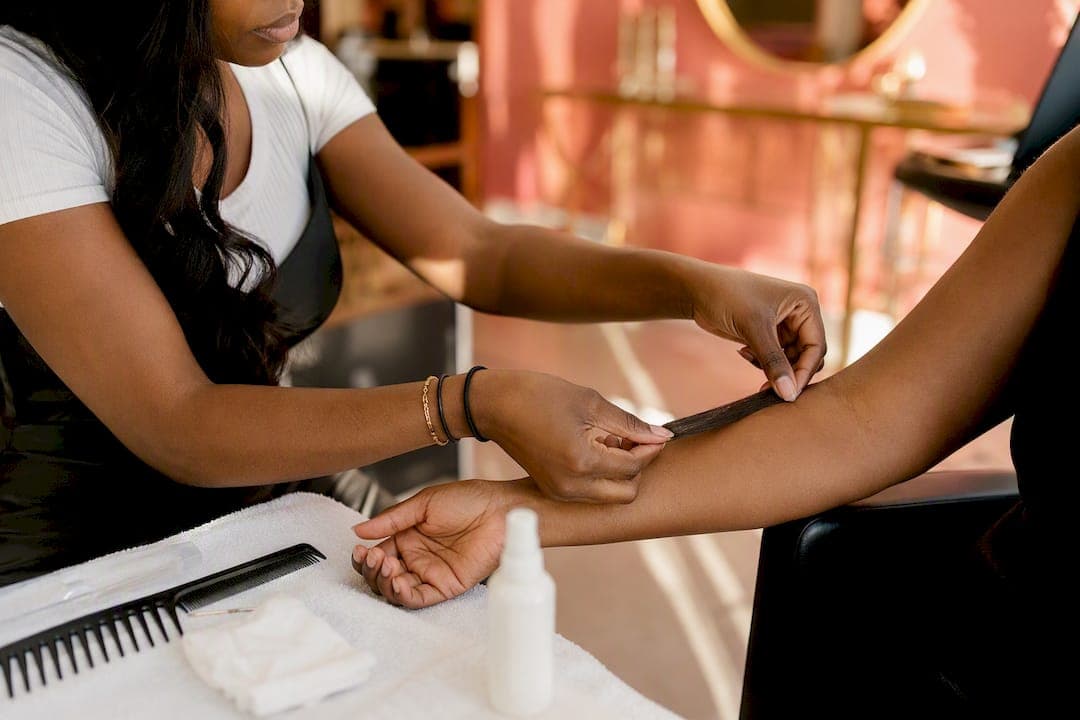
- Patch-test the hair and any leave-in products 48 to 72 hours before install
- Pre-wash bundles with an ACV rinse or sulfate-free clarifier
- Request knotless or low-tension braiding
- Use water-based scalp serums, not heavy oils, during wear
- Take the braids out at the first sign of a spreading reaction
Key Takeaways
Preventing an allergic reaction to braiding hair comes down to patch-testing the fiber and products, pre-washing bundles, choosing low-tension installation, and using water-based scalp care throughout the wear period.
| Point | Details |
|---|---|
| Patch-test everything | Tape a strand to your forearm or behind your ear for 48 to 72 hours before full install. |
| Pre-wash synthetic bundles | Soak in a two-parts-water, one-part-ACV rinse for up to an hour to cut surface residue. |
| Know the real difference | Allergic contact dermatitis brings intense itching, spreading redness, and hives, unlike normal 2 to 3 day soreness. |
| Demand low-tension install | Pain on day one signals excessive tension, which raises the risk of chemical penetration. |
| Choose salons that plan for sensitivity | Afromagicbraiding pre-washes hair on request and runs patch tests as part of standard sensitive-scalp consultations. |
Table of Contents
- What Causes Allergic Reactions to Braiding Hair?
- Is It a Reaction or Just Normal Post-Braid Soreness?
- What Should You Do Before You Book Your Appointment?
- How Do You Clean Synthetic Braiding Hair Before Installing It?
- Which Installation Practices Actually Lower Your Risk?
- How Should You Care for Your Scalp While Wearing Braids?
- What Should You Do If You Get an Allergic Reaction?
- What Are Your Options If You Have a Sensitive Scalp?
- What Does a Salon-Tested Prevention Checklist Look Like?
- A Stylist's View on Preventing Reactions Before They Start
- Book a Sensitive-Scalp Install With Afromagicbraiding
- Sources
What Causes Allergic Reactions to Braiding Hair?
Most reactions trace back to the fiber itself or what's coating it. Kanekalon, the modacrylic fiber used in the majority of synthetic braiding bundles, is processed with alkaline chemicals that can irritate skin on contact, especially over hours of scalp exposure. Manufacturers also add flame retardant coatings, dyes (some containing PPD-related compounds), preservatives, and fragrance or masking agents to keep bundles smelling neutral off the shelf. Any of these can trigger a reaction in someone sensitized to them.
There's also a mechanical piece that gets confused with allergy. Synthetic fiber doesn't breathe the way human hair does, so sweat and natural oils get trapped against the scalp for weeks at a time. That warm, damp environment feeds yeast overgrowth, which shows up as itching and flaking that looks a lot like an allergic flare but isn't one.
Allergic contact dermatitis happens when your immune system reacts to a specific chemical, producing redness, swelling, and sometimes blistering. Irritant dermatitis is a direct chemical or mechanical injury to the skin barrier, no immune response required. Both hurt. Only one means you've been sensitized to something you'll react to again.
- Kanekalon and other alkaline synthetic fibers
- Flame retardant coatings and dye residues
- Preservatives and fragrance or masking agents
- Trapped sweat and oil feeding yeast overgrowth
WebMD's overview of braiding hair points to alkaline plastics and processing chemicals as the most common source of inflammation, which is why trichologists recommend a physical barrier between scalp and fiber whenever possible.
Is It a Reaction or Just Normal Post-Braid Soreness?
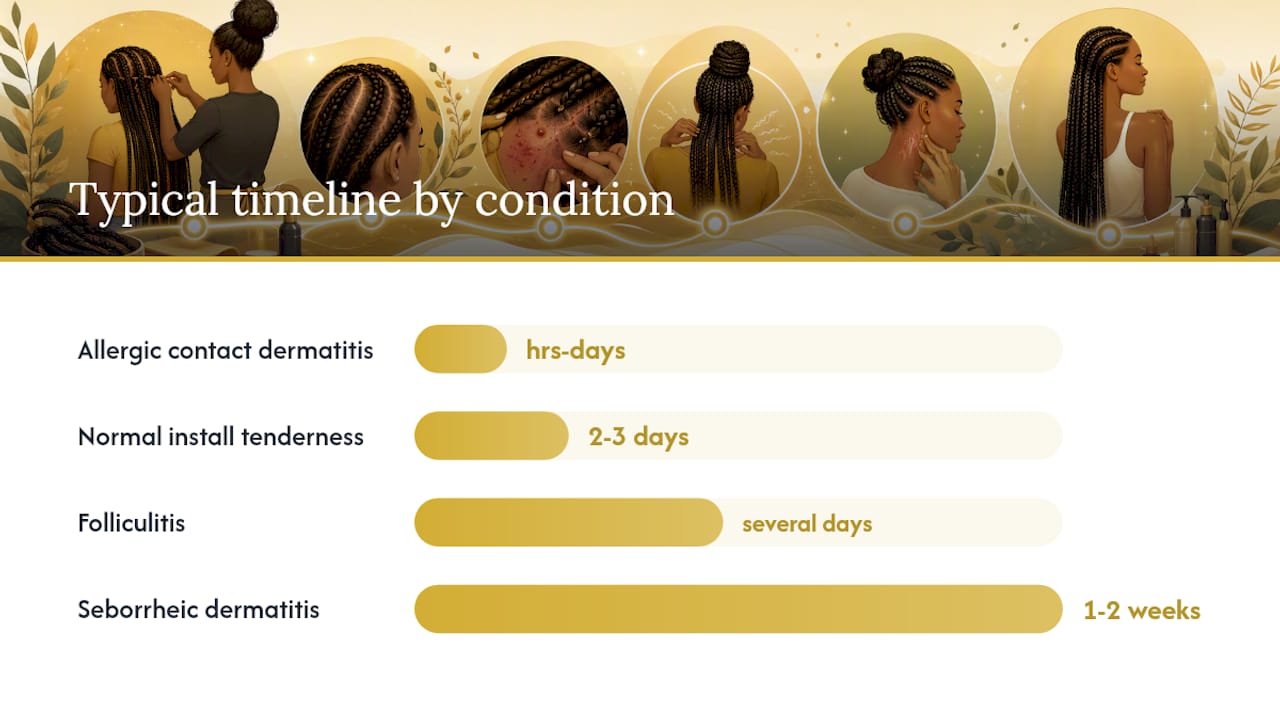
Normal tenderness after a fresh install is mild, localized to where the braids pull, and fades within two to three days. An allergic reaction looks different: intense itching that doesn't ease up, redness that spreads beyond the parted sections, hives, blistering, or an eczema-like rash. Left untreated, it can progress into folliculitis, tender inflamed bumps along the hairline where hair follicles get infected.
| Condition | Key signs | Typical timeline |
|---|---|---|
| Normal install tenderness | Mild, localized to part lines, no rash | Improves in 2 to 3 days |
| Seborrheic dermatitis | Flaking, greasy scale, mild itch | Builds gradually over 1 to 2 weeks |
| Allergic contact dermatitis | Intense itch, spreading redness, hives, blistering | Starts within hours to days, worsens without treatment |
| Folliculitis | Tender bumps at follicles, sometimes pus-filled | Develops after several days of irritation |
Baylor's dermatology guidance is blunt on one point: reactions like these can escalate to serious folliculitis if the underlying cause isn't addressed. If you develop facial swelling, trouble breathing, or a rash spreading rapidly across your scalp and neck, that's an emergency room visit, not a home remedy.
What Should You Do Before You Book Your Appointment?
Most reactions are preventable with prep work you do days before you ever sit in a stylist's chair.
- Research the hair material your salon uses and ask directly whether it's Kanekalon or a different fiber.
- Ask if bundles are pre-washed before installation, and request it if they aren't.
- Request a low-tension or knotless technique, especially if you've had scalp sensitivity before.
- Bring your own patch-tested products if you know you react to certain fragrances or preservatives.
- Schedule your patch test at least 48 hours ahead of your appointment, not the morning of.
To patch-test braiding hair, cut a small strand from the actual bundle you plan to use and tape it to your inner forearm or the skin behind your ear. Leave it undisturbed for 48 to 72 hours. Redness, itching, swelling, or small bumps at the site count as a positive reaction, meaning that hair isn't right for you. No reaction after 72 hours is a reasonably good sign, though individualized testing research shows even negative standard tests occasionally miss a delayed sensitivity.
Pro Tip: If you've reacted to braids before, bring your own pre-washed bundles to your appointment or ask your stylist to run a small trial install on a few strands first. A five-minute test section can save you two weeks of discomfort.
Reading up on hair prep before your braiding visit ahead of time helps you walk in with the right questions instead of figuring it out in the chair.
How Do You Clean Synthetic Braiding Hair Before Installing It?
Pre-washing your bundles is one of the single most effective things you can do, and it takes less than an hour.
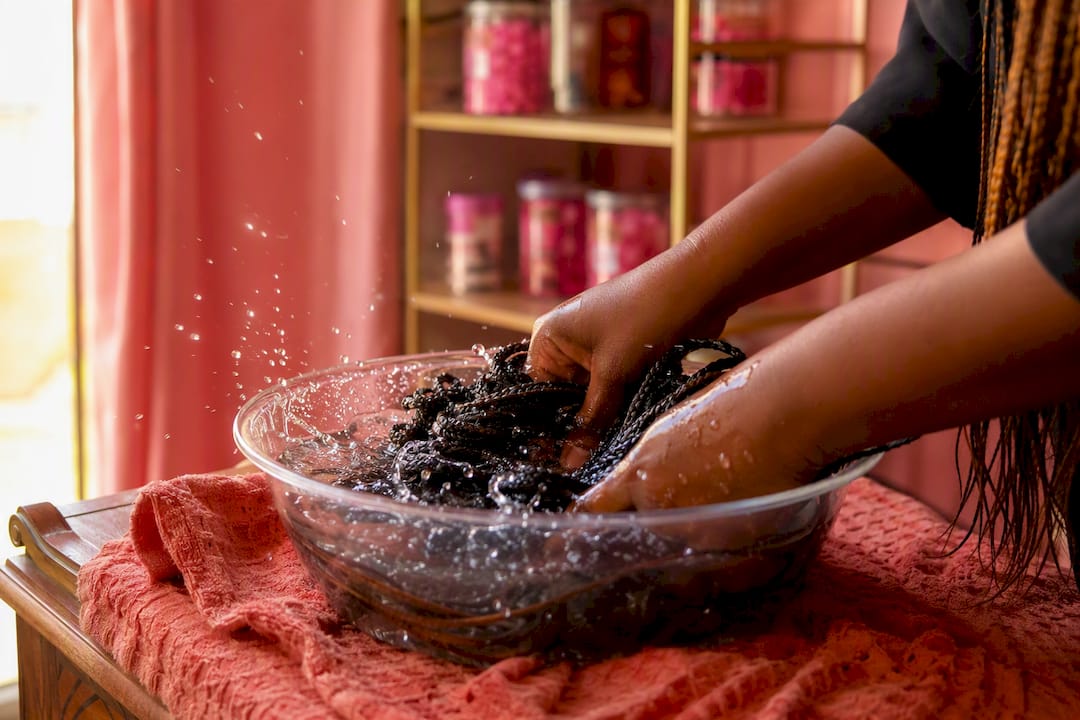
- Mix a rinse of two parts water to one part apple cider vinegar in a basin large enough to submerge the bundle.
- Soak the synthetic hair fully for up to one hour, agitating gently every 15 minutes or so.
- Rinse thoroughly under cool running water until the vinegar smell fades.
- Air-dry the bundle completely on a clean towel before installation.
If ACV isn't available or the fiber feels waxy after rinsing, a gentle sulfate-free clarifying shampoo followed by a cool water rinse works as an alternative and tends to cut down on that manufacturer coating more thoroughly.
Set expectations correctly here: Essence's reporting on braiding hair toxins confirms that pre-washing removes a fair amount of surface residue and bacteria, but it won't strip out everything, including certain flame retardants and embedded dyes baked into the fiber during manufacturing. Treat the rinse as risk reduction, and still patch-test the hair even after washing it.
Which Installation Practices Actually Lower Your Risk?
How your stylist installs the braids matters almost as much as the hair itself. Excessive tension doesn't just hurt; it compromises the scalp's protective barrier and makes it easier for chemical irritants to penetrate skin that would otherwise resist them.
- Low-tension or knotless techniques instead of tight traditional box braids
- Even sectioning and spacing rather than cramming parts close together
- Minimal product buildup right at the scalp during install
- Pre-washed hair used whenever a client requests it
Before your stylist starts, ask these questions:
- What brand or material is this hair, and has it been pre-washed?
- How much tension will you use, and can we adjust if it's too tight?
- How do you protect my edges and hairline during install?
If you feel sharp pain rather than mild pulling on day one, or you can't pull your hair into a loose ponytail without discomfort, that's a sign of excessive scalp tension, and it's worth asking your stylist to loosen sections immediately rather than waiting it out.
How Should You Care for Your Scalp While Wearing Braids?
What you put on your scalp for the next six to eight weeks matters as much as what happened during install.
What helps:
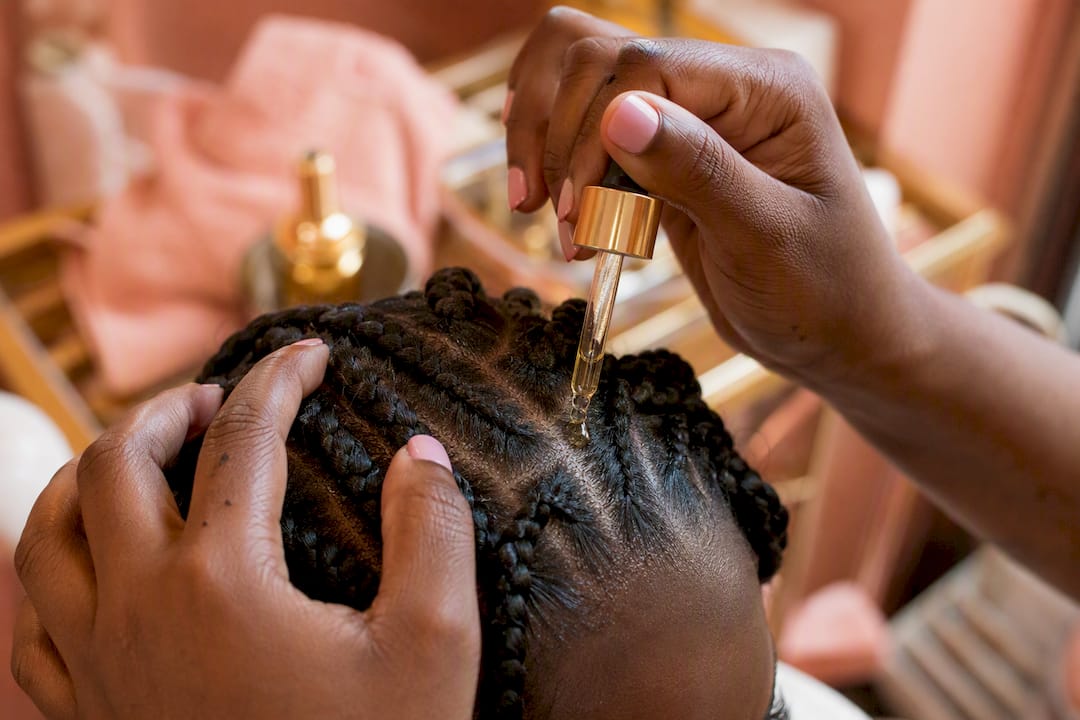
- Water-based scalp serums containing zinc pyrithione, salicylic acid, or glycolic acid
- Diluted tea tree or peppermint oil for targeted itch relief
- A gentle cleansing schedule using cool water rather than hot
- Silk or satin pillowcases and bonnets to cut down on nighttime friction
What to avoid:
- Heavy oil-based products, which trap moisture against the scalp and feed yeast overgrowth
- Scented sprays or oils if you suspect a fragrance sensitivity
- Scratching with fingernails, which breaks skin and invites infection
Essence's guidance on scalp care under braids specifically recommends water-based formulas over oils for this reason: oil sits on top of trapped moisture instead of letting the scalp breathe.
Pro Tip: If mild flaking shows up around week two, switch to a medicated scalp oil or serum with salicylic acid before it turns into a full flare. Catching it early usually means a milder, shorter reaction. For ongoing maintenance, our guide on scalp care strategies for healthy hair with braids walks through a full weekly routine.
What Should You Do If You Get an Allergic Reaction?
Act quickly, but in order. Panic leads to skipped steps.
- Loosen or remove the braids if the reaction is spreading or the tension is worsening it.
- Rinse your scalp with cool water to remove any surface irritant still in contact with skin.
- Apply an over-the-counter hydrocortisone cream to calm mild redness and itching.
- Take an oral antihistamine if itching is intense or hives have developed.
- See a dermatologist if symptoms worsen after 48 hours or don't respond to home care.
See a dermatologist sooner rather than later if you notice persistent rash, patchy hair loss, tender folliculitis bumps, or no improvement after a few days of home treatment. When you do go in, bring the actual hair and products you used. The PubMed research on scalp allergens found that individualized testing with a patient's real products catches allergens that standard panels miss entirely, so showing up with the exact bundle in hand gives your dermatologist a real shot at pinpointing the trigger.
Pro Tip: Take a photo of the reaction as it progresses. If it flares and calms before your appointment, your dermatologist still needs to see how it looked at its worst.
What Are Your Options If You Have a Sensitive Scalp?
You don't have to give up protective styling if synthetic fiber has burned you before.
- Human hair bundles react less often since they lack the alkaline processing chemicals in synthetic fiber, though they cost more and need more upkeep.
- Plant-based or non-toxic synthetic fibers are a newer category with lower reported irritation, though selection is still limited compared to standard Kanekalon.
- Twist-outs and other synthetic-free protective styles eliminate the fiber-contact issue entirely, at the cost of shorter wear time.
- Crochet installs with hypoallergenic fiber reduce direct scalp contact since the braid pattern sits underneath.
Rotating styles and giving your scalp a real break between installs lets the skin barrier recover, which lowers your odds of reacting the next time around. Our breakdown of pre-stretched braiding hair covers how fiber processing affects friction and irritation if you're comparing options.
What Does a Salon-Tested Prevention Checklist Look Like?
This is close to the actual routine we run at Afromagicbraiding for clients with known sensitivities.
- Pre-wash bundles with an ACV rinse on request before the appointment.
- Run a documented patch test for clients with a history of scalp reactions.
- Default to low-tension or knotless technique unless a client specifically requests otherwise.
- Use water-based scalp serums during install rather than heavy oils.
- Follow up with clients in the days after install to catch early symptoms before they escalate.
At booking, ask about the bundle source, whether pre-washing is standard or on request, and whether your stylist has experience with sensitive scalps specifically.
- Bundle source and material confirmed at booking
- Pre-wash performed or offered on request
- Stylist trained in low-tension and knotless methods
If you want a salon that treats these questions as normal instead of an inconvenience, Afromagicbraiding builds them into every consultation.
A Stylist's View on Preventing Reactions Before They Start
Most reactions I see could have been caught with a five-minute conversation before the first braid went in. I ask every client with sensitive skin what hair they've reacted to before, and I'd rather loosen a section twice during install than have someone call me in tears three days later. Pre-washing and patch testing aren't extra steps we tack on. They're just how we work.
Book a Sensitive-Scalp Install With Afromagicbraiding
If you've read this far, you already know most reactions come down to two things: what's in the hair and how tight it goes in. That's exactly where Afromagicbraiding is built differently from a rushed walk-in appointment. We pre-wash bundles on request, run patch tests for clients with a history of scalp sensitivity, and default to knotless and low-tension techniques instead of pulling everything tight to save time.

Every consultation starts with a real conversation about your scalp history and the materials we're using, not a guessing game once you're already in the chair. Browse our portfolio to see knotless and low-tension installs up close, then book a consultation and tell us about any past reactions before your appointment so we can plan around them from the start.
Sources
- Braids for curly and coily hair: Baylor dermatologist weighs in - Baylor College of Medicine Blog Network
- Allergic contact dermatitis of the scalp: a review of an underdiagnosed entity - PubMed
- Can You Really Soak The Toxins Off Your Braiding Hair? The Truth, According To Experts - Essence
- Braiding Hair: Styles, Colors, Techniques, and Maintenance - WebMD
This article is general information, not a substitute for advice from a qualified doctor. Consult a qualified healthcare professional about your own circumstances before acting on anything here.