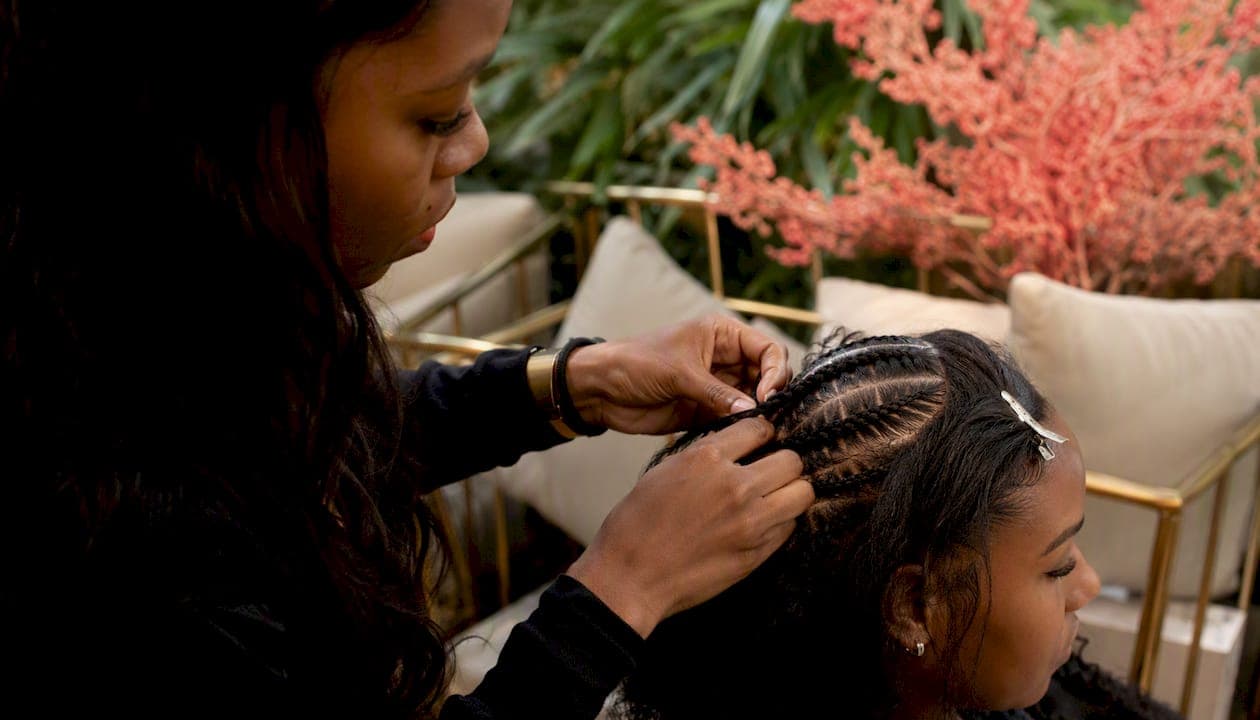
The fastest way to prevent braid damage is choosing a low-tension installation, protecting your scalp every night, cleansing every 1 to 2 weeks, and taking the style down by week eight. Skip any one of these and you're gambling with your edges. Here's the checklist to follow starting today:
- Choose knotless braids or feed-in cornrows over heavy, tight sections
- Protect your hair at night with a silk or satin bonnet, scarf, or pillowcase
- Cleanse your scalp every 1 to 2 weeks, even mid-style
- Wear the style no longer than several weeks, with a typical upper limit around two months
- Moisturize lightly and often, without piling on product
Pain, throbbing, or bumps at the root is never normal. If your scalp hurts during or after installation, tell your stylist immediately and loosen or remove the affected sections. Ignoring it risks traction alopecia, which can become permanent.
Key Takeaways
Preventing braid damage comes down to four controllable factors: installation tension, night protection, cleansing cadence, and wear duration.
Table of Contents
- How to choose braiding techniques that protect your edges
- How often should you clean braids without ruining them?
- What daily habits keep braids moisturized and frizz-free?
- How do you take braids down without breaking your hair?
- What are the warning signs of braid damage?
- What should you bring to your braiding appointment?
- Why we build every install around the scalp, not just the style
- Book a knotless install that's built to protect your hair
- Frequently asked questions about preventing braid damage
- Sources
How to choose braiding techniques that protect your edges
Not all braids pull the same. Tight, heavily sectioned box braids concentrate stress right at the root, which is exactly where hair follicles are most vulnerable. Knotless braids and feed-in cornrows distribute tension more evenly because the technique feeds hair in gradually instead of anchoring a knot right at the scalp. That single difference in technique is why so many stylists now default to knotless as the standard low-manipulation option.
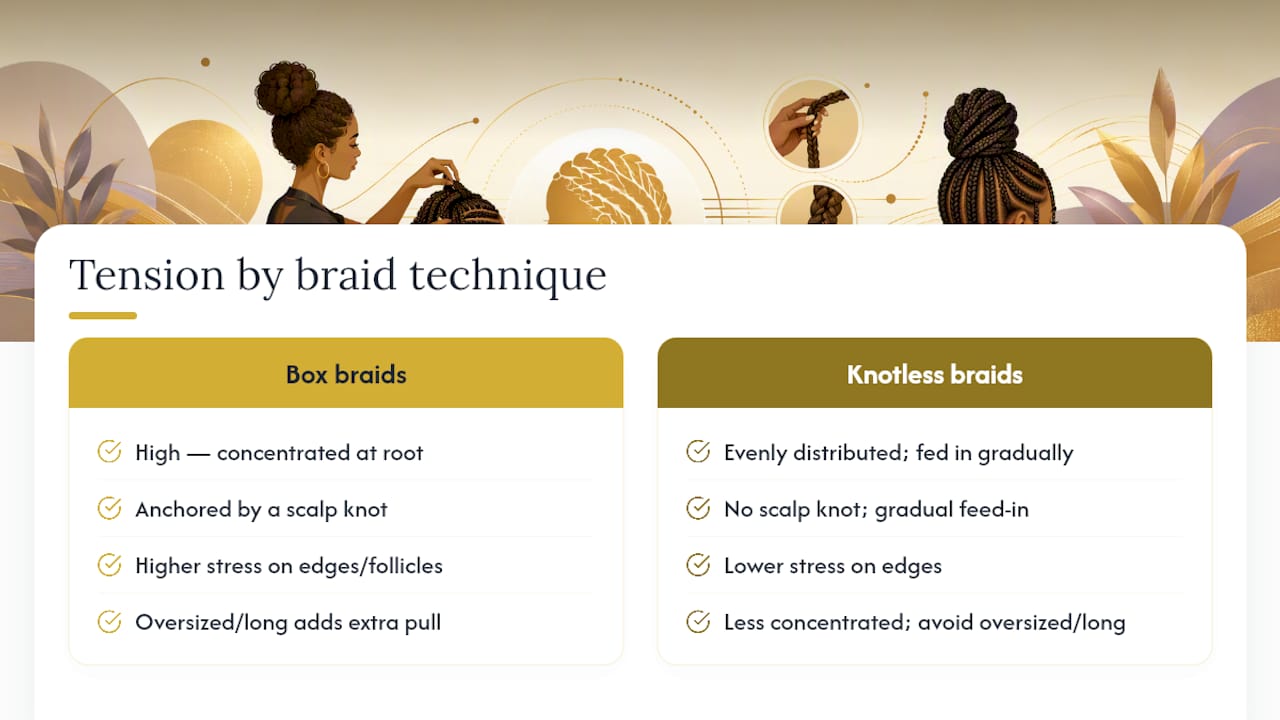
Size and weight matter just as much as method. Oversized braids or extra-long extensions add pull with every movement, especially at the nape, where the hair is often finer and more fragile. Ask your stylist to keep nape sections smaller and lighter, and skip added length if your natural hair is already thin in that area.
Before your appointment, wash, deep-condition, detangle, and trim split ends. Clean, tangle-free hair braids more evenly and takes down with far less breakage later. Hold off on relaxers, dye, or any chemical processing in the days before or during your braided style. Chemically treated hair is more porous and breaks more easily under tension.
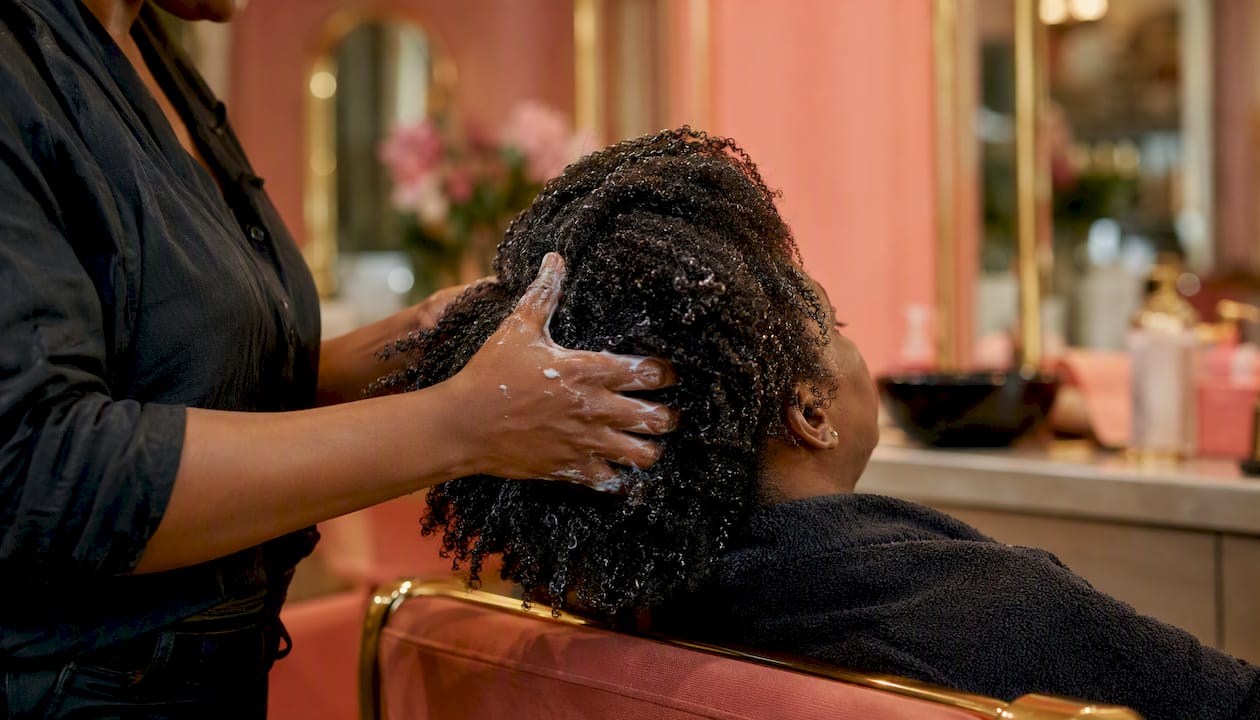
Speak up before the stylist even picks up a rat-tail comb. Say something like, "I want a light hand, especially at my hairline," or "Please stop and check with me if any section feels tight." Good stylists welcome this conversation.
Pro Tip: On day one, try pulling your braids into a loose, comfortable ponytail. If you feel sharp pulling instead of gentle resistance, the tension is too high and should be adjusted before you leave the chair.
How often should you clean braids without ruining them?
Cleanse the scalp every 1 to 2 weeks, adjusting for how much you sweat or how oily your scalp runs. Most people do fine on a 7 to 10 day cadence, while frequent gym-goers or naturally oilier scalps often need a weekly rinse to avoid buildup and odor.
Here's the method that actually works without wrecking your style:
- Dilute a gentle, sulfate-free shampoo with water in an applicator bottle.
- Part sections carefully and apply the diluted shampoo directly to the scalp, not the braid length.
- Massage gently with fingertips, working in small circles instead of scrubbing.
- Rinse by directing water flow at the scalp and letting it run down, rather than drenching and squeezing the braids like a sponge.
- Squeeze out excess water and air-dry, or use a blow dryer on cool, low settings.
Skip heavy, mineral-oil-based products on the scalp. They sit on the surface and trap dirt and sweat instead of washing away, which is exactly what causes buildup and irritation under the style. Persistent itching, visible flaking, or tender bumps call for a diluted medicated shampoo, and if symptoms don't clear within a week or two, it's time to see a dermatologist.
Pro Tip: Never go to bed with a wet scalp. Damp hair trapped under a bonnet all night breeds bacteria and leaves your braids smelling musty by day three.
What daily habits keep braids moisturized and frizz-free?
Nightly protection and light, water-based moisturizing do more for braid longevity than any single product on the shelf. Cotton pillowcases and scarves pull moisture straight out of your hair and create friction every time you turn over in your sleep. A silk or satin bonnet, scarf, or pillowcase solves both problems at once.
Between washes, keep your routine light:
- Mist a water-based leave-in spray onto the scalp and length, not a heavy cream.
- Seal with a few drops of a lightweight oil like jojoba or argan, applied sparingly.
- Use an alcohol-free mousse, such as TRESemmé Extra Hold Mousse, on frizzy edges without saturating the braids.
- A light rice water mist, like Mielle's, refreshes strands between full washes without weighing them down.
- Before swimming or an intense workout, tie hair into a protective updo and rinse thoroughly afterward, then dry completely.
- Avoid mineral-oil-heavy pomades like SoftSheen-Carson Let's Jam near the scalp. Reserve them, if at all, for smoothing edges only.
Pro Tip: A dime-sized amount of product per application is plenty. Overloading braids with oil or cream is the number one cause of the dull, waxy buildup that makes a style look old before its time.
How do you take braids down without breaking your hair?
Take your time. Rushing a takedown is where most breakage actually happens, not during the wear itself. Detangle with slip, working from the ends toward the roots, never the reverse.
- Trim any excessively matted ends if the scissors can save you a fight.
- Loosen and remove braids one at a time, starting from the bottom.
- Finger-detangle each section before reaching for a wide-tooth comb.
- Apply a pre-poo treatment to soften remaining knots before washing.
- Clarify to remove weeks of product buildup, then follow with a deep conditioner.
Once hair is clean, a bond-building treatment or a gentle protein mask helps restore elasticity that weeks of tension can sap. Stick to the 4 to 8 week wear window, and lean toward the shorter end if you're wearing braids on fine or already-thinning natural hair.
Right after takedown, check your scalp for tender spots, apply a moisturizing scalp tonic, and hold off on any chemical processing for at least a week while your scalp recovers.
- Scalp check for tenderness or bumps
- Light moisturizing tonic, not heavy oil
- No relaxers or color for at least a week
What are the warning signs of braid damage?
Some discomfort in the first day is common as your scalp adjusts. Pain that lingers, worsens, or comes with visible symptoms is not.
- Sharp pain during or right after installation
- Persistent headaches that don't ease within a day
- Small bumps along the hairline or part lines
- Bleeding or open sores at the scalp
- Ongoing itching or flaking that doesn't respond to gentle cleansing
- Visible thinning along the hairline or temples
Traction alopecia often starts quietly, with small bumps or a slightly receding hairline that looks like normal shedding at first. By the time thinning is obvious, some follicle damage may already be permanent.
If you notice any of these signs, ask your stylist to loosen the affected braids immediately, or remove them altogether. Spot-treat the scalp with a gentle, alcohol-free cleanser and give your hair a break before reinstalling. Bumps, sores, or thinning that don't improve within a week or two warrant a visit to a board-certified dermatologist.
What should you bring to your braiding appointment?
A little prep before you sit in the chair saves you a lot of frustration later. Pack these essentials:
- Silk or satin bonnet, scarf, or pillowcase for night one
- Water-based leave-in spray
- Lightweight oil like jojoba or argan
- Alcohol-free mousse for edge control
- Detangling spray for future takedown day
- Microfiber towel for gentler drying
At booking, mention specifics: "I'd like the knotless method," or "Please use a light hand at the nape." Flag any known scalp sensitivities or allergies up front. Wash and deep-condition your hair before you arrive so your stylist starts with clean, tangle-free strands instead of fighting buildup from day one.
Why we build every install around the scalp, not just the style
In our chairs, the damage we see almost never comes from the braids themselves. It comes from tension nobody addressed early, or a scalp that went weeks without a proper cleanse. Low-tension methods and a real maintenance routine aren't extras. They're what separates a protective style from one that quietly works against you. If you're not sure your current routine is doing enough, a quick tension check with a stylist who understands protective styling can catch problems before they show up in the mirror.
Book a knotless install that's built to protect your hair
Afromagicbraiding installs knotless braids and feed-in cornrows with a lighter hand at the root and the nape, the two spots where most tension damage actually starts, and every client leaves with a scalp-care plan, not just a finished style.

Our in-salon shelves stock the water-based leave-ins and lightweight oils this guide recommends, so you're not left guessing what to buy after your appointment. Browse real installs in our portfolio to see how knotless and feed-in techniques actually look and hold up over weeks of wear, and check client reviews before you decide. When you're ready, book your appointment and mention any scalp sensitivities at scheduling. Every client is welcome to ask for a complimentary tension check partway through the visit.
Frequently asked questions about preventing braid damage
How long can I safely wear braids before they start damaging my hair? Most stylists recommend 4 to 8 weeks. Beyond that window, new growth and buildup increase tangling risk during takedown, and prolonged tension on the same follicles raises the chance of lasting damage.
Is it normal for braids to hurt for the first day or two? Mild tightness the first day is common as your scalp adjusts. Sharp pain, throbbing, or headaches are not normal and mean the style is too tight and needs loosening right away.
How often should I wash my scalp with braids in? Every 1 to 2 weeks works for most people, though those who sweat heavily or have oilier scalps often do better on a weekly cleanse to prevent buildup and odor.
What's the best way to keep braids from frizzing? Sleep in a silk or satin bonnet or scarf, apply light water-based leave-in sprays instead of heavy creams, and use alcohol-free mousse sparingly on edges rather than saturating the whole style.
Can I work out or swim with braids in? Yes, but tie hair into a protective updo first, rinse thoroughly after swimming or heavy sweating, and dry the scalp completely to avoid buildup and irritation.
Sources
- Are Braids Breaking My Hair Off? Here’s What Experts Say
- Braids for curly and coily hair: Baylor dermatologist weighs in
- How Braids Can Affect Hair and Scalp Health | As Seen in Byrdie - Mona Dermatology
- How to Maintain Braids: Frizz Control, Scalp Care, and Longevity - CU Independent
- How to keep braids from frizzing