
Afro braiding hair is defined as the practice of braiding natural afro-textured hair or adding extensions to create protective and expressive styles rooted in African tradition. The term covers everything from tight cornrows to voluminous box braids, and it describes both the technique and the hair materials used. Braiding traditions date back over 5,000 years, making this one of the oldest continuous beauty practices in human history. At Afromagicbraiding, we see every braid as a living connection to that heritage. Whether you are new to braiding or deepening your knowledge, understanding afro braiding hair starts with knowing its styles, roots, and care requirements.
What is afro braiding hair and how does it work?
Afro braiding hair refers to two connected things: the act of braiding afro-textured hair and the extension hair used to create or enhance those braids. Natural afro-textured hair has a tight coil or curl pattern that grips braiding hair extensions well, making it ideal for long-lasting styles. Protective braids reduce daily manipulation and help retain moisture, which promotes natural hair growth and reduces breakage. Extensions come in two main forms: synthetic fiber and human hair. Synthetic options are affordable and widely available, while human hair blends more naturally and lasts longer.
Afro kinky bulk human hair is loose, unwefted hair designed to match afro-textured hair, making it ideal for braiding and locs. It offers strong grip and long-lasting style hold, which is why many stylists prefer it for clients who want a natural finish. The choice between synthetic and human hair affects everything from styling time to scalp comfort to overall look.
What are common afro braid styles and how do they differ?
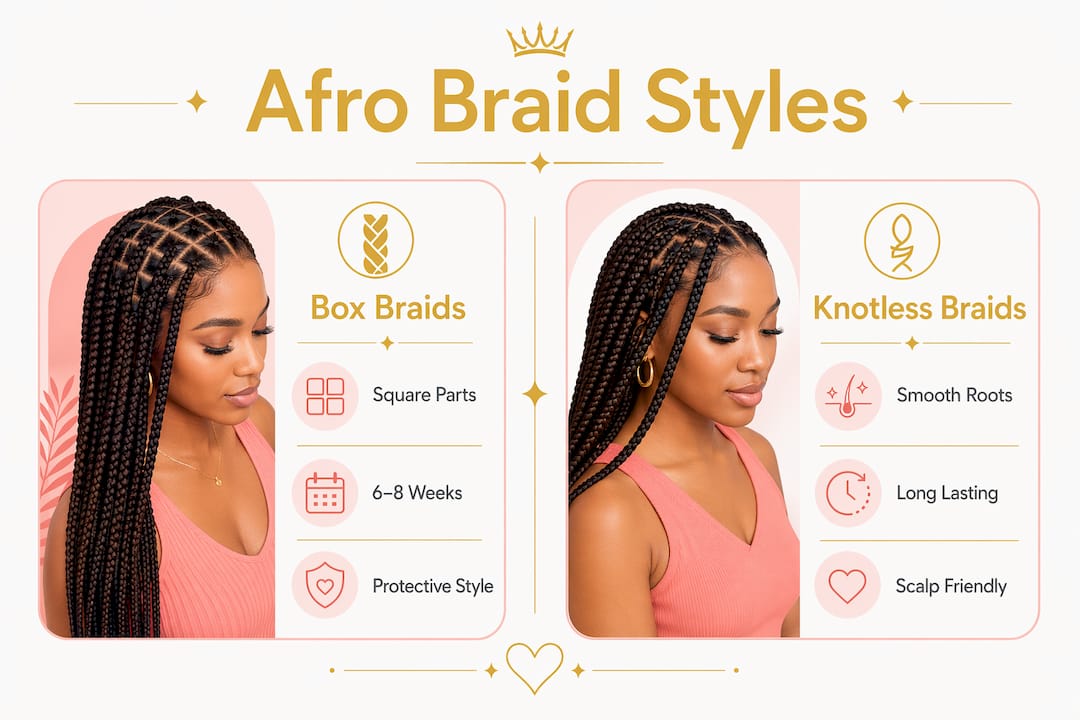
Afro braid styles vary widely in appearance, installation time, and maintenance needs. The four most popular styles each serve a different purpose and suit different lifestyles.
- Box braids: Individual plaits created from square-shaped sections of hair. Box braids are one of the most recognized protective styles globally, known for their clean, geometric parts and versatile length options.
- Cornrows: Braids braided flat against the scalp in straight or curved rows. They require no added hair and work well as a base for other styles or as a standalone look.
- Knotless braids: A feed-in technique that starts with your natural hair before gradually adding extension hair. This method reduces tension at the root compared to traditional box braids.
- Twists: Two strands of hair wrapped around each other rather than braided in three sections. Twists are gentler on the hair and easier to take down.
| Style | Appearance | Maintenance | Common use |
|---|---|---|---|
| Box braids | Square-parted, full individual plaits | Refresh every 6–8 weeks | Everyday protective style |
| Cornrows | Flat, scalp-hugging rows | Low maintenance, 4–6 weeks | Base style or standalone look |
| Knotless braids | Smooth root, natural start | Similar to box braids | Tension-sensitive scalps |
| Twists | Two-strand coils | Gentle, 3–4 weeks | Natural texture definition |
Box braids last 6–8 weeks and are redone when new growth reaches about half an inch. That timeline makes them one of the most practical long-wear styles available.
What is the cultural and historical significance of afro braiding?
Braiding is not just a hairstyle. It is a language. Braiding traditions encode cultural identity, with elders passing techniques to younger generations as a social bonding ritual that conveys tribe, age, and marital status.
"Braids historically indicated tribal membership, social status, and identity across African communities for thousands of years." — Braid, Wikipedia
Box braids trace their origins to African tribes including the Mbalantu of Namibia and the Khoisan of South Africa. These communities used braid patterns to communicate who a person was within their community without a single word. The Himba people of Namibia are particularly well known for their elaborate braiding traditions, which signal age, social standing, and life stage.
Braiding also served as a form of resistance and identity preservation within the African diaspora. Enslaved Africans used braiding patterns to map escape routes and communicate covertly. That history gives modern braiding a weight and meaning that goes far beyond aesthetics. Learning about hair braiding culture is part of respecting the practice.
Adornments like beads, shells, and colorful pins have always been part of the tradition. Accessories can signify readiness, emulate wealth, or simply enhance style, depending on the community and context. Wearing them today connects modern braiding to centuries of symbolic expression.
How to care for and maintain afro braided hair
Proper care extends the life of your braids and protects your natural hair underneath. A consistent routine makes the difference between braids that last six weeks and braids that cause damage.
- Cleanse gently. Use a diluted sulfate-free shampoo or a braid-specific cleanser. Apply it directly to the scalp and rinse thoroughly without scrubbing the braids aggressively.
- Moisturize the scalp. Use a lightweight oil like jojoba or tea tree oil between washes. Dry scalp leads to itching and flaking, which can cause you to scratch and loosen braids prematurely.
- Protect at night. Sleep with a satin or silk bonnet or on a satin pillowcase. Cotton absorbs moisture and creates friction that frays the braid edges over time.
- Avoid heavy buildup. Product buildup on synthetic hair is hard to remove and can cause odor. Use minimal product and focus application on the scalp, not the braids themselves.
- Refresh on schedule. Braids should be refreshed every 6–8 weeks, depending on hair growth and style. Leaving them in longer risks matting and breakage at the roots.
Pro Tip: Apply a light scalp oil the night before your wash day and cover with a plastic cap for 30 minutes. This loosens buildup and makes cleansing more effective without over-stripping your natural oils.
Scalp care strategies are especially important for afro-textured hair, which tends to be drier than other hair types. Moisture retention is the foundation of healthy braided hair.
What are health considerations and safety tips for choosing braiding hair?
The braiding hair you choose matters as much as the technique used to install it. Not all synthetic hair is safe, and the risks are more serious than most people realize.
- 90% of synthetic braiding hair samples tested contained heavy metals including lead, cadmium, and arsenic. That figure represents a significant health concern for anyone wearing synthetic extensions regularly.
- The same testing found 169 harmful chemicals in synthetic hair samples, with several linked to breast cancer and other serious health conditions.
- Scalp absorption is real. Chemicals in synthetic hair can transfer to the scalp, especially when the hair is worn for weeks at a time or when the scalp sweats.
Safer alternatives include plant-based synthetic hair and high-quality human hair extensions. Afro kinky bulk human hair, for example, is free from the chemical coatings found in most synthetic fibers. Modern consumers are increasingly seeking plant-based or toxin-free braiding hair options as awareness of these risks grows.
Pro Tip: Before purchasing synthetic braiding hair, check the packaging for ingredient disclosures. Ask your stylist whether they carry low-chemical or plant-based options. A licensed braider will know which brands have cleaner formulations.
When in doubt, choose human hair or ask your stylist for guidance. A professional installation from a licensed braider also reduces the risk of scalp damage from improper tension or product use.
What are popular styling options and accessories for afro braids?
One of the greatest strengths of afro braid styles is their versatility. The same set of box braids can look completely different depending on how you wear and accessorize them.
- Updos and buns: Gather braids into a high bun or low chignon for a polished, formal look. This also keeps braids off the neck during warm weather.
- Half-up styles: Pull the top section back while leaving the rest down. This style works especially well with longer box braids or knotless braids.
- Ponytails: A sleek high ponytail with braids creates a clean, elongated silhouette. Wrap one braid around the base to conceal the hair tie.
- Parting variations: Zigzag parts, diagonal parts, and curved parts all change the visual impact of cornrows and box braids dramatically.
Beads, shells, colorful pins, and bands are the most common accessories used to personalize braids. Beads in particular carry cultural weight in many African traditions, where specific colors and patterns carry meaning. You can find creative styling ideas that work for both everyday wear and special occasions.
Pro Tip: When adding beads or cuffs, avoid metal accessories with sharp edges that can snag or break individual braids. Smooth-edged beads and rubber-lined cuffs protect the braid structure while still making a statement.
Color is another powerful styling tool. Ombre synthetic hair, pre-dyed human hair, and colored extensions let you add dimension without chemical processing your natural hair. This makes braiding one of the most color-safe ways to experiment with bold looks.
Key takeaways
Afro braiding hair is a protective, culturally rooted practice that requires the right materials, consistent care, and informed choices about extension safety to deliver healthy, long-lasting results.
| Point | Details |
|---|---|
| Definition matters | Afro braiding hair covers both the technique and the extension materials used to create styles. |
| Style variety is wide | Box braids, cornrows, knotless braids, and twists each serve different needs and scalp types. |
| Cultural roots run deep | Braiding traditions over 5,000 years old encode identity, status, and community belonging. |
| Safety is non-negotiable | 90% of synthetic hair samples tested contained harmful chemicals; choose human or plant-based options. |
| Care extends style life | Gentle cleansing, scalp moisturizing, and refreshing every 6–8 weeks protect natural hair health. |
Every braid tells a story worth protecting
I have spent years working with afro-textured hair, and the one thing I keep coming back to is this: braiding is not a trend. It is a practice that carries real cultural weight, and treating it that way changes everything about how you approach it.
The health findings around synthetic braiding hair are something I take seriously. When a client sits in my chair, I want them to leave not just looking great but feeling confident that what we used was safe. That means having honest conversations about materials, asking questions about sourcing, and staying current on what the research says.
What I find most rewarding is watching someone connect with a style that reflects their identity. A set of Fulani-inspired braids with gold cuffs is not just beautiful. It is a living link to a tradition that survived centuries. That context makes the work feel meaningful in a way that goes beyond technique.
My advice to anyone learning about afro braiding hair: start with the culture before you start with the style. Understanding where these traditions come from makes you a more informed client and a more respectful participant in a practice that belongs to a community with a long, proud history.
— Afro
Afromagicbraiding: where craft meets cultural pride
At Afromagicbraiding, we specialize in knotless braids, box braids, and afro braid styles installed with care and precision in Southfield, Michigan. Every client receives a personalized consultation to match style, hair type, and lifestyle needs.
We use premium human hair and carefully selected extensions to protect your natural hair while delivering exceptional results. Browse our style portfolio to see the range of looks our stylists create, or book your appointment directly online. Our team is ready to bring your vision to life with techniques that honor both your hair and the tradition behind every braid.
FAQ
What is afro braiding hair exactly?
Afro braiding hair refers to the practice of braiding natural afro-textured hair or adding extensions to create protective styles. The term also describes the extension hair materials, including synthetic fiber and human hair, used in the process.
What are box braids?
Box braids are individual plaits created from square-shaped sections of hair, often with added extensions. They are a popular protective style that typically lasts 6–8 weeks before needing to be redone.
How do I braid afro hair without causing damage?
Use a tension-free feed-in technique, avoid braiding too tightly at the roots, and keep the scalp moisturized throughout the wear period. Refreshing braids every 6–8 weeks prevents matting and breakage.
Is synthetic braiding hair safe to use?
Testing found that 90% of synthetic braiding hair samples contained harmful chemicals including heavy metals and carcinogens. Choosing plant-based synthetic hair or high-quality human hair extensions significantly reduces that risk.
How long do afro braid styles last?
Most afro braid styles last 4–8 weeks depending on the style and how well you maintain them. Box braids and knotless braids typically reach the upper end of that range with proper care.