
Micro braids have captured attention for decades, yet most people still misunderstand what they actually are. If you've been wondering what are micro braids and how they differ from other protective styles, you're asking the right question. These ultra-fine braids are smaller than a pencil tip, often mistaken for natural hair strands, and carry far more complexity than their delicate size suggests. This guide covers everything: how they work, their cultural roots, the right way to care for them, and the real risks you should know before sitting in the stylist's chair.
Table of Contents
- Key takeaways
- What are micro braids and how they compare to other styles
- Cultural significance and history of micro braids
- Micro braids maintenance tips for healthy hair
- Understanding the risks: traction alopecia and scalp stress
- Styling options that make micro braids worth every hour
- My honest take on micro braids after years in the salon
- Experience micro braids done right at Afromagicbraiding
- FAQ
Key takeaways
| Point | Details |
|---|---|
| Micro braids are ultra-small | Each braid is thinner than a pencil, often resembling natural hair strands for a seamless look. |
| Cultural roots run deep | Micro braids connect to African braiding traditions that span centuries of identity and heritage. |
| Maintenance is non-negotiable | Edges need refreshing every 3 weeks and braids should not exceed 2-3 months of wear. |
| Damage comes from poor technique | Micro braids themselves don't damage hair; tight tension and improper removal do. |
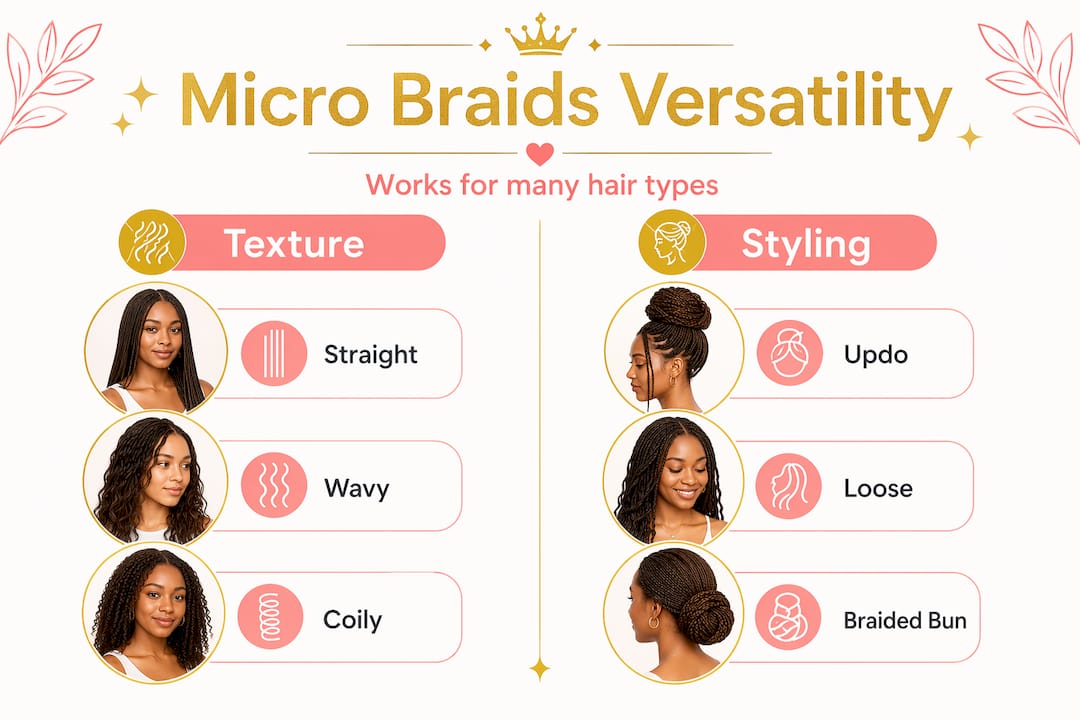
| Styling versatility is unmatched | Micro braids can be worn straight, wavy, curly, or in updos, adapting to any occasion. |
What are micro braids and how they compare to other styles
Micro braids are exactly what the name suggests: braids installed at an extremely small size, often no thicker than a matchstick. Each section of hair is divided into very fine parts, then braided down using a three-strand technique, with or without braided extensions added for length and fullness. The result is hundreds of tiny braids that flow and move almost like loose natural hair.
What separates micro braids from other protective styles is their sheer fineness. Here's how they stack up against the most popular braid types:
| Braid type | Size | Install time | Best for | Pros | Cons |
|---|---|---|---|---|---|
| Micro braids | Very small | 8-12+ hours | Versatility and natural look | Moves like real hair, highly versatile | Time-intensive, higher tension risk |
| Box braids | Medium to large | 4-8 hours | Low maintenance | Quick install, bold look | Less natural movement |
| Knotless braids | Medium | 5-8 hours | Scalp comfort | Reduced tension at root | Can unravel faster |
| Cornrows | Flat to scalp | 1-3 hours | Base style or protective base | Fast, affordable | Limited styling options |
The micro braids hairstyle is often chosen by people who want the protective benefits of braiding without the bulkier, more obvious look of larger styles. They can be installed with braided extensions for added length, or using your natural hair alone if it's long enough.
Micro braids work across a range of hair textures, from fine and straight to thick and coily. They're one of the few braid styles that genuinely suit almost every hair type, though finer hair may require more care during installation to avoid excess tension on the roots.
Cultural significance and history of micro braids
Braiding is one of the oldest forms of cultural expression in the world. In African communities, specific braid patterns communicated tribal affiliation, age, social status, and marital standing. Micro braids didn't emerge from a trend. They grew from centuries of craft passed from generation to generation, honoring heritage with every strand.
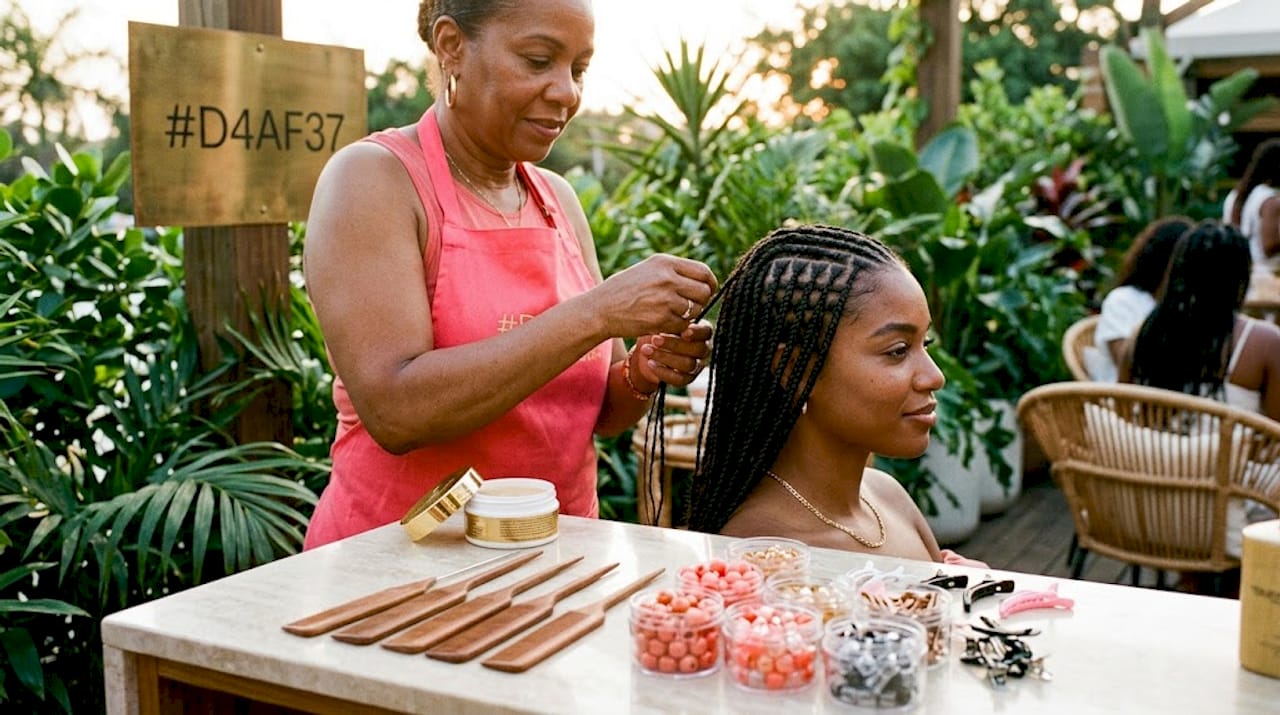
As African diasporic communities spread globally, braiding traditions traveled with them. Micro braids became a signature look in the 1990s and early 2000s, worn prominently by artists and actresses who made the style globally recognizable. The style is widely celebrated as both a fashion statement and a practical approach to protecting natural hair health.
The cultural weight of micro braids goes beyond appearance. They represent resilience and identity in communities where natural hair was historically policed or suppressed. Wearing micro braids is, for many, an act of pride.
Here's why micro braids hold such specific cultural significance:
- They preserve natural hair by shielding it from daily manipulation and environmental exposure.
- They connect wearers to ancestral grooming traditions practiced across West, East, and Central Africa.
- They've been reclaimed as high fashion, appearing on runways and in editorial spreads worldwide.
- They signal belonging and identity within Black communities, carrying personal and collective meaning.
Understanding this context matters. When you choose micro braids, you're participating in something much older and richer than a hairstyle trend. Every braid tells a story.
Micro braids maintenance tips for healthy hair
Here's the honest truth most people don't hear: the micro braids hairstyle is stunning, but it demands consistent care. Neglecting maintenance is where most people run into trouble. The good news is that a solid routine isn't complicated. It just requires discipline.
Follow these steps to keep your micro braids and scalp healthy throughout the wear period:
- Wash with diluted shampoo. Using a water-diluted shampoo applied directly to the scalp keeps your roots clean without causing braid slippage. Never pour thick, creamy shampoo straight onto braids. It builds up inside the braid and weakens the strand.
- Skip heavy conditioners on the braid shaft. Use a lightweight liquid conditioner or diluted leave-in on the scalp and roots only. Creamy conditioners cause slippage and attract lint. Your scalp cleanliness directly affects how long your braids last.
- Moisturize regularly with light oils. Jojoba oil, argan oil, and light scalp sprays work well between washes. Apply directly to the scalp and the roots of each braid.
- Refresh your edges every three weeks. This is one of the most overlooked micro braids maintenance tips. Edges refresh every 3 weeks to prevent breakage caused by new growth tension against older, looser braids at the hairline.
- Cap your braids at night. A satin bonnet or silk pillowcase reduces friction, prevents frizz, and extends the life of your style significantly.
- Remove braids professionally or with extreme patience. The removal phase is where the most damage happens. Improper detangling causes breakage and matting that requires cutting. A professional or a very slow, product-assisted self-removal is non-negotiable.
Micro braids can be worn safely for 2-3 months with this level of care. Pushing past that window without proper edge maintenance is where hair health starts to suffer.
Pro Tip: Many people avoid washing micro braids out of fear of ruining them. Skipping washes actually harms scalp health and shortens braid longevity. A clean scalp equals healthier braids, full stop.
Understanding the risks: traction alopecia and scalp stress
Micro braids, like any braided protective style, carry real risks when installed or maintained incorrectly. Traction alopecia is the biggest concern and the one most worth understanding before you commit to the style.
Traction alopecia is hair loss caused by repeated or prolonged tension on the hair follicles. It typically shows up first along the hairline, temples, and edges. The early-stage damage is reversible, with hair often regrowing within 6 to 12 months once tension is removed. But without intervention, the damage becomes permanent.
"Prolonged wear and high tension cause follicular inflammation that can progress to cicatricial alopecia, a form of permanent scarring." — Hair Transplant for Traction Alopecia: Scarring Guide
Watch for these warning signs of scalp stress:
- Soreness or pain at the roots that lasts more than 24 hours after installation
- Visible thinning along the edges or temples
- Small bumps or folliculitis along the hairline
- Redness, flaking, or persistent itching at the scalp
- Braids that pull visibly when you move or tilt your head
If you notice any of these, take the style down. Don't wait. Alternating hairstyles with rest periods between installations protects follicles and gives your scalp time to recover. A braided wig worn between installations can give you the look without the tension on your natural hair.
The key insight here: micro braids don't cause damage. Poor installation and neglected warning signs do. Choosing an experienced braider who uses a tension-free technique makes an enormous difference.
Styling options that make micro braids worth every hour
The installation time for micro braids is long. It can run 8 to 12 hours or more depending on length and thickness. That investment pays off in sheer styling flexibility that most protective styles simply can't match.
Here's a look at the styling range micro braids offer:
- Straight and sleek. Micro braids hang naturally with a polished, straight appearance, ideal for professional settings or formal occasions.
- Wavy texture. Braid micro braids into large plaits or twist sections overnight, then release them for a defined wave pattern that looks effortlessly natural.
- Curly volume. Rod sets or flexi rods used on micro braids create big, bouncy curls that rival a blowout in drama and presence.
- Updos and buns. Micro braids gather beautifully into high buns, French twists, and pinned styles that hold their shape without pins digging into the scalp.
- Half-up, half-down. This everyday style works especially well with micro braids because the thinner size keeps the look clean rather than bulky.
Pro Tip: To keep micro braids looking fresh between salon visits, spray a light mix of water and rosewater onto your braids before restyling. It refreshes the texture and reduces frizz without disturbing the braid structure.
Seasonal styling is another reason people love this style. In summer, you can wear micro braids up and off your neck. In colder months, they wear beautifully down or tucked under accessories without losing their shape. No other braid style adapts quite as naturally to different occasions and looks.
My honest take on micro braids after years in the salon
I've worked with hundreds of clients who came in convinced that micro braids had permanently damaged their hair. In almost every case, what I found wasn't damage from the style itself. It was damage from tension that went unchecked, edges that hadn't been refreshed, or removal that was rushed.
The misconception that braids inherently damage hair is one of the most persistent myths in protective styling. And it discourages people from a style that, done right, can actually support healthy hair growth by shielding strands from manipulation.
What I've learned is that micro braids reward clients who are willing to commit to the maintenance. They're not a set-it-and-forget-it style. But the payoff, both aesthetically and for hair health, is real. I've seen clients grow out significant length under a well-maintained micro braid installation. And I've seen clients lose significant edge density from a single overly tight install. The braider and the aftercare make all the difference.
My honest advice: if you want micro braids, don't go to the cheapest or fastest option. Go to someone whose portfolio shows clean, fine parts and who will talk honestly with you about tension and timing. Your edges will thank you later.
— Afro
Experience micro braids done right at Afromagicbraiding
If this guide has you ready to commit to micro braids, the next step is finding a braider you can trust with the work.

At Afromagicbraiding, every micro braid installation is approached with care, precision, and a genuine commitment to your hair health. Browse the Afromagicbraiding portfolio to see the quality and artistry that goes into every style. When you're ready, book your appointment directly online for a smooth, convenient experience. Have questions before you commit? Reach out to the team and get honest answers about what's right for your hair type, lifestyle, and goals. Your micro braids should feel as good as they look.
FAQ
What exactly are micro braids?
Micro braids are very small, fine braids created using a three-strand technique on tiny sections of hair. They are often no thicker than a matchstick and can be installed with or without braided extensions for added length.
How long do micro braids last?
With proper care, micro braids can last 2 to 3 months. Edges should be refreshed every 3 weeks to prevent breakage and maintain a fresh appearance along the hairline.
Do micro braids damage your hair?
Micro braids do not cause damage on their own. Damage results from excessive tension during installation, skipping maintenance, or rushing the removal process. Choosing an experienced stylist and following a proper care routine protects your natural hair.
How do you wash micro braids without ruining them?
Use a diluted shampoo spray applied directly to the scalp, avoiding creamy products on the braid shaft. Rinse gently and allow braids to air dry fully to prevent mildew and braid slippage.
Are micro braids suitable for all hair types?
Yes, micro braids work across most hair textures, from fine and straight to thick and coily. People with finer hair should request lighter tension during installation to protect their strands and follicles from undue stress.