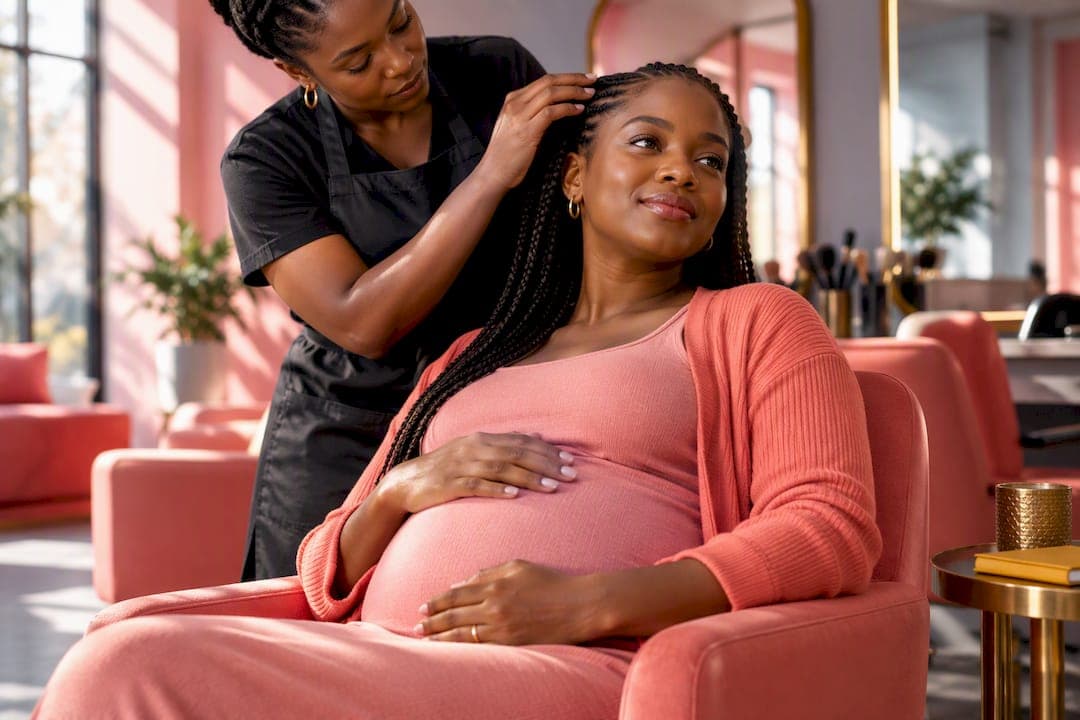
Knotless braids, loose box braids, flat twists, light faux locs, and crochet or boho styles top the list of pregnancy protective styles, along with wigs as a no-tension alternative. The one rule that matters most: keep every installation low tension and don't wear it too long. Dermatology guidance backs braiding during pregnancy as long as the style isn't tight and you remove it at the first sign of scalp stress.
TL;DR:
- Low-tension styles like knotless braids, loose box braids, and crochet braids are safest during pregnancy, especially in late stages when lighter styles prevent scalp stress.
- A professional stylist can adjust technique and section size based on your pregnancy stage and comfort to reduce the risk of traction alopecia.
- Signs of scalp stress require immediate action, including loosening or removing styles and consulting a dermatologist if redness or tenderness persists.
- Planning braid installation around 36 weeks helps manage postpartum recovery and reduces daily styling burdens during early motherhood.
- Postpartum shedding is temporary and may cause increased perceived hair loss after taking down styles, but protective styles do not prevent natural hormonal hair loss.
Table of Contents
- Which protective styles work best during pregnancy
- How to pick a style and brief your stylist
- Safety rules that protect your scalp from traction alopecia
- Timing your install around late pregnancy and delivery
- What happens to your hair after birth
- What a pregnancy-aware braiding appointment looks like
- Booking a braid-friendly appointment for pregnancy
- Where this guidance comes from
- Sources
- FAQ
Which protective styles work best during pregnancy
Not every braid or twist suits a changing body and a more sensitive scalp. The right pick depends on how far along you are, how much time you can sit still, and how much daily upkeep you're willing to do.
- Knotless braids: gentle at the root because hair is fed in gradually, typically a 3 to 6 hour install, low daily upkeep once done.
- Loose box braids: classic and versatile, medium install time, best kept larger and lighter to avoid extra pulling weight.
- Flat twists or cornrows: quick to install, minimal tension when done with a light hand, good for readers who want something simple during the first trimester.
- Light faux locs: styled without heavy extensions, moderate install time, ideal when you want a fuller look without the weight of traditional locs.
- Crochet or boho braids: faster installs since hair is looped rather than braided from the root, a smart choice for later pregnancy when sitting for hours feels harder.
- Wigs or protective units: zero tension on your own hair, near-instant styling, worth considering in the third trimester or during weeks of higher scalp sensitivity.
Late pregnancy favors shorter, lighter versions of any of these. Extra length and thickness add weight that pulls at the hairline over time, which is the opposite of what a protective style should do. A professional install matters more than usual right now: an experienced braider can adjust technique, section size, and pace based on how you're feeling that day, something a DIY session at home can't always accommodate.
How to pick a style and brief your stylist
Walking into a consultation with a clear idea of what you need makes the whole appointment smoother. Before you book, think through your goals, how long you want the style to last, whether you have a history of scalp pain or breakage, and how many hours you can realistically sit.
Bring these questions to your stylist:
- Do you use a feed-in or knotless method to reduce pulling at the root?
- What braid weight and length do you recommend for my hair type and how far along I am?
- What's your policy if I need a break or the tension feels like too much?
Comfort requests are fair game and a good stylist will expect them. Ask for a pillow or cushion for extended sitting, the option to split a long install across two sessions, and regular water and bathroom breaks. Our pre-appointment guide walks through what to wash and communicate beforehand so nothing gets missed.
Pro Tip: Write down your questions before your appointment. Pregnancy brain is real, and a stylist would rather answer a checklist than guess what you need mid-braid.
Safety rules that protect your scalp from traction alopecia
Dermatology guidance is direct on this point: pulling that causes pain or headaches is a warning sign, not something to push through. The American Academy of Dermatology recommends keeping braids in for a moderate period and avoiding tight installations altogether, since prolonged tension is the main driver of traction alopecia.

Traction alopecia is often reversible if caught early. A clinical review on NCBI Bookshelf notes that early-stage hair loss from tension can recover once the pulling stops, but chronic cases risk scarring and permanent loss. That single fact is the reason "just push through it" is bad advice during any protective style, pregnant or not.
Watch for these warning signs and act on them right away:
- Pain, tenderness, or tender bumps near the hairline.
- Redness or visible inflammation around individual braids.
- Breakage or thinning concentrated at tension points.
- Tenting, where the scalp lifts with the braid instead of lying flat.
If you notice any of these, loosen or remove the affected section immediately and check with a dermatologist if redness or tenderness doesn't settle within a few days. Between appointments, cleanse your scalp gently, moisturize with a lightweight oil or leave-in spray, alternate your parting to avoid repeat stress on the same spots, and lean toward lighter extensions rather than long, heavy ones. Our scalp bump troubleshooting guide covers what normal irritation looks like versus what needs attention.
Timing your install around late pregnancy and delivery
Many expectant mothers schedule what's known as a labor or delivery braid around 36 weeks, a pattern parenting coverage on braiding before birth ties to practical postpartum planning. A fresh protective style at that stage means one less thing to manage in the exhausting first weeks with a newborn.
A few things to plan around:
- Installs commonly take several hours depending on style and length, so factor that into your day.
- Ask about splitting a longer style across two shorter sessions if sitting that long feels like too much.
- Bring snacks, water, and a phone charger, and don't hesitate to request a mid-session stretch break.
Once installed, plan your maintenance cadence around a realistic 4 to 8 week wear window rather than stretching it further. Check in with your stylist if anything feels off before that window closes, and always have the style removed by someone gentle and patient rather than rushing it yourself. Our maintenance guide breaks down cleansing and moisturizing routines between visits.
What happens to your hair after birth
Postpartum shedding, known clinically as telogen effluvium, typically peaks around four months after delivery and is temporary for most new mothers. Protective styles don't prevent this shedding, and taking down a braided style postpartum can make the volume of shed hair more noticeable all at once since it's been collecting under the style.
When you're ready to take styles down or start fresh:
- Detangle in small sections with a wide-tooth comb, working from the ends up.
- Moisturize thoroughly since postpartum hair is often drier than usual.
- Hold off on chemical straighteners or heavy heat styling for a few weeks.
- Consider a temporary low-tension style again if you want coverage while shedding settles.
- See a dermatologist if thinning persists past a few months or you notice patches that don't seem to be regrowing.
What a pregnancy-aware braiding appointment looks like
We treat every pregnant client's session a little differently, because comfort changes week to week. That usually means a cushioned seat, the option to split a longer install into two shorter visits, and a tension-free feed-in technique throughout, so the braid grows in gently rather than pulling from day one. Most pregnant clients ask the same handful of questions: how long will this take, will it hurt, and can I get up if I need to. The answer is always yes, and we build the appointment around that flexibility rather than around a fixed schedule.
— Afro
Booking a braid-friendly appointment for pregnancy

You shouldn't have to choose between a style you love and a scalp that feels good for the next two months. Certain braid styles using a feed-in method keep pulling to a minimum from the first section to the last. Consultations often cover comfort needs upfront, from seating to session length, to avoid decisions mid-appointment.
- Browse the full style portfolio to see knotless braids, box braids, Fulani braids, and 17 more options before you book.
- Mention you're pregnant when you book your appointment so we can plan breaks and session length in advance.
- Ask about follow-up care during visits to know when to schedule the next appointment.
If you're weighing a labor braid around 36 weeks or just want something low-maintenance for the months ahead, our booking guide walks through what to expect from first call to finished style.
Where this guidance comes from
The safety guidance in this article draws on dermatology and clinical sources: the American Academy of Dermatology's hairstyle guidance, the NCBI clinical review on traction alopecia, ACOG's guidance on hair care during pregnancy, and reporting on braiding before birth.
Sources
- Hairstyles that pull can lead to hair loss | American Academy of Dermatology
- Traction alopecia clinical review | NCBI Bookshelf
- Is it safe to dye my hair during pregnancy? | ACOG
- How braids help pregnant Black moms prepare for birth and postpartum | What to Expect
FAQ
Are braids safe to get while pregnant?
Yes, professional braiding is generally considered safe during pregnancy as long as the style avoids excessive tension on the scalp. The American Academy of Dermatology notes there's no evidence that protective styling harms the fetus, though pain or headaches from a tight install should prompt you to loosen it.
How long should braids stay in during pregnancy?
Dermatologists recommend keeping braids in for about 6 to 8 weeks to limit the risk of traction alopecia, the same guideline that applies outside of pregnancy. Removing or refreshing a style sooner is reasonable if your scalp feels sensitive or tender before that window ends.
Is hair dye safe to use during pregnancy?
Most experts consider hair dye unlikely to harm the fetus because only a small amount is absorbed through the scalp, according to ACOG. Still, it's worth mentioning any personal concerns to your OB provider before your appointment.
Why do some women get braids right before labor?
Many expectant mothers schedule braids around 36 weeks so they have one less styling task to manage during the exhausting early weeks with a newborn. Parenting coverage on this pattern also describes it as a calming ritual many find grounding before delivery.
Will postpartum hair shedding affect my protective style?
Postpartum shedding, called telogen effluvium, is a temporary hormonal response that typically peaks around four months after birth. A protective style won't prevent this shedding, and taking the style down afterward may reveal more loose hair than expected since it's been collecting underneath.