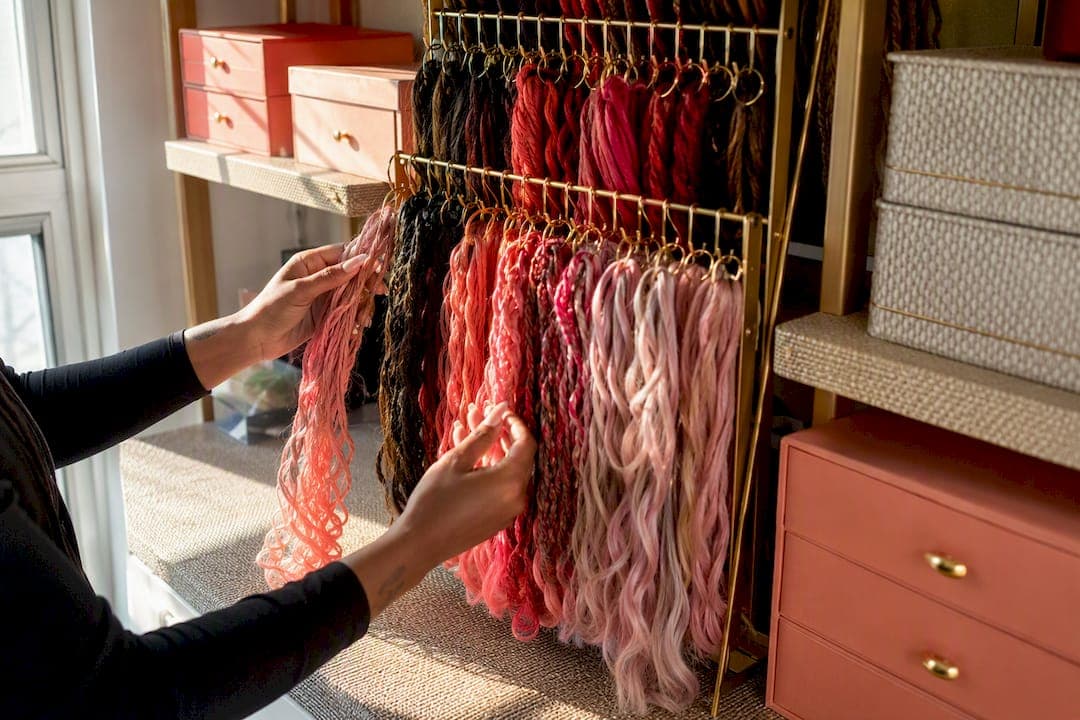
The best way to store braiding hair is simple: clean and fully dry each bundle, secure the top and label it, then protect it in a satin-lined, breathable container or hang it on a peg or rack for quick access. That sequence, dry first, protect second, matters more than which container you eventually pick.
Here's what that looks like in practice:
- Short-term (days to a few weeks): wig stand, satin bag, or S-hook on a garment rack
- Long-term (months or seasonal): breathable wig box with satin lining or a labeled bin
- For stylists: braid racks or multi-tier carts that keep bundles pegged, visible, and dust-free
- For leftovers: loosely coiled and secured, stored flat or hanging, never crammed into a drawer
One rule overrides all the others: hair must be completely dry before it goes into any bag, box, or bin. Even a little leftover dampness invites mildew and a smell you cannot brush out later, according to guidance on preparing bulk human hair.
Key Takeaways
Braiding hair lasts longest when it's fully dried before storage, protected in satin or breathable materials, and labeled for easy rotation.
| Point | Details |
|---|---|
| Dry completely first | Never store hair with any residual dampness, since it invites mildew and odor. |
| Choose satin over cotton or plastic | Satin and silk reduce frizz and friction; sealed plastic traps moisture long term. |
| Match method to timeline | Use wig stands or hanging bags for short-term access, breathable boxes for months-long storage. |
| Label and rotate stock | Track color, length, and date so older bundles get used before newer purchases. |
| Get salon-grade results | Afromagicbraiding preps every bundle with the same detangle, cleanse, and dry routine covered here before it reaches your appointment. |
Table of Contents
- How To Prepare Braiding Hair Before Storage
- Best Short-Term Storage Methods For Daily Use
- What's The Right Way To Store Braids Long Term?
- Storing Unopened Bundles Versus Leftover Extensions
- How Should Stylists Organize Braiding Hair Inventory?
- How Do You Refresh Braiding Hair That's Been Stored?
- What Should You Buy For Proper Braiding Hair Storage?
- Salon-Tested Braiding Hair Storage Tips From Afro Magic Braiding
- Ready For Your Next Braid Appointment?
- Sources
How To Prepare Braiding Hair Before Storage
Storage problems almost never start in the box. They start with hair that got put away wet, tangled, or coated in product residue. Fix that first and the rest of this guide gets a lot easier.
Run through this before anything goes into a bag or bin:
- Detangle gently with your fingers or a wide-tooth comb, working from the ends up
- Clarify if needed to strip product buildup or the factory coating some synthetic hair ships with
- Condition for slip if the hair is human hair or a synthetic-friendly blend, which makes future detangling easier
- Air-dry completely on a hanger or rack in a space with real airflow
For securing bundles, skip the tight rubber bands. They crease synthetic fibers at the exact spot they wrap, and that crease often will not brush out. A loose zip tie or a soft, snag-free hair tie at the very top of the bundle holds shape without leaving a permanent kink. While you're at it, jot down the color number, length, and the date on a small tag or sticky label. It takes ten seconds now and saves you from guessing later.
Pro Tip: Never dry or store hair in a steamy bathroom. The residual humidity gets trapped in sealed plastic bags and undoes all the drying work you just did. A closet shelf or a hanger in a dry room works far better.
Prepping this way before every storage cycle connects directly to how the hair performs at your next appointment. A quick pass through hair health basics before braiding covers the same drying and cleaning logic from the other direction, getting hair ready to wear rather than ready to shelve.
Best Short-Term Storage Methods For Daily Use
If you're reaching for the same braid wig or the same bundle every few days, you need something faster than a sealed box. Short-term storage is about balancing easy access against protecting the hair from dust, crushing, and frizz.
Wig stands or mannequin heads work best for full braid wigs. A stand keeps the shape rounded the way it sits on your head, which matters because a wig left flat in a drawer for two weeks often needs a full reshape before it looks right again. The tradeoff is space: a stand takes up real shelf real estate that a folded bag does not.
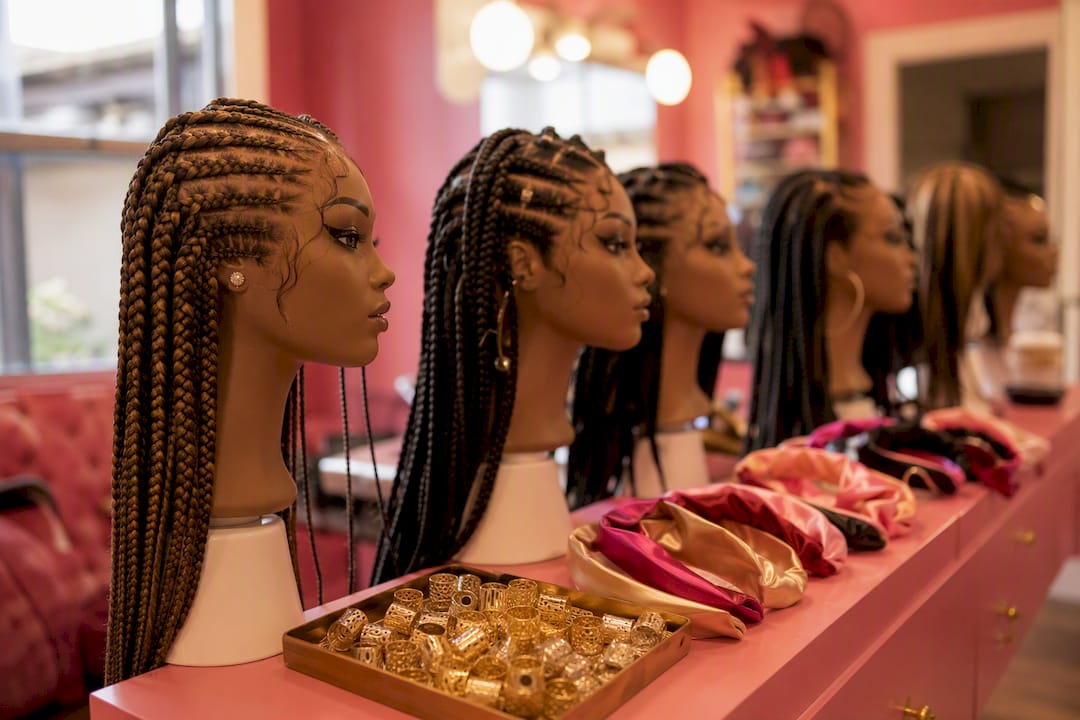
Satin or silk bags and scarves are the lightest option and the most forgiving on fiber texture. Cotton pulls moisture and roughens synthetic strands over time, while satin and silk reduce the friction that causes frizz in the first place, a point backed by wig storage guidance from Invisible Particles. The downside is they offer zero structural support, so a bagged braid wig can still flatten if it's shoved into a corner.
Hanging on S-hooks or clipped hangers gives you the best combination of visibility and airflow for loose bundles or single braids you're rotating through often. It's also the fastest to grab on a rushed morning. Just don't clip directly onto delicate ends. Clip near the secured top instead.
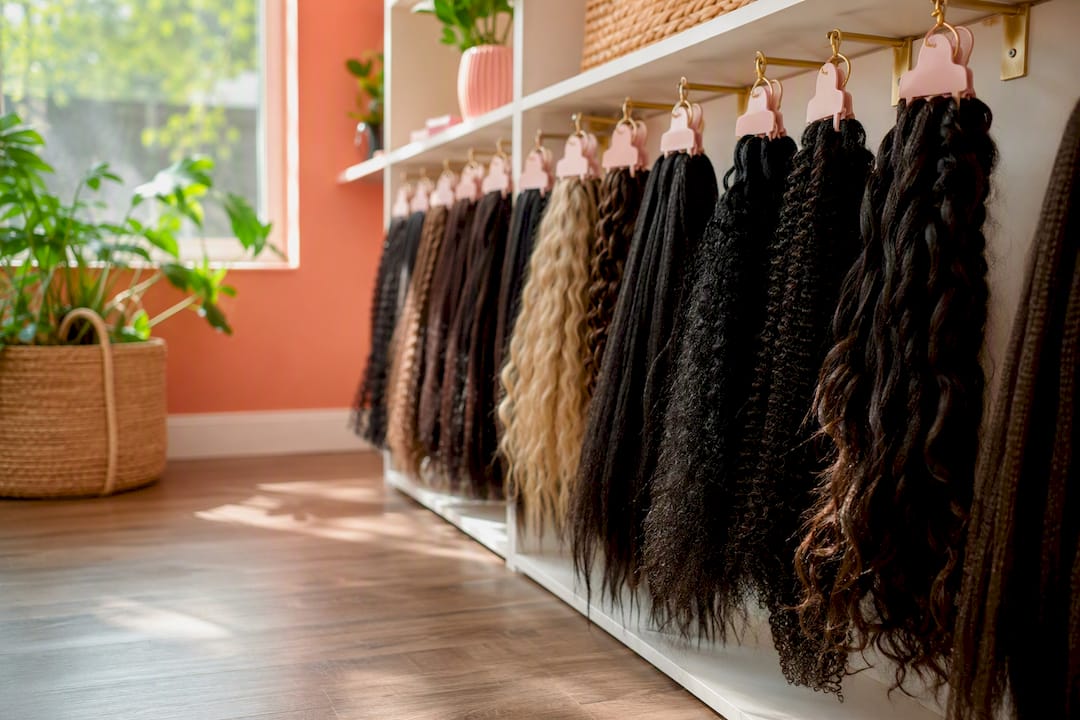
Resealable breathable garment bags split the difference: more protection than an open hook, more airflow than solid plastic. Guidance on storing detached box braids points to hanging organizers and lined bins with the same breathable logic in mind.
For tight spaces or travel, a few tricks go a long way:
- Roll bundles into a compact satin pouch instead of folding them flat
- Use the binder clip and hanger trick to hang loose extensions in a closet corner
- Try a clear-pocket hanging organizer, the kind made for shoes, to sort multiple colors at a glance
The most common daily mistake is compression. Stacking heavy items on top of a folded wig or cramming bundles into a too-small drawer flattens curl pattern and creates creases that are tough to reverse. Give braiding hair room to breathe, even in a small space, and check our guide on tangle-free braid steps for styling tricks that also reduce storage stress between wears.
What's The Right Way To Store Braids Long Term?
Long-term storage, think seasonal rotation or hair you won't touch for months, asks more of you than a quick overnight stash. The hair needs breathable protection, some kind of structural support, and a check-in now and then so small problems don't turn into ruined bundles.
Here's a straightforward process for boxing a braid wig or a large bundle for extended storage:
- Confirm the hair is bone dry, then wrap it loosely in a satin scarf or slip it into a satin pillowcase
- Stuff the wig cap lightly with tissue paper or a foam head form to hold its rounded shape
- Angle it upright in a wig box rather than laying it flat, which keeps the crown from flattening
- Close the box loosely rather than airtight, and store it somewhere dry and out of direct sunlight
- Check every few weeks to a couple of months, more often in humid climates, per storage advice from Invisible Particles
A short do-not-do list saves a lot of regret:
- Do not box up hair that's even slightly damp
- Do not rely on sealed plastic bins for months at a time. Trapped moisture is worse than no protection at all
- Do not stack heavy boxes or bags on top of stored wigs or bundles
For very long braids or extensions, store them elongated on a hanger inside a garment bag, or coil them loosely and secure the ends, a method detailed in this bulk human hair storage guide. Avoid sharp folds at the midpoint. That's where creases set in hardest and take the longest to work out. Our post on long-lasting braid styles covers the same moisture and ventilation principles for braids you're currently wearing, not just hair on the shelf.
Storing Unopened Bundles Versus Leftover Extensions
Unopened bundles and the leftover hair from a finished style need different handling, and mixing them up in one pile is how people lose track of what's usable.
For unopened bundles straight from the pack:
- Keep them in the original packaging as long as it's intact. Manufacturers design it to protect the strands during shipping and shelf storage
- Store flat or hanging in a cool, dry spot, never near a heat vent or window
- Label the outer packaging with purchase date and color lot the moment it comes in, before it gets buried under other stock
For hair you've already opened, trimmed, or pulled from a finished braid:
- Coil the leftover strands loosely into a soft ring rather than balling them up tight
- Secure the ends with a snag-free tie to stop unraveling in storage
- Consider a gentle loose braid down the length of the leftover piece. It keeps strands aligned and prevents the tangled nest that loose hair turns into after a few weeks
Label everything the same way: color number, length, lot if you have it, and intended use. Rotate stock so older leftovers get used before newer purchases. Hair that sits untouched for a year degrades faster than hair in active rotation, which is reason enough to make "use oldest first" a habit rather than an afterthought. For portioning bundles cleanly before storage, see how to separate braiding hair packs.
How Should Stylists Organize Braiding Hair Inventory?
A home stash of three or four colors is one thing. A working stylist with dozens of bundles in rotation needs a system, not a closet shelf.
Braid racks with pegs are the backbone of most professional setups. A rack built with a large number of individual pegs, some models offer close to 200, lets you pre-stretch and stage hair by color and length so you're never stopping mid-appointment to hunt for the right bundle. Multi-tier utility carts add mobility. Wheels mean you can roll the whole setup between styling stations instead of walking back and forth to a supply closet all day. Pegboards mounted on a wall work well in smaller salons where floor space is tight, and hanging color-coded organizers give you a fast visual system, no reading labels required, you just grab from the section that matches the shade card.
A working inventory checklist should track:
- Color code and length
- Texture or hair type (synthetic, human hair blend, kanekalon, etc.)
- Purchase or restock date
- Batch or lot number where available
Rack height matters more than most people think. Ergonomics research on salon equipment points to peg placement and mobility as real factors in reducing the reaching and bending that adds up over a multi-hour braiding session. A rack set at the wrong height turns a six-hour appointment into a six-hour ache in your lower back.
Pro Tip: Don't buy the biggest rack you can find right away. Start with a mid-size cart that fits your current volume, then scale up once you know exactly which colors and lengths you restock most often. If you're weighing the investment, a compact rack for a home-based stylist costs far less than a full multi-tier cart, and specialized salon equipment and organization tools can help you compare options built specifically for professional workspace flow. Prioritize the rack first. Better hanging or pegboard organization pays for itself faster than any other single upgrade in a busy braiding schedule.
How Do You Refresh Braiding Hair That's Been Stored?
Hair that's been sitting for a few weeks or months usually needs a small refresh before it's client-ready again, and most fixes take under ten minutes.
For frizz, work through these steps in order:
- Mist lightly with a braid spray or apply a small amount of mousse to smooth stray strands
- Wrap the hair in a satin scarf for a few minutes to let the product settle
- Finger-smooth the surface gently rather than combing right away
For tangles, start with your fingers before you ever reach for a comb. Light tangling from storage usually works loose with patient finger detangling. Heavier matting calls for a wide-tooth comb paired with a slip product or light conditioner, worked from the ends upward. Checking hair periodically during storage, as recommended in wig care guidance, catches small tangles before they turn into knots.
For odor, air out the hair in a dry, ventilated spot before assuming you need a full wash. Avoid heavy oils on stored hair between wears. They smell great going on but they also attract dust and buildup that make the next wash harder. If hair still smells musty after airing out, brittle fibers snap when gently stretched, or the odor persists after a wash, it's time to retire that bundle rather than fight it. Our guide on preventing braid damage walks through more of these warning signs in detail.
What Should You Buy For Proper Braiding Hair Storage?
A short shopping list covers almost every scenario in this guide:
- Satin or silk bags and scarves, for daily protection and wrapping bundles
- Breathable garment bags, for hanging wigs or bundles without trapping moisture
- A wig stand or mannequin head, for shape retention on braid wigs
- A peg rack or S-hooks, for fast access and staging multiple colors
- Labeled bins or boxes, for long-term or seasonal storage
- Silica gel packets, especially useful if you live somewhere humid
You'll find most of this at beauty supply stores, salon wholesalers, or online marketplaces. When you're comparing options, check three things before buying: size relative to your typical bundle length, breathability of the fabric or box material, and whether bags marketed as satin are actually satin-lined rather than just satin-colored polyester on the outside.
Salon-Tested Braiding Hair Storage Tips From Afro Magic Braiding
The checklist we run before any hair goes into storage at Afro Magic Braiding starts the same way every time: detangle, a light cleanse if there's product buildup, air-dry fully, then secure the top before it touches a shelf or a bag.
A few habits that make the biggest difference:
- We use soft, snag-free ties instead of tight elastics, since creased fiber is nearly impossible to fully correct
- Every bundle gets a fast label with color, length, and date the moment it's prepped, no exceptions, no "I'll remember it later"
- Stock rotates oldest-first, so nothing sits untouched long enough to degrade quietly in the back of a bin
Pro Tip: When a client brings in their own hair, we inspect it first for existing tangles, product residue, or signs of prior damage, then keep it separate from salon stock until it's cleaned and confirmed ready. That quarantine step protects both the client's hair and everything else on the shelf.
If you're weighing between doing this yourself or getting hands-on help, our portfolio of finished braid styles shows what properly maintained hair looks like once it's back in a client's chair.
A Note From The Salon Floor
We've handled synthetic and human hair long enough to know that storage habits, not the hair itself, cause most of the frizz and tangling clients complain about. Different textures, from silky kanekalon to human hair blends, all respond the same way to one thing: full drying before they go into a bag or box. If you'd rather have us handle prep, styling, and storage guidance in person, you can book an appointment and we'll walk you through what works best for your specific hair type.
Ready For Your Next Braid Appointment?
Reading about storage racks and satin bags only gets you so far. If you'd rather skip the trial and error and walk in with hair that's already prepped, dried, and ready for a style that holds its shape for weeks, Afromagicbraiding handles that end to end. We source premium braiding hair ourselves, so every bundle you buy in-salon already meets the drying and quality standard this guide describes, no guessing whether last-minute clearance-rack hair was stored properly before it reached you.

Whether you need knotless braids, boho braids, or a fresh set of Fulani-inspired braids, our stylists start every appointment with the same prep checklist covered above: detangle, cleanse, dry, secure. You get a style built to last and hair that's easier to maintain between visits. Browse our current services and pricing or book your appointment today, and bring any questions about your own storage setup. We're happy to talk through it in the chair.
Sources
- How Do You Store a Braid Wig to Keep It Looking New? - Invisible Particles
- How to Prepare Bulk Human Hair for Braiding
- Braiding Hair Rack with 196 Pegs, Hair Extension Holder with 4 Tiers Storage Cart, Classical Black Braiding Rack Stand for Hair Braider, Sturdy Hair Rack for Salon, Home, Braiding School
- How to Store Unused Box Braids for Future Use - JALIZA
- Human Hair for Braiding Guide | Best Types & Lengths