
Knotless braids typically hold up neat and tidy for four to eight weeks, with most clients getting their best results between weeks two and six. Eight weeks is the safe maximum stylists recommend before new growth and buildup start working against you. Where you land in that range comes down to braid size, installation care, and how well you protect them at night, which the next sections break down in detail.
TL;DR:
- Smaller or micro knotless braids typically last six to eight weeks, providing the longest duration if installed with proper tension and care.
- Heavier extension hair, tight installation, and fast hair growth can reduce wear time by causing early loosening or tangling, especially around the roots.
- Regular scalp maintenance, gentle washing, thorough drying, and night protection extend braid lifespan and prevent early unraveling.
- Larger or boho styles tend to need reinstallation after three to five weeks due to their increased weight and looser curl effects.
- Prioritizing scalp health and avoiding overly tight tension or heavy products can prevent traction alopecia and other damage while maximizing style longevity.
Table of Contents
- How Long Do Knotless Braids Last By Size and Style?
- What Makes Knotless Braids Last Longer or Fall Apart Sooner?
- What's the Best Nightly and Weekly Routine for Knotless Braids?
- How Do You Wash and Dry Knotless Braids Without Ruining Them?
- When Should You Take Knotless Braids Out?
- Salon-Tested Advice for Getting the Most Out of Your Install
- My Take: Longevity Should Never Beat Scalp Health
- Sources
- FAQ
How Long Do Knotless Braids Last By Size and Style?
Braid size drives most of the difference in wear time, and it is not a small effect. Tighter, smaller braids grip the natural hair more securely, so they resist frizz and loosening far longer than chunky installs.
Here is what to expect from each size category:
- Small or micro knotless braids: Several weeks of neat wear. The tighter weave and lower hair-per-braid ratio mean less weight pulling at each strand, so they hold their shape longer.
- Medium knotless braids: A moderate duration of neatness for most clients. This size is the most requested at salons because it balances styling time with a reasonable durability window.
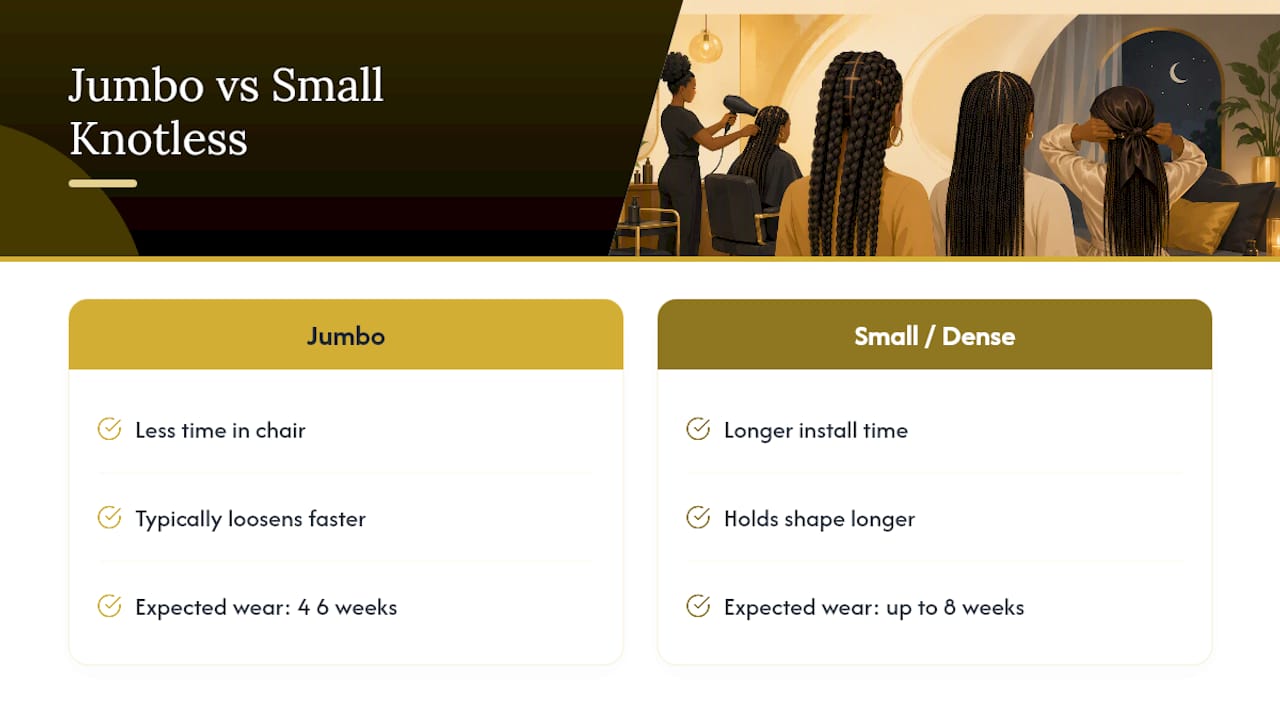
- Large or jumbo knotless braids: Three to five weeks. Bigger braids carry more extension hair per section, and that extra weight shortens the time before roots loosen.
- Boho or curly-piece styles: A relatively brief wear period, as the loose curl pieces frizz and shift faster than a sleek, straight finish.
- Human hair extensions tend to blend and hold a little longer than synthetic strands, which can dry out and tangle sooner, especially with frequent washing.
If you are deciding between a size or comparing knotless against a traditional install altogether, this breakdown of box braids versus knotless braids walks through the wear-time and hair-health tradeoffs side by side.
What Makes Knotless Braids Last Longer or Fall Apart Sooner?
Wear time is not just luck. Several variables, some you control and some you do not, decide whether your braids are still camera ready at week six or already frizzing at week three.
- Installation tension. Knotless technique starts with your natural hair and feeds extension in gradually, which reduces the base tension you get with a knotted install. That method can help prevent traction alopecia, but a rushed or overly tight application still puts stress on your edges no matter the technique.
- Amount and weight of extension hair. More hair per braid looks fuller on day one, but it also pulls harder on your roots and accelerates loosening. Ask your braider to size the hair pack to your natural density, not just the style photo you brought in.
- Hair growth rate and new growth. As your hair grows, the braid's base shifts away from your scalp, creating a gap that tangles and mats over time. Faster growers often notice this by week three or four.
- Lifestyle factors. Regular workouts, swimming, and humid climates all speed up frizz and edge swelling. Sweat and chlorine dry out both your scalp and the braid, so athletes usually see shorter wear windows than average.
- Product buildup. Heavy oils, gels, or too-frequent product application near the roots trap dirt and sweat, which softens the braid's grip and speeds up frizz.
Pro Tip: Ask your stylist for a lightweight, water-based edge product instead of a heavy gel. Gels build a waxy layer that attracts lint and dust, which makes braids look dull and frizzy well before they actually loosen.
What's the Best Nightly and Weekly Routine for Knotless Braids?
A consistent routine matters more than any single product. Here is the order that keeps braids looking fresh the longest.
- Every night, pineapple your braids by gathering them loosely at the top of your head and securing with a satin scrunchie. This keeps friction off your edges while you sleep.
- Sleep on a satin or silk pillowcase, or wear a satin bonnet. Cotton pulls moisture out of both your hair and the braiding extension, which speeds up dryness and frizz.
- Moisturize your scalp two to three times a week with a lightweight, water-based spray rather than a heavy oil. Focus the product at the root, not the length of the braid.
- Spot-clean visible buildup between washes with a diluted apple cider vinegar rinse or a scalp-friendly cleansing spray, applied with a cotton ball directly to the part lines.
- Touch up edges every two to three weeks if you notice frizz creeping in around the hairline, especially if you have finer or shorter edge hair.
- Avoid over-styling. Skip heavy gels, excessive restyling, or pulling braids into tight buns near the root, since this reintroduces the same tension the knotless technique is designed to avoid.
Pro Tip: Keep a small spray bottle of water mixed with a few drops of lightweight leave-in conditioner in your bag. A quick misting midday revives dry-looking braids without the buildup that comes from reapplying oil.
For a deeper routine that pairs scalp care with wear time, the scalp massage guide for knotless braids covers techniques that support both comfort and hair growth underneath the style.
How Do You Wash and Dry Knotless Braids Without Ruining Them?
Washing is where most knotless braids meet an early end, and it is almost always about the drying, not the shampooing.
- Target shampoo at the scalp, working it in with your fingertips or a scalp brush rather than lathering down the length of the braids.
- Rinse thoroughly but avoid fully soaking the braid lengths, since saturated extension hair takes far longer to dry and holds moisture near the root.
- Blot dry with a microfiber towel or a soft T-shirt instead of rubbing, which prevents frizz at the roots and along the parts.
- Finish with a hooded dryer or low heat setting aimed at the scalp until it is completely dry. Skipping this step is the single most common reason braids unravel early.
Stylist Takeisha Berry-Brooks recommends washing knotless braids every two to three weeks, scalp first, with careful rinsing and full drying to avoid buildup and odor. That interval keeps sweat and product from accumulating without oversaturating the style, and it lines up with how long most sizes of knotless braids are expected to hold anyway. Damp roots left after a wash create the exact conditions for odor, itchiness, and early unraveling, so a hooded dryer session is not optional, it is the step that protects everything else you have done right.
When Should You Take Knotless Braids Out?
Your scalp will usually tell you before your calendar does. Watch for these signs that it is time to schedule a takedown rather than push for another week.
- Consistent scalp pain or tenderness, especially around the hairline, which signals ongoing tension rather than normal newness soreness.
- Persistent itching paired with visible buildup, since this combination usually means product and sweat have accumulated past what spot-cleaning can fix.
- Tangled new growth at the base, which happens once regrowth creates enough gap between your scalp and the braid to knot up on itself.
- Excessive shedding concentrated at the roots when you touch or style the braids, as opposed to a few loose hairs, which is normal.
Many stylists recommend removing protective styles by around eight weeks, since new growth past that point increases tangling faster than most people expect. When you take braids down, detangle gently from ends toward roots with a slip conditioner to avoid turning normal shed hair into breakage. If you notice ongoing bumps, sores, or hair loss at the edges, a dermatologist visit is worth the trip before you reinstall anything.
Salon-Tested Advice for Getting the Most Out of Your Install
At Afro Magic Braiding, the nightly pineapple-and-satin routine is the single habit we push hardest, because it costs nothing and does more for wear time than any product on the shelf. Pair it with a light, water-based moisturizer at the roots, and most clients comfortably ride out the four-to-six-week window without their edges looking tired.
Hair amount and braid diameter are the two choices that most affect both your price and how long the install lasts. A fuller, jumbo look costs less time in the chair but tends to loosen faster, while a smaller, denser braid takes longer to install and typically holds its shape further into the eight-week range. Knotless installs generally run longer than traditional box braids because the stylist feeds hair in gradually rather than knotting at the base, so plan your appointment window accordingly and book your refresh two to three weeks out if you know you will need one. Knotless braid pricing at Afro Magic Braiding runs $180 to $290 depending on size and length, and that range reflects exactly this tradeoff between install time and expected wear.
My Take: Longevity Should Never Beat Scalp Health
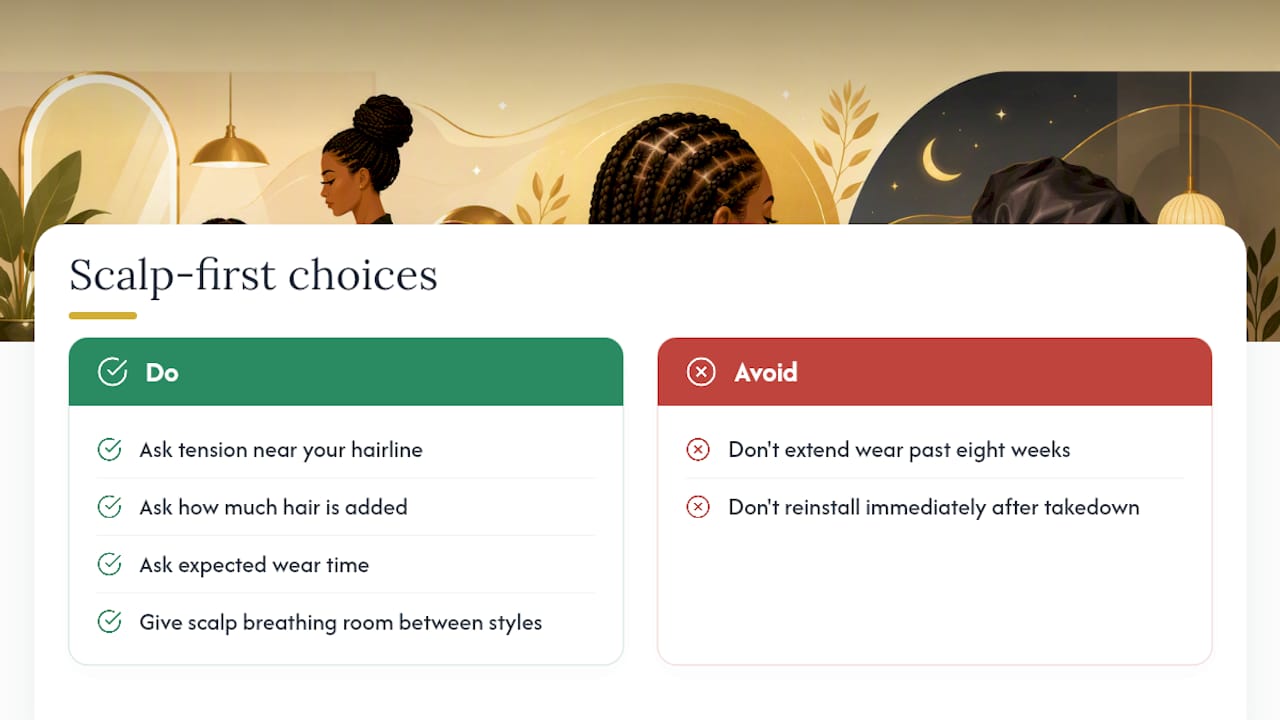
Chasing the maximum wear time is tempting, especially when a fresh install looks its best in week one and you want to stretch every dollar. But squeezing past eight weeks to avoid a redo almost always costs more in the long run, whether that is thinning edges or a scalp that needs real recovery time.
Before your next appointment, ask your braider three things: how much tension they plan to use near your hairline, how much hair they are adding relative to your natural density, and what wear time they expect given your hair's growth rate. Then give your scalp real breathing room between styles rather than going straight from takedown to reinstall. Your hairline will thank you years from now, even if this style felt a little too good to let go this week.
— Afro
Sources
For washing technique, see how hairstylists recommend washing knotless braids. For scalp health during protective styling, read Allure's guide to protective style hair loss. For general curl-friendly aftercare habits, this curl routine guide offers useful crossover tips, and Afro Magic Braiding's own maintenance tips for 2026 rounds out the salon-tested side.
- Your Favorite Protective Style Might Actually Be Causing Your Hair Loss | Allure
- Knotless Braids: The Pros, Cons, and Care
- 5 itchy scalp remedies for protective styles (Head & Shoulders)
FAQ
What Braids Last the Longest?
Small and micro knotless braids typically last the longest, holding neat for six to eight weeks because their tighter weave resists loosening better than larger sizes. Jumbo and boho styles look fuller but tend to need a redo sooner, often within three to five weeks.
What Are the Disadvantages of Knotless Braids?
Knotless braids generally take longer to install than traditional box braids since the stylist feeds hair in gradually rather than knotting at the base. They can also cost more for that extra chair time, and heavy extension packs still carry some traction risk even with the gentler technique.
How Much Do Knotless Braids Cost?
At Afro Magic Braiding, knotless braids run $180 to $290 depending on braid size, length, and the amount of hair used. Smaller, denser braids that last closer to eight weeks typically fall at the higher end of that range because of the added installation time.
Why Don't Knotless Braids Last Longer?
Hair growth is the main limiter. Once new growth creates space between your scalp and the braid base, usually around week four to six, tangling accelerates and the style stops looking fresh. Incomplete drying after washing and heavy product buildup near the roots make that timeline even shorter.