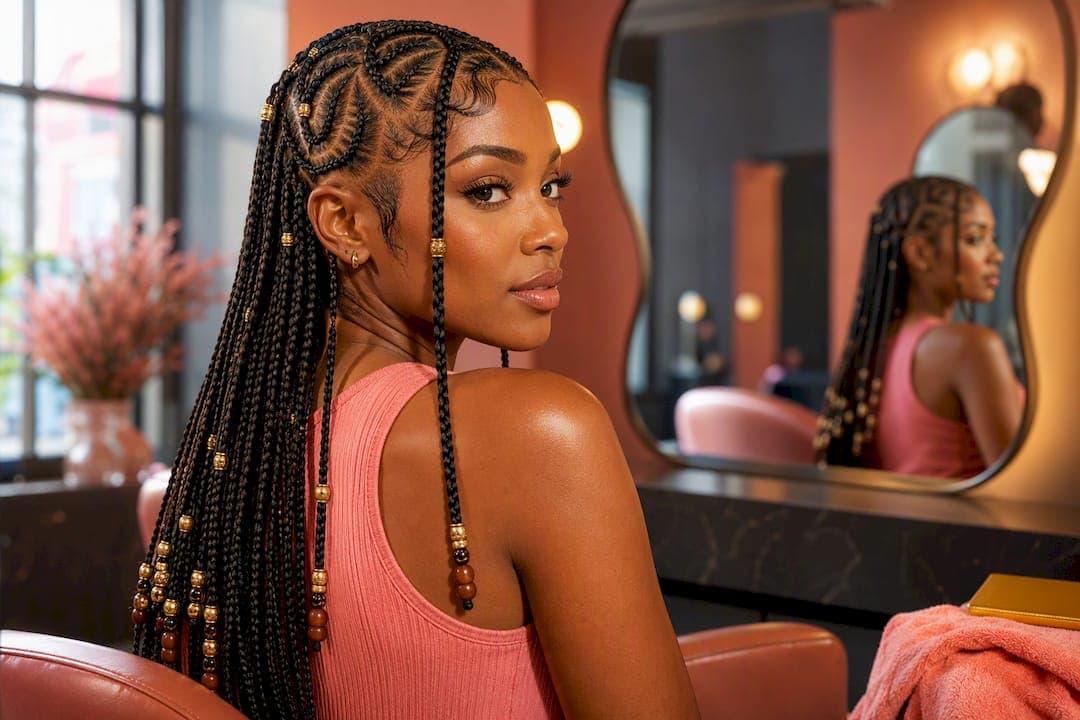
Fulani braids with beads combine close cornrows and loose individual plaits finished with decorative beads, giving you a protective style rooted in West African tradition. Done well, with loose tension and lightweight beads, this look can last 6 to 8 weeks without straining your edges. Below, you will find style inspiration, a full tutorial, bead selection tips, and the safety guidance that keeps your scalp happy the whole time.
TL;DR:
- Beaded Fulani braids can last 6 to 8 weeks if tension is kept loose and lightweight beads are used near the scalp to prevent strain.
- Lightweight acrylic beads are best for face-framing areas, while heavier wooden or metal beads should be reserved for braid ends to reduce scalp tension.
- Proper bead placement and tension management are essential to prevent traction alopecia, with specific warning signs like soreness and redness indicating a need to loosen or remove the style.
- Washing requires diluting shampoo and focusing on the scalp, with air drying or cool setting recommended to preserve beads and prevent frizz.
- Cultural awareness involves understanding Fulani braids’ heritage as symbols of identity and social status, not merely fashion accessories.
Table of Contents
- Popular Fulani braid looks and bead placements to try
- Step-by-step tutorial: from prep to finished beads
- Choosing bead materials, sizes, and placement for safety
- Managing tension to protect your scalp
- Keeping beaded Fulani braids fresh between salon visits
- A brief look at Fulani heritage and bead symbolism
- What Afro's salon notes for booking your beaded Fulani braids
- Book Fulani braids with beads at Afro Magic Braiding
- Sources
- FAQ
Popular Fulani braid looks and bead placements to try
Every braid tells a story, and the beauty of Fulani styling is how many ways you can tell it. The classic layout features a central cornrow running from the forehead to the crown, forward-facing temple plaits framing the face, and loose individual braids cascading down the back, finished with beads at the ends. That version works for most face shapes because the center part draws the eye upward and elongates the face.
Shorter styles bring the beads higher, right at bob length, so they catch the light with every turn of the head. A boho finish loosens the back sections even further, mixing in a scattered handful of small beads or metal cuffs for texture rather than covering every strand.
- Classic center-part Fulani: forward-facing temple braids with beaded ends, best for oval or heart-shaped faces.
- Short bob-length beaded Fulani: beads sit near the tips, ideal for a low-maintenance daily look.
- Boho Fulani: loose, wavy backs with scattered beads and cuffs for a softer finish.
- Accent placement: cluster beads near the temples sparingly and save heavier pieces for the ends.
For a deeper look at how these variations come together, our complete protective style guide walks through the reasoning behind each layout choice.
Step-by-step tutorial: from prep to finished beads
Getting the look right starts before you ever pick up a strand of hair. Detangle thoroughly, deep condition the day before, and decide whether you want pre-stretched Kanekalon for a light, feathered taper or bulk human hair for softer, boho movement.
- Section the crown: part a straight or curved line from front to back to set the central cornrow axis.
- Braid the temples forward: create small, forward-facing plaits along each hairline, the detail that gives Fulani braids their signature look.
- Cornrow the center: braid flat against the scalp from front to crown, choosing feed-in or knotless technique to avoid pulling at the root.
- Transition to individual plaits: once past the crown, switch to loose individual braids for the back and sides.
- Thread the beads: use a bead threader or a firm plastic straw to slide beads onto the braid tip without tugging the root.
- Secure and seal: clamp each bead in place with a small elastic band, then seal the very end with a light dab of oil or a quick dip in warm water.
Pro Tip: Thread your beads onto the braid before you finish braiding the last inch, it gives you room to slide them into position without forcing the hole over a thicker section.
For a full walkthrough with troubleshooting notes, see our guide to Fulani braid steps and care.
Choosing bead materials, sizes, and placement for safety
Not all beads are created equal, and the material you choose affects both comfort and how long the style holds up. According to the Park Magazine guide, lightweight acrylic beads are the go-to for dense, face-framing placements because they add almost no extra pull on the root, while wooden or metal beads carry real weight and should stay near the ends where tension matters less.
Matching bead hole size to your braid thickness prevents beads from slipping or jamming halfway down the strand, and a bead threader with an elastic stop keeps everything anchored without adding bulk near the scalp.
- Acrylic beads: light, ideal for temples and high-density placements.
- Wooden or metal beads: heavier, best reserved for braid ends.
- Cowrie shells and thread wraps: add texture and a nod to heritage when placed thoughtfully.
- Cuffs: metal cuffs work well mixed sparingly through boho styles rather than covering every strand.
If you are curious about balancing weight and visual impact the way jewelers think about it, the jewelry styling guide from USA Jewels offers useful principles on material and proportion that translate surprisingly well to braid accessories.
Managing tension to protect your scalp

Beautiful beads mean nothing if the braid underneath is doing damage. The American Academy of Dermatology warns that tight braids, especially those weighed down with heavy extensions or beads, are a leading cause of traction alopecia and recommends looser tension, thicker braids to spread the weight, and a maximum wear time of 6 to 8 weeks before giving your scalp a rest.
Traction alopecia starts small and reversible, but chronic tension can cause permanent scarring if it goes unchecked, according to a clinical review on the condition, which makes early recognition genuinely important.
- Watch for: pain, scalp soreness, redness around the follicle, or thinning near the hairline.
- Ask your braider for: a looser perimeter, feed-in or knotless technique, and lighter beads near the temples.
- Remove or loosen the style immediately if pain persists, and see a dermatologist if redness or thinning does not improve after removal.
Our breakdown of tension mechanics in box braids covers the same principles in more depth if you want to understand exactly why loose edges matter so much.
Keeping beaded Fulani braids fresh between salon visits
Washing braided hair takes a different approach than washing loose hair, and the beads add one more thing to work around. Dilute your shampoo, focus the cleaning motion on your scalp rather than scrubbing the length, and let braids air dry or use a cool setting to avoid frizzing the roots.
- Wash routine: dilute shampoo and concentrate on the scalp, not the braid length.
- Night care: wrap with a silk or satin bonnet, keeping beads loose enough that they do not press into the scalp while you sleep.
- Moisture: apply light oil to the scalp only, skipping heavy products near the beads where residue builds up fast.
- Lifespan: expect 6 to 8 weeks before frizz, new growth, or loosening beads signal it is time to remove or redo the style.
For a scalp-first wash method built specifically for knotless styles, our 1:3 dilution wash guide walks through the exact ratio that keeps roots clean without disturbing your beads.
A brief look at Fulani heritage and bead symbolism
Fulani braids take their name from the Fulbe, or Fulani, people of West Africa, whose braiding traditions vary widely across the Sahel region from Senegal to Chad. Historically, braiding and adornments among Fulani communities signaled identity, marital status, and social standing, though the exact meaning of a given pattern or bead choice shifts from region to region and generation to generation.
Wearing the style respectfully means understanding it carries real cultural weight rather than treating it as a passing trend. Choosing bead materials thoughtfully, and crediting the heritage behind the look when you share it, honors the tradition rather than flattening it into decoration alone.

What Afro's salon notes for booking your beaded Fulani braids
When you book a beaded Fulani style, ask specifically for feed-in or knotless technique and a looser perimeter, especially around your temples. The salon favors lightweight acrylic beads for face-framing rows and uses cowrie shells for the ends, securing each with a small elastic rather than a tight knot. DIY works for simple bead placement, but a trained hand keeps tension even across the whole head.
— Afro
Book Fulani braids with beads at Afro Magic Braiding
Skipping the guesswork on tension and bead placement means booking with people who braid this style every day. The salon offers Fulani braids alongside knotless and boho options, with bead styling built into the consultation to help keep temples comfortable and ends well supported.

- Browse the full portfolio of Fulani braids and 17 more styles before your appointment.
- Mention your preferred bead type and any sensitivity around your hairline when you book.
- Come with clean, detangled hair for a smoother, faster install.
Ready to get started? Book your appointment and let a trained braider bring your beaded Fulani look to life.
Sources
- Hairstyles that pull can lead to hair loss — American Academy of Dermatology
- Traction Alopecia — StatPearls / NCBI Bookshelf
- Fulani Braids: Ultimate Protective Style Guide — Park Magazine NY
- Fulani braids — Wikipedia
FAQ
What do Fulani braids symbolize?
Fulani braids trace back to the Fulbe people of West Africa, where braiding patterns and adornments historically signaled identity, marital status, and social standing. The exact symbolism varies by region and has evolved over generations, so meanings are not universal across every community.
How do you do a braid with beads in it?
You braid the section most of the way down, then slide a bead onto the tip using a bead threader before securing it in place with a small elastic. This method, detailed in the tutorial above, keeps the bead from adding pull near the root while still holding it firmly at the end.
What are the trends for Fulani braids in 2026?
Boho-finished Fulani styles with loose backs and scattered small beads or cuffs are a leading trend, alongside shorter bob-length versions where beads sit near the tips for a low-maintenance daily look. Mixed accents, like combining acrylic beads with cowrie shells or thread wraps, are also popular for adding texture without extra weight.
What type of hair is used for Fulani braids?
Pre-stretched Kanekalon synthetic hair is widely used for the cornrow sections and individual plaits because it creates a natural, feathered taper and stays lightweight, according to styling guidance from Park Magazine. Bulk human hair is another option, offering softer movement for boho finishes though it tends to add more weight.
How long can you safely wear beaded Fulani braids?
Dermatology guidance recommends keeping any braided style, beaded Fulani braids included, in place for no more than 6 to 8 weeks before removing and giving your scalp a rest. Pain or soreness at any point is a sign to loosen or remove the style sooner rather than waiting out the full timeline.