
Most people assume that once braids are in, your hair is on autopilot. No washing, no real upkeep, just protective styling on cruise control. That belief is one of the most damaging myths in the braiding world, and it costs women their scalp health every single season. Explaining Fulani braids properly means going beyond the aesthetics. These braids carry West African heritage, stunning visual detail, and real care requirements that most guides skip. This article covers everything: history, installation time, style options, maintenance routines, and how to protect your edges the right way.
Table of Contents
- What are Fulani braids? Origins and signature features
- Fulani braids installation and durability: What to expect
- Choosing the right Fulani braid style for your hair and lifestyle
- How to care for and maintain Fulani braids for scalp health and longevity
- Protecting your edges and avoiding damage with Fulani braids
- Our honest take: Cultural pride and protective style need to coexist
- Ready to book your Fulani braids at Afro Magic Braiding?
- Frequently asked questions
Key Takeaways
| Point | Details |
|---|---|
| Fulani braids origin | Fulani braids stem from West African heritage combining cornrows, individual braids, and signature accessories. |
| Installation and wear time | Expect 4 to 6 hours for installation with 3 to 6 weeks of typical wear, extendable with proper care. |
| Style choice impacts care | Classic Fulani braids last longer with less upkeep; boho styles are trendier but need more maintenance. |
| Wash and moisturize regularly | Scalp cleansing weekly and washing every 2 to 4 weeks are essential to avoid buildup and infections. |
| Protect edges with knotless braids | Knotless installation reduces tension and breakage risk compared to traditional tightly knotted styles. |
What are Fulani braids? Origins and signature features
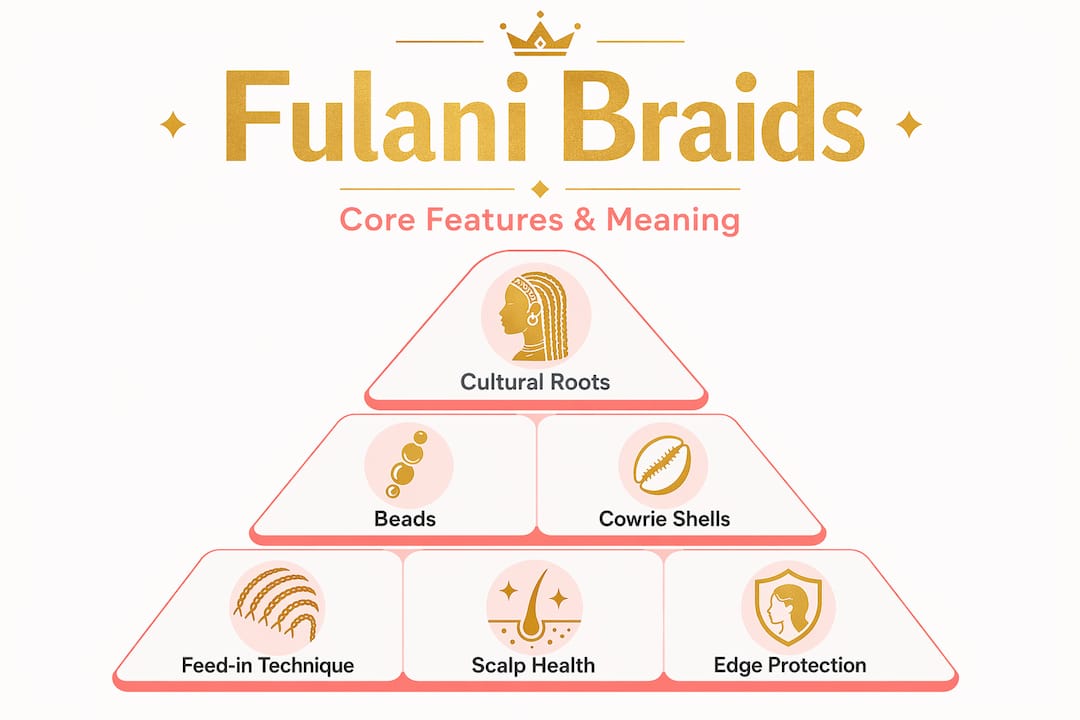
Every braid tells a story, and Fulani braids tell one rooted in centuries of West African identity. Fulani braids originate from the Fulani people, one of the largest ethnic groups across West Africa, spanning countries like Nigeria, Senegal, Mali, and Guinea. For the Fulani people, braiding was never just beauty. It signaled age, marital status, and social standing within the community. The accessories weren't decorative afterthoughts either: beads, cowrie shells, and metallic cuffs each carried meaning.
The signature Fulani braid pattern is recognizable the moment you see it. A center cornrow runs from the forehead to the nape, flanked by cornrows that sweep to the sides or back. Individual braids hang down, often adorned with beads or shells at the tips. That combination of cornrows and hanging braids, with cultural accessories woven in, is what separates Fulani braids from other protective styles.
You can explore step-by-step styling details for Fulani braids to get a feel for the full installation process. Popular variations today include:
- Classic Fulani braids: The traditional center part with side cornrows and hanging braids, finished with beads and cowrie shells
- Boho Fulani braids: A modern take that adds loose curls or wavy extensions for a romantic, free-flowing look
- Tribal Fulani braids: Bolder geometric cornrow patterns combined with thicker individual braids and heavier bead accents
- Half-up Fulani styles: Braids gathered into a top ponytail or bun while leaving some hanging, perfect for a versatile everyday look
- Side-swept Fulani braids: All braids swept to one shoulder for dramatic asymmetry
The cultural significance of Fulani braids is part of what makes them so enduringly beautiful. Wearing them with awareness of that heritage honors the tradition they come from.
Fulani braids installation and durability: What to expect
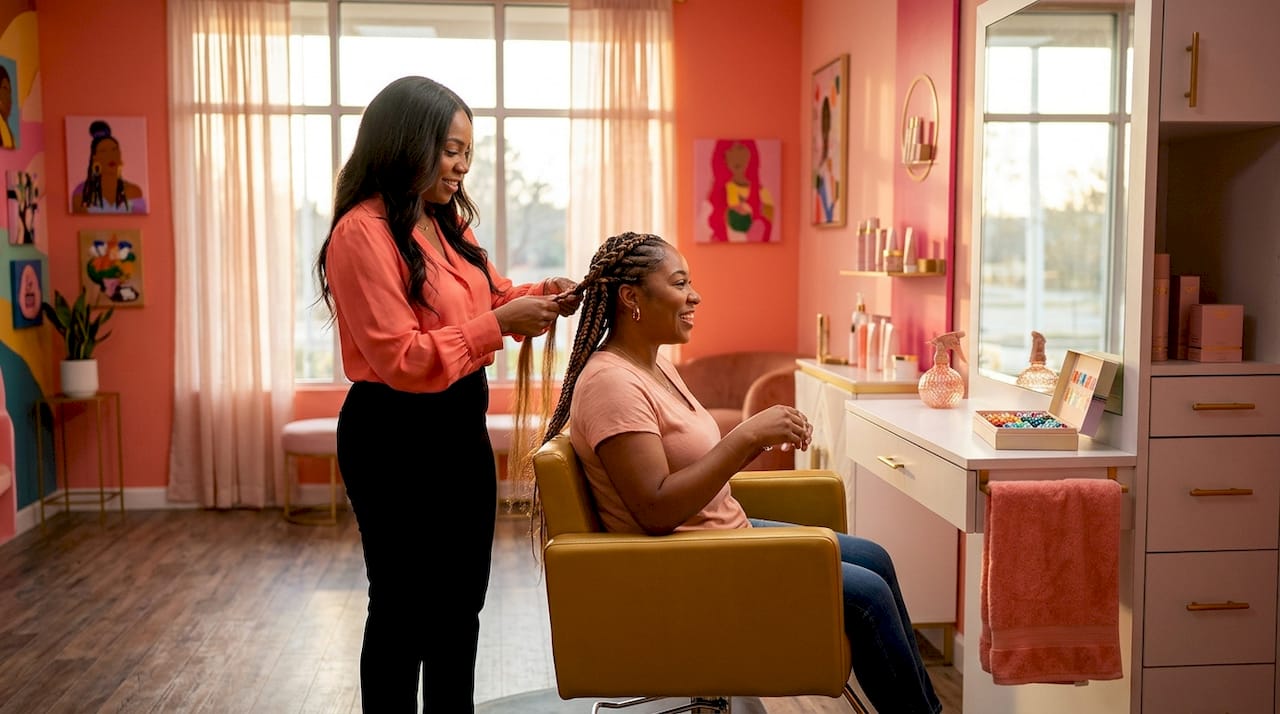
Now that you understand what Fulani braids are, let's look at the time investment and how long you can realistically expect your style to last.
A full installation takes 4 to 6 hours and the style typically lasts between 3 to 6 weeks, with excellent care potentially stretching wear to 8 weeks. That range is wide because several factors influence longevity: your natural hair texture, how diligently you maintain the style, whether you have curly additions, and how your scalp responds to protective styles in general.
| Style variation | Install time | Average wear time | Maintenance level |
|---|---|---|---|
| Classic Fulani braids | 4 to 5 hours | 5 to 6 weeks | Low to moderate |
| Boho Fulani with curls | 5 to 7 hours | 3 to 4 weeks | High |
| Tribal Fulani braids | 5 to 6 hours | 4 to 6 weeks | Moderate |
| Half-up Fulani styles | 3 to 5 hours | 4 to 5 weeks | Low to moderate |
Boho styles with loose curls or wavy extensions are stunning, but they demand more attention. The curly extensions tangle and frizz faster than plain braids, especially after washing. Classic bead-only styles hold up significantly longer with minimal intervention. If this is your first time getting Fulani braids, a classic style is a solid starting point so you can learn your maintenance rhythm before adding the complexity of curls.
Choosing the right Fulani braid style for your hair and lifestyle
With installation and durability covered, let's look at how to choose the style that actually fits your hair and your life.
Boho Fulani braids with curls are among the most requested styles right now, but they require noticeably more upkeep due to frizz and tangling compared to classic bead-only variations. That is not a reason to avoid them. It is just a reason to go in informed.
Here is a side-by-side comparison to help you decide:
| Style | Best for | Frizz risk | Edge tension | Maintenance frequency |
|---|---|---|---|---|
| Classic Fulani braids | Low-maintenance lifestyles | Low | Moderate | Every 1 to 2 weeks scalp care |
| Boho Fulani with curls | High-impact looks, events | High | Moderate | Every week, curl refresh needed |
| Tribal Fulani braids | Bold, fashion-forward looks | Low | Moderate to high | Every 1 to 2 weeks |
| Knotless Fulani variations | Fragile edges, sensitive scalps | Low | Very low | Every 1 to 2 weeks |
When thinking about how to style boho Fulani braids and maintain them between salon visits, your daily schedule matters as much as your hair type.
Key questions to ask yourself before booking:
- Do you exercise frequently? Sweat speeds up frizz and scalp buildup, which means more frequent washing regardless of style.
- How much time can you realistically dedicate to upkeep each week? Be honest. Boho braids that go unwashed for three weeks do more harm than good.
- Are your edges fragile or recently thinning? If yes, a knotless base is not optional. It is essential.
- Do you prefer a polished or effortless look? Classic Fulani braids hold a cleaner silhouette longer. Boho styles relax beautifully but look undone faster.
Your complete braid style guide can help you compare these options across more braid types beyond Fulani variations.
Pro Tip: Ask your stylist specifically for a knotless feed-in technique at the root, even if you want a traditional Fulani look overall. You get the classic aesthetic with significantly less tension at the hairline.
How to care for and maintain Fulani braids for scalp health and longevity
After choosing your ideal style, proper maintenance is what separates a healthy protective style from one that causes damage over time.
One of the most common misconceptions in protective styling is that braids excuse you from washing. They do not. Dermatologists recommend cleansing the scalp at least once a week and completing a full hair and scalp wash every 2 to 4 weeks to prevent buildup, odor, and infections. Skipping this leads to product accumulation, scalp inflammation, and in some cases mold growth in the braids themselves. That last one is rarer than people think, but it does happen.
Here is a practical weekly and monthly care routine for Fulani braids:
- Week one to two: Cleanse your scalp with a diluted shampoo or scalp spray between the braids. Focus on the parts and root areas, not the braid length.
- Every two to four weeks: Do a full wash. Apply a lightweight, sulfate-free shampoo directly to the scalp using a squeeze bottle. Work gently in sections, rinse thoroughly, and avoid rubbing.
- After washing: Pat braids dry with a microfiber towel. Sit under a hooded dryer or allow to air dry fully before sleeping. Damp braids held overnight can develop an unpleasant odor quickly.
- Daily moisture: Apply a light leave-in conditioner or scalp oil to your parts and roots. Avoid heavy butters or cream conditioners along the braid length because they attract lint and cause buildup.
- Nighttime protection: Wrap your braids in a satin scarf or sleep on a satin pillowcase every night. This preserves the style, reduces frizz, and retains moisture in both your natural hair and the extensions.
"The biggest mistake clients make with braids is treating the style itself as low maintenance. The style is low effort. The scalp is not. A healthy scalp is the foundation every braid stands on."
Pro Tip: Wear a wig cap over your braids before getting into the shower. It reduces water saturation in the body of the braid, which means faster drying time and far less frizz, especially in boho styles with curls.
For more on healthy braid care, it is worth understanding how different braid types interact with your scalp over time.
Protecting your edges and avoiding damage with Fulani braids
Understanding maintenance is essential, but protecting your edges during and after braiding is just as important and often gets far less attention than it deserves.
Traditional Fulani braids create high tension at the scalp because of the tight anchor knot used at the start of each braid. Over time, that tension can cause traction alopecia, a form of hair loss caused by repeated pulling at the hairline and temples. It develops gradually, which is why many women do not notice it until there is visible thinning.
Watch for these warning signs that your braids may be too tight:
- Pain or throbbing at the roots immediately after installation, lasting more than 24 to 48 hours
- Small bumps or pimples forming along your hairline within the first week
- Visible gaps or thinning at the temples or crown area
- Flaking or itching concentrated at the braid roots rather than across the entire scalp
The good news is that knotless braids solve most of this. The knotless technique starts with your natural hair and gradually feeds in extension hair, distributing weight more evenly and dramatically reducing root tension. Many clients who switched from traditional to knotless Fulani braids report significantly less soreness and better edge retention over time.
Communicate openly with your stylist. If a section feels uncomfortably tight during installation, say so immediately. A skilled braider will not take that personally. They will adjust. You should never have to sit through pain and assume it is normal.
Pro Tip: Rest your hair for at least two to three weeks between installations. Deep condition during that break, massage your scalp to stimulate circulation, and avoid any tension-based styling. Your edges will thank you by staying fuller, longer.
Our honest take: Cultural pride and protective style need to coexist
Here is what most Fulani braid guides do not say plainly. The protective style conversation in 2026 still too often separates aesthetics from cultural meaning, and it separates both from actual scalp health. You end up with beautiful braids on a damaged scalp, or a culturally inspired look without any real understanding of what it represents. None of those outcomes serve you.
Fulani braids are not a trend we happened upon. They are a living tradition with a specific visual language developed over generations. When you sit in a braiding chair and choose this style, you are participating in something with real weight. That does not mean only Fulani women can wear them, but it does mean wearing them with knowledge rather than just a Pinterest screenshot.
At the same time, cultural celebration and scalp health are not competing priorities. They reinforce each other. A braider who understands Fulani braid history is more likely to execute the style correctly. A client who understands maintenance is more likely to come back with healthy hair that can handle beautiful, intricate work again and again. This is why we tell our clients: the conversation that happens before the braids go in is just as important as the technique itself.
Ready to book your Fulani braids at Afro Magic Braiding?
At Afro Magic Braiding, we approach every Fulani braid installation with the expertise and cultural respect this style deserves. Our skilled stylists use tension-free feed-in techniques, work with premium braiding hair sourced globally, and take the time to understand your hair health before a single braid goes in.

Whether you are drawn to classic Fulani braids with cowrie shell accents, a boho look with flowing curls, or a bold tribal design that is uniquely yours, we have the skill and the product selection to make it happen. Browse our full service offerings and book your appointment today. Your next protective style should feel as good as it looks, and we are here to make sure it does.
Frequently asked questions
How long do Fulani braids typically last?
Fulani braids usually last 3 to 6 weeks, and with proper maintenance, wear can extend up to 8 weeks. Classic styles without curls tend to hold up longer than boho variations.
Can you wash your hair while wearing Fulani braids?
Yes, and you absolutely should. Dermatologists recommend a weekly scalp cleanse and a full wash every 2 to 4 weeks to prevent buildup, odor, and scalp infections.
What is the difference between traditional Fulani braids and knotless Fulani braids?
Traditional Fulani braids create high tension at the root due to a tight anchor knot, while knotless versions gradually feed in extensions, reducing tension and protecting your edges from damage.
How can I prevent frizzing in boho Fulani braids with curls?
Wear a wig cap during washing to reduce friction on the curls, then use curl mousse or foam to refresh and define the curls after cleansing.
How long should I wait between Fulani braid installations?
A two to three week break between sessions is strongly recommended to allow your hair to recover, reduce traction stress, and give you time to deep condition your natural hair before the next installation.