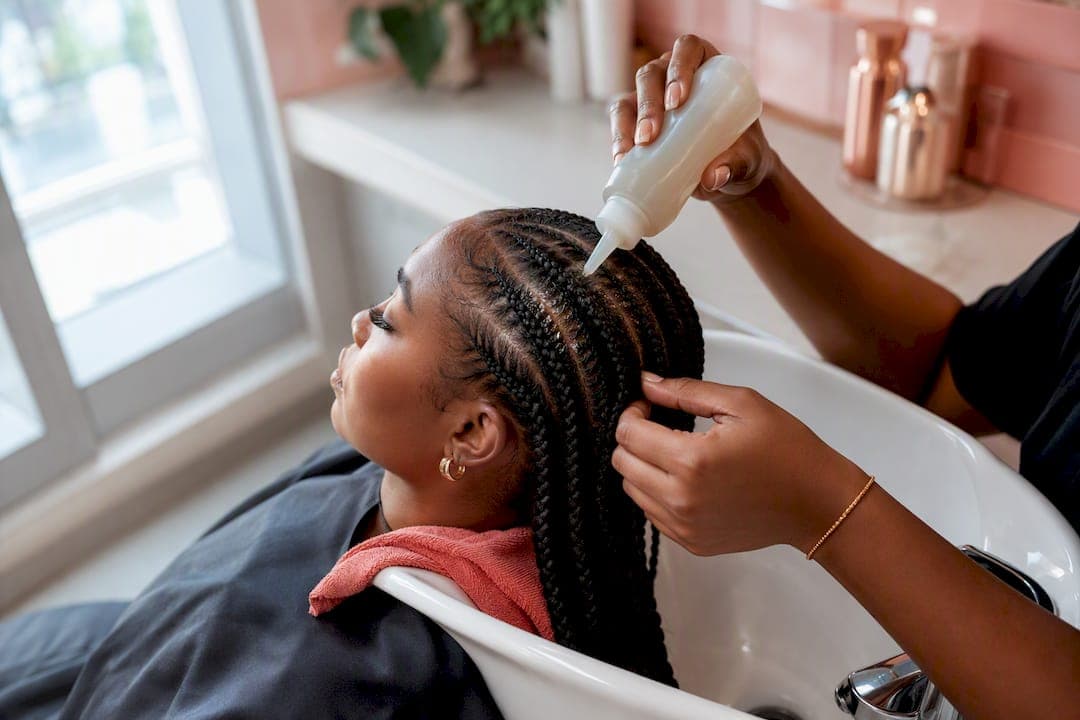
Spot-clean between parts with a diluted, sulfate-free or medicated shampoo, skip heavy oils, and give your scalp air to breathe. If flakes or itching persist past a week of care, work in an antifungal active like ketoconazole, selenium sulfide, or zinc pyrithione on a 7 to 14 day cleansing rhythm. Severe redness, pain, or spreading irritation means the braids come out. This guidance reflects common observations in braiding salons.
TL;DR:
- Flaking within one to three days of braiding often indicates synthetic hair residue or tension, while flakes appearing after two to four weeks suggest product buildup or yeast overgrowth.
- Treat early with spot-cleaning using diluted sulfate-free or medicated shampoos, and avoid heavy oils or alcohol-based anti-itch sprays that can worsen dryness.
- Medicated antifungal shampoos like ketoconazole, selenium sulfide, or zinc pyrithione are most effective for ongoing dandruff-like flakes if regular washing fails to resolve them.
- Preventative measures include pre-clarifying the scalp before installation, minimizing tension, using synthetic-free hair, and scheduling regular scalp checks during the style's wear.
- Persistent redness, pain, sores, or worsening symptoms over a week necessitate removal of the braids and consultation with a healthcare professional.
Table of Contents
- Why Braids Can Cause or Reveal Flakes and Itch
- Immediate, Low-Risk Fixes You Can Do Without Taking Braids Out
- How to Wash and Treat a Braided Scalp Without Undoing the Style
- Which Active Ingredients and Product Forms Actually Work for Braids
- Pre-Install and Aftercare Checklist to Prevent Dandruff with Braids
- Red Flags That Mean the Braids Have to Come Out
- Salon-Tested Tips and Author Notes from Afro Magic Braiding
- Keep the Style, Protect the Scalp
- How Afro Magic Braiding Supports Scalp-Sensitive Clients
- Sources
Why Braids Can Cause or Reveal Flakes and Itch
Not all flaking under braids is dandruff, and figuring out which cause fits your symptoms changes what actually fixes it. True dandruff comes from an overgrowth of Malassezia, a yeast that lives on everyone's scalp but flares under warmth, oil, and moisture, which is exactly the environment braids create. It shows up as small, oily-looking flakes paired with itching that gets worse a few weeks into the install, not right after.
Product buildup looks similar but behaves differently. Gels, edge control, and heavy oils layer up at the roots and along parts, and because braids trap everything against the scalp, that residue does not shed the way it would with loose hair. Buildup gets mistaken for dandruff constantly, and the tell is dry, waxy flakes concentrated where product was applied rather than spread evenly across the scalp.
Synthetic braiding hair adds another variable. Many synthetic fibers carry manufacturing residues or coatings that can dry out or irritate a sensitive scalp, especially in the first week after installation, and trichologists and dermatologists point to these residues as a common trigger for flaking that shows up almost immediately rather than building over time.
Then there is tension. Braids pulled too tight at the part or nape strain the follicle and can cause dryness, tightness, and small bumps that itch and flake in a way that mimics dandruff, even though the root cause is mechanical, not fungal.
Timing is your best clue:
- Flaking within 24 to 72 hours of installation: likely reaction to synthetic hair coating or tension.
- Flaking that builds over 2 to 4 weeks: likely product buildup or Malassezia overgrowth.
- Itching concentrated at the part lines or nape: likely tension or traction, not dandruff.
- Oily flakes plus itching that worsens with humidity or sweat: classic Malassezia pattern.
Immediate, Low-Risk Fixes You Can Do Without Taking Braids Out
Most flaking and itching can be managed while the braids stay in, as long as you catch it early and treat gently. Here's the order to work through:
- Spot-clean between the parts. Dilute a sulfate-free shampoo or a small amount of apple cider vinegar with water, apply it directly to the scalp along visible parts using a cotton pad or a Q-tip, then rinse thoroughly with warm water. Do this every 4 to 7 days rather than daily.
- Mist with a lightweight, water-based scalp spray. Skip the heavy oils and butters. A tonic or leave-in spray applied every 4 to 7 days keeps the scalp moisturized without adding to buildup.
- Dry completely before covering your hair. Trapped moisture under braids is a breeding ground for both fungal flare-ups and, in worse cases, mold. After any wash or spray, use a wig cap and a handheld dryer on a cool or low setting, holding it a few inches from the scalp, until the roots feel dry to the touch, not just the braids.
- Track your itch level for a week. Mild, manageable itching that responds to spot-cleaning is normal. Itching that worsens despite treatment, or that comes with visible redness, is your signal to move to medicated products or consider removal.
Pro Tip: Keep a small spray bottle of diluted apple cider vinegar (one part vinegar to four parts water) in your bathroom. A quick spritz along the parts between full wash days lifts light buildup without soaking the braids.
Alcohol-based anti-itch sprays feel satisfying in the moment, but the American Academy of Dermatology warns that alcohol-heavy topicals dry out the scalp barrier and tend to make flaking worse within days. If a product tingles intensely or leaves your scalp feeling tighter afterward, stop using it.
How to Wash and Treat a Braided Scalp Without Undoing the Style
Cleansing frequency matters more with braids than with loose hair, because product and sweat have nowhere to escape. The rhythm dermatologists recommend is straightforward: spot-clean every 4 to 7 days, and do a full, gentle cleanse of the entire scalp every 7 to 14 days. That window balances keeping the scalp clean against disturbing the braid pattern too often.
For flakes that do not respond to plain diluted shampoo, a medicated option applied directly to the scalp works better than a full-strength wash-and-rinse. Here's how to use the three most common actives safely between braids:
- Ketoconazole shampoo (typically 1% OTC strength): Dilute slightly with water, apply with a cotton pad or applicator bottle along each visible part, let it sit for 3 to 5 minutes, then rinse until the water runs clear.
- Selenium sulfide shampoo: Apply the same way, but rinse extra thoroughly since residue left in braids can dry out and flake on its own.
- Zinc pyrithione shampoo: Generally the gentlest of the three; suitable for more frequent spot use if your scalp tolerates it well.
Clinical research on antifungal treatments supports these medicated washes as effective against the yeast overgrowth behind most dandruff, which is why dermatologists reach for them before anything else when flaking persists past a week of basic care.
An apple cider vinegar rinse works as a clarifying step between medicated treatments, especially if buildup rather than fungus is the main issue. Mix one part vinegar to three or four parts water, apply along the scalp, leave it for a minute or two, and rinse well.
Rinse thoroughly. Trapped shampoo or vinegar residue is one of the most common reasons flaking returns within days of treatment. After any wash, dry the scalp fully before styling or covering it, and if a product leaves your scalp more irritated than before, stop using it and give your scalp a break.
Which Active Ingredients and Product Forms Actually Work for Braids
Choosing the right ingredient matters less than choosing the right product form, since a great shampoo does nothing if it cannot reach the scalp under a full head of braids. Here's what to look for and what to skip.
- Ketoconazole disrupts the fungal cell membrane of Malassezia, and clinical reviews back its effectiveness against dandruff-related flaking. Most OTC formulas sit at 1% strength; prescription versions go higher.
- Selenium sulfide slows skin cell turnover on the scalp, reducing the rate at which flakes form. It has a distinct smell many people find strong, so ventilate while rinsing.
- Zinc pyrithione has mild antifungal and antibacterial action and tends to be the most tolerable for daily or semi-frequent spot use.
- Best product forms for braids: scalp-targeted shampoos in applicator bottles, spray-on scalp tonics, diluted rinses applied with a cotton pad, and no-rinse spot treatments made for parted hair.
- Avoid: petroleum jelly, heavy pomades, and thick butters. They seal moisture and product against the scalp instead of letting it breathe, which feeds the buildup cycle you are trying to break.
If your scalp reacts easily, ask your braider to pre-wash synthetic hair before installation to strip manufacturing residues, or request human hair or plant-based braiding hair instead. It costs more, but for a scalp already prone to irritation, it removes one major variable before the braids ever go in.
Pre-Install and Aftercare Checklist to Prevent Dandruff with Braids
Preventing flakes starts before you ever sit in the chair, and the choices you make at installation matter as much as anything you do afterward. Run through this checklist:
- Wash and clarify your scalp before your appointment. Braiding over product buildup or an unwashed scalp locks problems in for weeks.
- Ask for minimal gel and lighter tension. Heavy gel at the base and tight parting are two of the biggest preventable triggers for irritation and traction-related flaking.
- Consider knotless or looser techniques if you have had scalp issues with braids before. Less pulling at the root means less inflammation.
- Request pre-washed or human/plant-based hair if you know your scalp reacts to synthetic fibers.
- Set a spot-cleaning schedule from day one rather than waiting for flakes to appear. Prevention is easier than treatment.
- Sleep with a silk or satin cover and skip tight, heavy updos that add extra tension on top of what the braids already carry.
- Give your scalp recovery time between installs. Back-to-back braiding with no break rarely lets irritation fully resolve.
For more on gentle, low-tension techniques that reduce strain at the root, see this knotless braid scalp massage guide.
Red Flags That Mean the Braids Have to Come Out
Self-care handles most flaking and itching, but certain signs mean it is time to stop treating at home and either remove the braids or see a professional.
- Open sores or painful spots on the scalp, especially where braids sit close to the skin.
- Redness that spreads beyond a single part line rather than staying localized.
- Pus or discharge at any point on the scalp.
- Rapid, patchy hair loss that goes beyond normal shedding.
- Itching or flaking that worsens despite a full week of spot-cleaning and medicated treatment.
Trichologists and dermatologists recommend removing braids once irritation persists rather than layering on more products to mask a reaction that is getting worse, not better. OTC medicated shampoos are appropriate for mild to moderate flaking that responds within a week or two. If symptoms do not improve, or if you see any of the signs above, book a dermatologist or trichologist visit. Take a few photos of the affected area before your appointment and note when symptoms started. That timeline helps a clinician tell fungal dandruff apart from a contact reaction or traction damage in a single visit. For a closer look at bump-specific irritation, this guide to scalp bumps after braids breaks down the takedown timeline in more detail.
Salon-Tested Tips and Author Notes from Afro Magic Braiding
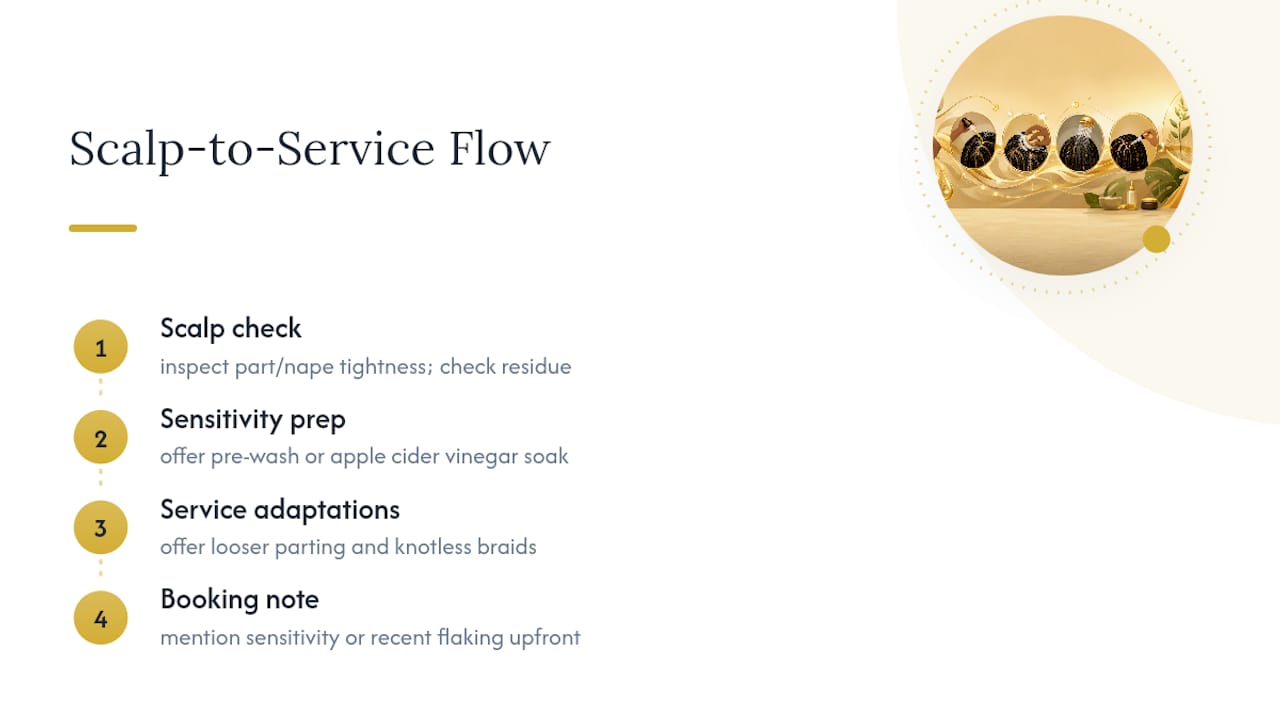
Every client appointment at the salon starts with a scalp check, not just a style consultation. The team inspects tightness at the part and nape, checks synthetic hair for visible residue, and may offer a pre-wash or apple cider vinegar soak before installation for clients with a history of scalp sensitivity. Clients who flag recurring irritation are offered looser parting and knotless options as part of their service.
When you book, mention a sensitive scalp or recent flaking upfront. It changes the plan before the first braid goes in. For more on aftercare that stretches the life of a style without stressing the scalp, see this guide to maintaining braids and this breakdown of scalp care strategies for healthy hair with braids.
Keep the Style, Protect the Scalp
Braids carry weight beyond style. They protect natural hair, honor tradition, and let you wear your hair with pride for weeks at a time. None of that is worth trading for a scalp that stays irritated because of pride or convenience. Check your scalp the way you'd check any part of your body that's under stress, and say something to your braider the moment things feel off. A five minute conversation at booking prevents most of the flaking and itching covered here.
— Afro
How Afro Magic Braiding Supports Scalp-Sensitive Clients
The salon focuses on customizing installs around each client's scalp condition rather than style alone. They typically use low-tension and knotless techniques for clients reporting sensitivity, and can provide pre-wash or clarifying options for synthetic hair before installation.

Browse real client results in our portfolio to see knotless and low-tension styles in action, or head straight to booking and mention your sensitive scalp or recent flaking in the notes. We'll adjust tension, product, and hair type before your appointment starts, not after you're already uncomfortable in the chair.
This article is general information, not a substitute for advice from a qualified doctor. Consult a qualified healthcare professional about your own circumstances before acting on anything here.
Sources
- Braids for curly and coily hair: Baylor dermatologist weighs in
- Braiding hair: styles, colors, techniques, and maintenance — WebMD
- NCBI PMC review related to scalp conditions (PMC10238826)
- Relieve scalp itch — American Academy of Dermatology