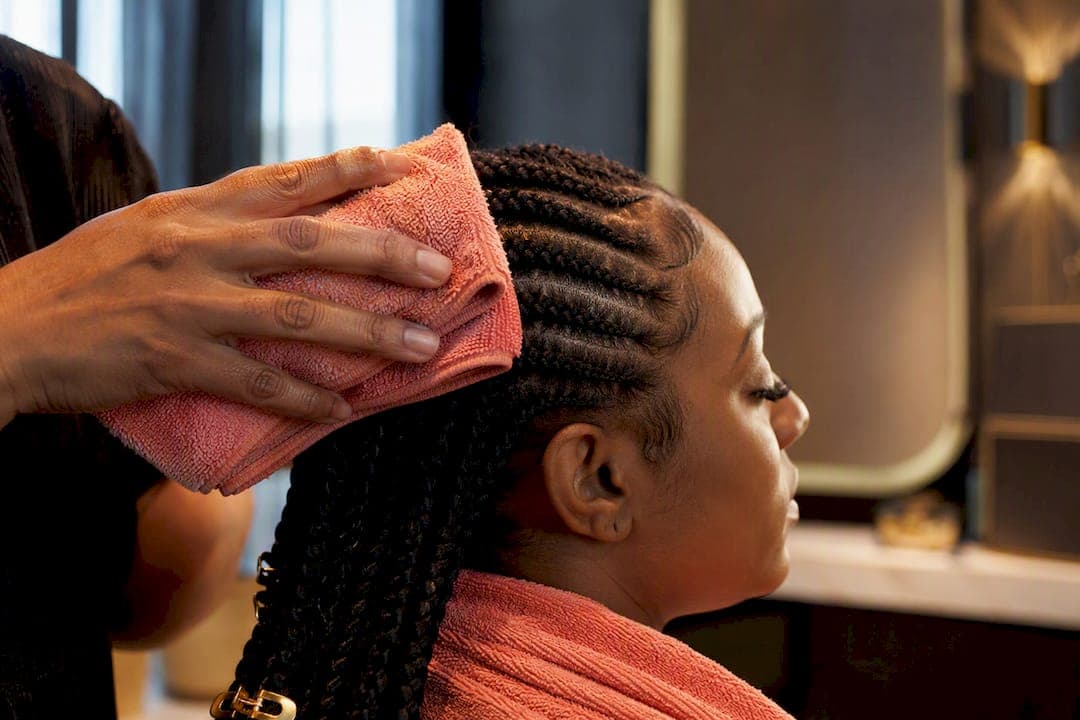
The fastest way to relieve tight braids is warm, moist heat followed by a light spray of water and lightweight oil, then a gentle fingertip massage along the tightest rows. Wear your hair down for the first two to three days instead of pulling it into a bun. If you develop severe pain, sores, or bumps that don't ease within a day or two, take the braids out. No home remedy is worth risking your hairline.
TL;DR:
- Moist heat from warm water or a damp towel provides the most effective immediate relief, relaxing hair and scalp tension within minutes.
- Lightly misting the scalp with water and oil several times daily for the first 48 hours helps maintain relief and prevents further tightness.
- Avoid using heavy creams or butters, opting instead for sprays, jojoba oil, or aloe vera gel to add slip without causing buildup or weight.
- Pressing a steamer against the scalp or using warm water is preferable to high heat tools, especially for synthetic styles, to prevent dehydration and damage.
- Signs that indicate it's time to remove braids include persistent pain, sores, bumps, thinning, or receding along the hairline, which risk long-term damage.
Table of Contents
- How Do You Relieve Tight Braids Right Now?
- What Tools Safely Loosen Tight Braid Roots?
- Which Oils and Sprays Actually Ease Braid Tension?
- Should You Steam Tight Braids Instead of Using a Blow Dryer?
- When Should You Just Take the Braids Out?
- How Long Does It Take for Tight Braids to Feel Normal Again?
- How Do You Prevent Tight Braids Next Time?
- What Does a Salon Actually Do When Braids Are Too Tight?
- Sources
How Do You Relieve Tight Braids Right Now?
Tight braids usually announce themselves within a few hours of leaving the chair. Your scalp throbs, your temples feel stretched, and even smiling hurts. That tension is real, and it's your scalp telling you the follicles are under more strain than they should handle long term.
Here's what actually works in the first minutes and hours, in order:
- Take a warm shower or apply a warm, damp towel to your scalp for 5 to 10 minutes. Moist heat relaxes the hair shaft and the scalp tissue around each braid base, which eases the pull almost immediately. Warm moist heat is one of the most reliable first-response tricks for tight braids, though repeated wetting can shorten how long your style lasts.
- Mix a light spray of water with a few drops of a lightweight oil or a spray-on leave-in conditioner, and mist it directly along your part lines and edges. Reapply two to three times a day for the first 48 hours.
- Massage your scalp with your fingertips, using small circular motions along the parts where tension feels worst. Jojoba oil works well here because it's thin enough not to leave residue, but patch-test any new oil, including essential oils, on your inner arm first.
- If pain is significant, an over-the-counter pain reliever like ibuprofen can help you get through the first day, following the label's dosing. This is a bridge, not a fix. If you're leaning on pills past day two, that's your cue to look harder at removal.
Pro Tip: Keep a small spray bottle with your water-and-oil mix in your bag or by your bed. Tight braids tend to flare up at night or a few hours after you've been out in the cold, and having relief within reach beats waiting until morning.
What Tools Safely Loosen Tight Braid Roots?
Once moist heat and massage have softened things up, some mechanical help can create small pockets of space at the root without undoing your style.
- Use the pointed handle of a rat-tail comb, or the eraser end of a pencil, and gently wiggle it at the base of a tight braid to loosen the knot slightly.
- Work slowly. If the tool meets resistance, stop. Forcing it causes frizz, split ends, or breakage right at the root, which defeats the purpose.
- A rat-tail comb or similar tool can help ease individual tight spots, but it should always follow, not replace, softer methods like heat and oil.
- Treat your nape and edges with extra caution. That hair is finer and more fragile, so a lighter touch there matters more than anywhere else on your scalp.
- Never pull or tug at a braid to loosen it. Tension you add manually is just as damaging as the tension that got you here.
Which Oils and Sprays Actually Ease Braid Tension?
Heavy creams and butters sit on top of braids and build up fast, which clogs your part lines and makes future takedown harder. What you want instead is slip without weight.
- Tension sprays or spray leave-in conditioners outperform creams because they penetrate down to the root through braided rows rather than coating the surface. A spray nozzle delivers product directly to the scalp where the pulling actually happens.
- Jojoba oil and aloe vera gel are two of the gentlest options. Aloe vera calms an irritated scalp and adds moisture without buildup, and jojoba mimics your scalp's natural oil closely enough that it rarely feels greasy.
- Essential oils like peppermint or tea tree can soothe itching, but they need to be diluted and patch-tested first since undiluted oils can irritate skin that's already inflamed from tension.
- A simple DIY spray: mix 1 cup of water with 1 teaspoon of a light carrier oil and a few drops of aloe juice in a spray bottle. Shake before each use.
One thing worth remembering: the goal is frequency, not volume. A light misting two or three times a day beats one heavy soak, which mostly just runs off and adds buildup at your roots.
Should You Steam Tight Braids Instead of Using a Blow Dryer?
Direct high heat from a blow dryer dries out both your scalp and the braiding hair, which makes tension worse, not better. A hair steamer solves that problem by adding moisture along with gentle warmth, relaxing the hair fiber instead of dehydrating it.
- If you have access to a steamer, use it in 10 to 15 minute sessions, with a break of at least 20 minutes between passes.
- If you don't own one, a warm shower or a warm, damp towel pressed against your scalp for 5 to 10 minutes achieves a similar softening effect.
- Avoid soaking your braids completely. Steaming or warm water works better than high heat tools for adding slip, but over-wetting synthetic extensions can cause them to swell, frizz, or shed strands faster.
- If you're wearing faux locs or braids with synthetic hair, keep sessions shorter and let your style air-dry fully before covering it at night.
When Should You Just Take the Braids Out?
Some tightness is normal for the first day or two. Certain symptoms are not, and they mean it's time to stop troubleshooting and start removing.
Watch for these red flags:
- Blistering or open sores at the scalp
- Sharp, localized pain that doesn't ease with heat, spray, or massage
- Tender bumps that persist past 48 to 72 hours
- Visible thinning or a receding pattern along your hairline
Traction alopecia develops gradually from repeated pulling on the follicle, and dermatologists and stylists warn that once thinning sets in at the hairline, it can become permanent if the tension isn't addressed early.
Persistent pain or bumps that home remedies don't resolve are a clear signal to remove the style. You have two paths: a careful at-home takedown using a detangler and downward strokes to avoid snapping strands, or a professional removal, which is the safer route if you're dealing with sores or significant pain. Our scalp bump treatment guide walks through gentle takedown steps if you're going the at-home route.
How Long Does It Take for Tight Braids to Feel Normal Again?
Relief happens in layers. You'll usually feel some improvement within minutes of applying moist heat, but full loosening at the root takes longer.
Most people notice a meaningful difference within one to three days, depending on how tight the initial install was and how consistently they're applying relief methods. If you're still in significant discomfort past day three, that's no longer a "give it time" situation.
Once braids are out or tension has eased, your scalp needs a short recovery period.
- Shampoo gently, focusing on massaging your scalp rather than scrubbing.
- Follow with a light aloe treatment or a deep conditioner to restore moisture the braids pulled away.
- If you notice flaking or ongoing irritation, a medicated shampoo formulated for scalp inflammation can help; ask a dermatologist if it doesn't clear up.
- Give your scalp at least a week or two of rest between braided installs, longer if you experienced any bumps or soreness.
| Timeframe | What to expect | What to do |
|---|---|---|
| First minutes | Partial relief from heat and massage | Warm shower, light spray |
| 1 to 3 days | Noticeable loosening at the root | Continue spray, gentle massage, sleep with hair down |
| 3+ days with no improvement | Persistent pain or bumps | Remove braids, start aftercare routine |
How Do You Prevent Tight Braids Next Time?
The best relief technique is not needing one. Most of that comes down to what happens in the chair, not after you leave it.
- Speak up during the install. Say something like: "Please keep this looser at the root," or "Can we use the knotless technique so there's less pull?" A good stylist will adjust in real time, not just at the end.
- Ask for lighter extension hair, especially at your nape and edges, where thinner strands can't handle heavy weight without added stress.
- For the first 48 to 72 hours after your appointment, wear your hair down instead of pulling it into buns or ponytails, which adds tension exactly where your scalp is most vulnerable.
- Sleep on a satin or silk pillowcase or wrap your hair to cut down on friction overnight.
- Use lightweight sprays sparingly during this window rather than heavy products that weigh down fresh braids.
Our pre-appointment checklist covers what to do before you even sit down, and our guide on scalp tension in box braids breaks down why some techniques pull harder than others.
What Does a Salon Actually Do When Braids Are Too Tight?
When clients call about tight braids, the approach includes assessing where the pain is concentrated first, because tight rows at the crown respond differently than tension at the nape or hairline. Often, loosening a handful of specific rows or swapping heavier extension hair for something lighter at the nape solves the problem without a full redo.
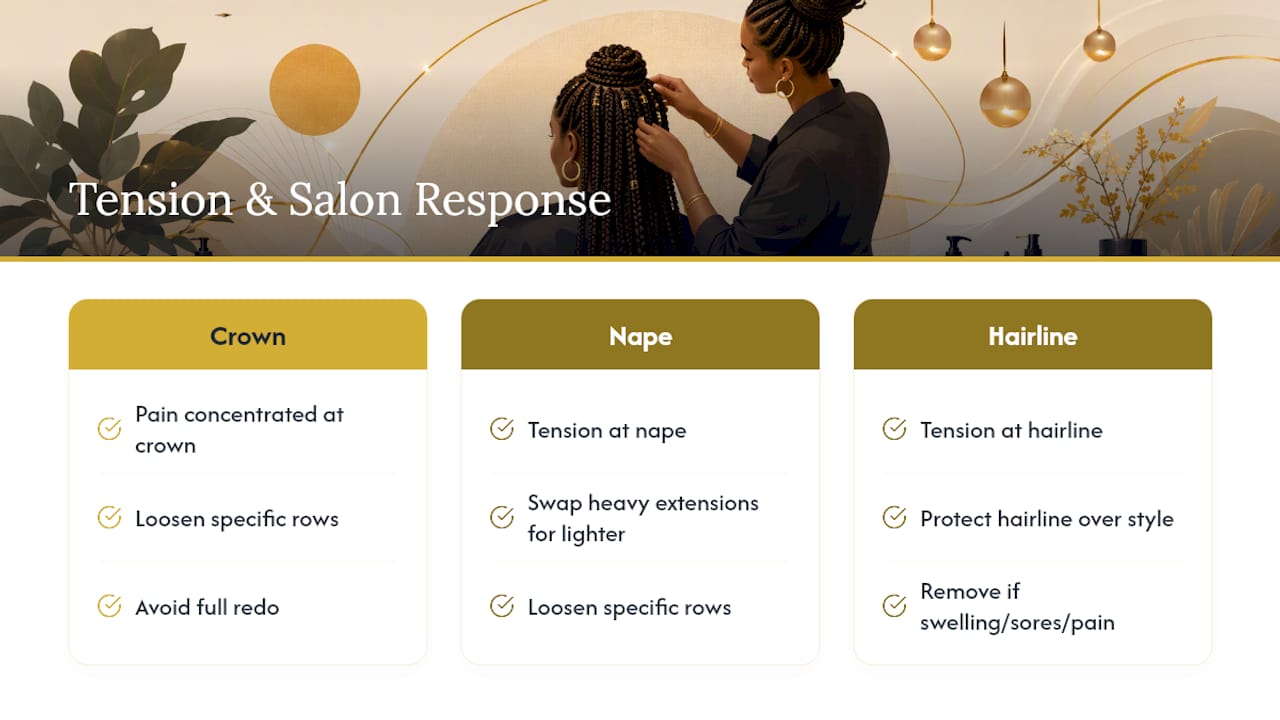
The same moist heat and light spray approach covered above is recommended if not ready to come in right away. But if there's swelling, sores, or pain that hasn't eased in a day or two, it is advised to come in for removal. Protecting the hairline always outweighs saving a style.
If you want a technique built to avoid this from the start, our knotless braiding services distribute weight more evenly at the root, which is the single biggest factor in whether a style feels comfortable a week from now or not.
— Afro
Sources
For more on the science behind tight braids, see Byrdie's guide from hair professionals and L'Oréal Paris's loosening tips. For scalp maintenance between installs, browse our scalp care strategies or explore Cedar Mountain's marula oil shampoo set for gentle aftercare.
- How to relieve tight braids
- 14 tips for braids that are too tight, straight from hair pros (Byrdie)
- How to Loosen Tight Braids (L'Oréal Paris)
- How to Loosen Tight Braids (wikiHow)
- Aloe vera for hair (Healthline)