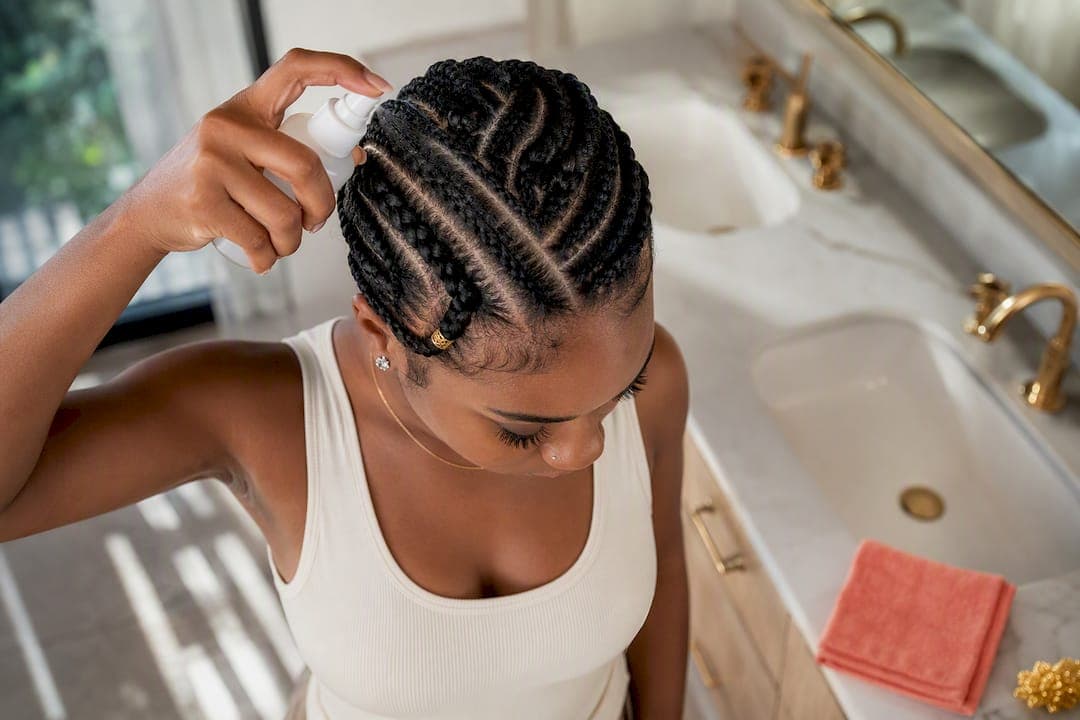
The simplest effective routine for cornrows maintenance is this: cleanse your scalp every 7 to 10 days, moisturize lightly every few days with water-based products, protect your style at night with satin or silk, and never let tension cross the line into pain. Follow that rhythm and most cornrow styles hold their shape for weeks. If your scalp hurts, stings, or shows bumps at any point, that is your cue to see a stylist, not to wait it out.
TL;DR:
- Proper tension during installation is the most critical factor in ensuring cornrows last longer and prevent hair loss.
- Washing every 7 to 10 days with diluted, sulfate-free shampoo maintains scalp health without loosening the style.
- Moisturizing every few days with water-based sprays and sealing with diluted oil helps keep hair hydrated and reduces breakage.
- Sleeping on satin or silk protects the style from friction, frizz, and tension that can cause early unraveling.
- Promptly addressing signs of pain, bumps, or thinning prevents traction alopecia and avoids the need for full style removal.
Table of Contents
- What Does a Cornrows Maintenance Routine Actually Involve?
- How Should You Prepare Your Hair Before Getting Cornrows?
- How Often Should You Wash Cornrows?
- What's the Best Way to Moisturize Braided Hair?
- How Do You Protect Cornrows While You Sleep?
- What Are the Warning Signs of Too-Tight Braids?
- How Long Do Cornrows Actually Last?
- How Do You Fix Frizz or Itch Without Redoing the Style?
- What Do Stylists Do Differently to Make Cornrows Last?
- How Do You Manage Sweat and Dirt in Cornrows Day to Day?
- How Do You Keep Your Scalp Healthy Under Cornrows?
- Why Salon-Tested Practicality Beats Generic Braid Advice
- How Afro Magic Braiding Keeps Cornrows Looking Sharp Longer
- Sources
- FAQ
What Does a Cornrows Maintenance Routine Actually Involve?
Cornrow care breaks down into four habits repeated on a schedule: cleansing, moisturizing, protecting, and monitoring tension. Each one solves a different problem, and skipping any single one is usually why a style that should last six weeks starts unraveling at three.
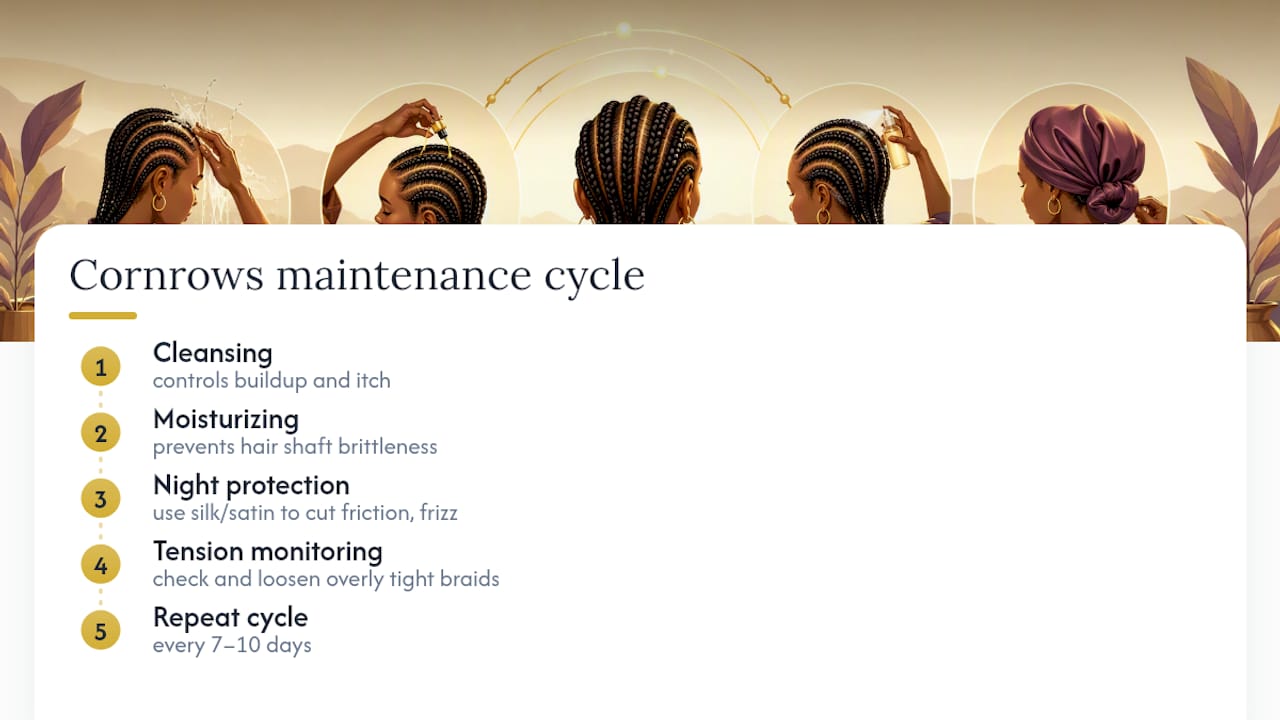
Cleansing controls buildup and itch. Moisture keeps the hair shaft from turning brittle under the tightness of the braid. Nighttime protection cuts down on the friction that causes frizz and flyaways along the hairline. Tension monitoring is the one people skip most, and it's the one dermatologists point to as the biggest risk factor in braided styles.
None of these steps require salon-grade equipment. They require consistency, and a little bit of restraint with product.
How Should You Prepare Your Hair Before Getting Cornrows?
What you do before installation matters almost as much as what you do after; for expert guidance, see how a hairstylist preparing client for salon before after photo can impact results. Hair that goes into braids clean, conditioned, and detangled comes out healthier on the other end, and it holds the style longer.
- Wash and deep-condition your hair a day or two before your appointment so the scalp isn't carrying old product residue under the braids.
- Detangle thoroughly and trim split ends. Knots and damaged tips make the braiding process rougher on the hair than it needs to be.
- Skip high-heat blow-drying before your appointment. Stretched, slightly damp hair braids more evenly than bone-dry, heat-stressed strands.
- Prioritize hydration in the days leading up to your visit rather than trying to fix dryness the morning of.
- Ask your stylist to check tension before they finish, especially around the hairline and temples, where the skin is thinnest.
Salons that build in a tension check and a proper finishing step, like a light mousse set, tend to produce cornrows that look sharper for longer than a rushed professional braid service skips.
How Often Should You Wash Cornrows?
Wash your scalp every 7 to 10 days. That cadence removes sweat, dead skin, and product buildup without over-handling the braids enough to loosen them. A Baylor College of Medicine dermatologist backs this exact window for braids on curly and coily hair, noting that regular cleansing at this interval relieves itching while preserving the style.
Here's how to do it without creating frizz:
- Dilute a sulfate-free shampoo with water in an applicator or nozzle bottle. This lets you target the scalp directly instead of saturating the whole braid.
- Section your hair and apply the diluted mixture along the scalp in rows, massaging gently with fingertips rather than nails.
- Rinse using a cup or a detachable shower head aimed at the roots, letting water flow down and out rather than scrubbing against the braid pattern.
- Pat the scalp and braids dry with a microfiber towel or old cotton T-shirt. Rubbing with a regular towel is what causes most post-wash frizz.
- Let the style air dry fully, or sit under a hooded dryer on low, before covering it for the night.
Pro Tip: Keep a travel-size spray bottle of diluted shampoo in the shower specifically for scalp days. It takes the guesswork out of dilution and keeps you from grabbing full-strength shampoo out of habit.
What's the Best Way to Moisturize Braided Hair?
Moisturize every few days, not every day, and lean on water first. A light water-based braid spray or leave-in mist rehydrates the hair shaft without sitting on the scalp the way heavier products do.
- Spritz a water-based moisturizer along the scalp and length of the braids every 3 to 4 days, adjusting up in dry winter months or down if your scalp runs oily.
- Seal moisture with a small amount of jojoba or argan oil, diluted with water in your palm before application, rather than applied straight from the bottle.
- Skip thick butters, petroleum-heavy pomades, and anything marketed as a "grease." Hairstylists and dermatologists consistently point to heavy greasing products as the top cause of buildup that shortens a cornrow style's life.
- Watch for a white or gray film at the roots, or finding yourself needing to wash more than every 7 to 10 days. Both are signs a product is sitting on your scalp instead of absorbing into it.
Modern styling guidance has moved away from the old habit of slathering scalps in heavy grease between washes, favoring lighter, water-first formulas that extend how long a set actually lasts.
How Do You Protect Cornrows While You Sleep?
Cotton pillowcases pull moisture out of hair and create friction that frizzes edges and loosens braids overnight. Satin and silk don't. Swapping your sleep setup is one of the lowest-effort, highest-impact things you can do for protective sleep habits that keep a style neat longer.
- Wrap your hair in a satin or silk scarf, or use a satin bonnet, before bed every night.
- Switch your pillowcase to satin or silk if you tend to remove scarves in your sleep.
- Pull hair into a loose bun or gentle pineapple style if you need it out of your face. Avoid anything tightly wrapped, which just relocates the tension problem to nighttime.
- If you wear a helmet or fitted hat during the day, line it with a thin scarf or soft padding to cut down on rubbing at the hairline.
What Are the Warning Signs of Too-Tight Braids?
Pain is never normal. A little tightness on install day that fades within hours is typical; sharp, persistent pain, tender bumps, or a hairline that looks like it's pulling back is not. Braid tension is the single biggest driver of traction alopecia, a form of hair loss caused by sustained pulling at the follicle, and dermatological research is consistent on that point.
- Throbbing or stinging that lasts more than a day after installation.
- Small, tender bumps along the part lines or hairline.
- A hairline that looks thinner or further back than it did before your last few styles.
- Flaking or soreness that gets worse instead of better as the days pass.
If any of these show up, go back to your stylist and have the braids loosened or removed in the affected areas. Do not try to push through it hoping it settles, since ongoing tension on a stressed follicle is exactly how permanent thinning starts.
Pro Tip: Rotate your part pattern between installs and give your scalp at least a month of rest between braided styles. Constant tension on the same follicles, even at moderate strength, adds up over time. You can read more on how scalp tension develops and what relief looks like in practice.
How Long Do Cornrows Actually Last?
Most cornrow styles can hold up for several weeks, depending on braid size, your hair's texture, and how closely you stick to a maintenance routine. Smaller, more intricate cornrows tend to last closer to the upper end of that range; larger, chunkier patterns loosen faster.
Watch for these signs that it's time to remove or refresh rather than push a style further:
- Matting or tangling at the roots that a wash doesn't resolve.
- Persistent itching that cleansing no longer relieves.
- Heavy buildup you can see or feel at the scalp despite regular washing.
- Any pain, which means removal regardless of how long the style has been in.
Not every fix requires a full takedown. If just a few edges are frizzing or loosening, a stylist can trim stray hairs and re-braid a handful of sections instead of redoing the whole head. Save the full re-braid for when the majority of the pattern has slipped or matted, generally past the six to eight week mark.
How Do You Fix Frizz or Itch Without Redoing the Style?
Most small annoyances between wash days don't need a full reset. Try these in order before you consider a redo:
- Wipe visible surface residue with a damp cloth or cotton pad along the part lines, which lifts sweat and product film without soaking the braid.
- For itch, mist a diluted aloe vera and water rinse directly on the scalp and let it air dry.
- For frizz, smooth a small amount of light mousse over flyaways, or trim the specific loose strands rather than adding more product overall.
- If bumps look infected, pain doesn't ease, or large sections have unraveled, stop the DIY approach and book a stylist visit instead.
These fixes buy you time between salon appointments, but they're not a substitute for a proper wash cycle or professional attention when something feels wrong.
What Do Stylists Do Differently to Make Cornrows Last?
A trained eye catches problems before they become painful. Salon-level cornrow care usually starts before the first braid goes in, with a proper pre-wash and a stylist checking tension row by row instead of guessing by feel.
The difference between a cornrow set that lasts six weeks and one that fails in ten days almost always comes down to two things: whether the hair was properly prepped and moisturized before install, and whether the braider checked for even, pain-free tension at the hairline before calling it finished.
Complex patterns, a history of slipping edges, or a scalp that's sensitive to tension are all good reasons to book a professional installation rather than go the DIY route. A stylist who finishes with a light mousse set and a silk wrap is giving your style a real head start on longevity.
How Do You Manage Sweat and Dirt in Cornrows Day to Day?
Cornrows collect more than they let on. Sweat, outdoor dust, and pillow lint work their way into the scalp between wash days, and ignoring that buildup is one of the fastest ways to shorten a style's life.
After a workout or a hot, sweaty day, don't wait for your next scheduled wash to deal with it. A quick rinse with cool water alone, no shampoo needed, can flush sweat and salt off the scalp without disturbing the braid pattern. If you don't want to get the style wet that often, a diluted witch hazel or apple cider vinegar mist wiped gently along the part lines with a cotton pad works almost as well for cutting through sweat residue.
Dry shampoo has a place here too, but use it sparingly. It's designed to absorb oil at the roots, not to replace a real wash, and overusing it between your 7 to 10 day cleanse can actually add to the buildup problem it's supposed to solve.
If you're active outdoors, consider a light, breathable scarf during high-exposure hours, like yard work or a long commute with the windows down, to keep dust and pollen from settling directly into the part lines. At night, that same scarf habit doubles as friction protection, so you're not adding a separate step, just extending one you're already doing.
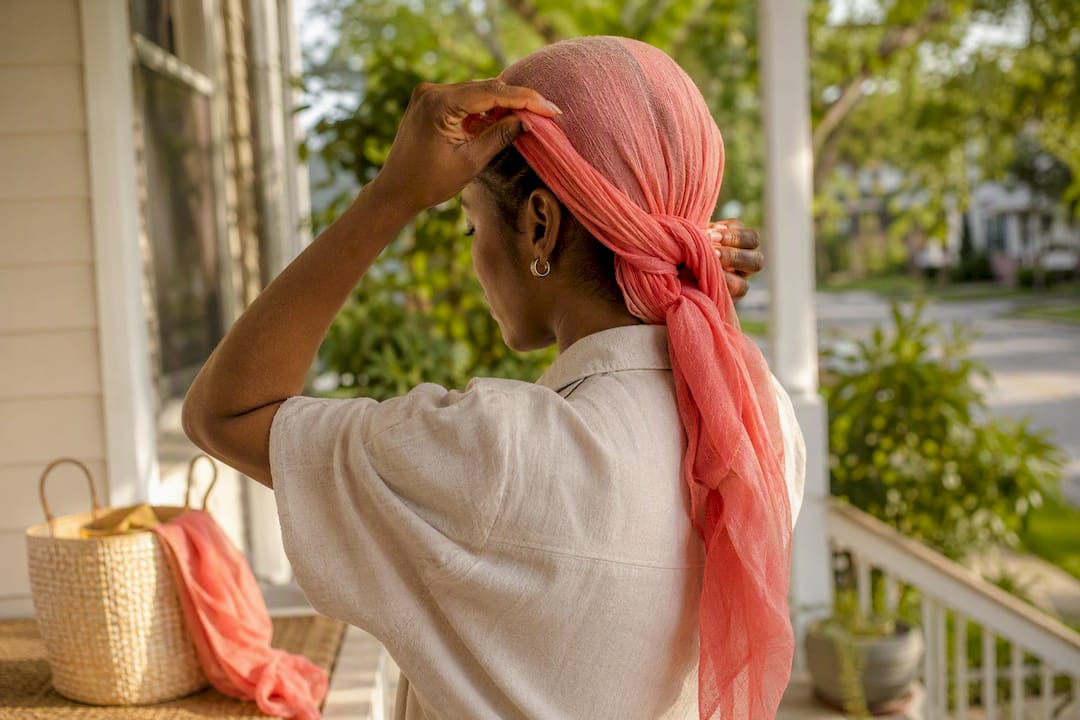
The goal isn't to keep cornrows spotless. It's to keep sweat and dirt from sitting against the scalp long enough to cause irritation or clog the follicle, which is where itching and eventual buildup both start.
How Do You Keep Your Scalp Healthy Under Cornrows?
A healthy scalp under braids looks calm: no flaking, no persistent itch, no tenderness when you press gently along the part lines. Getting there starts with what you put on it, and how sparingly.
Dandruff and irritation under braids are usually a buildup problem, not a dryness problem, even though the itch can feel identical. Heavy oils and butters trap sweat and dead skin against the scalp, creating exactly the environment flaking thrives in. That's why lightweight, water-based products consistently outperform thicker ones for people wearing cornrows longer than a couple of weeks.
If you notice flaking that looks white and dry, a diluted tea tree oil rinse, a few drops in a cup of water, applied directly to the scalp with a cotton pad, can help calm irritation without saturating the braids. If flakes look yellow, greasy, or come with redness, that's more consistent with seborrheic dermatitis, and it's worth a dermatologist visit rather than a home remedy.
Edge control deserves a specific warning here. Using it heavily and often on already-tight edge braids adds ongoing stress to follicles that may already be under strain. A light touch, or swapping to a silk scarf to lay edges instead of gel, reduces that stress without sacrificing how the style looks. Combine that with the 7 to 10 day cleansing routine and you're addressing both sides of the problem: what's building up, and what's causing tension in the first place. For a deeper look at scalp-specific techniques, see this guide on scalp care with braids.
Why Salon-Tested Practicality Beats Generic Braid Advice
Most cornrow advice floating around treats maintenance like a product problem. Buy the right spray, use the right oil, and the style takes care of itself. That's incomplete. The research on traction alopecia makes clear that tension, not product choice, is the leading cause of braid-related hair damage. You can moisturize perfectly and still lose hair at the hairline if the install was too tight to begin with.
The conventional wisdom also over-indexes on heavy "greasing," a habit that made sense decades ago but works against you now. Buildup from thick products shortens a style's life faster than most people realize, and it's often mistaken for a hydration problem when it's actually the opposite.
If there's one thing to prioritize above the rest, it's tension awareness. Cleansing and moisture matter, but they're forgiving. A too-tight install is not. Ask your stylist directly about tension before you leave the chair, and treat any lingering pain as a same-week problem, not a wait-and-see one. A quiet scalp is the real sign of a cornrow style that's working, not just one that looks neat on day one.
— Afro
How Afro Magic Braiding Keeps Cornrows Looking Sharp Longer
A cleansing schedule and a good scarf only get you so far if the install itself was rushed. Professional braiding services often include tension checks and proper prep to help the style hold up under a good maintenance routine.

If your scalp is sensitive, your pattern is intricate, or you've had slipping edges from past installs, a professional set makes a real difference over DIY. You can browse finished looks in the braiding portfolio to see the kind of tension-aware, clean-part work that holds up week after week, and Some salons carry lightweight, water-based products recommended for cornrow maintenance, so you can avoid guessing at ingredient labels. Ready to get started? Book your appointment and walk in with a style built to last, not one you'll be troubleshooting by week two.
Sources
- Braids for curly and coily hair: Baylor dermatologist weighs in
- Traction alopecia: clinical and research perspective (NCBI Bookshelf)
- How to Maintain Cornrows, According to Hairstylists | PS Beauty
FAQ
Should I Oil My Cornrows Every Day?
No. Daily oiling, especially with heavy products, tends to cause buildup that shortens how long the style lasts. Moisturize every few days with a light, water-based spray and seal sparingly with diluted oil instead.
Is It Better to Cornrow Wet or Dry Hair?
Stretched, slightly damp hair braids more evenly than bone-dry strands, which is why stylists typically wash and condition hair a day or two before installation rather than braiding it soaking wet or freshly blow-dried.
How Often Should Cornrows Be Washed?
Wash every 7 to 10 days using a diluted, sulfate-free shampoo focused on the scalp rather than the braids themselves. This removes buildup and relieves itching without loosening the pattern.
Is It Okay to Shower With Cornrows?
Yes, showering is fine between full wash days as long as you're not scrubbing the braids or saturating them daily. A quick rinse to clear sweat is different from a full cleansing session, and both have a place in a cornrow maintenance routine.