
Braids are one of the best protective styles you can choose during your transition from relaxed to natural hair — but only when installed with low tension and the right technique. The line of demarcation, where your new natural growth meets your chemically processed ends, is the most fragile point on your strand. Braids keep that vulnerable junction covered, protected from daily manipulation, and shielded from the elements. Done right, they give your hair room to grow and recover. Done wrong, they can cause the exact breakage you were trying to prevent.
Here is what works:
- Choose knotless braids or box braids over micro braids or tight cornrows
- Keep braids in for 4–6 weeks maximum to protect scalp health
- Moisturize your scalp and braids consistently throughout the wear period
- Give your hair at least one week of rest between braid installations
- Detangle only on wet, conditioned hair to reduce snapping at the demarcation line
- Deep condition before every install and after every removal
The transition itself typically takes 6–18 months depending on your hair length, growth rate, and how aggressively you trim. Braids will not speed that up, but they will protect the length you are working hard to keep.
Best protective braiding styles for transitioning hair
Not every braid style is created equal when you are managing two textures at once. The styles below are recommended because they minimize tension at the root, blend mixed textures naturally, and give you access to your scalp for proper care.
- Knotless braids. The gold standard for transitioning hair. Instead of anchoring the extension with a knot at the base, the braid starts with your own hair and feeds in extension hair gradually. The result is low tension at the root, a lighter feel on your scalp, and far less risk of breakage at the demarcation line. They also tend to look more natural and last well with proper care.
- Box braids (medium to large size). A classic choice, but size matters. Larger box braids let you reach your scalp to cleanse and moisturize properly. Smaller box braids restrict airflow and make scalp care nearly impossible. Stick to medium or large sections, and ask your stylist to avoid tight anchoring at the base.
- Senegalese twists. Two-strand twists using extension hair, installed with a smooth, rope-like technique. They sit gently on the scalp, blend well with mixed textures, and are easy to moisturize along the length.
- Two-strand twists (your own hair). A great option between braid installs. No extensions needed, low manipulation, and they create a uniform pattern that blends natural roots with relaxed ends beautifully. They also double as a braid-out prep style.
- Crochet braids. The extension hair is looped through cornrowed base braids using a crochet needle. When the base cornrows are installed without excessive tension, this style is lightweight and protective. The key is making sure the foundation braids are not too tight.
- Marley twists. A low-tension style that intertwines Marley braiding hair with your own strands for a natural, carefree look. Gentle on edges and easy to maintain.
Avoid micro braids entirely. They are notorious for pulling hair from the root and are particularly damaging for transitioning hair, where the demarcation line is already under stress. The smaller the braid, the harder it is to reach your scalp, and the more tension sits on each individual strand.
How to install and maintain braids on transitioning hair
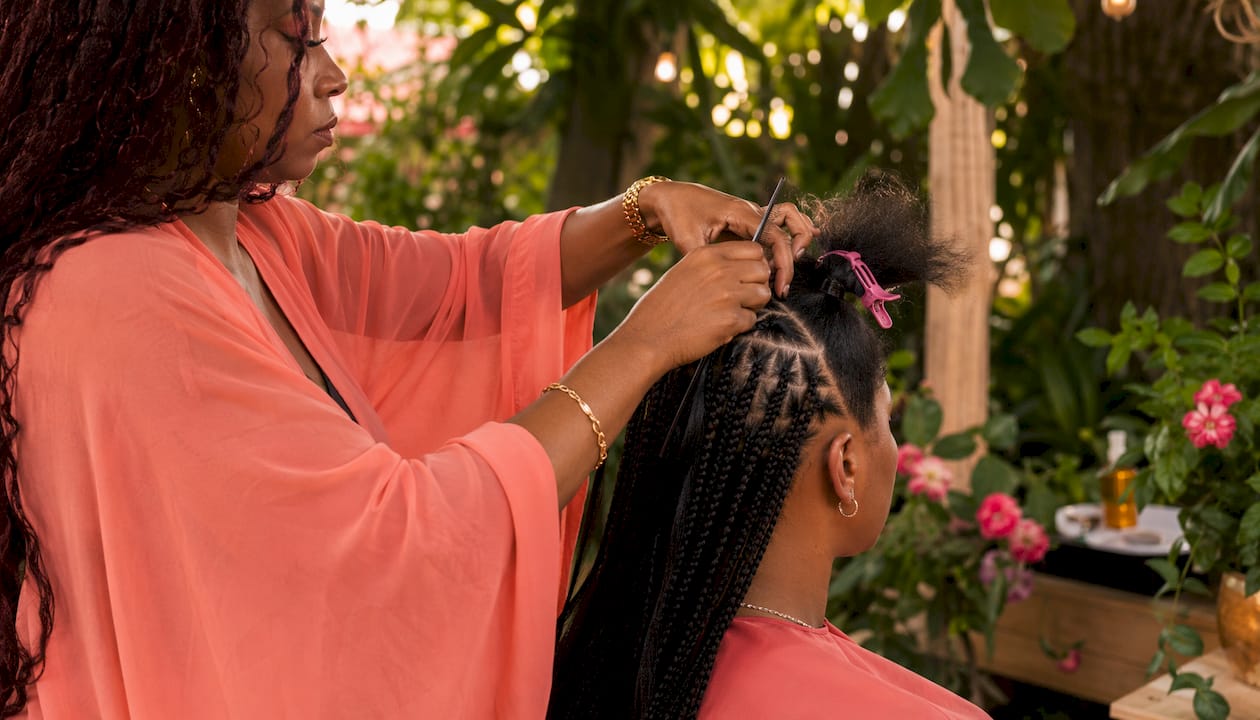
Installation is where most damage happens. A style that looks beautiful on day one can cause serious breakage by week four if the tension was wrong from the start.
Before the install:
- Wash your hair with a sulfate-free shampoo, working in sections to minimize tangling
- Deep condition thoroughly, giving extra attention to the demarcation area
- Detangle only while hair is wet and saturated with conditioner, starting from the ends and working upward
- Apply a pre-poo treatment (coconut oil or avocado oil work well) before washing to soften strands and reduce tangles
- Stretch your hair gently before the appointment to make sectioning cleaner
During installation:
- Communicate clearly with your stylist about tension. If you feel pulling at the roots, bumps forming along your hairline, or a headache starting, the braids are too tight
- Tight braids do not last longer on transitioning hair. They cause edge thinning, breakage, and sometimes bald spots. A well-installed, comfortable braid will outlast a painful one
- Request medium to large sections, especially around the perimeter
Ongoing maintenance:
- Moisturize your scalp every few days using a lightweight oil or hydrating spray
- Cleanse your scalp gently every 1–2 weeks with a diluted sulfate-free shampoo or a scalp rinse
- Sleep with a satin bonnet or on a silk pillowcase every night to reduce friction
- Check your edges weekly for signs of thinning or stress
Pro Tip: Give your hair at least one full week of rest between braid installations. Use that window for a trim, a protein treatment, and a deep conditioning session before your next install.
Braids should stay in for no longer than 4–6 weeks. Beyond that, new growth matting, product buildup, and restricted scalp access start working against you. Protective styles are tools for length retention, not a reason to neglect the hair underneath. For a deeper look at keeping your braids in great shape throughout the wear period, the braid maintenance guide at Afromagicbraiding covers scalp cleansing and moisturizing routines in detail.
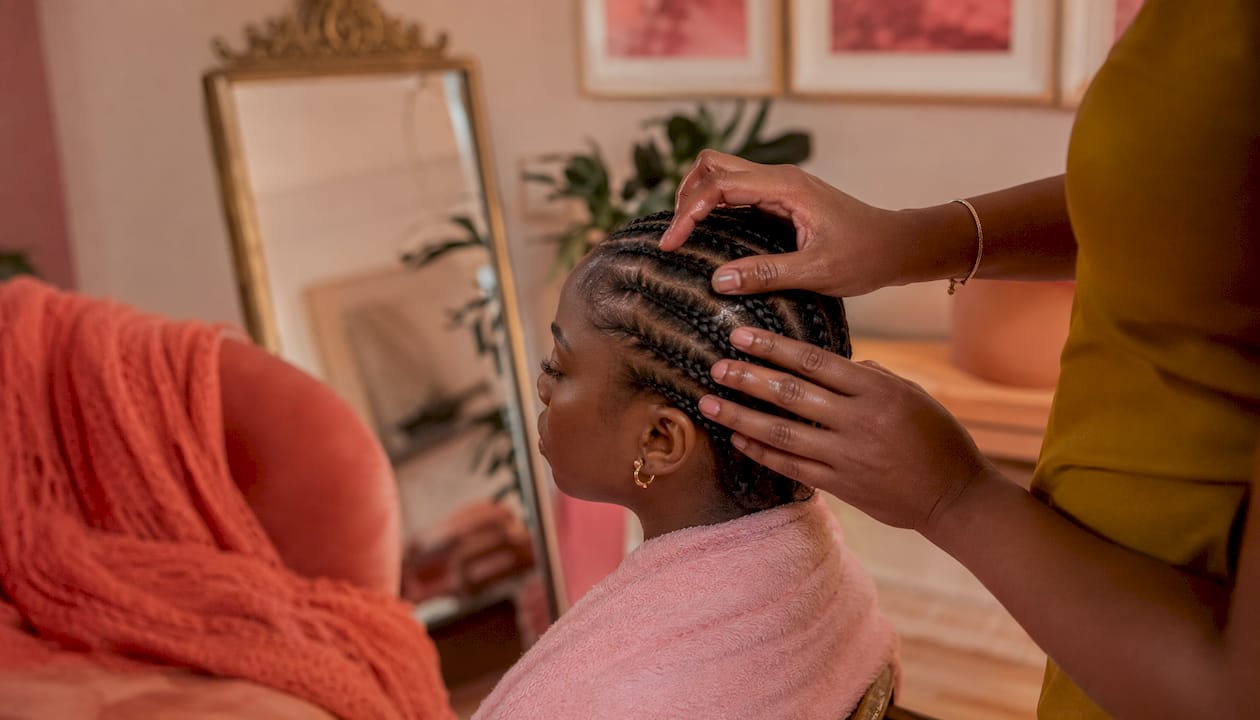
Moisturizing, protein treatments, and care tips while in braids
Transitioning hair needs a hybrid approach because you are caring for two different hair types at once. Your new growth is porous and thirsty for water-based moisture. Your relaxed ends are fragile and need sealing with heavier oils to prevent dryness and splitting.
- For new growth at the roots: Use water-based leave-in conditioners and hydrating sprays. Water is your hair's best friend here. Apply directly to the scalp and new growth, then follow with a lightweight oil like jojoba or argan to seal the moisture in.
- For relaxed ends: Heavier oils like castor oil or a rich butter cream help seal and protect the more porous, processed ends. These ends lose moisture faster, so they need consistent sealing.
- Protein treatments: Use them approximately once a month. Protein strengthens the hair shaft and helps reinforce the demarcation area, but overuse makes hair brittle and prone to snapping. Balance every protein treatment with a moisturizing deep conditioner.
- Deep conditioning: Do this before every install and after every removal. It rebuilds elasticity, which is what keeps your hair from breaking when it is handled. For guidance on balancing protein and moisture during your hair care routine, a structured checklist can help you stay consistent.
- Detangling: Only detangle on wet, conditioned hair. Detangling dry transitioning hair causes snapping at the demarcation line every time. Use a wide-tooth comb, start from the ends, and work slowly upward.
The goal is balance. Too much protein without moisture creates brittleness. Too much moisture without protein leaves hair limp and weak. Your hair will tell you which way it is leaning: if it snaps easily, it needs protein; if it feels mushy or stretches without bouncing back, it needs moisture.
Common pitfalls and how to avoid breakage during your transition
Most breakage during a transition is preventable. The mistakes below are the ones that show up most often, and each one has a straightforward fix.
- Tight braids. The belief that tighter braids last longer is one of the most damaging myths in hair care. Tight braids cause edge thinning, broken hairs, and bald spots, especially on transitioning hair where the perimeter is already fragile. Always prioritize comfort over longevity.
- Micro braids. These put concentrated tension on tiny sections of hair, pulling directly at the root. For transitioning hair, this is a serious risk. Learn more about why micro braids can be problematic before choosing this style.
- Skipping moisturizing while in braids. Hair that is braided still needs water and oil. Neglecting hydration while in a protective style leads to dry, brittle strands that break the moment you take the braids down.
- Over-manipulation. Wash-and-go styles, frequent combing, and constant restyling all stress the demarcation line. Low-manipulation styles are your friend during this period.
- Leaving braids in too long. Beyond 6 weeks, new growth begins to mat around the braid base, making removal much harder and more damaging.
- Rough braid removal. Cutting corners here undoes weeks of careful maintenance. Take your time, use a detangling spray or oil, and work section by section.
- Skipping rest periods between installs. Going from one braid style directly into another without a break does not give your edges or scalp time to recover.
- Dry detangling. Running a comb through dry transitioning hair is one of the fastest ways to cause breakage at the demarcation line. Always add moisture and conditioner first.
Patience is the skill that holds all of this together. The transition period is genuinely hard, and bad hair days are part of the process. Realistic expectations make the difference between giving up and getting through.
Expert insights from Afromagicbraiding on preparing your hair for braids
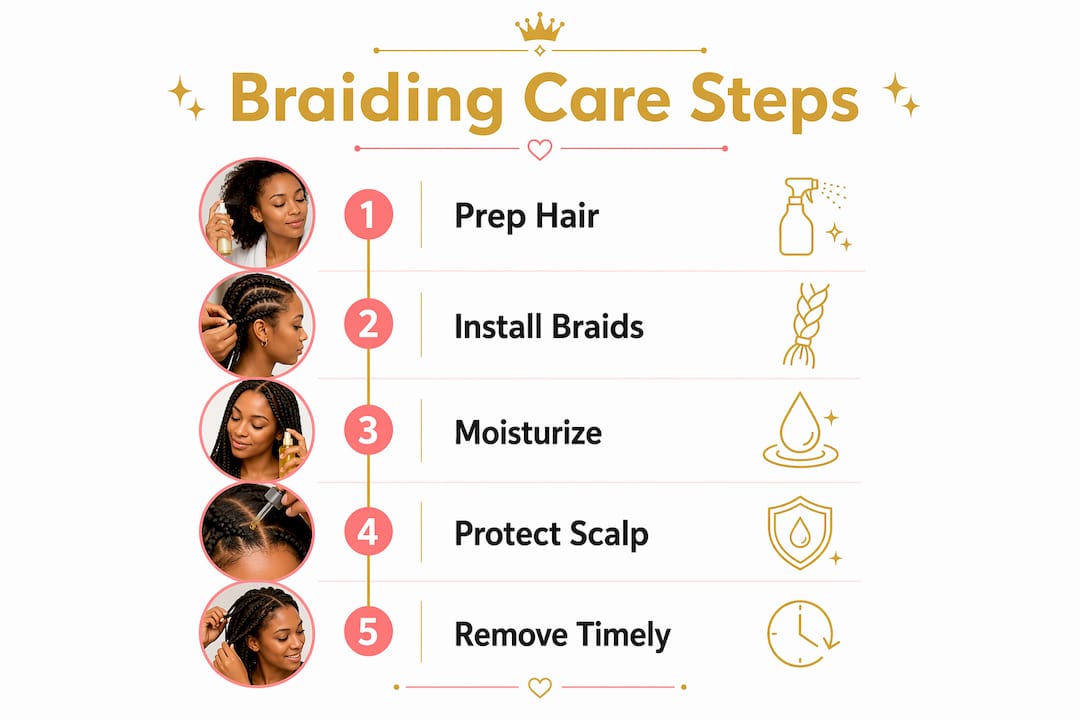
At Afromagicbraiding, every braid installation on transitioning hair starts with preparation, not the braid itself. What you do in the 24–48 hours before your appointment shapes how well your hair holds up over the entire wear period.
Pre-braiding preparation steps:
- Deep condition the night before or the morning of your appointment
- Clarify your scalp with a gentle scalp detox treatment to remove product buildup before the install
- Arrive with clean, stretched hair so your stylist can work efficiently and with less tension
- Trim any visibly split or thinning ends before the install, not after
Maintenance strategies during the wear period:
- Apply a jojoba or peppermint scalp oil every 3–4 days to keep the scalp nourished
- Use a hydrating braid spray on the length of the braids to prevent dryness and frizz
- Wrap hair nightly in a satin bonnet to preserve moisture and reduce friction
- Check edges weekly and apply a strengthening edge treatment if you notice any thinning
At Afromagicbraiding, we always say: your scalp health comes before your style's longevity. A braid that is comfortable and properly maintained will always outlast one that was installed too tight and neglected. The goal is healthy hair at takedown, not just a beautiful install on day one.
At removal:
- Apply a generous amount of oil or detangling spray to each braid before cutting or unraveling
- Work slowly, section by section, never pulling or rushing
- Follow removal immediately with a post-braid protein treatment and a deep conditioning session to restore strength and elasticity
The expertise behind every Afromagicbraiding installation comes from understanding that transitioning hair is not one texture. It is two, and every decision from product choice to braid size to tension level has to account for both.
Why the line of demarcation needs your full attention
The line of demarcation is the point where your natural curl pattern meets your chemically relaxed ends. It is structurally the weakest part of your hair during the entire transition. The two textures have different porosity levels, different elasticity, and different responses to moisture, which means the junction between them is under constant stress.
Breakage at the demarcation line is the most common frustration during a transition. It happens when hair is detangled dry, when braids are installed too tightly, when protein and moisture are out of balance, or when the hair is manipulated too frequently. The fix is not a single product. It is a consistent, gentle routine applied specifically to that area.
When cleansing, work in sections and use downward strokes rather than scrubbing motions that tangle the two textures together. When detangling, hold the hair above the demarcation point with one hand to reduce the pulling force on that fragile zone. When styling, avoid anything that puts direct tension on that junction, including tight ponytails, slicked-back styles, and small braids near the hairline. For a full breakdown of how braids protect your natural hair through every stage of the transition, Afromagicbraiding's complete guide covers the mechanics in depth.
The demarcation line is temporary. As you trim and grow, it moves further down the strand until it is gone entirely. Protecting it consistently is what gets you to the other side with your length intact.
Afromagicbraiding: professional braiding for your transition
Transitioning hair deserves more than a standard braid appointment. It needs a stylist who understands the demarcation line, knows how to install without damaging fragile edges, and can recommend the right style for where you are in your transition.

Afromagicbraiding in Southfield, Michigan specializes in exactly this. Every knotless braid installation is done with a tension-free feed-in technique that protects your roots and edges from the start. The team works with both textures simultaneously, choosing braid sizes, products, and techniques that suit your specific hair condition on the day of your appointment. Whether you are two months into your transition or approaching the finish line, the goal is always the same: healthy hair at takedown, not just a beautiful style on day one. Browse the style portfolio to see the work, then book your appointment online and come in ready to protect your progress.
Key takeaways
Braiding for transitioning hair works best when low tension, consistent moisture, and timely removal are treated as non-negotiable parts of the process.
| Point | Details |
|---|---|
| Choose knotless braids | Knotless braids apply low tension at the root, making them the safest option for the fragile demarcation line. |
| Keep braids in 4–6 weeks | Leaving braids beyond 6 weeks causes matting, buildup, and breakage that undoes your protective styling effort. |
| Protein treatments monthly | Use protein treatments approximately once a month; overuse causes brittleness and snapping at the demarcation line. |
| Protect the demarcation line | Detangle only on wet, conditioned hair and avoid tight styles near the hairline to prevent breakage at the weakest point. |
| Afromagicbraiding | Professional knotless braid installations in Southfield, Michigan, using tension-free techniques designed for transitioning hair. |