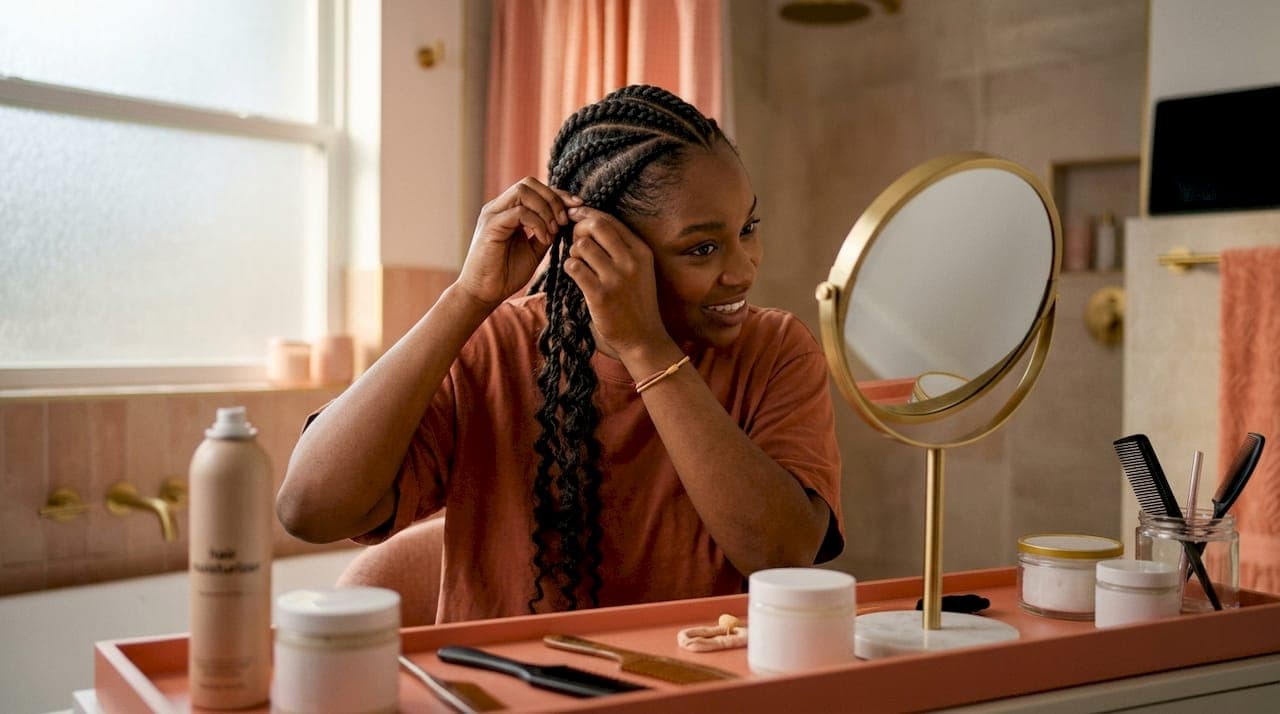
Crochet braiding is defined as a protective hairstyle technique where loose extension hair is attached to cornrowed natural hair using a latch hook tool. The method creates a wide range of finished looks, from faux locs to curly styles, without braiding each strand of natural hair individually. Traditional braiding can take 8 hours or more, while crochet installation cuts that time significantly. The result is a low-tension, versatile style that works for beginners and experienced clients alike.
What is crochet braiding and how does it work?
Crochet braiding is a two-step process. First, your natural hair is braided flat against the scalp in cornrows. Then, a latch hook tool is slipped under each cornrow, extension hair is folded over the hook, and the hook pulls the hair through, securing it with a knot.
The latch hook is the defining tool of this technique. It looks similar to a crochet needle used in yarn crafts, which is exactly where the name comes from. The hook opens to grab the hair and closes to pull it through cleanly. No thread, no needle, no glue.
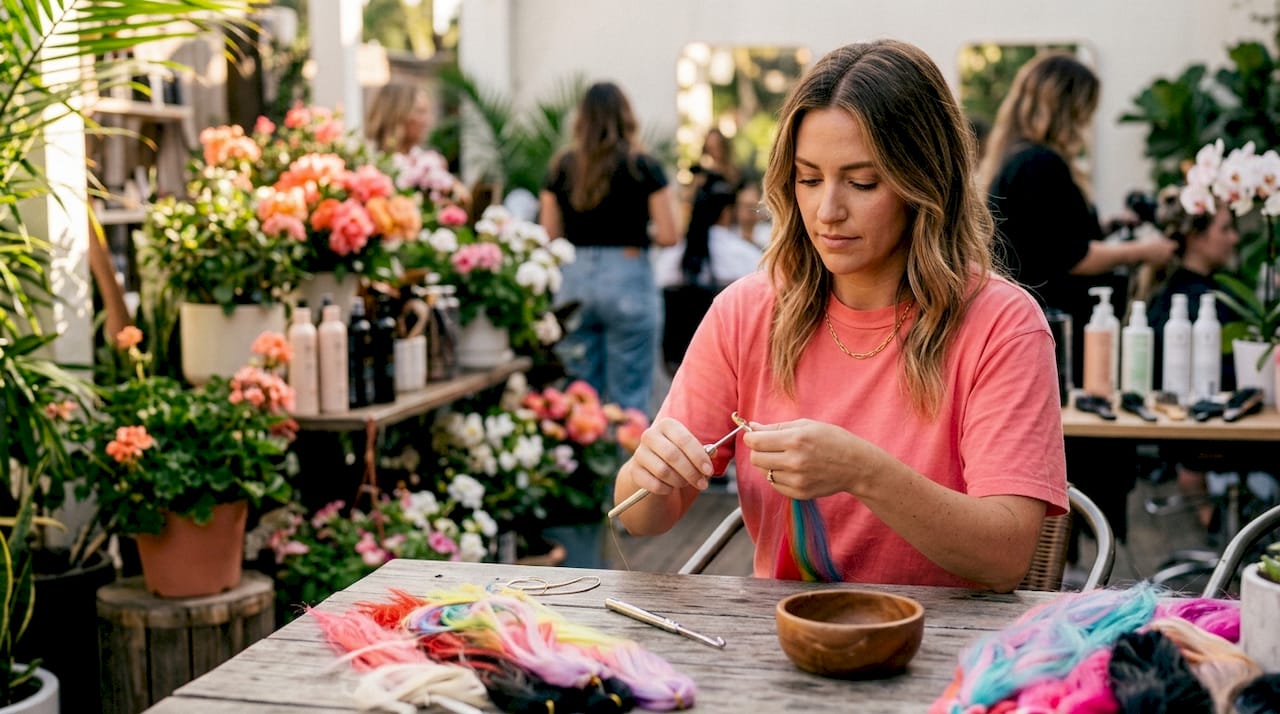
Crochet braids allow for versatile style options including curls, twists, locs, and straight hair. That versatility is the technique's biggest selling point. One cornrow base can support completely different finished looks depending on the extension hair you choose.
How do crochet braids compare to other protective styles?
Crochet braids occupy a unique position among protective styles. They share the cornrow base with sew-in weaves but require no thread or needle. They produce a similar finished look to box braids but apply zero tight tension to individual strands.
| Style | Installation method | Tension level | Time to install |
|---|---|---|---|
| Crochet braids | Latch hook onto cornrows | Low | 2–4 hours |
| Box braids | Braiding natural hair strand by strand | High | 6–10 hours |
| Sew-in weave | Wefts sewn onto cornrows with thread | Medium | 3–5 hours |
| Braided wig | Pre-made, worn over natural hair | None | Under 1 hour |
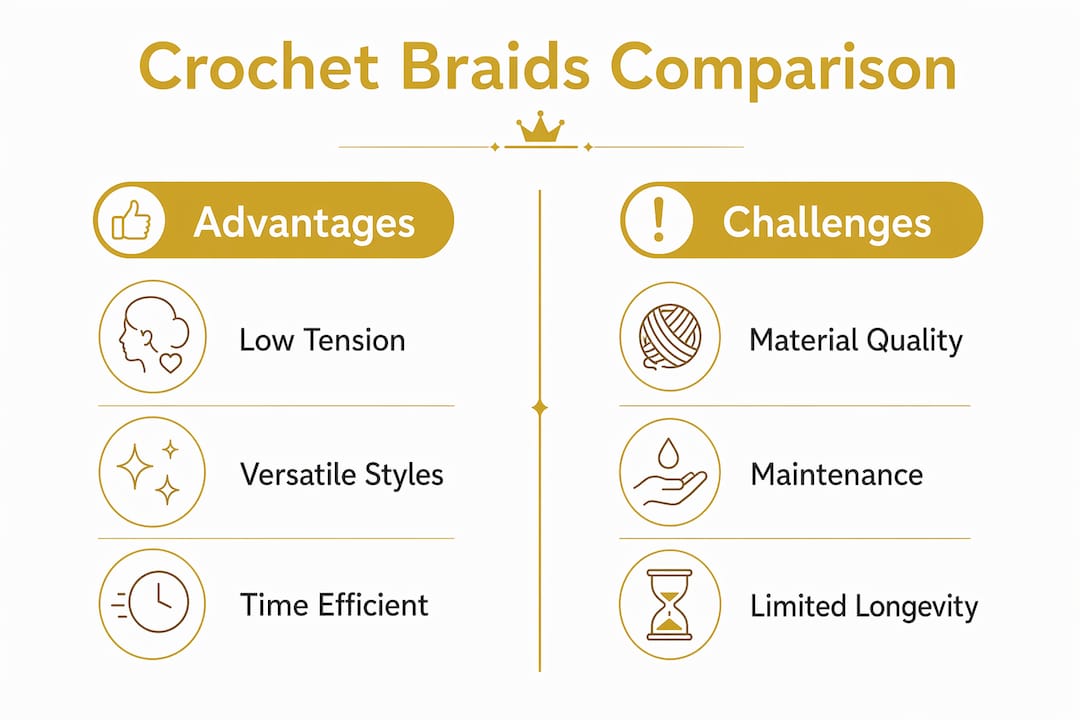
Crochet braids reduce tension on hair edges compared to individual braids, which lowers the risk of edge damage and hair loss. That is a meaningful distinction for anyone who has experienced thinning edges from years of tight styles. The extensions attach to the cornrow, not to individual strands, so the pulling force is distributed across the braid rather than concentrated at the root.
Key differences that set crochet braids apart:
- No thread or needle like sew-in weaves require
- No strand-by-strand tension like traditional box braids create
- Faster removal because you simply cut the knots and unravel
- Natural hair stays moisturized because the scalp remains accessible
- More styling variety than braided wigs without the commitment of a full sew-in
What materials and hair types work best for crochet braids?
The extension hair you choose determines how long your style lasts and how healthy your scalp feels throughout the wear. Synthetic hair is the most common choice because it is affordable and widely available. Human hair costs more but behaves more naturally and holds up better over time.
Feather hair extensions sit at the top of the quality ladder for crochet braiding. Feather hair extensions reduce scalp tension by 40% compared to traditional heavy synthetic fibers, thanks to their air-tapered design. That reduction matters over a 6-week wear period. Less weight means less pulling on your cornrows and less stress on your edges.
Professional stylists recommend feather-weight human hair for its breathability, lightweight feel, and durability compared to synthetic options. The natural taper at the ends also creates a more realistic finish that blends with your own hair texture.
What to look for when choosing crochet extension hair:
- Weight: Lighter is better. Heavy extensions pull on cornrows and cause premature loosening.
- Texture match: Choose a texture close to your natural hair for the most natural blend at the roots.
- Fiber type: Human hair and feather hair outlast standard synthetic fibers in both appearance and comfort.
- Pre-looped vs. loose: Pre-looped hair speeds up installation. Loose hair gives you more control over placement and volume.
Pro Tip: Buy one pack of your chosen extension hair and do a quick burn test. Human hair curls into ash and smells like burned protein. Synthetic hair melts into a hard ball and smells like burning plastic. This test confirms what you are actually purchasing.
Cheaper synthetic fibers become frizzy or ratty quickly, which forces early removal and shortens your style's lifespan. Spending more on quality hair upfront saves you time and protects your natural hair from repeated installation cycles.
What are the essential crochet braiding techniques?
Mastering the installation process makes the difference between a style that lasts 4 weeks and one that lasts 8. The technique starts well before you pick up the latch hook.
- Prepare your cornrow base. Braid cornrows flat and tight enough to hold extensions securely, but not so tight that they cause scalp pain. The direction of your cornrows determines how your finished style falls.
- Section your extension hair. Fold a small bundle of extension hair in half to create a loop at the center.
- Insert the latch hook. Push the open hook under the cornrow from front to back.
- Catch the loop. Place the folded center of the extension hair onto the hook.
- Pull through. Close the latch and pull the loop back through the cornrow.
- Apply the Double-Loop Method. The Double-Loop Method passes the ends through the loop twice, securing the hair far better than a single knot for long-term wear.
- Apply the invisible root technique. The miracle knot or invisible root method pulls only a few fibers through the loop, creating a natural-looking hairline with hidden knots.
- Repeat consistently. Space each attachment evenly along the cornrow to avoid gaps or bunching.
Common mistakes to avoid: attaching too much hair per knot (creates bulk and tension), skipping the double-loop (leads to slippage within days), and starting at the nape instead of the crown (makes the hairline look unnatural).
Pro Tip: Practice the double-loop knot on a spare cornrow or even a piece of rope before working on your actual hair. Muscle memory makes the process faster and more consistent once you start the real installation.
How to care for and maintain crochet braids
Properly installed crochet braids last between 4 to 8 weeks, depending on hair quality and how well you maintain them. The good news is that your natural hair remains accessible under the extensions, so you can actually care for it during the wear period.
A solid maintenance routine for braids keeps both your extensions and your natural hair in good condition:
- Wash every 2 weeks. Use a diluted shampoo in a spray bottle and apply it directly to your scalp. Rinse gently without disturbing the knots.
- Moisturize your scalp weekly. A lightweight oil like jojoba or sweet almond oil keeps your scalp from drying out under the extensions.
- Wrap your hair at night. A silk or satin bonnet reduces friction and prevents frizz on synthetic extensions. Cotton pillowcases pull moisture from both your natural hair and the extensions.
- Avoid excessive manipulation. Pulling, tugging, or restyling too often loosens the knots and shortens the style's life.
- Watch for buildup. Product residue accumulates at the scalp faster under crochet styles. A clarifying rinse every 3 to 4 weeks prevents itching and odor.
Signs it is time to remove your crochet braids: visible new growth that lifts the cornrow base, knots that have slipped and left loose extensions, or a frizzy and matted appearance that no product can fix. Wearing a style past its natural lifespan puts stress on your edges and makes removal harder.
What popular crochet braid styles can you try?
Crochet braids support more style variety than almost any other protective technique. The cornrow base stays the same. The extension hair changes everything.
Popular crochet braid styles worth knowing:
- Crochet box braids: Classic, defined braids that mimic traditional box braids without the tension. Great for a polished, everyday look.
- Faux locs: Wrapped extensions that create the appearance of mature locs. Marley hair and distressed locs extensions work best for this style.
- Curly crochet styles: Water wave, deep wave, and Afro kinky curly extensions create full, voluminous looks. These suit clients who want a natural, textured finish.
- Crochet twists: Senegalese twists or Havana twists installed via crochet method. Lighter than traditional twists and faster to install.
- Straight crochet hair: Silky straight extensions give a sleek, blowout appearance. Human hair extensions hold this style better than synthetic options.
Customization goes beyond texture. Color adds dimension without chemical damage to your natural hair. You can mix two or three extension shades to create highlights or ombre effects. Length is equally flexible. You can go from shoulder-length to waist-length simply by choosing a different extension pack.
Choose your style based on your lifestyle. Curly styles require more daily refreshing. Straight styles show frizz faster in humidity. Faux locs are the lowest maintenance of the group and hold up well through workouts and outdoor activities.
Key takeaways
Crochet braiding is the most time-efficient protective style that combines low scalp tension, versatile finishes, and accessible natural hair care in a single technique.
| Point | Details |
|---|---|
| Core technique | A latch hook attaches extension hair to cornrows, not to individual natural strands. |
| Tension advantage | Crochet braids reduce edge stress compared to box braids, lowering the risk of hair loss. |
| Best materials | Feather-weight human hair outlasts synthetic fibers and reduces scalp tension by 40%. |
| Installation key | The Double-Loop Method prevents slippage and extends wear time significantly. |
| Wear and care | Styles last 4–8 weeks with proper washing, moisturizing, and nightly silk protection. |
What I have learned from years of crochet braiding
The clients who get the most from crochet braids are the ones who invest in the right hair from the start. I have seen beautiful cornrow bases ruined by cheap synthetic extensions that frizz within two weeks. Every braid tells a story, and that story starts with the materials you choose.
The invisible root technique is the single biggest upgrade a beginner can make. Most first-time crochet installs look obviously "done" at the hairline. Pulling just a few fibers through the loop instead of a full bundle changes everything. The hairline looks natural, and the style reads as effortless.
My honest advice for anyone new to this technique: do not rush the cornrow base. A flat, even foundation makes the entire installation smoother and the finished look cleaner. I have seen clients try to skip this step or rush through it, and the extensions never sit right. Take your time at the base, and the rest follows naturally.
Scalp health is the real long-term benefit that does not get enough attention. Clients who switch from tight individual braids to crochet styles often notice their edges filling back in within a few months. That is not a coincidence. Less tension over time means healthier hair growth. Protecting your edges is protecting your future styles.
— Afro
Crochet braids at Afromagicbraiding
Afromagicbraiding brings professional crochet braid installation to Southfield, Michigan, with a focus on quality materials and healthy hair practices. Every braid tells a story, and the team at Afromagicbraiding makes sure yours is one you are proud to wear.
Whether you are new to protective styles or ready to try a fresh crochet look, Afromagicbraiding offers expert installation using premium extension hair sourced for comfort and longevity. Browse the full range of braiding services and styles to find the right fit for your hair goals. Ready to get started? Book your appointment and let the team handle the rest with care, skill, and pride in every knot.
FAQ
What is crochet braiding in simple terms?
Crochet braiding is a protective hairstyle where a latch hook tool attaches extension hair to cornrowed natural hair. The result looks like traditional braids or locs but installs much faster and with less tension.
Is crochet braiding damaging to natural hair?
Crochet braids are one of the least damaging protective styles available. Extensions attach to the cornrow base rather than individual strands, which reduces tension on hair edges and lowers the risk of breakage.
How long do crochet braids last?
Crochet braids last 4 to 8 weeks with proper care. Hair quality plays the biggest role in longevity. Premium human or feather hair outlasts standard synthetic fibers by several weeks.
Can beginners do crochet braids at home?
Yes. Crochet braiding for beginners is manageable with practice. The Double-Loop Method and a good latch hook are the two most important tools. Starting with pre-looped extension hair also simplifies the process significantly.
What hair is best for crochet braids?
Feather-weight human hair is the top choice for crochet braids in 2026. It is breathable, lightweight, and durable compared to synthetic alternatives, and it creates a more natural finish at the roots.