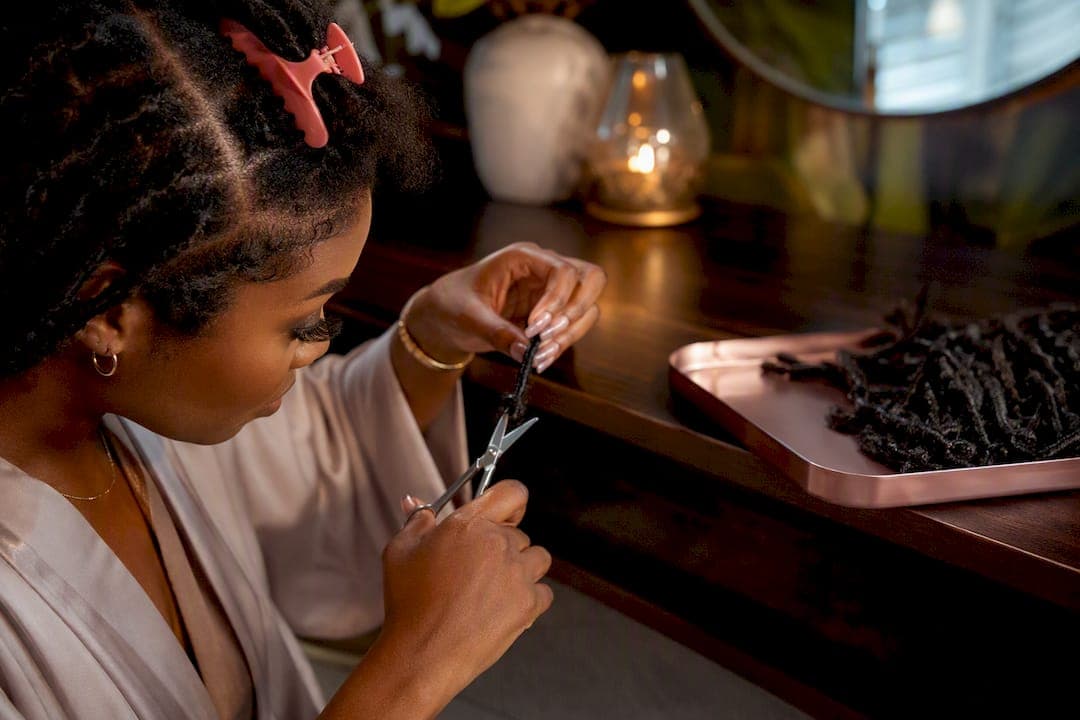
Yes, you can remove faux locs safely at home with a slow, section-by-section unraveling method that leans on oil, patience, and finger-first detangling. Stop and book a stylist if you find glued or tightly sewn installs, matting that won't budge, or scalp pain. The step-by-step method below walks through exactly how.
TL;DR:
- Faux locs should be removed within 6 to 12 weeks to prevent damage or scalp issues, with longer wear increasing risks.
- Use a generous oil soak, trim extensions to a few inches, and carefully finger-unravel each section to minimize hair breakage during removal.
- Gently detangling with wide-tooth combs from ends to roots after soaking helps protect natural hair and avoids unnecessary tension.
- Avoid DIY removal if locs are sewn-in, glued, or heavily matted, and consider professional help to prevent hair or scalp damage.
- Post-removal, a hot oil soak, clarifying shampoo, and deep conditioning restore scalp health and reduce excessive shedding.
Table of Contents
- What to Check Before You Start Removing Faux Locs Safely
- Step-by-Step: How to Take Out Faux Locs at Home
- How to Wash and Deep Condition After Removing Faux Locs
- Red Flags That Mean It's Time to Call a Professional
- What Salon Removal Looks Like Differently
- A Stylist's Honest Take on Wear Time
- When DIY Isn't Worth the Risk
- Sources
- FAQ
What to Check Before You Start Removing Faux Locs Safely
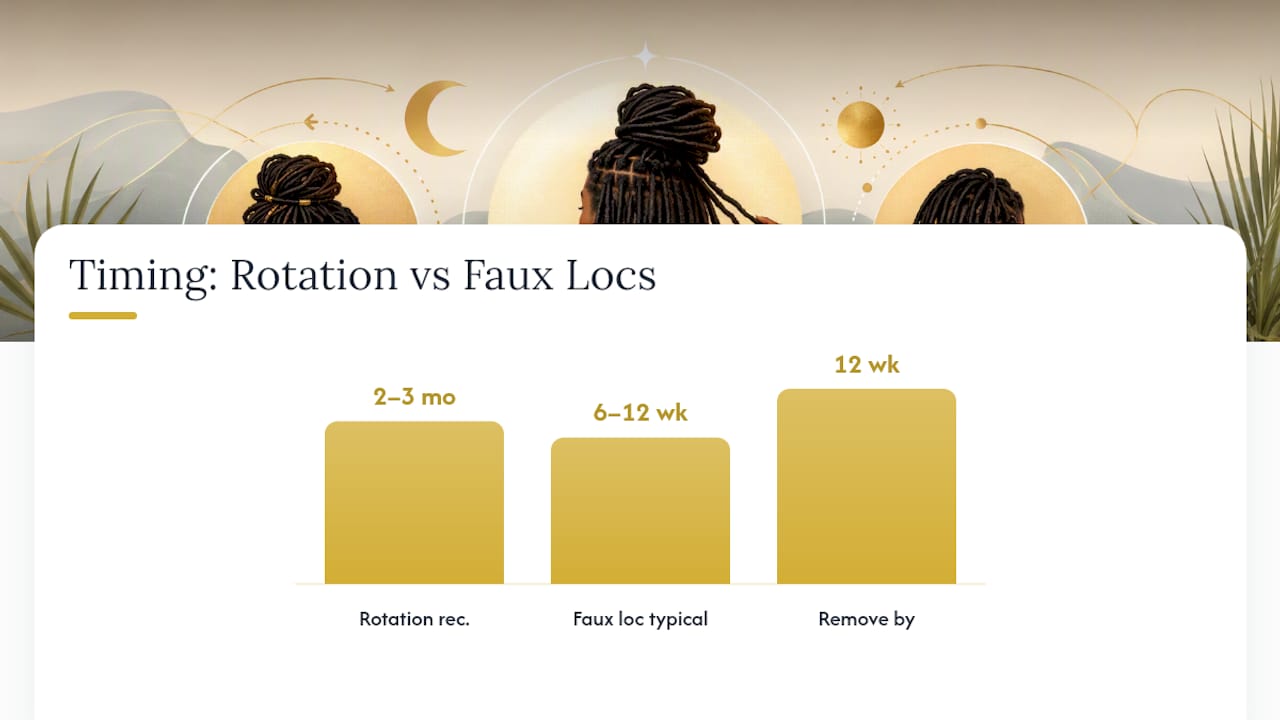
Before you touch a single strand, look at your calendar. The American Academy of Dermatology recommends rotating protective styles every 2 to 3 months to keep traction alopecia off the table, and most faux loc installs are designed to come out somewhere between 6 and 12 weeks. If you're past that window, don't wait longer.
Gather your tools first: sharp shears for trimming synthetic length, a lightweight oil like jojoba or coconut, a leave-in conditioner or detangling spray, a wide-tooth comb, a rattail comb, a spray bottle, and a couple of towels. If your locs sit low on your neck or near your crown, ask a friend to help with the spots you can't see well.
Take a minute to identify how your locs were installed. Wrapped and crochet/pre-looped styles are DIY-friendly. Sewn-in or glued installs are a different animal entirely, and forcing them apart with solvents or hard pulling almost always costs you natural hair. Set up in good lighting, get comfortable, and mentally divide your head into sections you can tackle one at a time.
- Confirm your locs have been in 6 to 12 weeks or longer.
- Lay out scissors, oil, leave-in conditioner, both comb types, spray bottle, and towels
- Identify installation type before you begin: wrapped, crochet, sewn, or glued
- Section your hair and recruit help for hard-to-reach areas
Pro Tip: Do a strand test on one loc first. If the wrap unravels easily after a light oil soak, the rest of your head will likely behave the same way.
Step-by-Step: How to Take Out Faux Locs at Home
Work in small sections, clipping the rest of your hair out of the way so you're never fighting more than one loc at a time. Depending on density, plan for 20 to 60 minutes per large section. Rushing is the single biggest cause of snapped strands.
- Trim the synthetic length. Cut the extension hair down to a few inches, leaving a safe margin beyond where your natural hair ends. This single step, backed by MyLivara's removal guide, cuts your total unraveling time dramatically.
- Saturate with oil or leave-in conditioner. Apply liberally along the length of each loc and let it sit for a few minutes. The slip this creates is what L'Oréal Paris's prep guide points to as the difference between smooth removal and breakage.
- Cut the outer wrap where it's safe to do so. Snip along the visible wrap, then switch to your fingertips before reaching for any tool.
- Finger-unravel from ends to roots. ChicSnips's care guide recommends this order specifically because working root-first stresses the follicle unnecessarily.
- Undo the under-braid or twist. Use a rattail comb tip or your fingers to loosen the base braid, then let the section fall free.
- Detangle start to root with a wide-tooth comb. Move slowly, holding the section above where you're combing to protect the root from tension.
For crochet or pre-looped styles, pull the extension hair back through the loop it was fed through rather than yanking the whole piece. If you hit a sewn-in or glued section anywhere on your head, stop working that area and flag it for a professional; forcing it typically shreds natural strands that took years to grow.
Pro Tip: Recheck each section with your fingers every few minutes. If you feel resistance that doesn't ease up after more oil, that's your natural hair telling you to slow down, not push harder.
How to Wash and Deep Condition After Removing Faux Locs
Once every loc is out, don't jump straight into the shower. Section your hair and do a hot oil soak first, either warming the oil slightly or using a warm towel to help it penetrate for 15 to 20 minutes. This step, echoed in L'Oréal Paris's guidance, softens weeks of buildup before you introduce shampoo.
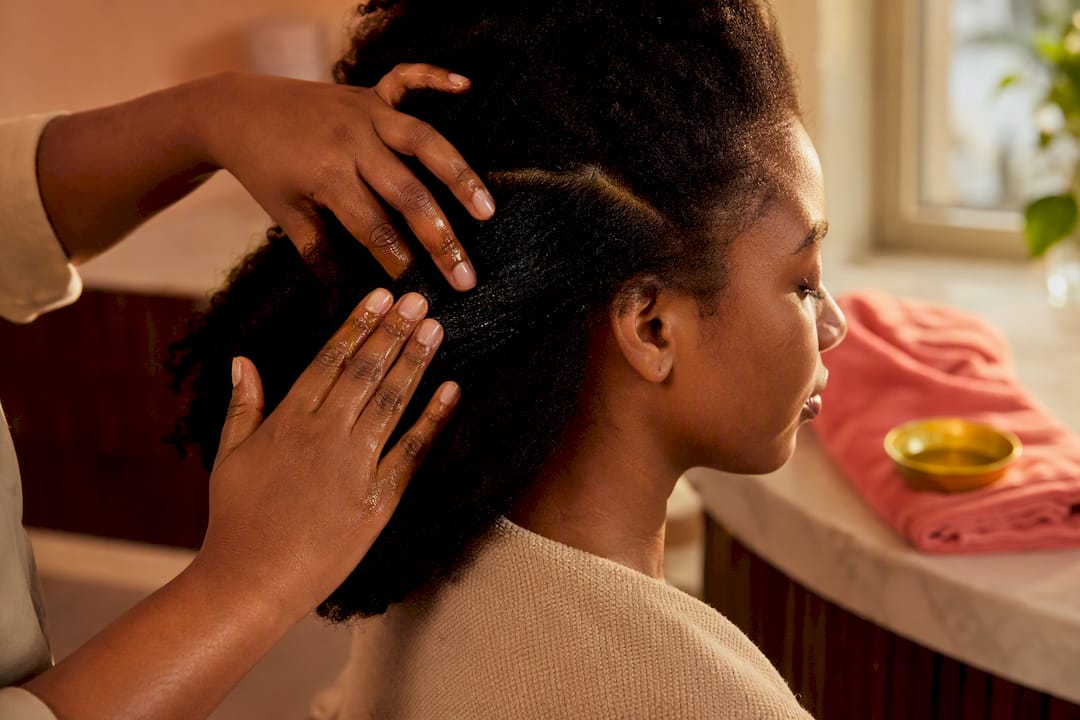
Follow with a clarifying shampoo to strip residue, then a rich deep conditioner or protein-moisture treatment to rebuild elasticity the strands lost during the protective style. Detangle in the same order you used during takedown, ends before roots, and hold off on heat tools or tight styles for at least a week while your scalp recovers.
Expect a pile of hair in the shower drain. According to ChicSnips, most of what looks like sudden hair loss is actually normal shed hair that got trapped inside the locs for weeks and releases all at once. That's different from pathological shedding, and the distinction matters:
- Trapped shed hair comes out in clumps during detangling but stops within a day or two
- Ongoing thinning, bald patches, or shedding that continues for weeks after removal is not normal
- Scalp tenderness that lingers past a day or two is worth mentioning to a stylist or dermatologist
A scalp-first wash routine built for post-protective-style hair can walk you through this in more detail if you want a repeatable checklist.
Red Flags That Mean It's Time to Call a Professional
Some situations aren't worth troubleshooting alone. Adhesive that won't loosen after repeated oil applications, hair that's fused or matted into a solid mass, or any scalp pain and visible irritation are all signals to stop.
- Adhesive residue that stays sticky after several oil soaks
- Matting so dense you can't separate strands even with conditioner
- Scalp pain, open sores, or bumps around the hairline
- Resistance that doesn't ease no matter how long you soak or how gently you pull
Try one localized oil soak and a gentle test patch before deciding it's beyond you, but stop the moment you feel real resistance rather than gradual loosening. A professional removal for glued or sewn installs typically uses targeted, low-irritant solvents applied in stages, paired with mechanical loosening, rather than one aggressive chemical pass.
What Salon Removal Looks Like Differently
Afromagicbraiding's takedown process leans on a scalp-first wash and patient sectioning, the same principle behind our boho braid takedown workflow. The difference at a salon chair is time and tools most home setups don't have: professional-grade solvents for stubborn adhesive, careful snipping instead of forceful pulling, and an immediate hot-oil and deep-conditioning treatment the moment the last loc comes out.
- Edges get extra oil and minimal tension throughout removal
- Quality synthetic hair can often be cleaned and reused for a future install
- Stylists typically recommend a rest period between protective styles, not back-to-back installs
Pro Tip: Ask your stylist to check your edges specifically at your next visit. Edge thinning shows up early and is one of the easiest things to reverse if you catch it in time.
A Stylist's Honest Take on Wear Time
Longer wear isn't automatically better for your hair. Give your scalp and edges real rest between installs, and if your hairline feels tender or your part looks wider than usual, that's your sign to take a break before booking the next style.
— Afro
When DIY Isn't Worth the Risk
If your locs were sewn in, glued down, or have matted past the point of finger-detangling, trying to force them out yourself usually costs more hair than it saves. Gentle takedown appointments that include a scalp-first wash, hot-oil treatment, and deep conditioning in one visit can help hair go straight from removal into recovery instead of sitting exposed and dry.

A salon takedown makes the most sense when you're not confident identifying your install type, when a section has resisted oil and gentle pulling for more than a few minutes, or when you simply want your next protective style prepped correctly from day one. Before your appointment, come in with clean, detangled hair if possible, and mention any spots that feel tender so your stylist can work around them.
Browse the full range of services in our portfolio, or head straight to book your takedown and recovery appointment in Southfield. If you have questions about your specific install before booking, reach out through our contact page.
Sources
For more detail beyond this guide, the American Academy of Dermatology's hairstyle guidance covers protective-style timing, and this natural hair care guide offers broader tips for maintaining textured hair between styles.
- American Academy of Dermatology — Hairstyles and hair loss
- L’Oréal Paris — 6 Tips for How To Prep And Remove Faux Locs
- ChicSnips — Faux Locs Using Braiding Hair: Installation & Care Guide
- MyLivara — How To Remove Faux Locs Without Damage: A Visual Guide
FAQ
Is It Hard to Take Out Faux Locs?
It's manageable if you work slowly, section by section, and use enough oil for slip. Most of the difficulty comes from rushing or skipping the lubrication step, not the technique itself.
How Long Do Faux Locs Typically Last?
Most faux locs are designed to be worn for 6 to 12 weeks, and dermatologists recommend rotating protective styles every 2 to 3 months to avoid traction alopecia.
Can Faux Locs Be Removed Without Cutting Natural Hair?
Yes, if you trim only the synthetic extension length and finger-detangle the rest, your natural hair should come through intact. Cutting risk goes up sharply with glued or sewn installs, which is why those often need professional removal.
Will My Hair Go Back to Normal After Faux Locs Come Out?
For most people, yes. The heavy shedding you see right after removal is usually trapped shed hair releasing all at once, not new hair loss, and a hot-oil treatment plus deep conditioning helps restore normal texture within a week or two.
What's the Best Way to Detangle Faux Locs Before Removing Them?
Apply oil or leave-in conditioner first, then work each section from the ends toward the roots using your fingers before reaching for a comb. This order, paired with a pre-braiding detangling routine, keeps root stress to a minimum.