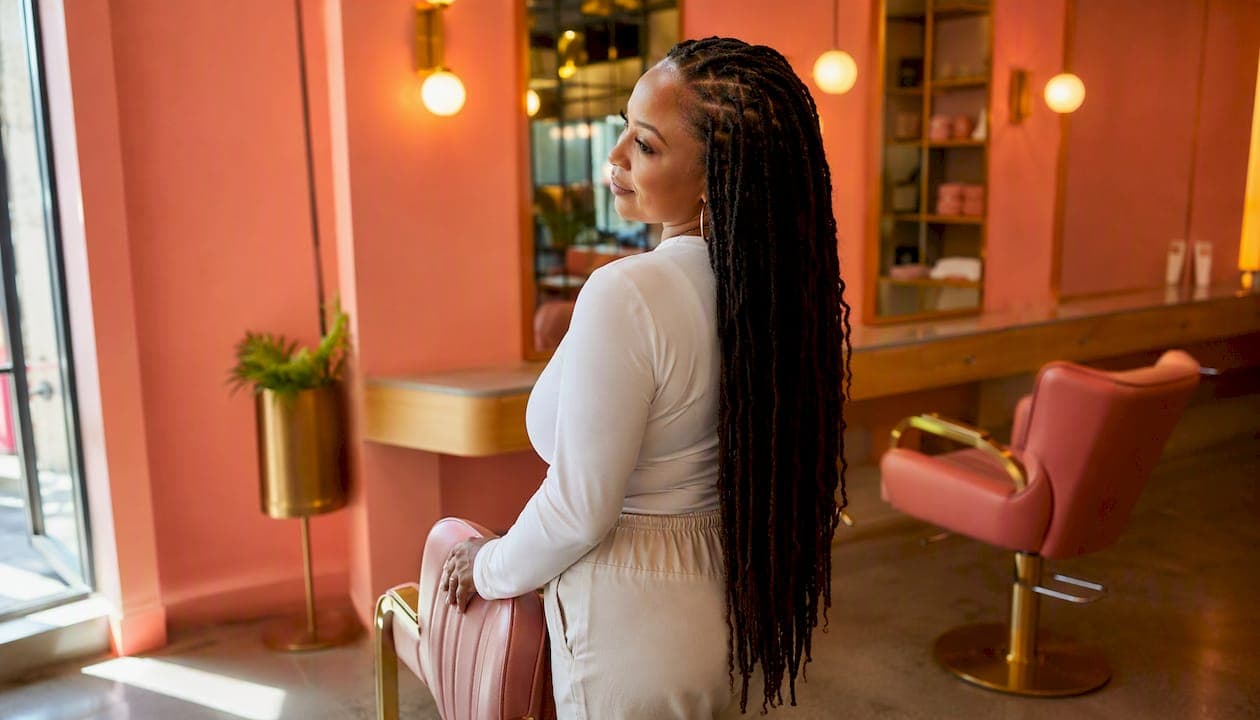
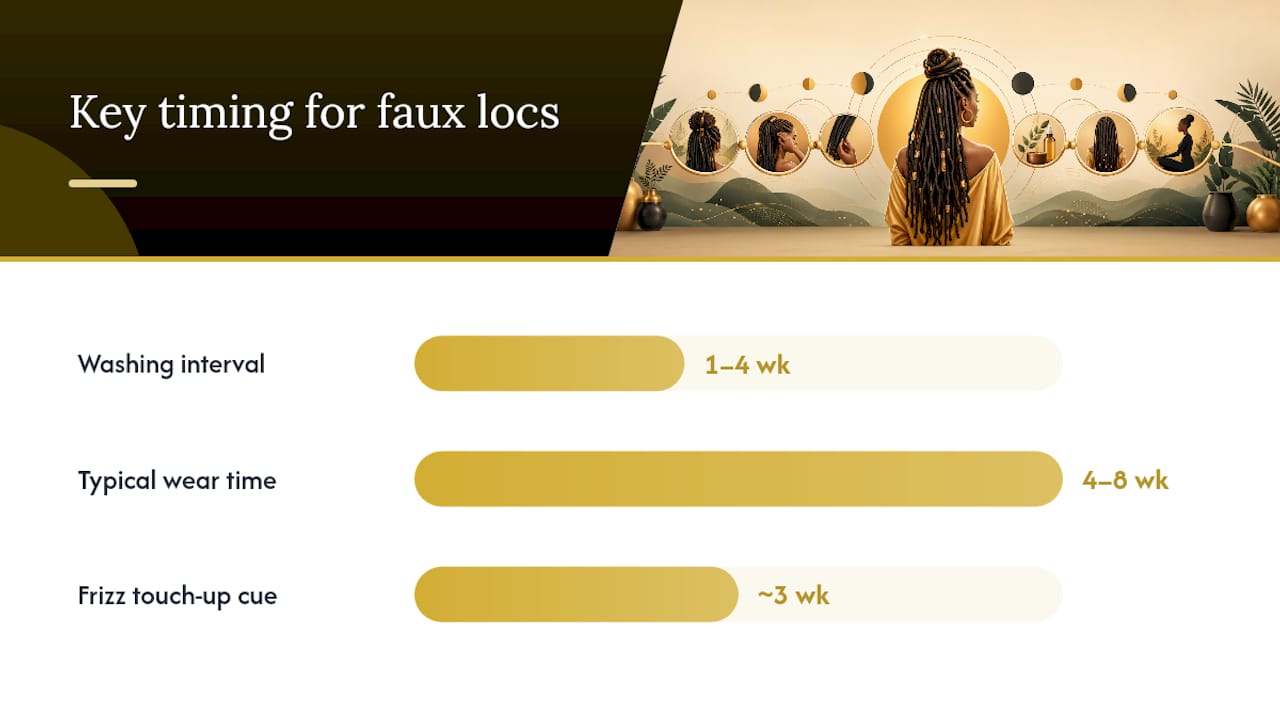
Most faux locs stay neat and wearable for 4 to 8 weeks, though some crochet or human-hair blend installs can push closer to 3 months with attentive care. The biggest factor isn't the calendar. It's your scalp. If you notice pain, thinning at the hairline, matting that won't detangle, or heavy buildup, that's your cue to remove them, regardless of what week you're on.
TL;DR:
- Faux locs typically last between 4 to 8 weeks, but factors like natural hair texture, growth rate, and lifestyle can shorten or extend this period.
- The installation method, such as crochet or wrapped styles, significantly influences longevity, with crochet locs often holding shape longer but being bulkier.
- Proper maintenance, including scalp-focused washing, lightweight moisturizing, and regular scalp checks, can extend wear time and prevent damage.
- Signs indicating it's time to remove faux locs include persistent scalp pain, thinning hair, stubborn matting, or unpleasant odors, regardless of the week.
Table of Contents
- What Affects How Long Faux Locs Last
- How Installation Method and Materials Change Longevity
- Daily and Weekly Maintenance That Extends Wear Time
- When to Remove Faux Locs: Warning Signs You Shouldn't Ignore
- How Different Faux Loc Styles Compare for Longevity
- Salon-Sourced Tips for Maximizing Safe Wear Time
- What Most Advice Gets Wrong About Wearing Faux Locs Longer
- Book Your Faux Locs Install or Maintenance Appointment
- Sources
What Affects How Long Faux Locs Last
The 4 to 8 week window shows up constantly in stylist guidance for good reason. It reflects the average pace at which new growth starts tugging at the base of each loc and natural oils begin softening the wrap. But that range isn't fixed. Several variables push it shorter or stretch it longer.
Hair texture plays a bigger role than most people expect. Coarser, kinkier textures tend to grip extension hair more securely and can sometimes tolerate a longer wear period, while finer or looser natural hair textures may loosen at the root faster, which shows up as flyaways and gaps within the first few weeks. Growth rate matters too. Faster-growing hair means faster loosening at the root, since new growth naturally shifts the tension point of every loc.
Your lifestyle matters just as much as your biology. Swimming, heavy sweating from workouts, and humid climates all accelerate frizz and can trap moisture close to the scalp, which shortens the comfortable wear window considerably.
Product choice either extends or sabotages your timeline:
- Lightweight, water-based products keep locs flexible without weighing down the roots.
- Heavy butters and creams sound nourishing but tend to build up fast, attracting lint and speeding up frizz.
- Alcohol-heavy edge products can dry out the hairline and cause premature unraveling at the most fragile part of the style.
Installation quality is arguably the single biggest lever. A rushed or overly tight install sets you up for early breakage no matter how well you maintain it afterward, while even, moderate tension distributed correctly across each section gives your scalp room to breathe and your locs room to hold their shape longer.
How Installation Method and Materials Change Longevity
Not all faux locs are built the same way, and the method your stylist uses affects how long the style holds up almost as much as your own hair does.
Braid-and-wrap (traditional wrapped faux locs) start with a cornrow or braid base wrapped in extension hair. They look sleek at install but loosen predictably at the root as new growth pushes through, usually within the 4 to 6 week range before the wrap starts sliding.
Crochet faux locs attach differently, looping extension hair through a braided base with a crochet hook. This method tends to hold its shape closer to the scalp for longer, which is why some wearers stretch crochet installs toward the upper end of the typical range, or beyond it with careful upkeep. The tradeoff is bulk. Crochet locs can be heavier and take longer to dry thoroughly after washing, which raises the risk of trapped moisture if you rush the drying step.
Soft locs and goddess or boho variations prioritize a more textured, natural finish using curly or wavy ends. They look effortlessly good from day one, but that same looseness means they can start looking undone faster than a tightly wrapped install, especially around the ends.
Material matters too. Synthetic hair is lighter and dries faster, but it can feel less breathable against the scalp for some wearers. Human-hair blends absorb moisture more like natural hair, which some people find more comfortable, though they take longer to air dry.
Pro Tip: Ask your stylist directly about part size and tension before they start. Smaller parts distribute weight more evenly across the scalp, which reduces the concentrated pulling that leads to early breakage at any single point.
Before you sit down for an install, ask your stylist:
- What part size will minimize tension at my hairline?
- Is the extension hair reusable for a future install?
- How should I expect this specific method to age over the first month?
Daily and Weekly Maintenance That Extends Wear Time
Faux locs are not a break from hair care. They're a different kind of hair care, and skipping it is the fastest way to cut your wear time short. Maintaining faux locs is not a hair-care vacation, and the wearers who get the most out of a protective style treat scalp health as a daily habit, not an afterthought.
Here's a maintenance routine that actually holds up over 4 to 8 weeks:
- Wash your scalp, not just your locs. Dilute a sulfate-free shampoo with water in an applicator bottle and apply it directly to your scalp rather than saturating the entire style. This targets the areas producing oil and buildup without soaking the extension hair, which slows drying and invites frizz.
- Set a washing frequency that matches your activity level. Every 1 to 4 weeks is the typical range, with more frequent washing for active or heavy-sweating wearers and less frequent washing for those with drier, more sensitive scalps.
- Moisturize with light products only. A lightweight scalp oil or hydrating mist keeps your roots comfortable without the buildup risk that comes with heavier creams and butters.
- Protect your locs overnight. A satin bonnet or scarf prevents friction damage, and loosely pineappling or wrapping your locs before bed keeps the roots from taking on unnecessary tension while you sleep.
- Dry thoroughly and gently. Blot excess water rather than rubbing, and let locs air dry with good airflow whenever possible. Trapped moisture deep in a dense install is one of the more common ways mildew and odor problems start.
Not every three weeks of frizz means a full takedown. A quick touch-up appointment, where your stylist re-wraps loosened roots without redoing the entire head, can add real time to an install that's otherwise holding up well. Regular scalp care habits matter just as much here as during any other protective style.
Care guides consistently point to the same conclusion: avoiding heavy product buildup and prioritizing regular scalp moisture does more to extend a faux loc install than any single "miracle" product on the market.
When to Remove Faux Locs: Warning Signs You Shouldn't Ignore
Faux locs are meant to be temporary, and wearing them past their safe window creates real risk to your natural hair underneath. Leaving faux locs in too long increases the chance of permanent matting and tension-related breakage, which is a very different problem than simple frizz.
Watch for these signals that it's time to book a takedown:
- Persistent scalp pain or tenderness, especially around the hairline or crown, which usually signals the roots are under more tension than your scalp can comfortably handle.
- Visible thinning or widening parts, a warning sign of traction alopecia, a form of hair loss caused by sustained pulling at the follicle.
- Matting that resists gentle detangling, since forcing through a mat risks pulling out natural hair along with the extension.
- Unpleasant odors or discoloration, which typically point to trapped moisture or mildew building up close to the scalp.
Traction alopecia develops gradually. The cumulative weight of the extension hair combined with new growth pulling against a fixed root creates ongoing tension, and by the time thinning is visible, some damage may already be underlying. That's why monitoring symptoms matters more than counting weeks. A style at week 5 with a sore scalp is more urgent than one at week 8 that still feels comfortable.
If you notice any of these signs, a professional takedown is worth the appointment. Trying to detangle matted extension hair yourself often does more harm than good, especially near the hairline where hair is most fragile.
How Different Faux Loc Styles Compare for Longevity
Choosing a style is partly an aesthetic decision and partly a durability decision, and it helps to know which trade-off you're making going in.
Crochet faux locs generally hold their shape closer to the scalp for longer stretches, which is why they're often recommended when longer wear is the priority. The tradeoff is added bulk and a longer drying time after washing.
Wrapped faux locs and soft locs tend to look their absolute best in the first two to three weeks, when the wrap is tightest and the ends are freshest. After that, they may need earlier removal or a touch-up to stay looking intentional rather than undone.
Goddess and boho locs use curly or wavy textured ends that hide early signs of frizz better than a sleek, straight finish. That textured look can create the impression of a longer lifespan, but leaving them in too long still risks the same matting and tension problems as any other style.
For most wearers, a root touch-up is the smarter move before a style hits its breaking point. It's faster, gentler on your natural hair, and considerably cheaper than a full reinstall every single time.
Salon-Sourced Tips for Maximizing Safe Wear Time
Before you ever sit in the chair, a good stylist should walk through a few things with you. At Afromagicbraiding, that conversation covers your desired wear time, your natural hair density, how much weight your scalp typically tolerates, and the part size that fits your hairline. That upfront discussion shapes decisions that affect your comfort for the next two months.
Once the stylist starts installing, a few in-chair checks make a real difference:
- Tension testing at the root before finishing each section.
- Showing you how the root should sit, so you can spot changes at home later.
- Confirming comfort at the hairline specifically, since that's where traction damage tends to start first.
Stylist and salon guides consistently flag installation skill and even weight distribution as the leading factors in preventing traction-related breakage, ahead of which extension hair you choose. Edge-sparing techniques, like using smaller sections near the hairline and avoiding excessive pulling at the temples, are a standard part of protecting that fragile perimeter.
Pro Tip: Do a weekly self-check by gently pressing along your hairline and part lines. Tenderness that wasn't there the week before is an early warning sign worth addressing before it becomes visible thinning.

After you leave the salon, a simple product lineup goes a long way: a lightweight scalp oil, a hydrating scalp mist, and the diluted shampoo method for wash days. Nothing heavy, nothing that sits on the scalp and invites buildup.
What Most Advice Gets Wrong About Wearing Faux Locs Longer
The common advice treats faux loc lifespan like a fixed countdown, week 6, done. That framing misses the point. Two people with the same install can have completely different safe wear windows depending on hair density, growth rate, and how their scalp responds to tension. Chasing a specific number of weeks, rather than watching your own scalp, is where most damage actually starts.
What the evidence actually supports is a shift in priority: treat comfort and scalp condition as the real clock, not the calendar. A style that still feels light and pain-free at week 7 doesn't need to come out just because a blog said 6 weeks is the limit. Conversely, a style that's tender at week 3 needs attention now, not at some arbitrary future date.
If you take one thing from this guide, let it be this: build a habit of checking your hairline weekly, and treat any tenderness as non-negotiable information, not something to push through for the sake of getting your money's worth out of an install.
— Afro
Book Your Faux Locs Install or Maintenance Appointment
Afromagicbraiding gives you what a DIY install or a rushed appointment elsewhere can't: trained hands that test tension section by section, so you're not gambling on whether your hairline holds up over the next two months. That attention to even weight distribution is exactly what separates a faux loc install that comfortably lasts 6 to 8 weeks from one that starts hurting by week 3.

Every appointment starts with a real conversation about your hair density, your activity level, and how long you're hoping to wear the style, so the part size and tension get set correctly from the first section. Browse examples of past faux loc installs and maintenance work in the portfolio gallery, then check available times through the booking page to get a full breakdown of what your appointment will include, from installation through your first touch-up.
Sources
- How to Wash Faux Locs - wikiHow
- Faux Locs Are the Perfect Protective Style—Here's What You Need to Know | Byrdie
- What are Faux Locs? The Ultimate Locs Care Guide | Prose
- How Long Do Faux Locs Last? What to Expect - TheTropicalBuzz