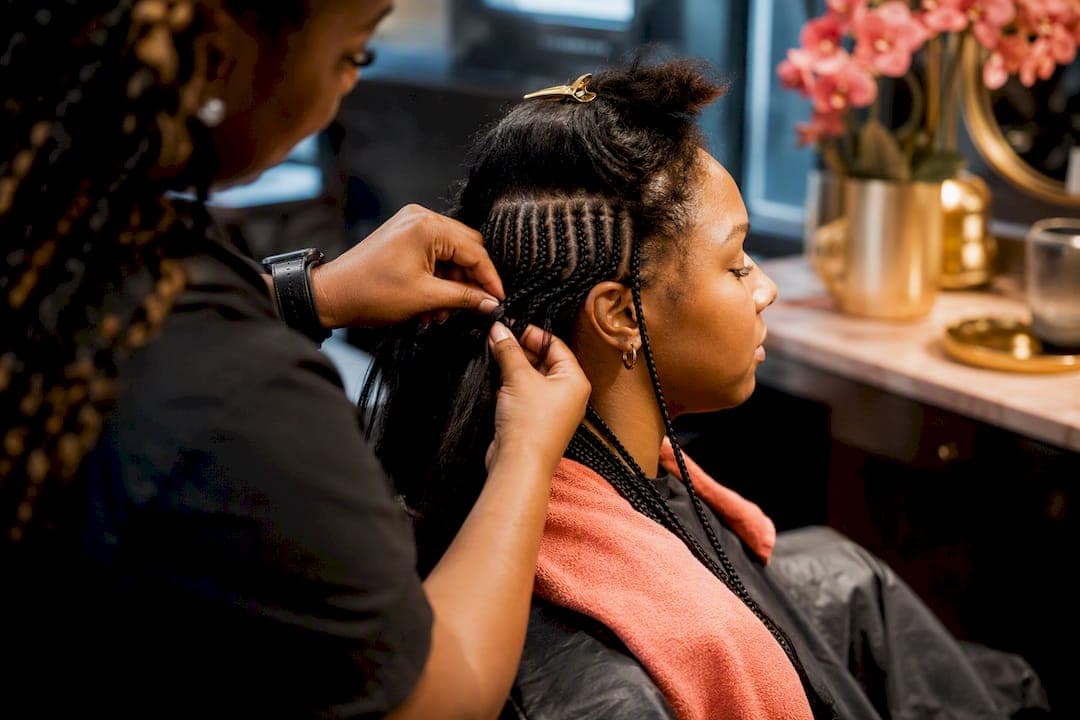
Yes, knotless braids can be one of the gentler protective styles for fine or thin hair, but only when three things happen: your stylist uses low tension with medium or small-medium sizing, the extension hair is lightweight, and you get a halo leave-out along your hairline. Skip any of those three, and fine hair pays the price at the root.
TL;DR:
- Using medium or small-medium sections and lightweight extension hair minimizes tension and potential damage for fine or thinning hair.
- Avoid micro braids and excessive length beyond shoulder height, as these increase leverage and pull at the scalp.
- Proper preparation including deep conditioning, dry hair, and skipping heavy edge gel helps protect fragile strands during installation.
- Maintaining a low-tension, lightweight braid during the first 48 hours and following gentle scalp care lengthens style wear and prevents breakage.
- Always confirm your stylist leaves a halo leave-out and adjusts tension if discomfort or signs of damage appear early in the styling process.
Table of Contents
- Are Knotless Braids Good for Fine or Thin Hair?
- What Braid Size and Length Work Best for Fine Hair?
- How Do You Get a Low-Tension Knotless Install?
- How Should You Prep Fine Hair Before Braiding?
- How Long Should You Keep Knotless Braids on Fine Hair?
- Which Styles Protect Fine Hair, and Which Ones Damage It?
- How Do You Choose the Right Stylist for Fine Hair?
- Afro Magic Braiding's Take on Protecting Fine Hair
- Ready for a Low-Tension Install That Fits Fine Hair?
- Sources
Are Knotless Braids Good for Fine or Thin Hair?
The feed-in method is what makes knotless braids different from traditional box braids, and it's the reason stylists recommend them for fragile strands. Instead of anchoring a knot at the scalp and clamping your natural hair under it, the stylist gradually feeds extension hair into your own strand as they braid down. That gradual build reduces the initial pulling force at the root compared to a knotted install, which matters most in the first 48 hours when your scalp is most sensitive to tension.
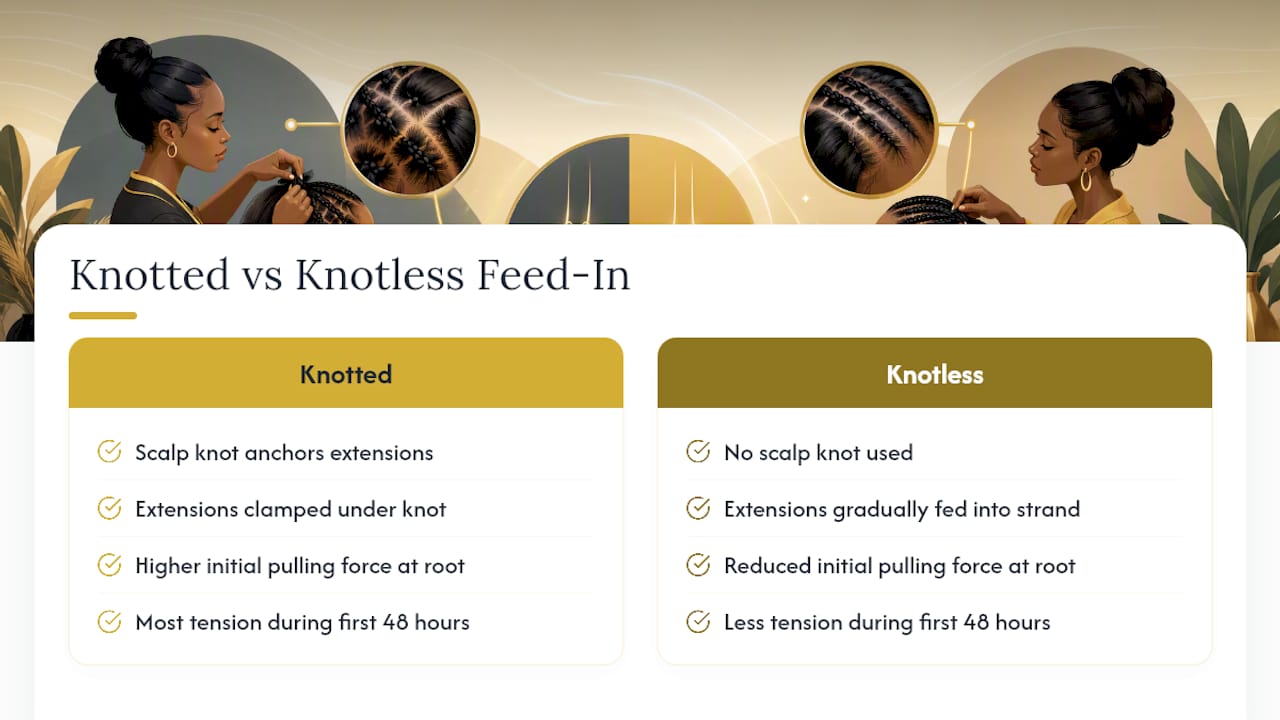
That said, "knotless" isn't automatically "safe." A knotless braid done with heavy hair, tiny sections, and a tight perimeter can strain fine hair just as much as a bad box braid install. The technique gives you an advantage. It doesn't guarantee one.
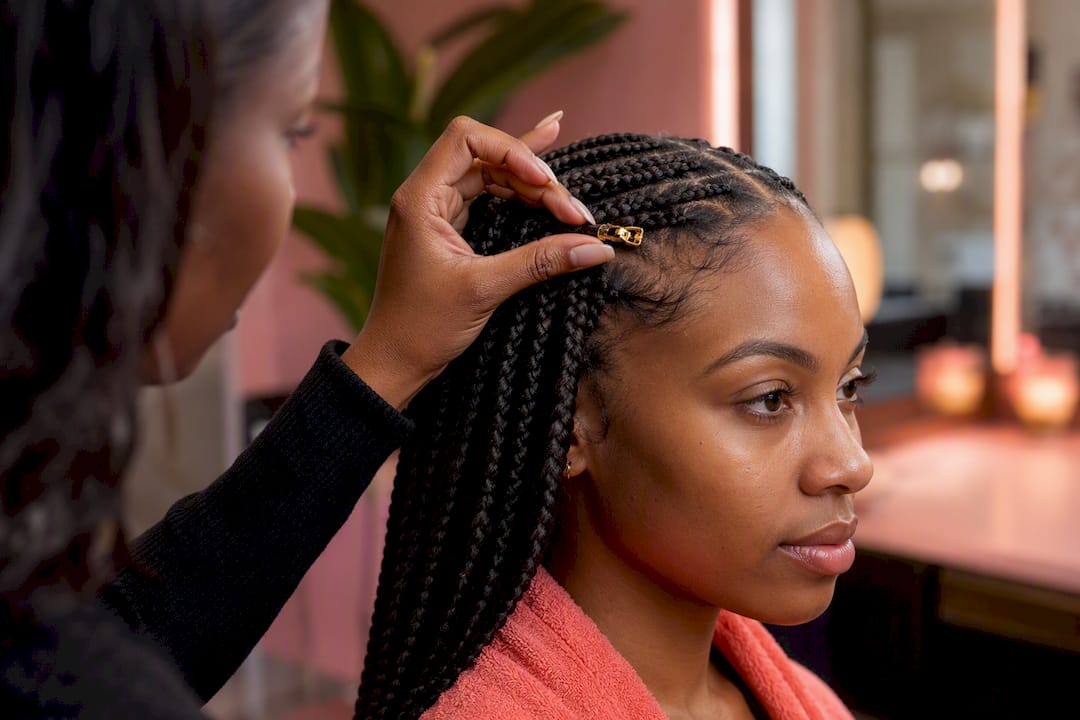
Stylists specializing in low-tension styling point to the feed-in method specifically because it lets fine, delicate hair carry less weight at the follicle from the very first braid. If your hair has thinned from previous tight styles, that distinction is exactly what you need to look for before booking anything.
What Braid Size and Length Work Best for Fine Hair?
Micro braids might look sleek, but they're one of the worst choices for fine or thinning hair. Smaller sections mean more braids per head, and more braids means each one, tiny as it is, still has to carry its share of extension weight. Multiply that across hundreds of micro sections and the tension adds up fast, concentrated on hair that can least afford it.
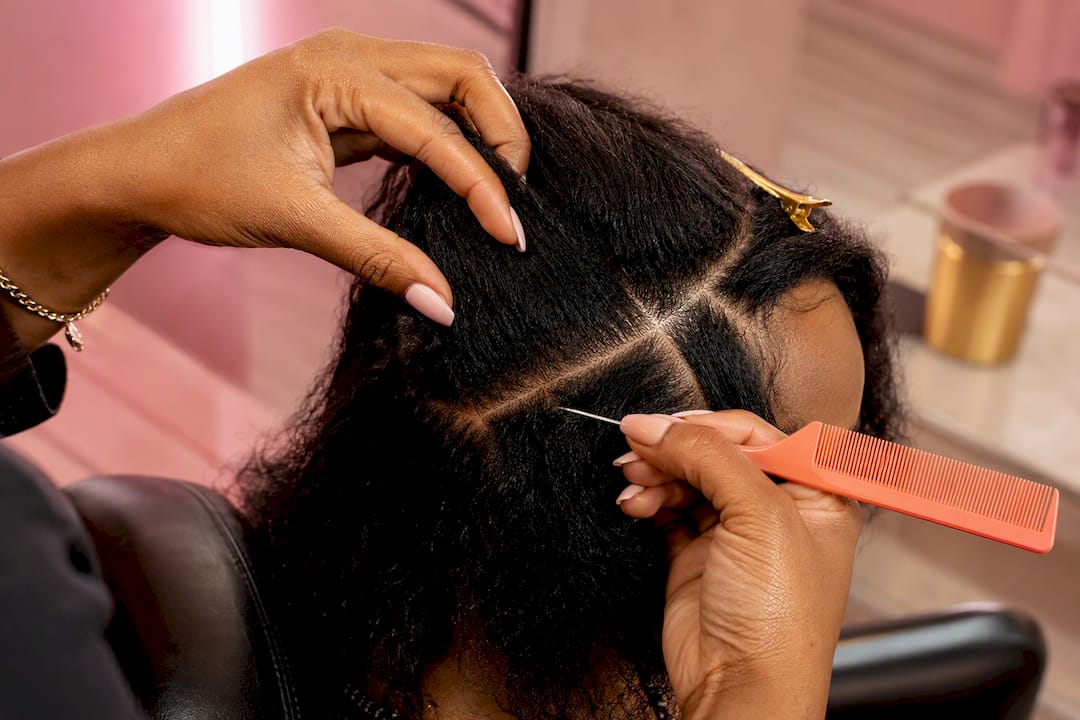
Medium or small-medium braids spread that same weight across fewer, sturdier sections. Real Simple's stylist guidance on parting recommends keeping sections larger near the hairline and reserving anything smaller for the crown, where hair is typically denser and better able to handle it.
Length matters just as much as size. Shoulder length to mid-back is the sweet spot for fine hair. Longer than that, and every inch of extra extension adds leverage that pulls at the root, even if the braid itself feels light when you first sit down.
-
Ask for medium or small-medium sections, never micro, especially around the perimeter.
-
Keep length at or above shoulder length, avoiding excessive length that can add leverage and pull at the root.
-
Feel the extension hair before it goes in. Lightweight synthetic or human-hair blends should feel airy, not dense or waxy.
-
If a bundle feels heavy in your hand, it will feel heavier hanging from your scalp for six weeks.
Pro Tip: Bring a small section of your natural hair loose and ask your stylist to hold a single strand of the proposed extension hair next to it. If the extension visibly outweighs your own strand, ask for a lighter option before the appointment starts.
How Do You Get a Low-Tension Knotless Install?
Good technique starts before the first braid ever goes in. A stylist who braids fine hair regularly will part in medium sections, avoid clamping the base too tightly, and check in with you as they move around the head. That last part matters more than it sounds. Tension can build gradually over an appointment without either of you noticing until it's too late.
Walk into your appointment with a short list of specific requests. Reading it out loud to your stylist, even if it feels awkward, sets the tone for the whole install.
- Ask the stylist to braid one small test section first so you can feel the tension before they continue.
- Request medium or small-medium sizing, with slightly larger sections at the hairline.
- Confirm the extension hair is a lightweight option, not the standard heavier bundle.
- Ask for a ¼ to ½ inch leave-out, or halo, around your entire perimeter.
- Tell the stylist to stop and loosen anything that pulls or stings, no exceptions.
Watch for warning signs while you're in the chair. Scalp pulling that doesn't ease up, an audible snapping sound as hair is fed in, or parts that look visibly tighter than the section next to them all mean it's time to speak up immediately, not after the appointment ends.
How Should You Prep Fine Hair Before Braiding?
Clean, well-conditioned hair braids more smoothly and holds up better once installed. Wash and deep condition a day or two before your appointment, detangle thoroughly, and let your hair dry completely. Damp hair under braids can lead to mildew odor and slower drying for weeks, which is uncomfortable and genuinely bad for scalp health.
Your edges deserve their own plan. The halo leave-out, that ¼ to ½ inch of hair left unbraided around your hairline, protects the strands most likely to already be thin or breaking. Skip heavy edge gel on that leave-out section. Gel builds friction against the braid base and can actually pull on the exact hairs you're trying to protect.
- Deep condition and detangle at least a day before your appointment.
- Arrive with fully dry hair, not just towel-dried.
- Skip chemical relaxers or heat styling in the days leading up to install.
- Trim split ends beforehand so weak hair isn't carrying extension weight.
- Go light or completely bare on edge gel around the leave-out.
How Long Should You Keep Knotless Braids on Fine Hair?
Four to six weeks is the general rule for knotless braids, and most stylists and hair care guides land on that same window for a good reason. Fine hair tends to mat and tangle at the new growth line faster than coarser hair, so pushing past six weeks raises your risk of breakage right when you take the style down.
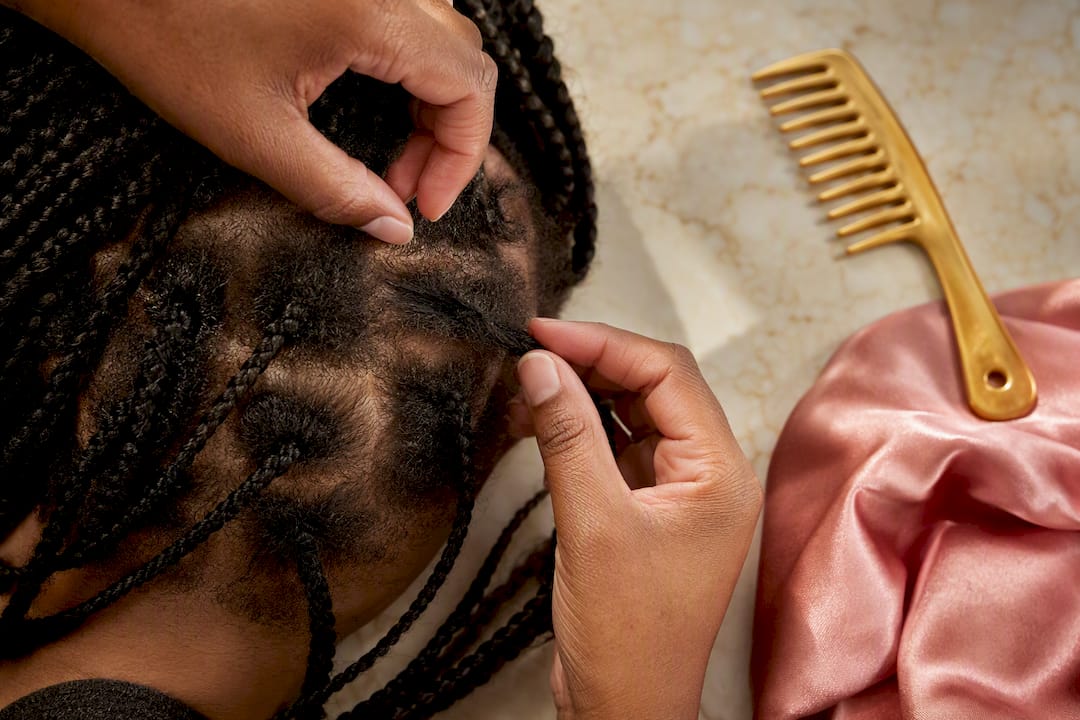
Nightly care determines how well you make it to that six-week mark. Wrap your hair in a satin bonnet or scarf, or sleep on a satin pillowcase, and gather your braids loosely rather than pulling them into a tight ponytail before bed. A loose gather protects your edges from the friction that builds up over a full night's sleep.
Scalp care should stay light. A water-based moisturizing spray applied every few days keeps your scalp from drying out without weighing down fine strands, and a gentle cleanse every one to two weeks removes buildup at the root. Lightweight extension choices paired with shorter lengths also reduce how much cumulative weight your scalp carries day to day, which directly affects how comfortable you feel by week four.
- Sleep in a satin bonnet, scarf, or on a satin pillowcase every night.
- Moisturize with a water-based spray, not a heavy grease or butter.
- Cleanse your scalp gently every one to two weeks.
- Remove braids at four to six weeks, sooner if you notice irritation or unusual shedding.
For more on stretching that timeline safely, Afromagicbraiding's guide on expert maintenance tips and scalp care strategies walks through the week-by-week routine in more depth.
Which Styles Protect Fine Hair, and Which Ones Damage It?
The first few days after installation set the tone for how your braids treat your edges over the following weeks. Give the install time to settle before you ask it to do anything strenuous.
- Stick to loose buns, low ponytails, and soft scrunchies rather than elastic bands for the first week.
- Smooth edges gently with a light-hold product instead of heavy gel, and avoid slicking them down daily.
- Wait 48 to 72 hours before pulling braids into any high or tight style, giving your roots time to settle.
- Avoid daily tight styling altogether. Rotate between a few low-tension looks instead of repeating one style.
- Watch for persistent scalp pain, small bumps at the root, a part line that looks wider than it did on day one, or shedding that seems heavier than usual. Any of those means it's time to loosen or remove the style, not wait it out.
How Do You Choose the Right Stylist for Fine Hair?
Not every stylist who braids well braids well for fine hair specifically. Before booking, ask to see photos of past clients with hair similar to yours, thin, fine, or with visible edge thinning, rather than just a general portfolio.
- Ask for a small demo section at the start of your appointment so you can feel the tension firsthand.
- Confirm upfront that they'll leave a halo and use lightweight extensions without pushback.
- Ask what happens if your scalp feels irritated a few days in. A stylist with a clear touch-up or early-removal policy has done this before.
- Expect pricing to scale with size and time. Medium sizing with a leave-out often takes longer than a rushed micro install, and that time shows up in the price.
Afro Magic Braiding's Take on Protecting Fine Hair
Every install we do starts with the same question: how much tension can this scalp actually handle? For fine-hair clients, that usually means medium or small-medium sizing, lightweight extensions, and a halo left loose at the perimeter, the same combination this article has walked through section by section. We keep a portfolio of past installs so you can see how that approach looks on hair textures similar to yours before you ever sit in the chair.
— Afro
Ready for a Low-Tension Install That Fits Fine Hair?
Afromagicbraiding is the alternative to guessing whether your next salon visit will leave your edges worse off. Instead of hoping a stylist happens to know how to work with fine hair, you get a team that starts every knotless appointment with sizing, extension weight, and leave-out placement already built into the plan.

Lightweight braiding hair options can help avoid heavy bundles that cause extra tension during the appointment. If scalp health is part of your routine already, browse hair-growth support options to pair with your protective style. When you're ready to see the difference a properly sized, low-tension install makes, book your appointment and tell us fine hair is the priority. We'll take it from there.
Sources
- Knotless braids: how to get the low-tension style — Stylist
- Braids for thin hair — Real Simple
- How to do knotless box braids — L'Oréal Paris
- Knotless braids for fine natural hair that needs less tension — Sister's Bombshell