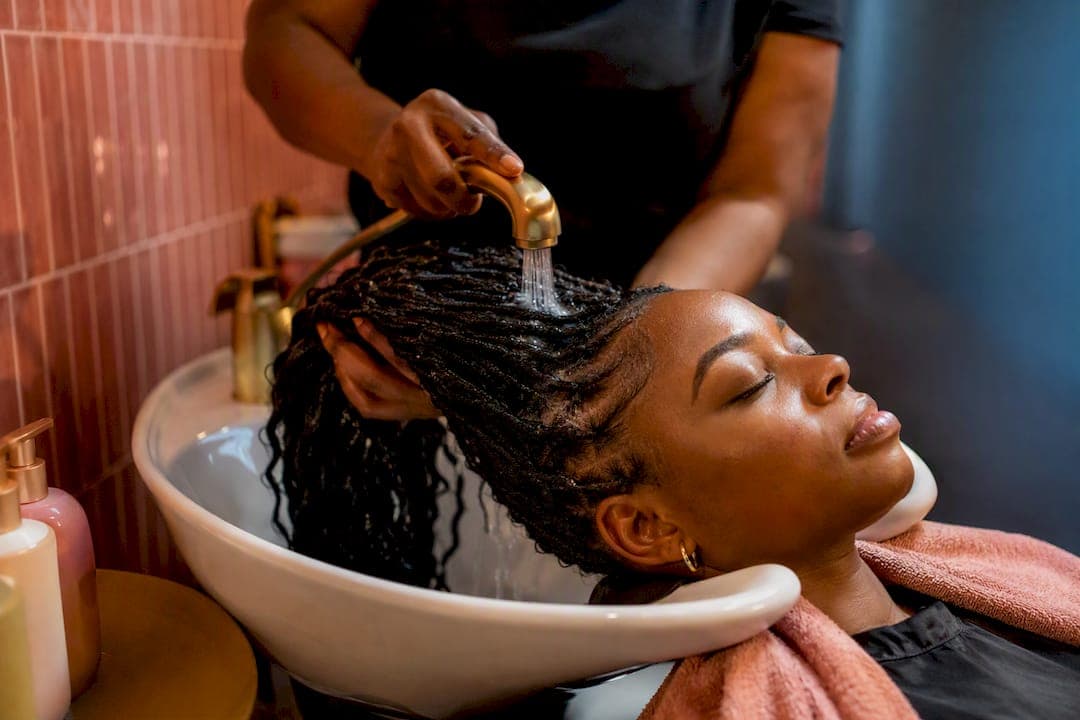
Yes, you can and should wash faux locs. The correct approach is scalp-first cleansing: dilute your shampoo, apply it directly to the roots with an applicator, massage gently, and dry the install completely before you touch a satin bonnet. Skip the heavy oils and creams on the locs themselves, and you'll get weeks more life out of the style.
TL;DR:
- Proper washing focuses on scalp-first cleansing with diluted sulfate-free shampoo applied directly to the roots, avoiding heavy oils and creams that attract dirt.
- Different install types require tailored water exposure, with crochet locs needing minimal soaking and wrapped styles requiring careful handling to prevent loosening.
- Complete drying, preferably air drying with a fan and using a satin bonnet at night, is crucial to prevent odor and mildew in faux locs.
- Light cleansing between full washes can be done with diluted sprays or dry shampoo, but full washing should be done once a month or when signals like itch, odor, or flakes appear.
- For deep buildup or loose installs, booking a professional scalp and faux loc maintenance is recommended over DIY washing.
Table of Contents
- What You'll Need for Washing Faux Locs
- How Do You Wash Faux Locs Step by Step?
- Does the Wash Method Change by Install Type?
- How Do You Dry Faux Locs the Right Way?
- How Do You Refresh Faux Locs Between Washes?
- What Causes Buildup, Frizz, and Itchy Scalp?
- What Do Stylists Actually Recommend for Washing Faux Locs?
- Our Take: Scalp Care Beats Loc Care Every Time
- Book a Professional Faux Loc Wash or Touch-Up
- Sources
What You'll Need for Washing Faux Locs
Grab a few tools before you start, and this whole routine gets easier. An applicator or spray bottle is non-negotiable. It lets you get diluted shampoo directly onto your scalp instead of soaking the entire install.
- Sulfate-free shampoo (diluted with water in a 1:3 or 1:4 ratio)
- Optional lightweight conditioner for the last inch of your natural hair
- Microfiber towel or old T-shirt for blotting, not rubbing
- Satin bonnet or scarf for post-wash and nightly protection
- Lightweight oils like jojoba, grapeseed, or tea tree for the scalp only
- A clarifying shampoo, used occasionally, for real buildup
Sulfates strip too aggressively and can leave synthetic fiber looking dull. Heavy creams and butters are worse: they attract dirt and are nearly impossible to rinse fully out of an install, which shortens how long your style holds up.
How Do You Wash Faux Locs Step by Step?
Here's the routine, broken into the order that actually protects your install.
- Section your hair. Divide into four to six sections so water and product reach every part of your scalp evenly.
- Mix your dilution. Combine one part sulfate-free shampoo with three to four parts water in your applicator bottle. This ratio cleans the scalp without oversaturating the locs.
- Apply directly to the roots. Tilt each section and squeeze the diluted shampoo along the part line, not down the length of the locs.
- Massage with finger pads. Small circular motions loosen product buildup, sweat, and dead skin. Stylists recommend finger pads over nails specifically to avoid snagging the braid base.
- Rinse thoroughly. Point the shower head at your scalp and let water run through each section until it comes out completely clear.
- Condition lightly, if at all. Skip conditioner on the roots. If your natural hair peeks out at the ends, a small amount there is fine.
- Squeeze and blot. Work section by section with your microfiber towel, pressing rather than twisting or wringing.
- Dry completely. Air dry with a fan, or use a diffuser on low heat, until the roots are bone dry.
Pro Tip: Set a timer for two full days of air drying near your roots before you wrap your locs at night. Locs feel dry on the surface hours before the scalp underneath actually is, and that hidden dampness is exactly where odor and mildew start.
The whole point here is scalp hygiene, not fiber hygiene. Faux locs don't produce natural oils, so the synthetic length doesn't need the same cleansing your scalp does.
Does the Wash Method Change by Install Type?
Not every faux loc install tolerates water the same way, and treating a crochet install like a wrapped one is a common way to loosen a style early.
- Crochet locs: Minimize soaking time and focus water flow directly at the roots. Dry quickly. Crochet loops are more delicate than a wrapped base and can slip if oversaturated.
- Wrapped or Marley locs: These handle more water, but skip aggressive rubbing. Keep the wrap itself protected by directing water flow downward, away from the wrapped section.
- Extension-based installs on a braid foundation: Protect the braid underneath and run a hand over each loc afterward to check for slack at the root.
- When in doubt, book a professional wash. If any section feels loose or your scalp has heavy buildup, a stylist can rewash and retie without damaging the base.
How Do You Dry Faux Locs the Right Way?
Drying matters as much as washing. A style that stays damp at the roots for days is a style headed for odor and, eventually, mildew.
- Squeeze and pat each section with a microfiber towel immediately after rinsing.
- Dry section by section rather than all at once, so no area gets skipped.
- Air drying is the safest method; a low-heat diffuser speeds things along without frying the synthetic fiber.
- Avoid full high heat entirely. It can melt or frizz synthetic strands permanently.
- At night, wrap with a satin bonnet or scarf, and gather locs into a loose bun or pineapple.
- Never wrap tight styles around wet or even slightly damp locs.
Thicker installs can take a full day or two to dry completely at the root, even with a fan running.
How Do You Refresh Faux Locs Between Washes?
Full washes aren't a daily task, and you shouldn't treat them like one. Most people do well washing once to three times a month, adjusting up if they sweat heavily or work out often.
- Use a dry shampoo or heavily diluted spray cleanser between full washes.
- Apply water or aloe-based sprays plus a very light oil at the roots only, never down the length.
- Wrap in satin at night and keep styles loose to cut down on friction and frizz.
- After a workout, blot sweat at the roots rather than letting it sit.
Pro Tip: Track three signals: itch, odor, and visible flaking at the part line. Any one of those shows up, it's time for a full wash, not another spritz of dry shampoo.
What Causes Buildup, Frizz, and Itchy Scalp?
Most faux loc problems trace back to one of four causes, and each has a specific, low-drama fix.
- Buildup: A clarifying shampoo used occasionally, applied the same scalp-first way, cuts through product residue that regular washing misses.
- Frizz: Trim loose fibers with small scissors and smooth flyaways with a light mousse or gel, not oil.
- Unraveling: Secure loose ends temporarily with small elastics or bobby pins, then get to a stylist before it spreads.
- Itchy or flaky scalp: A drop of tea tree oil diluted in a carrier oil, or a diluted apple cider vinegar rinse, calms most mild irritation. Persistent flaking that doesn't respond is worth a scalp-specific remedy or a professional consult.
What Do Stylists Actually Recommend for Washing Faux Locs?
Ask any stylist why scalp-first washing matters, and the answer comes back to control. Diluted product and a controlled applicator mean water goes exactly where it needs to go, and nowhere else. That's harder to manage solo, which is why heavy buildup or an install that feels insecure at the root is a sign to book professional scalp care rather than push through another DIY wash.
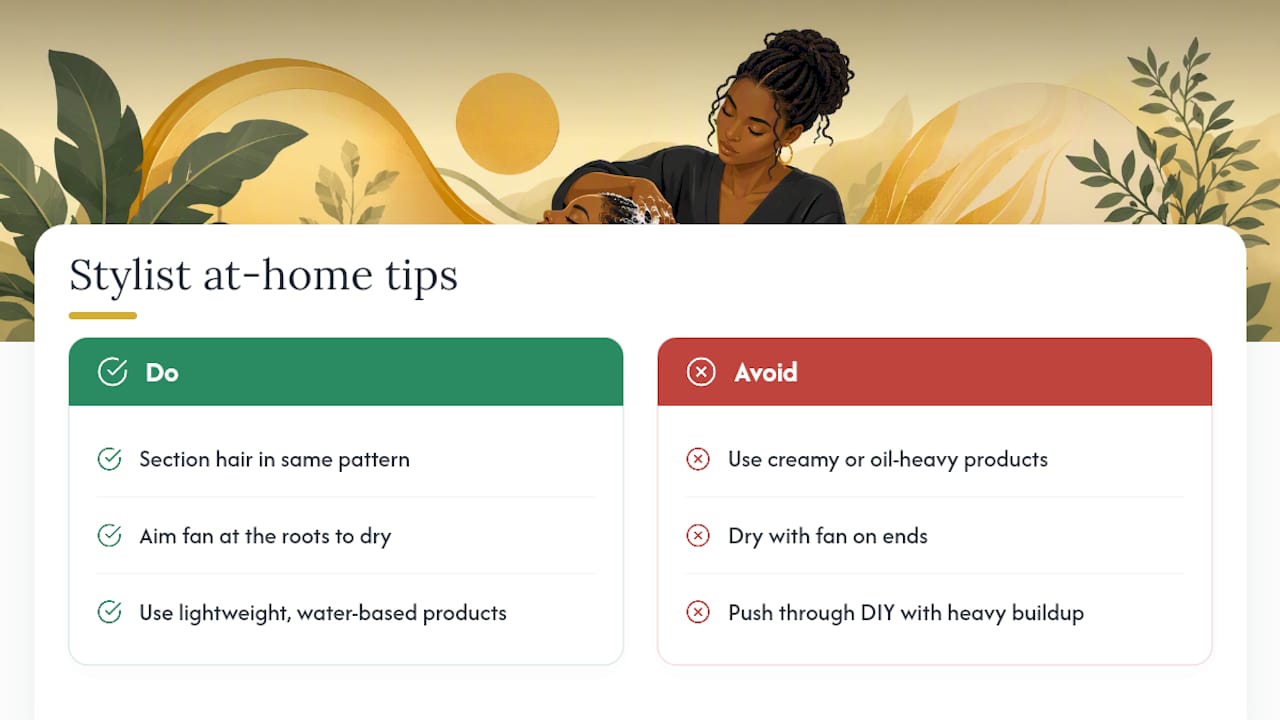
At home, stylists suggest sectioning in the same pattern every time so you don't miss spots, and drying dense installs with a fan pointed directly at the roots rather than the ends. Product choice matters too: lightweight, water-based options over anything creamy or oil-heavy.
Our Take: Scalp Care Beats Loc Care Every Time
The biggest misconception about washing faux locs is that the goal is clean-looking hair. It isn't. The goal is a clean scalp, and most of the advice that leads people astray treats the two as the same problem.
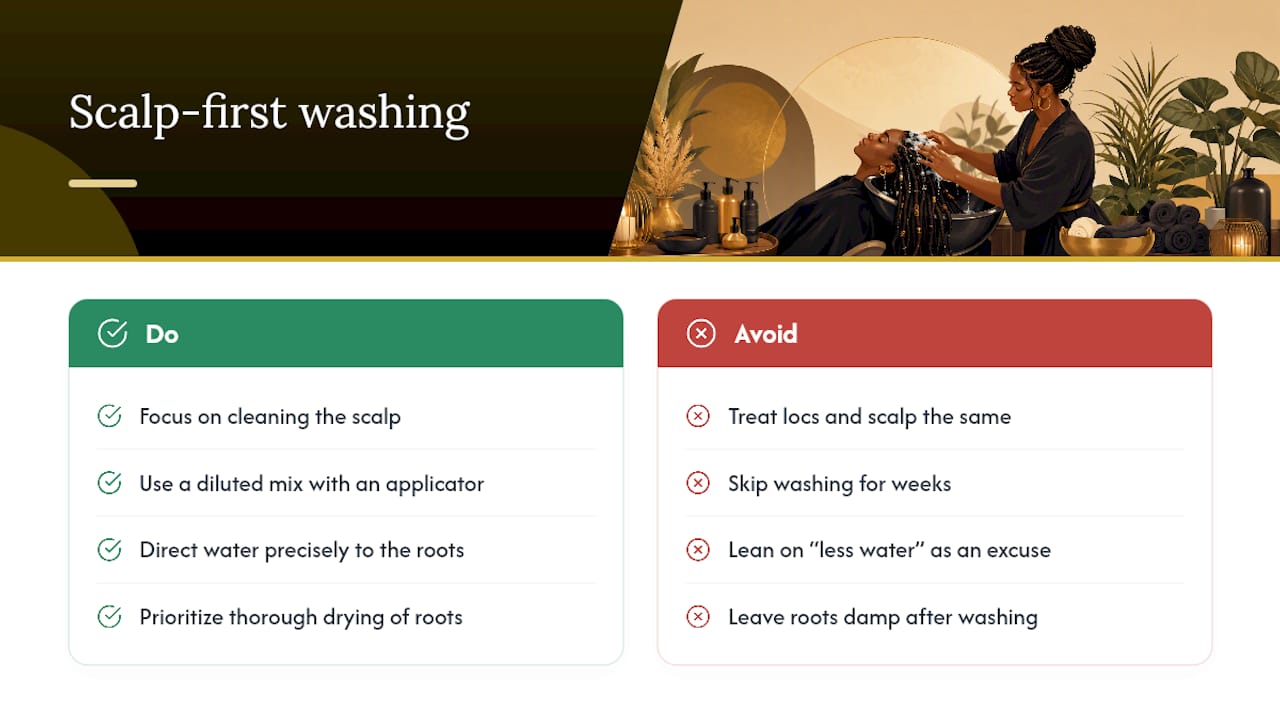
Conventional wisdom leans too hard on "less water is safer." That's true for crochet installs, but it becomes an excuse to skip washing altogether, and a scalp that goes three or four weeks without real cleansing gets itchy, flaky, and eventually smells. The fix isn't avoiding water. It's directing it precisely, with a diluted mix and an applicator, so the roots get attention the locs never needed in the first place.
If you take one thing from this routine, prioritize drying over everything else. A rushed wash with thorough drying beats a careful wash left damp at the root. Moisture trapped against a braid base is where real problems start.
— Afro
Book a Professional Faux Loc Wash or Touch-Up
Some washes are worth handing off, especially when buildup has settled in deep or your install feels less secure at the root than it did on day one. Afromagicbraiding offers professional faux loc maintenance, including scalp treatments, touch-ups, full takedown and reinstall, and controlled washing that protects the braid foundation better than a rushed sink session at home.

If your locs are past the point where a home wash feels manageable, or you simply want the wash done right the first time, browse the service list to see what maintenance options are available, check the portfolio for examples of faux loc installs and touch-ups, and book an appointment at a time that works for your schedule.
Sources
- How to care for faux locs | Prose blog
- How to Wash Faux Locs (with Pictures) - wikiHow
- The Ultimate Guide To Cleaning Crochet Faux Locs | CyCrochet
- How To Properly Wash and Groom Your Faux Locs To Keep Them Looking Fresh and Fab - Black Hair Information