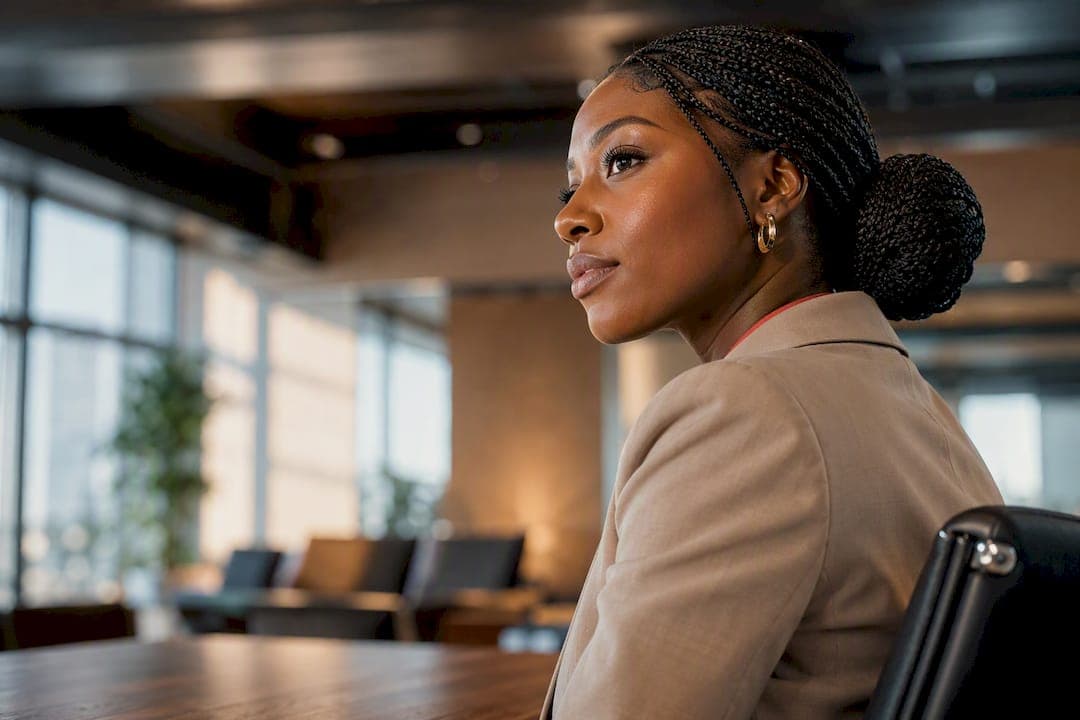
The best protective styles for work are the ones that read neat and contained without pulling on your hairline: sleek low buns, flat twists, knotless box braids, tucked cornrows, two-strand twists, and medium-length faux locs. The rule behind all of them is simple. Choose a style that stays controlled, keeps tension low at the root, and matches its volume to how conservative your office actually is. A braid install can be built around that same principle.
TL;DR:
- Knotless box braids at medium to jumbo sizes offer a professional look with minimal effort and cause less scalp tension than traditional braids.
- Small, neat styles like flat twists and cornrows with light shine can be kept comfortable and polished for most conservative workplaces.
- Avoid tight installations, especially with heavy extensions, to prevent traction alopecia and scalp irritation; request looser, knotless methods when booking.
- A quick nightly routine of wrapping and light moisturizing can extend style longevity, but styles typically last from a few days to several weeks.
- Choose protective styles based on your weekly routine, work environment, and tension levels, prioritizing comfort without sacrificing a tidy, intentional appearance.
Table of Contents
- Which Protective Styles Actually Work for the Office?
- How Do You Choose the Right Protective Style for Your Job?
- Keeping Your Protective Style Polished Between Appointments
- What to Ask For at Your Salon Appointment
- The Two-Minute Routine That Keeps Styles Office-Ready
- Matching Protective Styles to Your Hair Length and Texture
- Quick Fixes to Stay Polished Through a Long Workday
- Hair Accessories That Keep Styles Neat, Not Distracting
- Why "Professional" Should Never Mean "Uncomfortable"
- Book a Low-Tension Protective Style That Actually Lasts
- Sources
- FAQ
Which Protective Styles Actually Work for the Office?
Every style on this list earns its place for the same reason: it looks intentional. Loose flyaways and frizz read as unkempt no matter your hair type, but a style that's smooth, sectioned, and contained reads as put together in any office. Neat, contained styles like flat twists, slick buns, and box braids consistently land on the "safe for the boardroom" list, and there's a practical trick worth stealing: schedule a fresh install two or three days before a big meeting so it settles instead of looking brand new.
Knotless box braids are the most versatile option on this list. Medium to jumbo sizes worn in a low bun or half up, half down look polished with almost no daily effort. Traditional box braids work too, but knotless installs lay flatter at the root and feel lighter by the second week, which matters if you're at a desk eight hours a day. Our box braid styling guide has more ways to wear them beyond the basic ponytail.
Flat twists pulled into a low bun or sleek chignon are close to foolproof for conservative workplaces. They lie close to the scalp, show almost no bulk, and photograph well for headshots or video calls.
Cornrows, tucked low or styled into a braided ponytail, work in nearly any office when kept small to medium and finished with a light sheen instead of heavy gel. A braided low chignon is one of the fastest ways to take cornrows from casual to client-meeting ready.
Two-strand twists offer a softer, more textured look than braids while still qualifying as contained. They work especially well on natural hair that's transitioning or on shorter lengths where braids feel too sparse.
Faux locs, kept at medium length rather than waist length, strike a balance between statement style and desk-appropriate volume. Longer or chunkier locs read better in creative fields; shorter, thinner locs blend into stricter dress codes.
Sleek low buns and braided ponytails finish the list as the lowest-maintenance, highest-versatility option. Any of the styles above can convert into one in under a minute with a satin scrunchie.
For law firms, healthcare, and finance, lean toward lower volume, smaller braid sizes, and neutral tones. Creative agencies and retail environments generally tolerate more length, color, and texture.
How Do You Choose the Right Protective Style for Your Job?
The right style depends less on trend and more on your actual week. Run through this before booking:
- Check your dress code's actual wording. Most policies say "neat and professional," not "no braids," so a tidy install almost always clears the bar. The CROWN Act and similar laws now protect hairstyle and texture in many U.S. states, so if a manager pushes back on a braided style with no legitimate safety reason, that pushback may not hold up.
- Think about your daily movement. Field work, patient care, or a physical job favors smaller, tighter styles over anything that shifts or frizzes easily.
- Be honest about your commute and nightly routine. If you're not wrapping your hair most nights, pick a lower-maintenance option like flat twists over a style that needs daily re-tucking.
- Ask your stylist directly about installation method, tension level, and how they expect the style to age by week three.
Pro Tip: If a style still hurts two hours after your appointment, that's not "breaking it in." Call the salon. Tension that doesn't ease up in a day is a red flag, not a normal adjustment period.
Watch for heavy extensions that tug at your temples, a scalp that feels tender to the touch, or edges that look thinner than when you walked in. Those are trade-offs worth avoiding, not prices to pay for a longer-lasting style.
Keeping Your Protective Style Polished Between Appointments
A small desk kit solves most midweek styling problems. Keep these on hand:
- A travel-size leave-in mist for quick refreshes
- A lightweight oil to smooth frizz without weighing hair down
- A satin scrunchie for a fast, damage-free updo
- A mini gel or edge control stick for touch-ups
Cleanse your scalp gently every one to two weeks depending on oil buildup, and moisturize the scalp itself two to three times a week, not just the hair. Re-tuck loose ends as they work free instead of waiting until the whole style looks tired.
Longevity varies by style. Braids and faux locs typically last several weeks, while a sleek bun might only hold for a single workday before needing a refresh. Once you see significant frizz at the roots, buildup you can't rinse out, or braids that feel loose and slipping, it's time for a redo rather than another patch job.
What to Ask For at Your Salon Appointment
Tension is the real enemy of a comfortable, long-lasting protective style. Tight installations and heavy extensions are the primary drivers of traction alopecia, a slow, often permanent thinning at the hairline that shows up long after the appointment feels like a distant memory. A feed-in or knotless technique distributes the braid's weight along the strand instead of concentrating it at the root, which noticeably lowers that risk.
At booking, be specific:
- Ask for "feed-in" or "knotless" installation by name.
- Request a "looser base" if you have sensitive edges or a history of thinning.
- Ask for lighter hair at the root, especially for longer or fuller styles.
- Confirm aftercare instructions before you leave the chair.
Pro Tip: Clients who specifically ask for a looser base and knotless feed-in report far fewer complaints about soreness or edge thinning after the fact. It's a thirty-second conversation with your stylist that changes how the entire install feels for the next several weeks.
Human hair holds up better than synthetic for styles worn longer than three or four weeks, since synthetic strands tend to dry out and irritate the scalp over extended wear. See our guide to no-tension braiding methods for more on choosing the right base technique.
The Two-Minute Routine That Keeps Styles Office-Ready
You don't need a full styling session every morning. A short night-and-morning routine does most of the work:
- At night, wrap your hair in a satin bonnet or scarf, loosely re-tuck any escaped strands or pineapple longer styles on top of your head, and mist your scalp with a light moisturizing spray.
- In the morning, mist ends lightly, smooth flyaways along the hairline with a small amount of oil or edge control, then pull into a low bun or ponytail with a satin scrunchie.
- For gym days or shift work, swap a moisture-wicking headband in before sweating, re-tuck edges right after, and rinse just the scalp with water if a full wash isn't practical.
The whole sequence takes under two minutes once it's a habit, and it's the difference between a style that looks fresh on day twelve and one that looks tired by day four, as explained in quick routines for pros.
Matching Protective Styles to Your Hair Length and Texture
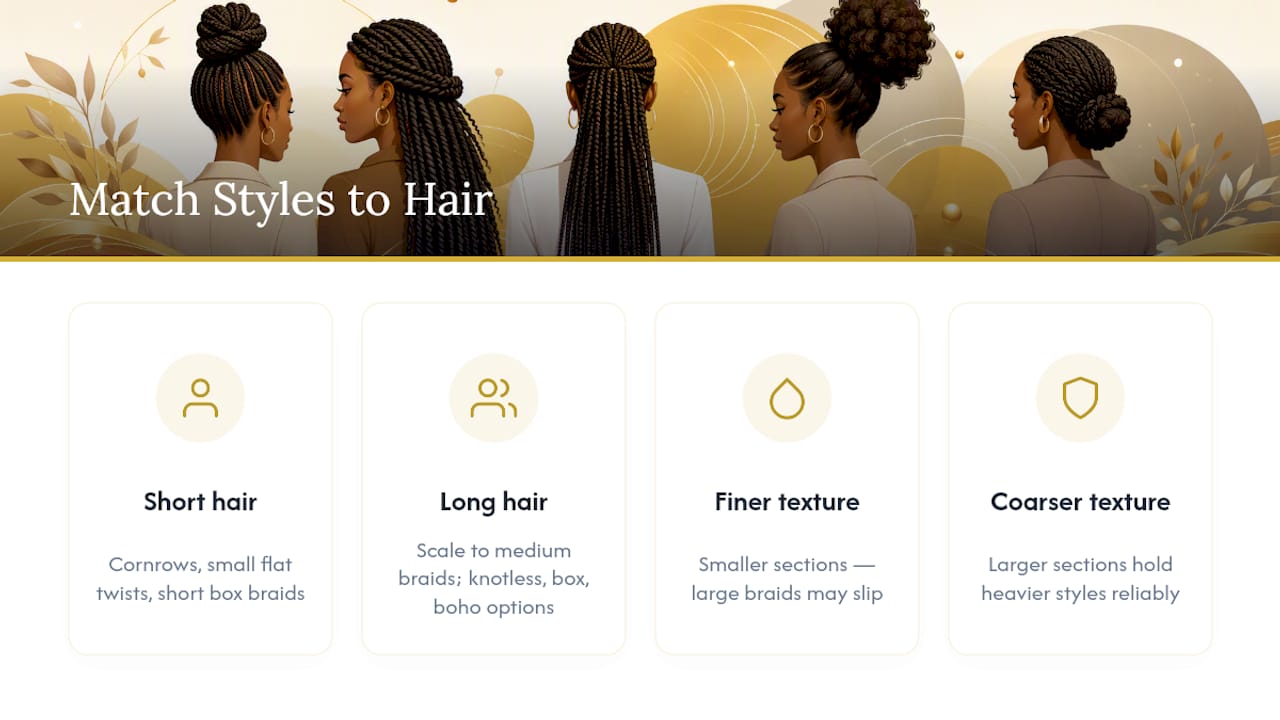
Shorter hair doesn't rule out braids or twists. It just changes the sizing. Cornrows, small flat twists, and shorter box braids all work well on hair above shoulder length, and a shorter faux loc install often looks fuller and more intentional than trying to stretch thin hair into long braids it can't support. Our guide to braiding short hair covers sizing and styling specifics if length is your main concern.
Longer, thicker hair has more room to play with volume and length, but that doesn't mean bigger is always better for the office. Jumbo braids or extra-long faux locs can look striking outside of work and feel like a lot of hair to manage at a desk. Scaling down to medium sizes usually strikes the right balance.
Texture matters just as much as length. Finer or looser-textured hair often does better with smaller sections since larger braids can slip or loosen faster. Coarser, denser textures generally hold bigger sections and heavier styles without added strain, which is part of why a stylist's in-person assessment beats guessing from a photo. Knotless, box, and boho braid options each suit slightly different textures and thickness levels, so it's worth reviewing before committing to a size.
Quick Fixes to Stay Polished Through a Long Workday
A style that looked perfect at 8 a.m. can shift by lunch, especially after a commute, a workout, or a stressful meeting where you've been running your hands through your hair. Keep a small emergency kit in a desk drawer: a travel mist, a bit of oil, and a spare satin scrunchie cover almost every midday problem.
If edges start to frizz, press a small amount of oil or edge control along the hairline with a clean finger or a soft brush, not your palm, which spreads product unevenly. Loose braids or twists that have started slipping can usually be re-tucked in under a minute by tightening the base and smoothing the strand back into place.
For a bun or ponytail that's gone flat, a light mist followed by finger-fluffing at the crown brings back volume without redoing the whole style. If you're between meetings and need an instant reset, pulling everything into a low, sleek bun hides more midday wear than any other single move, and it takes about thirty seconds with a satin scrunchie already in your bag.
The goal isn't perfection at every hour. It's catching small issues before they become a full redo, which keeps you from feeling like you need a mirror and twenty minutes every time your hair shifts.
Hair Accessories That Keep Styles Neat, Not Distracting
The right accessory finishes a look; the wrong one competes with it. Satin scrunchies are the single most useful accessory for protective styles at work because they hold hair securely without creating the crease or breakage a regular elastic causes at the base of a bun or ponytail.
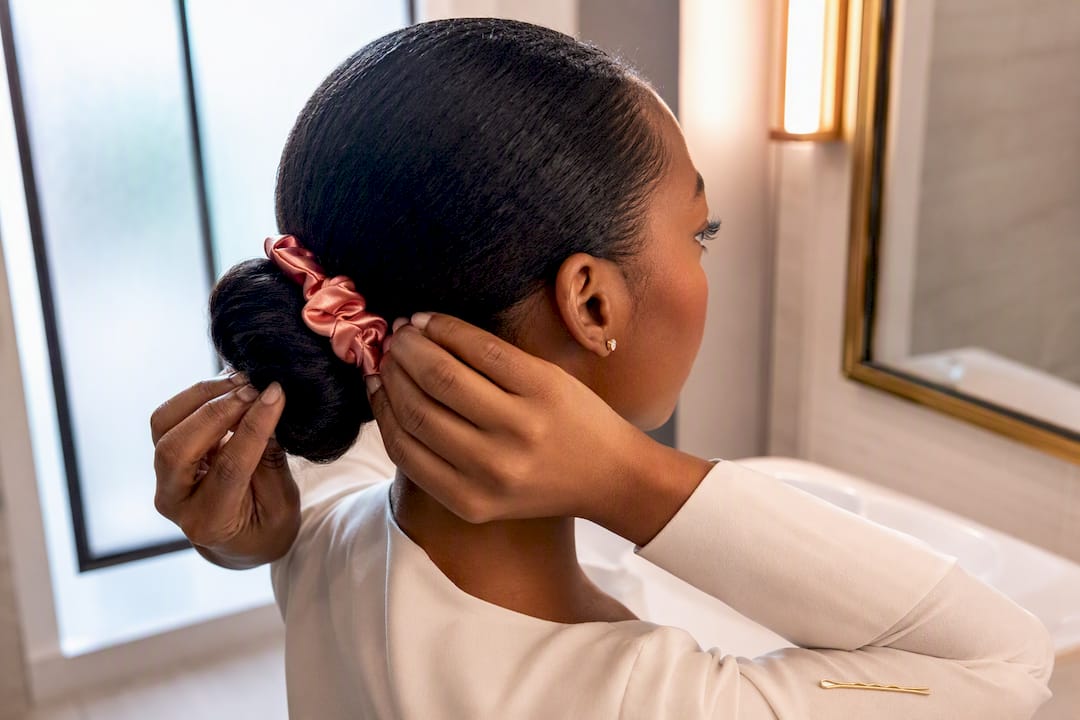
Small, matte hair pins in black, brown, or gold work for securing flyaways or shaping a style without catching light or drawing attention on a video call. Thin headbands in neutral tones smooth down edges and add a finished look to twists or locs without reading as casual.
Save chunky cuffs, large beads, or statement clips for creative or client-facing roles where more personality in your styling fits the culture. In more conservative settings, fewer, smaller accessories almost always read as more professional than several decorative pieces at once. A single well-placed pin does more for a polished look than a handful of scattered ones.
Why "Professional" Should Never Mean "Uncomfortable"
Too many people treat scalp soreness as the cost of looking put together, and that's backwards. A style that hurts isn't more professional. It's just poorly installed. The real skill in this work is making a braid look sleek enough for a client meeting while keeping the root loose enough that you forget it's there by day three.
That's the standard worth holding every stylist to, not just the ones you book with.
— Afro
Book a Low-Tension Protective Style That Actually Lasts
Appointments can be built around the idea covered in this guide: a style only counts as work-ready if it's both polished and comfortable. Braiders may use feed-in and knotless techniques as the default rather than the upgrade to reduce strain on the hairline from day one.
Browse the full portfolio of knotless braids, box braids, Fulani braids, and more to see sizing and length options before you book, then head to the booking page to grab a slot. During your consultation, tell your braider your workplace, your typical week, and how long you need the style to hold. That's enough for an experienced stylist to recommend the right size, base tension, and hair weight for your desk job, your shift schedule, or whatever your Monday actually looks like.
Sources
For deeper reading on hair health, workplace norms, and legal protections: Healthline on protective hairstyles, The Corporate Curly on interview-ready styles, Littler's CROWN Act analysis, and Byrdie's style longevity guide.
- Professional hairstyles for Black women: 5 interview-ready natural hair styles | The Corporate Curly
- 33 protective styles to try for Black hair | Byrdie
FAQ
What Are the Downsides of Protective Styles?
The main risks are traction on the hairline from tight installs, dryness underneath the style if you skip scalp moisture, and scalp irritation from synthetic hair worn too long. Choosing a knotless or feed-in method and moisturizing your scalp weekly addresses most of these issues.
What Are the Most Popular Protective Styles for Work?
Knotless box braids, flat twists, cornrows, two-strand twists, and sleek low buns are the most requested styles for office settings because they stay contained and low-maintenance. Faux locs at medium length are also popular for readers who want more texture without extra bulk.
Why Do They Call It a Protective Style?
The name comes from the function: these styles tuck away your ends and reduce daily manipulation and heat exposure, which limits breakage and supports length retention over time.
What Protective Style Is the Least Damaging?
Low-tension, knotless installs cause the least strain on the hairline compared to traditional tight braiding, since the weight distributes along the strand instead of pulling at the root. Flat twists and two-strand twists also rank among the gentler options because they involve less pulling than braids with heavy extensions.
Does Afro Magic Braiding Offer Knotless Installations?
Yes, knotless braids and knotless twists are core services, priced from $170 to $290 depending on size and length. Current pricing and availability are listed on the salon's booking page.