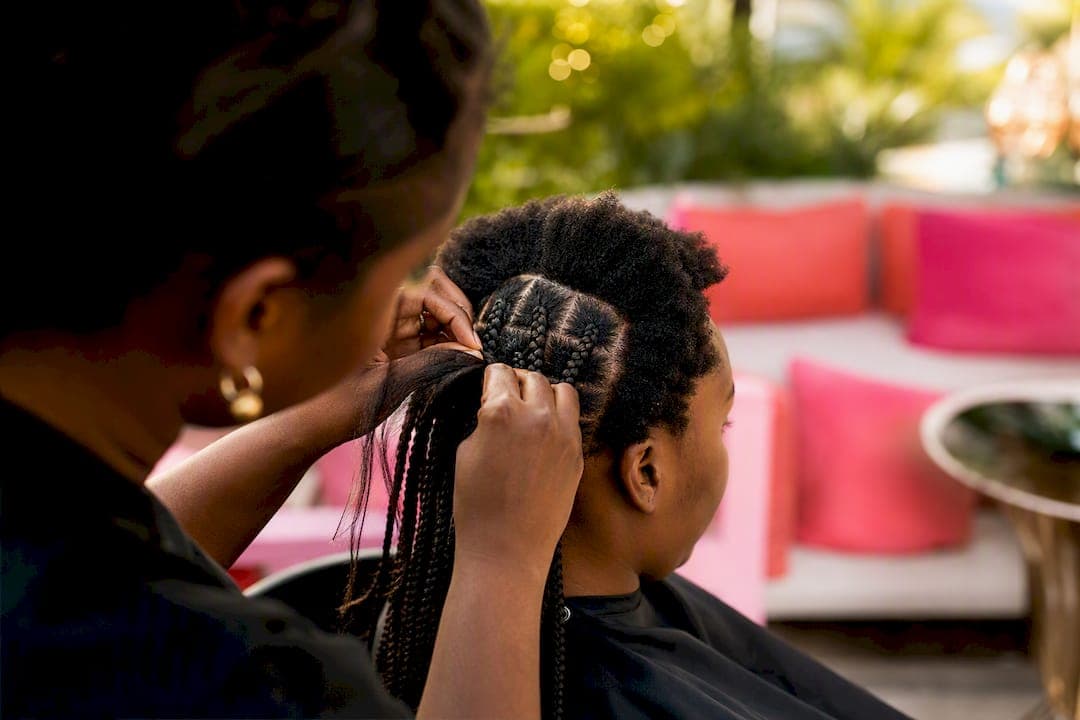
Nearly every braid style you have seen on long hair has a short-hair version, and the best short-hair categories share three traits: they are lightweight, low-tension at the root, and quick to install. Your top picks are the short box or knotless bob, the halo or crown braid, mini and face-framing braids, patterned cornrows, and pull-through faux braids. Each one solves a different short-hair problem, from fragile edges to just not having enough length to work with.
TL;DR:
- Short braids use less synthetic hair and take less time to install, resulting in lighter styles that are gentler on the scalp.
- Knotless braids are recommended for fragile edges or thinning hair because they reduce tension and breakage with gradual feed-in techniques.
- Micro or mini braids are ideal for low-density hair but require more time, making them suitable only for longer appointments.
- Styles like halo, crown, and pull-through faux braids are forgiving options for very short or fine hair, providing full looks without extensive length.
- Regular maintenance, such as nighttime wrapping and scalp oiling, helps keep short braids looking fresh for four to eight weeks.
Table of Contents
- Why Braids for Short Hair Work Differently Than Long-Hair Styles
- 1. Short Box Braids (Knotless Bob)
- 2. Knotless Short Bob for Fragile Edges
- 3. Mini and Micro Box Braids
- 4. Halo or Crown Braid
- 5. Three-Quarter French or Dutch Braid
- 6. Pull-Through Faux Braid
- 7. Cornrows and Patterned Cornrows
- 8. Braided Bob With Bangs or Face-Framing Braids
- 9. Braided Faux-Hawk
- 10. Braided Updos and Half-Up Styles
- Step-by-Step Tutorials for Short Braid Styles
- How to Choose the Right Short Braid for Your Hair Type
- Keeping Short Braids Looking Fresh Between Touch-Ups
- Meet Afro and Afro Magic Braiding
- Why Short Braids Deserve More Credit
- Book a Short Braid Style That Actually Fits Your Length
- Sources
Why Braids for Short Hair Work Differently Than Long-Hair Styles
Short braids generally fall at or above the shoulder, which means less synthetic hair goes into the install and less time in the chair. That translates into a lighter finished style, less weight pulling on the scalp, and often a shorter appointment than a waist-length set. The tradeoff is that short strands are harder to grip, so technique matters more than it does on longer hair.
The good news: almost any long-braid style can be scaled down. Knotless braids, Fulani-inspired patterns, and beaded looks all translate to shorter lengths, and knotless feed-in methods specifically reduce the tension at the root that tends to cause breakage on short, fine, or fragile hair. If you have never had braids on short hair before, that is the term to know: knotless. It is the standard industry technique for starting a braid without a bulky knot at the base, and it is worth requesting by name whether you are doing this yourself or briefing a stylist.
1. Short Box Braids (Knotless Bob)
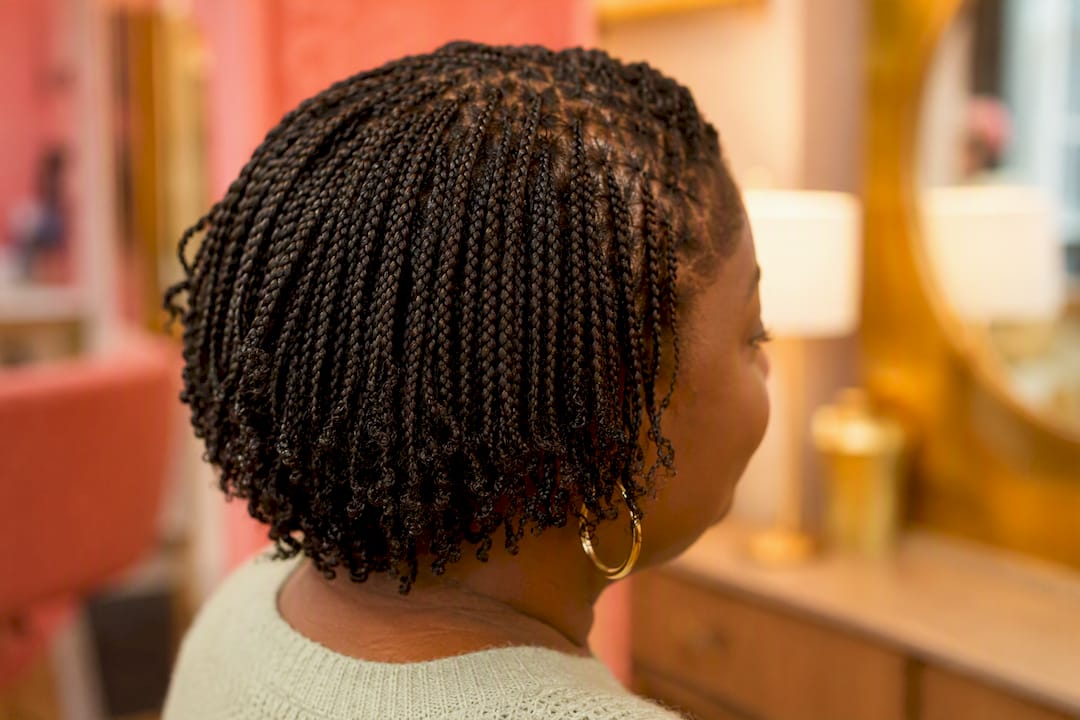
A chin to shoulder length knotless bob is the most requested short-braid look for a reason. It reads polished, moves like real hair, and skips the heavy root knot that makes traditional box braids feel tight. Ask for triangle or diamond-shaped parts instead of small squares. Bigger, creative parting patterns cut down install time while still looking deliberate rather than rushed.
2. Knotless Short Bob for Fragile Edges
If your edges are thinning or you have dealt with traction alopecia before, this is your safest bob variant. The feed-in technique lays the extension hair in gradually, so there is no knot yanking at the root from day one. It is slower to install than classic box braids but far gentler over a full wear cycle.
3. Mini and Micro Box Braids
Smaller sections distribute weight more evenly across the scalp, which matters most if your natural hair is fine or low-density. The catch is time. Micro braids on short hair can take noticeably longer than jumbo styles because there are simply more sections to complete. Reserve this one for when you have a full afternoon or a professional appointment booked.
4. Halo or Crown Braid
This is the style to reach for when your hair is too short to braid all the way around the head. Two side braids get pinned together at the crown, creating the illusion of a full braided look without ever needing length you do not have. It is one of the most forgiving short-hair styles because it hides where the natural hair actually ends.
5. Three-Quarter French or Dutch Braid
Start the braid at the crown and stop before you run out of hair to work with, then tuck the tail underneath and secure it with a few bobby pins. This works well for gym days, work shifts, or any time you want something braided that will not unravel the second your hair gets too short to hold a full braid.
6. Pull-Through Faux Braid
For very short hair, this is the trick that makes a real braid look achievable even with a couple inches of length. Small ponytails get looped through each other in sequence, which mimics the look of a braid without needing three long strands to cross over. Faux techniques like this one exist specifically, for ear-length crops and pixie-adjacent lengths.
7. Cornrows and Patterned Cornrows
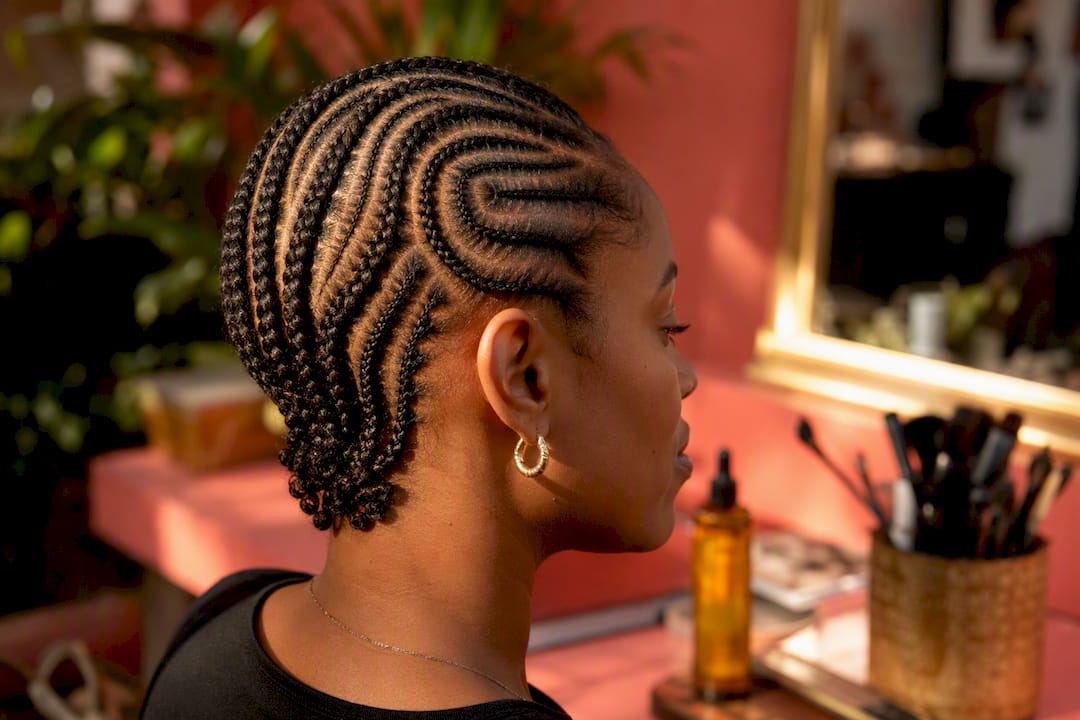
Scalp-hugging cornrows do not depend on length at all, which makes them the most flexible short-hair option on this list. Geometric patterns, curved lines, or a simple straight-back set all work, and cornrows double as a base for an updo later in the style's life cycle.
8. Braided Bob With Bangs or Face-Framing Braids
You do not need a full head of braids to get a braided look. A handful of small braids at the hairline, styled alongside the rest of your natural texture or a bob, frames the face without the time or cost of a complete install.
9. Braided Faux-Hawk
A single center braid with the sides pinned flat back gives you an edgier silhouette for a night out. This one leans on contrast: sleek sides against one textured braid down the middle.
10. Braided Updos and Half-Up Styles
Once your short braids have a few days of settling, they restyle easily into:
- Space buns for a playful, low-effort look
- A top knot when you want hair fully off your neck
- A half-up twist secured with a claw clip or scrunchie
- Beaded ends, cuffs, or thread wraps for a personalized finish
For deeper style inspiration once your braids are in, the box braid styling ideas guide covers restyling options that keep a short set looking fresh for weeks.
Step-by-Step Tutorials for Short Braid Styles
These four styles cover the range from "do it yourself tonight" to "here's exactly what to tell your stylist."
- Halo or crown braid. Part your hair down the middle. Dutch braid each side as close to the scalp as your length allows, going as far back as the hair holds without slipping. Cross the two braided tails over the crown and pin them flat. Gently pancake the braids by pulling the edges wider for a fuller look.
- Three-quarter French or Dutch braid. Start at the hairline and braid backward, adding small sections as you go. Stop about an inch before you hit your shortest layers. Tuck the loose ends underneath the braid and pin with two or three bobby pins.
- Knotless short box braid (feed-in). Section the hair into your chosen part shape. Begin each braid with your natural hair only, feeding in small amounts of extension hair every few passes instead of tying a knot at the base. This staging is what keeps root tension low.
- Pull-through faux braid. Section a horizontal row and tie a small ponytail. Split it in half, add a piece of hair from the row below to each half, and loop the pieces through the ponytail above it. Repeat down the head. Clip each finished section while you work the next row.
Before starting any of these, run through a short prep checklist: second-day or slightly unwashed hair grips extensions better than freshly washed strands, since natural oil adds friction that clean hair lacks. If your hair is freshly washed, a texturizing spray or dry shampoo solves the same problem. Keep a rattail comb, clear elastics, and a stash of small bobby pins within reach.
Pro Tip: Start your first braid section about half an inch away from your hairline if your edges are thin. That small gap keeps the heaviest tension off the weakest hair, and you can switch to a regular three-strand plait once you reach sturdier length toward the ends.
How to Choose the Right Short Braid for Your Hair Type
Picking a style based on looks alone is how people end up with breakage six weeks later. Match the style to your density and hair condition first.
- Fine or low-density hair: Choose micro braids or smaller sections. Chunky, jumbo braids concentrate too much weight on too few strands and put extra stress on the roots.
- Coarse or dense hair: Medium to chunky braids and layered bob shapes hold their shape well and will not look thin or patchy.
- Fragile edges or thinning areas: Go knotless with a feed-in start, begin braids away from the hairline, and skip tight rubber bands entirely.
- Very short crop or ear-length hair: Lean on faux techniques like pull-through braids, partial installs, or face-framing plaits rather than forcing a full-head style that your length cannot support.
If you notice ongoing breakage, scalp tenderness, or you are simply unsure how much tension your hair can safely handle, that is the point to book a consultation instead of guessing. A stylist can also walk you through the top braid types for healthy protective styling before you commit to a size or pattern.
Keeping Short Braids Looking Fresh Between Touch-Ups
Short braids show frizz faster than long ones simply because there is less length to hide it in. A little routine maintenance keeps the whole set looking intentional instead of worn out.
- At night: Wrap in a silk or satin bonnet or scarf, or loosely pineapple longer short styles to protect the ends.
- Scalp care: Apply a lightweight oil or leave-in spray two to three times a week, focused at the roots, to avoid the dulling buildup heavier oils leave behind.
- Frizz control: Smooth a small amount of edge gel along the hairline and re-tension loose spots with your fingers and a bobby pin rather than redoing the whole braid.
- Wear time: Most short braid styles hold up well for four to eight weeks depending on the style and your natural hair's condition; thin out installs at the first sign of matting or excessive shedding at the roots.
Short braids typically use less synthetic hair and take less time to install than long-length sets, which means lighter weight on the scalp and shorter salon appointments overall.
For a deeper look at how protective styling supports hair health long term, the guide on how braids protect natural hair is worth a read before your next install. If your scalp runs on the drier side, a partner resource on oiling low-porosity hair without buildup pairs well with the maintenance routine above.
Meet Afro and Afro Magic Braiding
Afro has spent years behind the chair specializing in knotless techniques and short protective styling, and that hands-on repetition is exactly why the tension-reducing tricks above show up so often in this guide.
- Afro Magic Braiding specializes in knotless braids, short box braid bobs, and full protective styling for clients across every hair length and density.
- Clients with fragile edges are typically steered toward knotless feed-in installs, while clients with very short hair often get triangular parting to keep sets looking full without excess weight.
Browse real finished looks in the salon's portfolio to see how these techniques translate on actual short-hair clients.
Why Short Braids Deserve More Credit
Clients often walk into a consultation assuming short hair limits their braid options, and that assumption is almost always wrong. The real limiting factor is technique, not length. A well-placed knotless start, a smart part shape, and a little patience with grip products open up far more styles than most people expect from a few inches of hair.
What gets underrated is how much healthier short braids tend to be for the hair underneath. Less synthetic weight and shorter wear cycles mean less cumulative stress on the scalp, which is the opposite of what people assume when they picture "protective styling" as one long, heavy commitment. Short, low-tension sets redone every few weeks often do less damage over a year than one marathon install left in too long.
— Afro
Book a Short Braid Style That Actually Fits Your Length
Afro Magic Braiding builds every short-hair consultation around your actual density and edge condition, not a one-size part pattern pulled from a photo. That means walking out with a knotless bob, patterned cornrow set, or faux-braid style chosen for your hair specifically, not adapted after the fact.
Book a knotless bob, box braid bob, or full protective styling appointment and bring two or three reference photos so your stylist can gauge braid size and part shape before starting. Chair time for most short styles runs shorter than a full-length install, though exact timing depends on density and the pattern you choose. Check the gallery for finished examples, then head to booking to reserve a slot, or reach out through contact if you have questions about which style fits your length before you commit.
Sources
- 20 Short Braid Hairstyles to Try, From a Blunt Boho Bob to a French Curl Lob
- Short box braids blend style and practicality with cultural expression
- Box braids for natural hair: 54 of the best
- Short box braids: Cute ideas & care tips
- How to braid short natural hair (WikiHow)