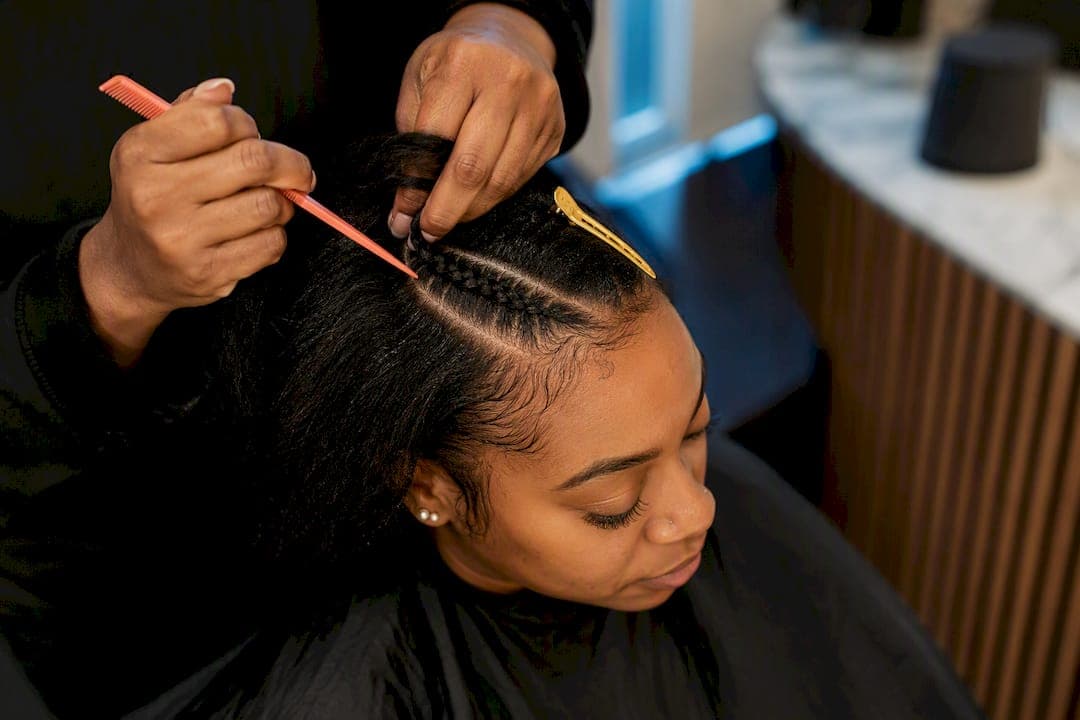
The safest options for thinning edges are knotless braids, loose feed-in cornrows, halo or crown braids, crochet on a loose base, and jumbo twists, but the style name matters less than the technique behind it. The single rule that protects your hairline: keep tension off the first half inch to full inch of hair at the perimeter, no matter which style you choose.
TL;DR:
- Starting braids at least one inch behind the hairline minimizes tension directly on fragile edges and reduces risk of damage.
- Knotless braids and feed-in cornrows distribute pulling force over a larger area, making them safer options for thinning or fine edges.
- Using bigger sections and lighter extensions at the perimeter decreases overall tension and prevents pulling on weak strands.
- Limiting install duration to four weeks and allowing a recovery period of the same length supports healthier edge growth.
- Avoid styles that anchor tightly at the hairline, such as micro braids, glued lace fronts, or heavy faux locs, to prevent unnecessary strain.
Table of Contents
- Which braids for thin edges actually reduce tension
- What to tell your braider before they touch your edges
- Maintenance, timeline, and at-home care during your install
- Styles and habits to avoid, and what to ask for instead
- What braiders and dermatology-informed guidance agree on
- A note from Afro
- Book a low-tension install built around your edges
- Sources
- FAQ
Which braids for thin edges actually reduce tension
Not every "protective" style is protective. The difference lives in how the braider distributes weight, and that's where most damage either happens or gets avoided.
Knotless box braids feed hair in gradually instead of anchoring a hard knot at the root. That spreads the pulling force over several inches of natural hair rather than concentrating it at one point, which is why licensed cosmetologists steer clients with fragile edges toward this method over traditional knotted box braids, according to Byrdie's braiding guide for thin hair. Knotless does not automatically mean safe, though. The technique still needs a low-tension hand behind it, and Edge Naturale's breakdown of knotless braids makes that distinction clear: the method reduces root tug, but a stylist can still braid it too tight.
Loose feed-in cornrows work the same principle for a flatter, closer style. Starting the rows a full inch behind the visible hairline gives your temples room to breathe instead of pulling directly on the weakest strands.
Halo or crown braids skip the hairline problem entirely by leaving the perimeter loose and unbraided, framing the face without anchoring a single strand at the edge.
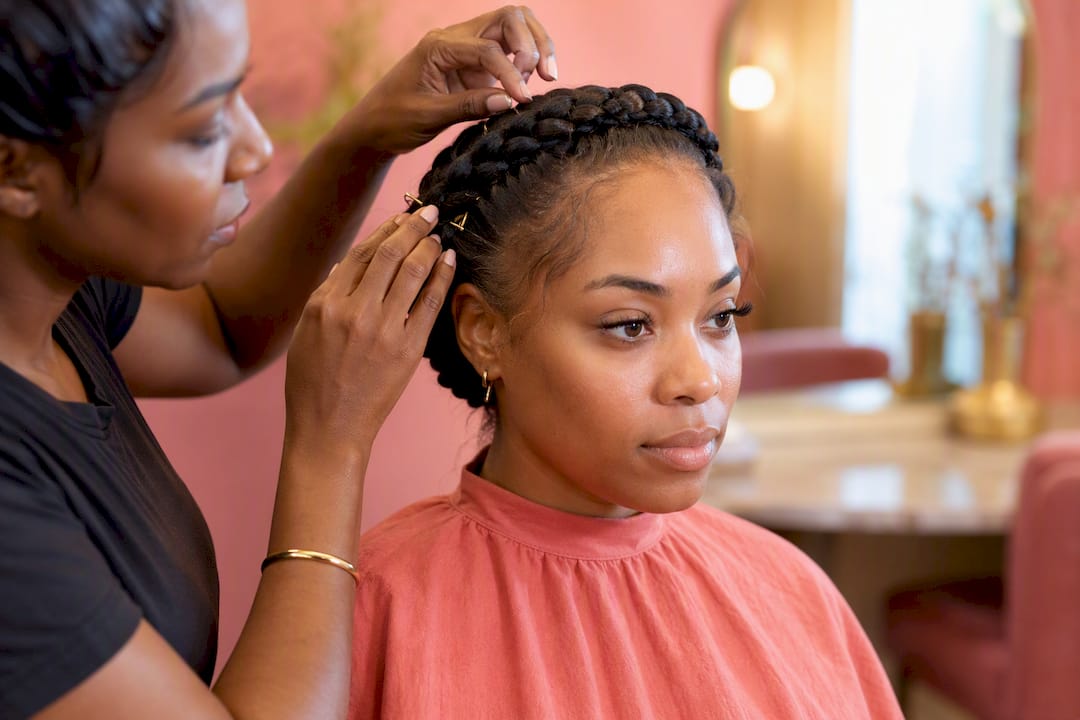
Crochet styles on a loose cornrow base deliver coverage and volume without packing tension into the root, since the crochet hair attaches to a foundation that was never pulled tight to begin with.
Jumbo twists and larger-perimeter parts also help simply through math: fewer, bigger sections mean fewer anchor points pulling on your edges.
- Shorter braid lengths and braided bobs cut cumulative weight, which matters because lighter, shorter styles are commonly recommended for fine or thinning hair to reduce strain on already-fragile strands.
What to tell your braider before they touch your edges
You don't need a cosmetology license to advocate for your own hairline. You just need the right words.
- Ask for rows to start behind the hairline. Say it plainly: "Please start my perimeter rows about an inch back from my hairline." Feed-in braids and loose cornrows are only protective when the first row actually sits behind the fragile zone, not on top of it, per Edge Naturale's guidance on feed-in braids.
- Request medium to large perimeter sections, not the tiny parts often used for a "laid" look. Bigger sections mean fewer pulling points along the edge.
- Ask for lightweight extension hair at the perimeter, and tell your braider you don't want gel or edge control applied directly to the hairline. Heavy gels can clog follicles and worsen inflammation, a concern flagged in Byrdie's coverage of thin-hair braiding.
- Request the eyebrow test. If raising your eyebrows or moving your scalp feels tight or painful anywhere near the perimeter, that section needs to be redone before you leave the chair.
Pro Tip: If a row feels sharp, tight, or "pulling" within the first hour, ask to have it redone immediately. Discomfort that lingers past the install almost always gets worse, not better, over the following weeks.
Maintenance, timeline, and at-home care during your install
How long you wear the style matters almost as much as how it's installed. Extended wear adds leverage on hair that's already regrowing or thinning, which is why timing deserves as much attention as the technique itself.
- Aim for 4 to 6 weeks of wear for most clients.
- If your edges are actively thinning, cap it at 4 weeks and prioritize a full recovery window before reinstalling.
- Sleep in a satin bonnet or on a satin pillowcase, and skip tight headbands or ponytail wraps at night.
- Massage lightweight oils like jojoba or organ into your scalp weekly rather than reaching for heavy, petroleum-based edge control.
- After removal, give your edges a rest period of 1 to 4 weeks before the next install, using that time for gentle washing and deep conditioning.
One planning strategy stands out: a 4-week install followed by a 4-plus week recovery window protects actively thinning edges better than a single long install with no rest at all. Repeated short cycles beat one marathon style every time. For a deeper look at nightly and weekly routines that keep braids from undoing your edge progress, these scalp care strategies walk through the details. If you notice persistent bumps, redness, or pain that doesn't fade within a day or two, that's your signal to see a dermatologist rather than wait it out.
Styles and habits to avoid, and what to ask for instead
Some installs are simply higher risk for thin edges, no matter how skilled the braider is.
- Tight cornrows anchored directly at the hairline concentrate tension exactly where you can least afford it.
- Micro braids multiply the number of anchor points across your perimeter, and more anchor points means more cumulative pull.
- Glued lace fronts trap bacteria and irritate follicles that are already compromised.
- Heavy faux locs add weight your edges have to support for weeks at a time.
Swap these for glueless wig caps when you want a break entirely, halo braids when you want a braided look without perimeter risk, or knotless techniques with fewer, larger sections when you want the classic braided style. Favor lighter extension textures at the perimeter specifically, even if you use heavier hair elsewhere in the install.
What braiders and dermatology-informed guidance agree on
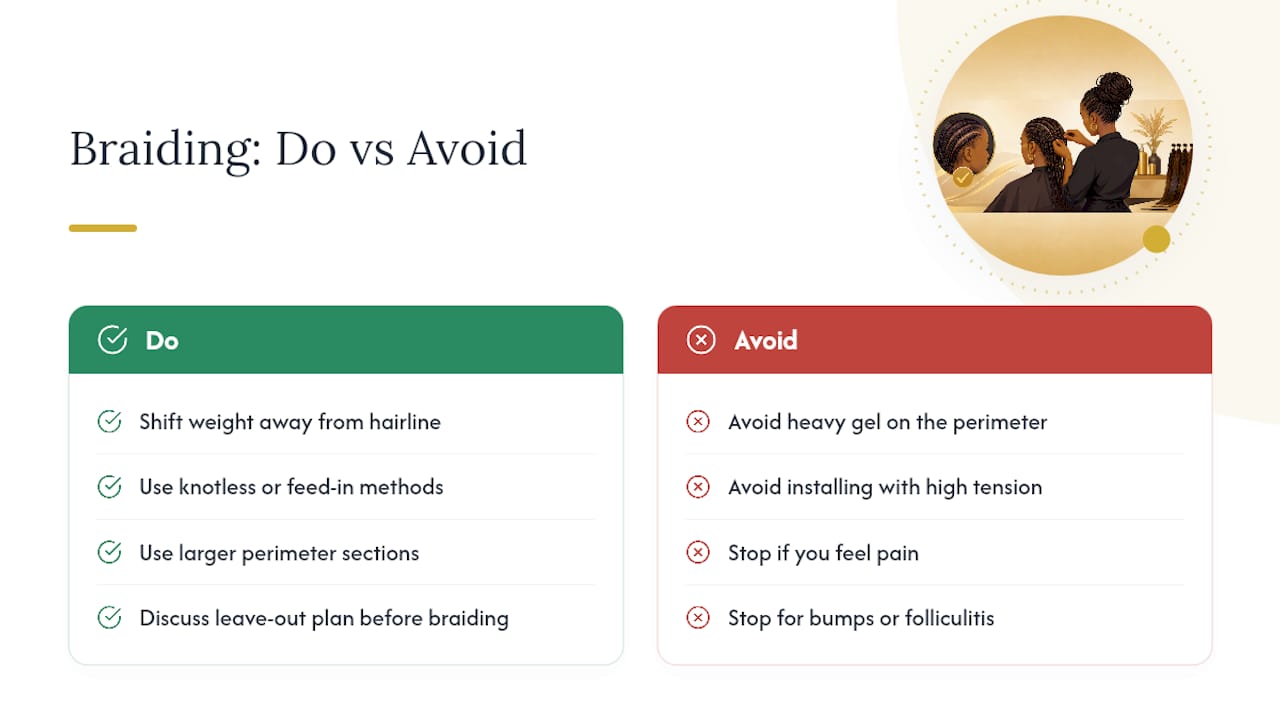
The advice here isn't a house opinion. Licensed cosmetologists interviewed by Byrdie consistently recommend shifting weight away from the hairline through knotless and feed-in methods, and steering clear of heavy gel at the perimeter. Clinical framing from Edge Naturale points to tension at installation as the strongest predictor of traction-related follicle damage, with persistent pain, bumps, or folliculitis as immediate warning signs to stop and reassess.
Adjustments for clients with thinning edges may include larger perimeter sections, lighter extension weight at the hairline, and a leave-out plan discussed before the first braid goes in. If you're weighing knotless as your safest option, this guide to knotless braids on fine hair covers the salon-tested rules in more depth. Any sign of scalp inflammation mid-install is a reason to pause, not push through.
A note from Afro
Technique beats trend, every time. A style can be called "knotless" or "feed-in" and still be installed too tight, so ask questions, request the eyebrow test, and don't be shy about asking for a redo. Your edges deserve a braider who treats your hairline as the priority, not an afterthought.
— Afro
Book a low-tension install built around your edges
Professional installs can be planned around thinning edges rather than relying on generic styles pulled from a lookbook. Every consultation starts with a conversation about your perimeter: section size, extension weight, and how long you can realistically wear the style before your edges need a break.

Clients booking knotless installs, feed-in cornrows, or crochet styles get a perimeter plan discussed before the first section is parted, along with a realistic wear-time recommendation based on how your edges look that day. You can browse real finished looks in the portfolio gallery to see the technique in action, or explore the full range of styling options available at the salon. If you're ready to get your edges a low-tension install, book your appointment directly and bring your questions with you. If you want lighter, shorter styling ideas to discuss at your consultation, this roundup of long-hair styling looks offers useful reference points for reducing overall extension weight.
Sources
- Braided styles for thin hair (Byrdie)
- Feed in braids for thin edges: what actually works (Edge Naturale)
- Knotless braids with thin edges (Edge Naturale)
- 10 Braided styles for thin hair (InStyle)
FAQ
What braid style is best for thinning edges?
Knotless braids and loose feed-in cornrows are generally considered safest, since both spread tension away from the root instead of concentrating it at the hairline.
What hairstyle is best for thinning edges besides braids?
Halo braids that leave the perimeter completely loose, or a glueless wig on a protective cap, both give your edges a full break from tension.
How do you cover thinning edges with braids without causing more damage?
Ask your braider to start perimeter rows about an inch behind the hairline and use medium or large sections, which conceals sparse areas without pulling directly on fragile strands.
What braids are best for fine, thin hair?
Shorter, lightweight styles like knotless bobs or jumbo twists work well for fine hair, since they reduce overall extension weight compared to long, dense braided styles.