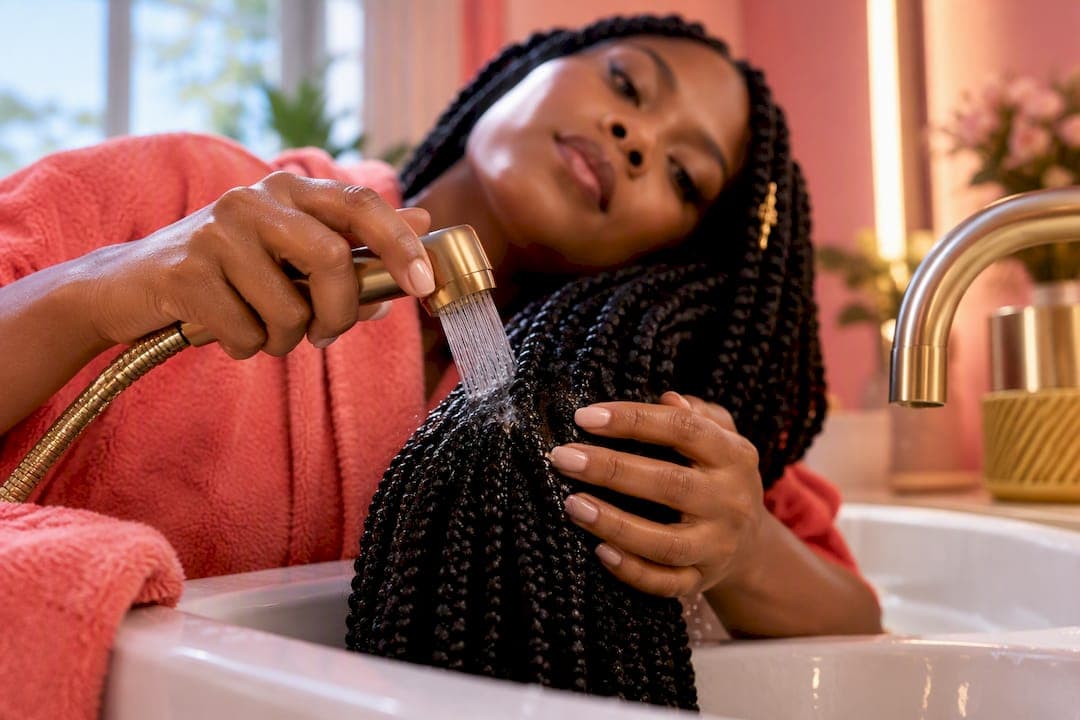
Yes, you can wash crochet braids, and you should. The safest rule is a scalp-first, low-friction method: cleanse the roots gently, keep the braid base dry, and never rub strands together like you're washing loose hair. Most people do well washing on a regular basis roughly once to twice a month, though your scalp, sweat level, and hair type will shift that. Stop and loosen the style immediately if you feel pain, stinging, or unusual tightness.
TL;DR:
- Washing crochet braids once to twice a month is usually sufficient unless you are highly active, heavily producted, or prone to sweating frequently.
- Use a gentle, scalp-first approach with diluted shampoo, section hair properly, and dry the braid bases thoroughly to prevent odor and matting.
- Avoid tight styles for more than six to eight weeks, and be alert for signs of scalp pain, thinning, or redness that indicate the need for loosening or removal.
- Dry shampoo and co-wash options are suitable for delicate or fragile crochet knots, especially in between full water washes.
- Professional maintenance includes tension checks, spot adjustments, and proper washing, which can prolong style life and protect scalp health.
Table of Contents
- When Should You Wash Crochet Braids?
- Prep Checklist Before Washing Crochet Braids
- How to Wet-Wash Crochet Braids Step by Step
- Can You Skip Water? Dry-Wash and Co-Wash Options
- Drying and Nightly Care That Prevent Odor and Matting
- Is Your Style Too Tight? Scalp Safety Signs to Watch
- Salon Tips From Afro Magic Braiding for Easier Washing
- A Stylist's View: Comfort Beats Longevity Every Time
- Book a Professional Maintenance Visit With Afro Magic Braiding
- Sources
- FAQ
When Should You Wash Crochet Braids?
There's no single schedule that fits everyone. Scalp oil production, activity level, and the type of crochet fiber you're wearing all change how often you need to wash. Cleveland Clinic dermatology guidance notes that people with coarse, coiled, or tightly curled hair often do best washing at least every two weeks, which lines up well with typical crochet braid maintenance.
Your scalp will tell you when it's time before any calendar does. Watch for:
- Itching that doesn't ease up with a scalp oil or cooling mist
- A sour or musty odor near the roots, especially after sweating
- Visible flaking or white buildup along the part lines
- A scalp that feels greasy or tacky to the touch
Heavy product users, swimmers, and anyone working out several times a week usually need to wash sooner, sometimes closer to the one-week mark. Coarser or drier textures, and synthetic crochet hair especially, often stretch comfortably to two or even three weeks between full washes.
Prep Checklist Before Washing Crochet Braids
A rushed wash is how knots loosen and edges fray. Before you touch water, run a quick inspection: check that knots feel secure, confirm the braid base still has even tension, and look closely at your edges for any flyaways or thinning that need extra care.
Gather your supplies ahead of time so you're not scrambling mid-wash:
- An applicator bottle filled with a gentle shampoo diluted with water
- A microfiber towel for blotting, not rubbing
- Butterfly clips or scrunchies for sectioning
- A lightweight conditioner or leave-in mist
- A blow dryer with a cool or low heat setting
Section your hair into four to six manageable parts before you start, and smooth a bit of edge control or light oil along your hairline to protect fragile baby hairs from friction.
Pro Tip: If you're unsure how your crochet hair handles water, test a small hidden section first. Some synthetic fibers dull or frizz faster than others, and it's better to find out on one braid than the whole style.

How to Wet-Wash Crochet Braids Step by Step
Work in sections, and never wash the whole head at once like you would with loose hair. Here's the routine salons and braid-care guides recommend for minimizing knot disturbance:
- Divide hair into your pre-clipped sections and unclip one at a time.
- Apply diluted shampoo directly to the visible scalp and part lines using your applicator bottle.
- Massage gently with your fingertips, moving in the direction of the braid rather than in circles.
- Let the lather travel downward naturally; avoid scrubbing or rubbing strands against each other.
- Rinse from the roots down, letting water flow with the braid pattern.
- Smooth a lightweight conditioner onto mid-lengths and ends only, keeping heavy creams away from the base.
- Blot with a microfiber towel, then dry the roots and braid base first using cool or low heat.
Most buildup collects at the roots and braid base, not the length of the hair, which is why a scalp-first approach does more work than an all-over scrub. Check the underside of your braid base with your fingers before you consider the wash finished. If it still feels damp, keep drying. Sleeping on a wet foundation is one of the fastest ways to end up with a musty odor or matting you can't brush out.
Can You Skip Water? Dry-Wash and Co-Wash Options
Full wet-washing isn't always the right call. Synthetic crochet hair, fragile knot foundations, or a style you just want to freshen between washes all do better with lower-manipulation methods, and Luvme's braid-care guidance backs both approaches for exactly these situations.
- Dry shampoo: Spray at the roots, wait a minute, then gently brush or fluff to lift oil and residue without water.
- Co-wash: Dilute a lightweight conditioner (roughly 1 part conditioner to 3 or 4 parts water) and apply it as a gentler cleanser than shampoo.
- Dilution first: Always test a small section before committing to a new mix, especially on delicate or aging knots.
Synthetic hair tends to hold up better with less water overall, leaning on co-wash and dry shampoo between full washes, while human-hair crochet generally tolerates more traditional wet routines. Reach for dry methods when you're short on time, when your knot foundation feels fragile, or when you just need to knock down odor before day seven.
Drying and Nightly Care That Prevent Odor and Matting
Trapped moisture is the enemy of every crochet install. After rinsing, blot rather than rub, and always dry the braid base before you worry about the ends. A cool or low dryer setting aimed underneath the cornrows, while gently lifting sections, clears moisture that would otherwise sit against your scalp and turn sour.
- Lift sections one at a time and direct airflow directly at the roots
- Check the underside of the braid base by touch, not just by sight
- Wrap with a satin bonnet or scarf every night to cut friction and frizz
- Gather braids loosely for sleep rather than in a tight, high ponytail
Pro Tip: Refresh frizzy curls with a light mist of water and leave-in rather than piling on more product. If ends start looking matted or worn, a small trim usually solves it faster than trying to detangle your way out.
Is Your Style Too Tight? Scalp Safety Signs to Watch
Tension does more damage than water ever will. The American Academy of Dermatology lists tight braids and extensions among the clearest risk factors for traction alopecia, and pain is your scalp's way of telling you the foundation is too tight.
Watch for these warning signs:
- Pain, stinging, or a headache that starts right after installation
- Small bumps or redness along the hairline
- Hair receding or thinning at the edges or part lines
- A foundation that still feels uncomfortably tight after a day or two
Most stylists consider six to eight weeks a reasonable outer limit for tighter styles, though your own scalp comfort should set the real deadline. Clinical reviews on scalp health point out that manipulation and tension cause more lasting damage than wash frequency ever does, so a style that hurts on day three shouldn't stay in for eight weeks just because that's the guideline. Alternate protective styles, ask for looser foundations next time, and see a dermatologist if you notice thinning that doesn't grow back.
Salon Tips From Afro Magic Braiding for Easier Washing
A flat, secure braid base at install makes every future wash easier. When your stylist avoids overly tight edges and keeps knots snug without cranking down tension, water and product can reach the scalp without disturbing the foundation, and a pre-install cleanse helps prevent irritation before the style even goes in.

Between full washes, stylists can refresh curls and pick out small tangles without a full reinstall, which stretches the life of your crochet braids without adding strain. If you're ever unsure whether your tension is too tight or your edges are thinning, a quick salon check beats guessing at home. Protecting your natural hair underneath the style is always the priority, not just how long the crochet lasts.
A Stylist's View: Comfort Beats Longevity Every Time
A protective style only earns its name when it protects your scalp along the way. Chasing eight full weeks out of a crochet install isn't worth it if your hairline is paying the price by week three. If you're ever second-guessing whether tension is normal or something's wrong, that hesitation is worth listening to. Book a professional check the moment pain or thinning shows up. Your natural hair underneath has to outlast any single style.
— Afro
Book a Professional Maintenance Visit With Afro Magic Braiding
A professional braiding service gives you what a home wash routine can't: a trained eye checking your tension before small discomfort turns into real damage. A professional maintenance visit can include a tension assessment along your hairline, spot adjustments where knots have loosened or tightened unevenly, and a proper scalp-first wash and dry to help keep the braid base clean without disturbing the foundation.

If your install feels painful, your edges look thinner than usual, or you're just unsure whether your tension is safe, that's exactly when a professional visit pays off. You can browse real results across knotless braids, crochet styles, and more on our portfolio, then head straight to booking to schedule a maintenance visit or your next full install.
Sources
- How often should you really wash your hair? (Cleveland Clinic)
- Hairstyles that pull can lead to hair loss (American Academy of Dermatology)
- How to wash crochet hair without ruining the style (Luvme blog)
- Clinical review on hair and scalp conditions (PMC article)
FAQ
Should I wash crochet braids before installing them?
Yes, cleansing your natural hair before installation removes product buildup and reduces the chance of scalp irritation once the braids are in. Stylists often build this pre-install cleanse into the appointment itself, so ask when you book.
How long can I keep my crochet braids in?
Most stylists recommend a maximum of six to eight weeks for tighter foundations, but your scalp comfort should set the real limit. If you feel pain, notice thinning, or see redness at the hairline before then, loosen or remove the style early.
Can I get crochet braids wet?
Yes, crochet braids can get wet, whether from washing, rain, or swimming, as long as you dry the braid base completely afterward. Trapped moisture at the roots is what causes odor and matting, not the water itself.
How do I maintain my crochet braids?
Wash every one to two weeks using a scalp-first, diluted shampoo method, keep the braid base dry, and protect the style with a satin bonnet at night. Between washes, a light mist of leave-in conditioner and gentle finger detangling keeps curls looking fresh without disturbing the knots.