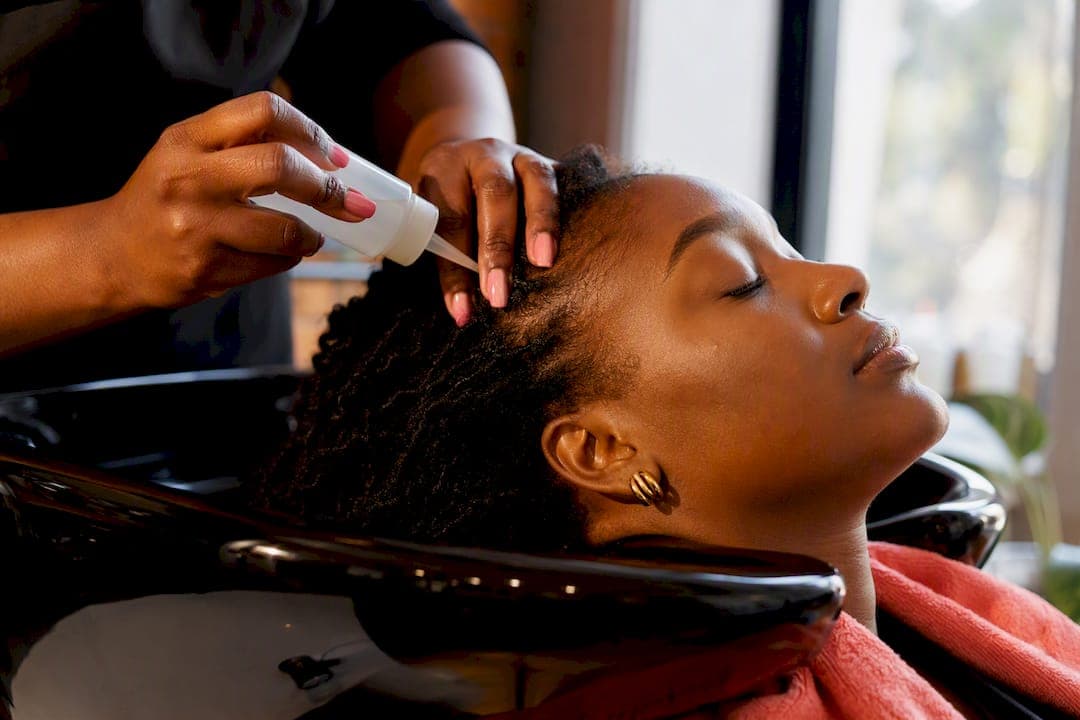
With a scalp-first cleansing habit, water-based misting, and nightly silk protection, soft locs stay neat for 4 to 6 weeks between salon refreshes. Wash sparingly and focus shampoo on the scalp, not the loc itself. Keep hydration light with a water-based mist and a tiny oil seal, and book a professional retwist or removal the moment you see heavy frizz, matting, or scalp discomfort.
TL;DR:
- Soft locs respond to water differently than traditional locs, requiring careful, scalp-focused washing every one to two weeks to prevent looseness and buildup.
- Using light, water-based misting and sealing with oils helps maintain hydration without attracting lint or causing product residue, extending the style’s longevity.
- The typical lifespan of soft locs ranges from four to six weeks, but persistent effort and lifestyle factors like swimming and sweating can reduce this period.
- Overtouching, tight styling, or excessive product application, especially near the roots, are common causes of early loc loosening and damage.
- Professional retwists and timely removal protect the hair’s health, with caution advised against repeated DIY fixes that may induce tension or breakage.
Table of Contents
- What Makes Soft Locs Different From Traditional Locs?
- What Is the Right Weekly Maintenance Routine?
- How Do You Wash Soft Locs Without Loosening Them?
- Which Products Keep Soft Locs Hydrated Without Buildup?
- How Do You Protect Soft Locs at Night?
- How Do You Refresh Soft Locs Between Salon Visits?
- How Long Should You Keep Soft Locs In?
- How Do You Remove Soft Locs Safely?
- What Does a Stylist-Vetted Scalp-First Routine Look Like?
- The Mistake That Shortens Loc Life Most Often
- Book Your Next Soft Loc Install or Retwist
- Sources
- FAQ
What Makes Soft Locs Different From Traditional Locs?
Soft locs are a temporary loc style created by wrapping natural hair or braided extensions with soft, pre-curled hair, usually human hair or a synthetic blend that mimics the texture of mature locs. Unlike traditional or "sister lock" style locs, which form permanently through years of palm rolling and interlocking your own hair, soft locs are a protective style built around a braided or crocheted base. That base is the part that actually determines how you care for the finished look.
Stylists generally install soft locs one of three ways:
- Wrapped method: natural hair is braided, then wrapped with loc hair and sealed at the ends.
- Crochet method: pre-made loc extensions are looped through braided cornrows with a crochet needle, which tends to install faster but can sit with slightly more tension at the root.
- Plaited base: hair is cornrowed first, then the soft loc hair is braided directly onto each row for a tighter, longer-lasting foundation.
Because the loc itself is not truly locked, soft locs respond to water very differently than mature locs do. Water can loosen the wrap at the ends or cause the extension hair to slip against the braided base, especially near the root where tension is already doing a lot of the holding-together work. That is the reason soft locs maintenance leans so heavily on controlled, scalp-focused washing rather than the fuller, more frequent washing routine mature locs can tolerate.
What Is the Right Weekly Maintenance Routine?
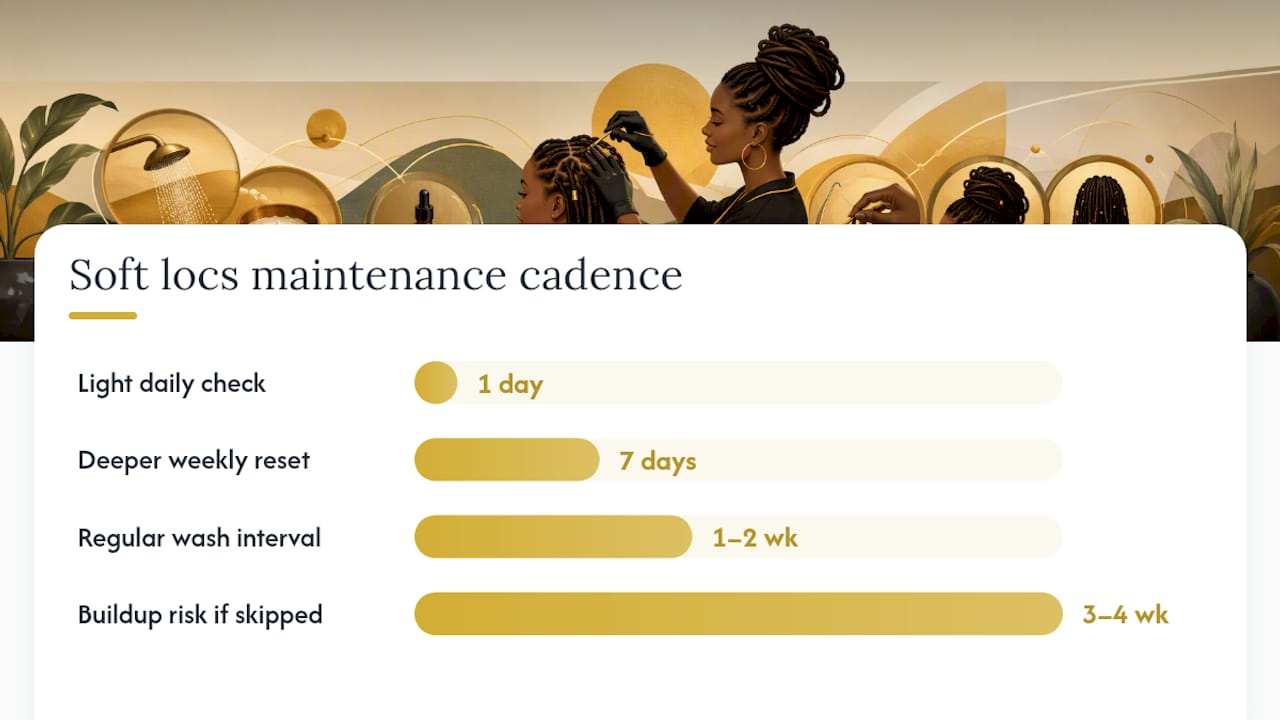
A soft locs care routine really comes down to two rhythms: a light daily check and a deeper weekly reset. Most clients do well washing every one to two weeks, which protects the wrap while still keeping the scalp clean enough to avoid itch and buildup. Wash more often only if you sweat heavily, swim, or notice visible product residue near the root.
Before you even touch water, run a quick check. Look for loose ends, exposed braid tracks, or spots where the loc feels thin. Catching a slipping section early means a five-minute rewrap instead of a full redo.
Here is the sequence that keeps soft locs intact wash after wash:
- Pre-cleanse the scalp. A targeted pre-cleanse spray lifts trapped oil and flakes before shampoo even touches your head, which makes the actual cleansing step faster and more effective.
- Cleanse scalp only. Apply a light, sulfate-free shampoo directly to the scalp using an applicator bottle, working in sections without scrubbing down the length of the loc.
- Rinse thoroughly but gently. Point the shower stream toward the scalp and let water run down and off the locs rather than massaging or twisting them under the flow.
- Blot, don't rub. Squeeze excess water out with a microfiber towel; rough towel-drying is one of the fastest ways to fuzz up the surface of a soft loc.
- Mist with a water-based leave-in. Cover the length evenly, paying attention to any drier sections.
- Seal with a small amount of light oil, focused at the scalp and ends, not the middle of the loc.
Skip heavy creams and butters anywhere near the root. They sit on top of the braid base, attract lint and dust, and make the next wash harder because you now have two layers of buildup to clear instead of one.
Pro Tip: Set a phone reminder for wash day the same way you would for a hair appointment. Soft locs maintenance fails most often not because people do the wrong thing, but because they skip the routine for three or four weeks straight and then have to deal with buildup all at once.
How Do You Wash Soft Locs Without Loosening Them?
Washing soft locs is really scalp care in disguise. The goal is a clean scalp and fresh-smelling hair without saturating or agitating the loc structure itself, which is the part actually holding your style together.
Stick to a light, sulfate-free shampoo for regular washes, and save a clarifying formula for once every four to six weeks when you notice product film or a dull look. Applying shampoo with a nozzle applicator bottle diluted with a bit of water lets you target the scalp directly instead of pouring shampoo over the whole head, where it inevitably runs down the locs and adds unnecessary friction.
Rinse in one direction, following the natural fall of the hair, the same gentle, directional approach micro-link extension care recommends to avoid disturbing attachment points. Avoid squeezing or twisting the locs while wet, since wet hair extension is more elastic and more prone to slipping at the base.
Drying matters as much as washing. Sitting under a bonnet dryer on low heat, or air-drying with a fan pointed at the roots, prevents the damp, trapped moisture that leads to mildew and a musty smell, particularly at the scalp where airflow is weakest.
A few habits worth building in:
- Use a medicated or anti-flake mist if you notice flaking between washes.
- Never go to bed with wet or even slightly damp roots.
- Skip daily full washes entirely. Rinse-only refreshes strip the scalp of natural oil and do nothing for the loc itself.
Which Products Keep Soft Locs Hydrated Without Buildup?
The two-step hydration method used across most professional loc-care lines is simple: mist first with a water-based leave-in, then seal with a small amount of oil. Water rehydrates the hair fiber from the inside; oil just locks that moisture in and adds shine. Reverse the order or skip the water step, and you get shiny locs that are still dry underneath.
For soft locs products, look for these categories rather than any single miracle bottle:
- Water-based leave-in mists for daily or every-other-day hydration.
- Light, lock-safe conditioners used sparingly during wash day, never left to sit heavy at the root.
- Mousse for smoothing frizz and taming new growth without the crunch of gel.
- Anti-dandruff or scalp mist for anyone prone to flaking under a protective style.
When it comes to the best oils for soft locs, lighter is almost always better near the scalp. Batana oil is a good example: it is genuinely nourishing, but it works best applied sparingly to the scalp and ends after misting with water first, since overusing it invites buildup rather than shine. Warm a dime-sized amount between your fingers before applying, and resist the urge to coat the full length of the loc. Heavier butters and waxes might feel luxurious going on, but they sit on the surface, collect lint, and slow drying time enough to raise mildew risk. Newer market entries, like Doo Gro's braids, twists, and locs line, reflect this same shift toward lighter sprays and mousses built specifically for protective styles.
Buildup shows up as a dull, waxy film, flaking that will not clear with a normal rinse, or a musty smell that lingers even after drying. If you see any of that, it is time for a clarifying wash, not another layer of product.
How Do You Protect Soft Locs at Night?
Friction while you sleep is the single fastest way to frizz out a fresh set of soft locs. A few minutes of nightly prep saves hours of styling later.
- Gather locs loosely and wrap with a satin or silk scarf, or pull them into a low, loose pineapple style secured with a satin-lined tie.
- Add a bonnet over the scarf if you tend to move around a lot in your sleep. The extra layer keeps the wrap in place until morning.
- Protect your edges separately. A thin satin strip laid flat along the hairline before the bonnet goes on prevents rubbing against a cotton pillowcase.
- On retwist days, avoid pulling locs into tight buns or ponytails for at least 24 hours, since the base needs time to settle without added tension.
Cotton pillowcases and scarves are the quiet enemy of soft locs maintenance. They pull moisture out of the hair and create the exact friction you spent all week trying to avoid.
How Do You Refresh Soft Locs Between Salon Visits?
A light mousse or gel applied with your fingertips, not a comb, smooths frizzy new growth and flyaways without adding the kind of buildup that forces an early wash. Work in small amounts, root to tip, and let it air dry rather than piling on more product to compensate for a heavy hand the first time.
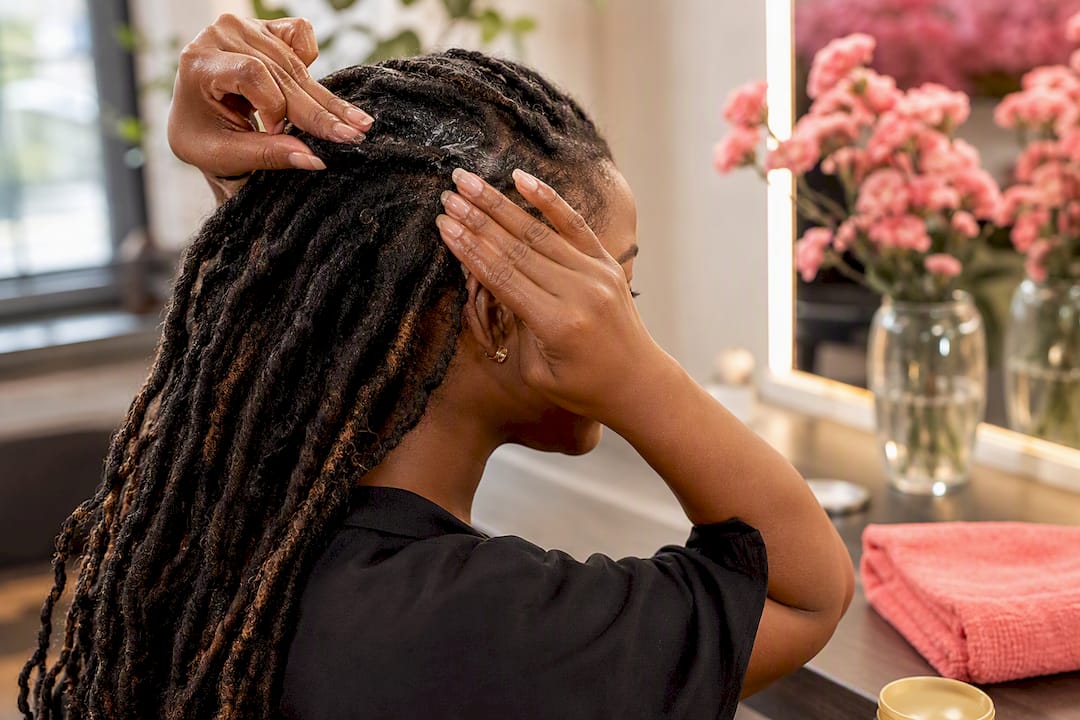
Targeted rewraps make sense when only a few locs have loosened; a full retwist is worth booking when frizz, thinning, or slippage shows up across most of your head. Here is where a lot of soft locs care tips online lead people astray by pushing daily heavy styling as a fix.
Watch for these warning signs that a DIY refresh is doing more harm than good:
- Locs feel thinner or noticeably lighter than when installed.
- The scalp feels tender, itchy, or shows small bumps at the base of several locs.
- You are reapplying product every day just to keep frizz down.
Pro Tip: If you find yourself refreshing the same three or four locs every week, that is usually a sign of a tension issue at the base, not a styling problem. A quick stylist check can catch it before those locs fully unravel.
How Long Should You Keep Soft Locs In?
Most soft locs last 4 to 6 weeks between professional refreshes when the routine above is followed consistently, and understanding how maintaining style longevity can save time is an important part of disciplined care, as explained in this haircut longevity guide for busy people, though some well-maintained installs stretch closer to two or three months with disciplined care. Lifestyle plays a bigger role than most people expect.
- Swimming and heavy sweating shorten the window considerably, since chlorine and salt water dry out the wrap and speed up loosening at the ends.
- High-impact workouts several times a week call for more frequent scalp cleansing, which means planning your wash cadence around your activity level rather than a fixed calendar date.
- Sleep habits matter too. Consistent silk protection can genuinely stretch a set closer to that upper six-week range.
Retwist rather than remove if the base is still secure and only the ends look worn. Remove and start fresh if you see widespread thinning, matting close to the scalp, or a scalp that stays irritated no matter how gently you wash.
How Do You Remove Soft Locs Safely?
Removal deserves the same care as installation, since rushing this step is where most breakage happens.
- Saturate each loc with a light oil or conditioner before unwrapping to reduce friction on the hair underneath.
- Unwind slowly from the end toward the root, never cutting straight through unless a stylist has confirmed it is safe for your particular install.
- Choose salon removal if you installed with a crochet method or if any locs feel matted, since a stylist can section and detangle without pulling on fragile strands.
- Deep condition immediately after removal to rebalance moisture and protein, since braided-under hair often comes out drier than expected.
- Wait at least one to two weeks before a new install, watching for scalp tenderness or breakage at the hairline as your sign that hair needs more recovery time.
A gentle, stylist-vetted removal process protects edges specifically, since that is where tension damage shows up first and heals slowest.
What Does a Stylist-Vetted Scalp-First Routine Look Like?
One popular routine for soft locs care focuses on the principle that healthy locs start with a healthy scalp, not a saturated loc. The method includes steps such as pre-cleanse, targeted scalp shampooing, directional rinsing, blotting, low-heat drying, water-based misting, light oil sealing, and a final scalp check for tension or irritation.
You can run a version of this at home between visits:
- Swap a salon applicator bottle for a drugstore nozzle bottle to target shampoo at the scalp.
- Pair a light leave-in mist with a small amount of a nourishing oil, following the same water-first, oil-second order stylists use in-salon.
- Book a scalp check every four to six weeks even if you are not ready for a full retwist, since a stylist will catch tension issues before they become breakage.
The full step-by-step routine covers each step in more detail for anyone who wants to follow it precisely at home.
The Mistake That Shortens Loc Life Most Often
The single biggest mistake behind early soft loc breakdown is not neglect. It is overcorrection. Clients see one frizzy section and respond by washing more, adding more oil, or pulling everything into a tight bun to "control" it, and each of those choices adds stress at exactly the point already under the most tension.
A stylist-first approach works because it treats soft locs as a system, not a single style. Occasional professional maintenance catches slippage and tension issues while they are still small, cheap fixes, rather than after they have turned into a section that needs to be redone entirely. The best soft locs upkeep advice is almost always the least dramatic option: wash less, moisturize lighter, and let a professional catch the small stuff before you try to fix it yourself.
— Afro
Book Your Next Soft Loc Install or Retwist
Some salons offer stylist-first approaches to soft locs maintenance. Professional installs and retwist appointments can help catch tension or thinning before it becomes a full redo.

Soft locs, along with faux locs, kinky twists, and knotless braids, are all installed using tension-free, feed-in techniques built to protect your hairline from day one. Browse the full portfolio of styles to see real results, and pick up scalp-safe shampoos, leave-in mists, and light sealing oils in-salon so your at-home routine matches what your stylist actually recommends. Faux locs run $170 to $250 depending on length and density, and most appointments include a scalp check as part of the service.
Come to your appointment with clean, detangled natural hair and a rough idea of the length and thickness you want. Book your install or retwist online, or reach out with questions about timing your next visit around your current maintenance routine.
Sources
For deeper reading on soft locs maintenance, the Carol's Daughter guide to soft locs covers lifespan expectations, while Dr Locs' pre-cleanse product notes explain buildup removal in more detail. For real-world wash and stretch scheduling, see this starter microloc maintenance routine.
- What Are Soft Locs and How Do You Care for Them? — Carol's Daughter
- Pre-Cleanse (16oz) — Dr Locs
- Batana Oil for Locs and Dreadlocks – Batanaful Hair & Skincare
FAQ
How long should you keep soft locs in?
Most soft locs last 4 to 6 weeks between professional refreshes, though a diligent routine can stretch that closer to two or three months. Swimming, heavy sweating, and skipped scalp cleansing all shorten that window.
What are the disadvantages of soft locs?
Soft locs are more prone to slipping or loosening near the root than mature locs, since the base is braided rather than truly locked. They also require careful product choices, since heavy oils or butters near the root can cause buildup, flaking, or a musty smell faster than with permanent loc styles.
Should I oil my locs every day?
No. Daily heavy oiling is one of the fastest ways to create buildup on soft locs. Mist with a water-based leave-in most days, and seal with a small amount of oil at the scalp and ends only two or three times a week.
What ruins locs?
Overwashing, heavy butters left near the root, rough towel-drying, and sleeping on cotton without silk protection are the main culprits behind frizz, matting, and early breakdown. Tight styling that pulls at the base right after installation or a retwist adds unnecessary tension exactly where the loc is most fragile.