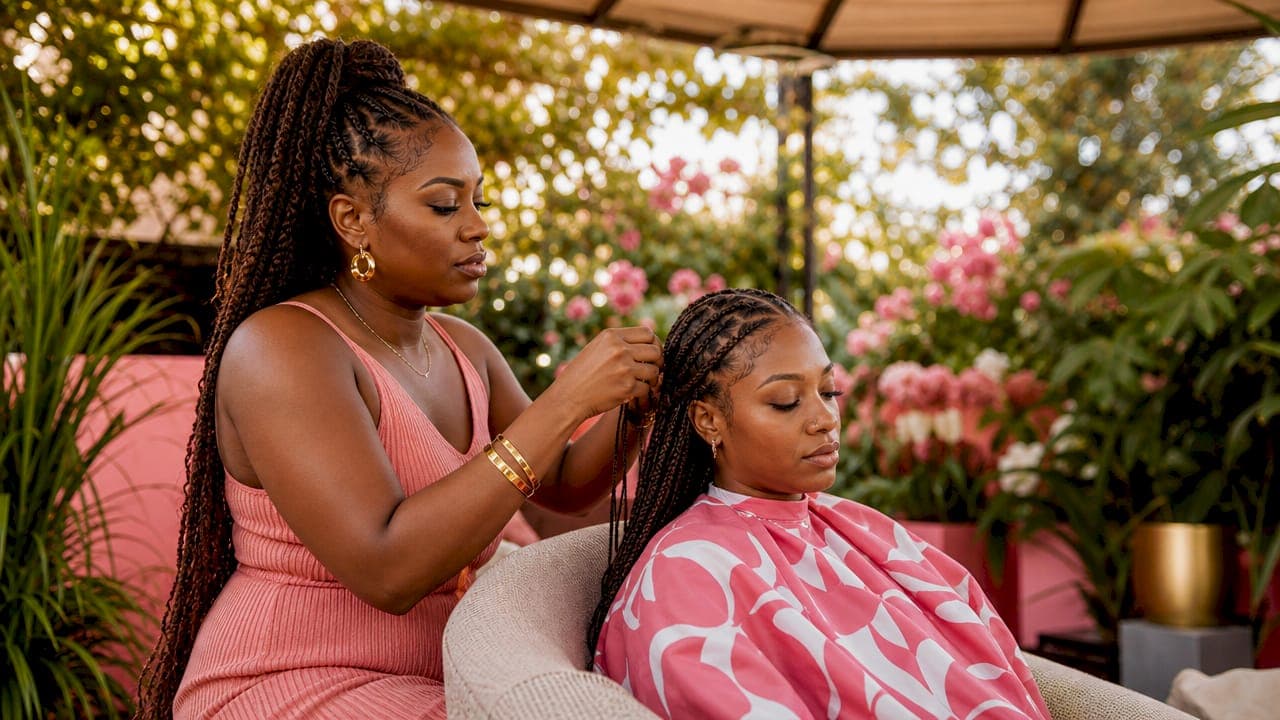
Knotless braids are defined as a tension-free feed-in technique where synthetic hair is gradually added to natural strands without an anchor knot at the root, making them the modern evolution of a 5,000-year-old African braiding tradition. Their knotless braid cultural significance goes far beyond aesthetics. Hair in African traditions functions as a complex social ledger communicating ancestry, status, and community belonging. Every braid tells a story, and the knotless method carries that story forward with care for both the scalp and the soul.
1. What is the knotless braid cultural significance rooted in?
African hair braiding history stretches back over 5,000 years, with archaeological evidence found among the Himba people of Namibia. That timeline places braiding among the oldest recorded forms of cultural expression on earth. Braiding was never a casual beauty choice. It was a deliberate act that communicated who you were, where you came from, and where you stood in your community.
The knotless technique is the newest chapter in that long story. It preserves the visual language of traditional braiding while introducing a method designed to protect the hairline and reduce traction alopecia. Understanding braiding culture and why it matters means recognizing that each refinement in technique is also a refinement in how communities honor their heritage.
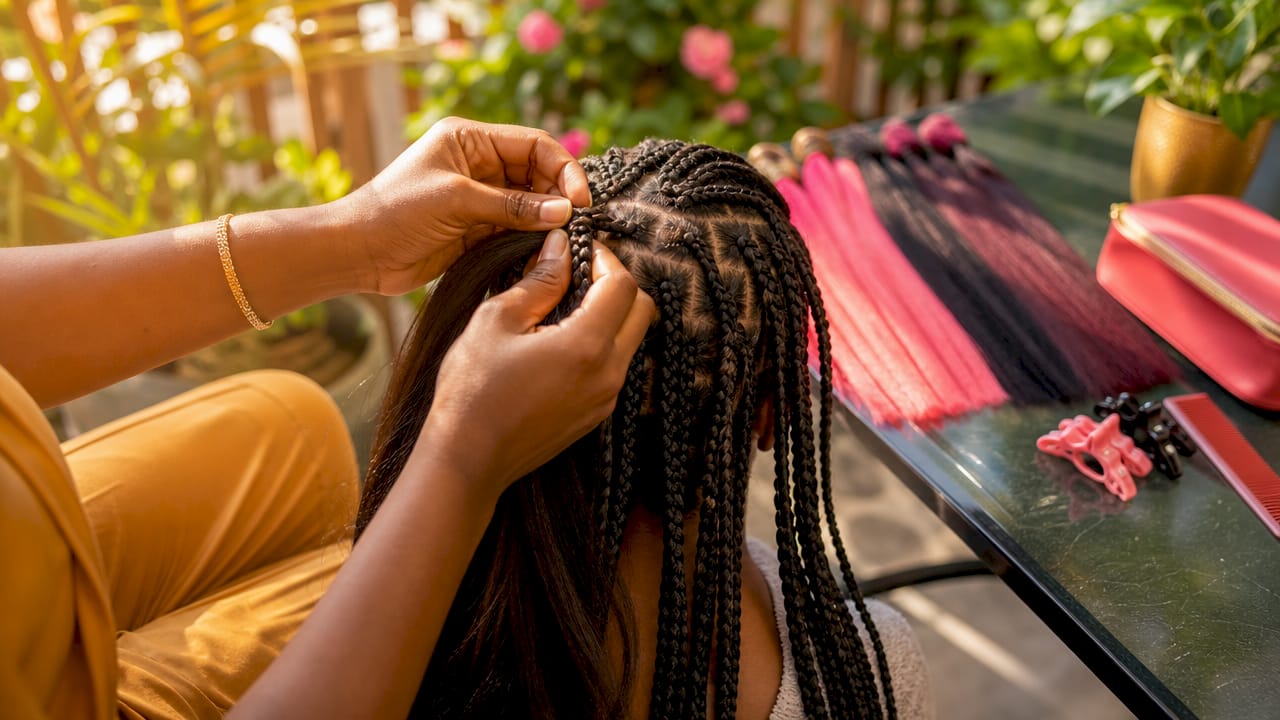
2. Ancient origins of the knotless braiding technique
The roots of knotless braiding reach into ancient Africa, where braiding patterns carried meaning that outsiders could not easily read.
- Archaeological evidence places African braiding traditions at over 5,000 years old, with the Himba people among the earliest documented practitioners.
- Social function was central from the start. Patterns indicated age, marital status, tribal affiliation, and spiritual beliefs.
- Practical purpose was equally real. Braids kept hair protected during physical labor, travel, and seasonal changes.
- Spiritual dimension was woven in. Many communities braided before ceremonies, rites of passage, and communal gatherings.
The modern knotless method emerged as braiders sought to reduce the scalp tension caused by traditional knot-based installation. Knotless braids protect the hairline better than traditional knot-based braids by feeding hair in gradually rather than anchoring it with a tight knot at the root. That technical shift did not break from tradition. It deepened the tradition's core value: caring for Black hair with intention.
Pro Tip: Ask your braider specifically about the feed-in method during your consultation. A gradual feed-in from the root is the defining feature of a true knotless installation, and it makes a real difference for scalp health over time.
3. Braids as identity and social status markers
Hair was never merely decorative in African societies. It was a visual identity system that communicated ancestry and socioeconomic standing at a glance. Specific patterns functioned like a visual ID card long before written records were common.
Among the Yoruba people of West Africa, braiding styles distinguished married women from unmarried ones. Among the Igbo, specific patterns signaled wealth and community rank. These were not arbitrary choices. They were a shared visual grammar that every community member could read.
Knotless braids carry this legacy forward in contemporary settings:
- Fulani-inspired braids with beads and center parts reference specific West African lineage and are worn today as a direct cultural tribute.
- Goddess braids with loose, flowing ends signal celebration and femininity, echoing ceremonial styles from across the continent.
- Jumbo knotless braids communicate boldness and self-possession, a modern statement rooted in the same logic of visible identity.
Wearing knotless braids today is a choice to participate in that visual language, whether consciously or not. The style announces cultural pride without a single word.
4. Knotless braids as resistance and cultural resilience
During the transatlantic slave trade, braids encoded escape routes and signals that enslavers could not decipher. Rows of cornrows mapped paths to freedom. Seeds and gold were hidden in braided patterns. The hair itself became a tool of survival.
"The forced cutting of braids during slavery and assimilation periods was not incidental. It was a deliberate act of cultural erasure, designed to sever enslaved and colonized people from their identity and ancestry."
The stigmatization of braids transformed wearing them today into acts of resistance and cultural reclamation. When Black women and men wear knotless braids in professional spaces, on red carpets, and in schools, they are asserting that their heritage belongs everywhere. The CROWN Act, which prohibits discrimination based on natural hair and protective styles in the United States, exists precisely because that assertion still requires legal protection.
Knotless braids represent healing as much as resistance. They are a way of saying: what was taken from us is ours again.
5. The communal and ritualistic aspects of knotless braiding
Knotless braid installation often requires 5–9 hours. That is not a flaw in the process. It is the process.
- Preparation involves washing, detangling, and sectioning the hair. This stage alone is meditative and sets the tone for the session.
- The feed-in installation requires focused, repetitive hand movements. Many braiders describe this as a flow state, similar to other craft-based meditations.
- Conversation and storytelling fill the hours naturally. Braiding sessions serve as communal rituals where family history, community news, and personal milestones are shared.
- Finishing and styling close the session with a sense of ceremony. The reveal is a collective moment, not just a personal one.
This mirrors ancestral practices where braiding happened in communal spaces, with elders passing knowledge to younger generations through their hands. The salon chair today is a direct descendant of that circle.
Pro Tip: Bring a playlist, a meal, or a friend to your next braiding appointment. Treating the session as a ritual rather than an errand changes the entire experience and connects you to the tradition behind the style.
6. Contemporary cultural meaning and practical benefits
Modern clients choose knotless braids for reasons that blend the practical with the deeply personal. The knotless technique reduces traction alopecia risk by eliminating the tight anchor knot, making it a genuinely protective style for long-term hair health.
Beyond scalp health, the style carries contemporary cultural weight:
- Pre-transition styling. Knotless braids are chosen before major life events like childbirth, offering reduced daily maintenance and a sense of spiritual readiness.
- Identity expression. Choosing a specific pattern, length, or color is a personal statement that connects individual style to collective heritage.
- Mental reset. The hours spent in the chair and the weeks wearing the style create what many clients describe as a quiet reset for both spirit and appearance.
The practical and the symbolic are inseparable here. A style that protects your hairline also honors the women who braided before you.
7. Knotless braids vs. traditional braiding styles
Understanding the evolution of the technique clarifies why knotless braids hold their specific place in the cultural conversation. The table below compares the two methods across key factors.
| Feature | Traditional knot-based braids | Knotless braids |
|---|---|---|
| Installation method | Anchor knot at the root | Gradual feed-in from natural hair |
| Scalp tension | Higher, can cause traction alopecia | Lower, designed to protect the hairline |
| Installation time | Generally faster | 5–9 hours, emphasizing ritual value |
| Appearance at root | Visible knot or bump | Flat, natural-looking root |
| Cultural continuity | Direct link to ancestral styles | Modern evolution of the same tradition |
| Symbolic weight | Deep historical roots | Carries forward plus adds healing narrative |
Traditional knot-based braids are not inferior. They carry their own deep history and remain culturally significant across many communities. Knotless braids represent a refinement, not a replacement. The tribal braiding history that informs both styles is the shared foundation.
8. Braids as spiritual and ceremonial markers
Across African cultures, specific braiding styles marked spiritual transitions. Young girls received their first braids as part of coming-of-age ceremonies. Brides wore elaborate patterns on their wedding day. Mourners sometimes braided in specific ways to honor the dead. Hair was the medium through which communities marked the moments that mattered most.
Knotless braids fit naturally into this ceremonial role today. Many clients choose them before weddings, graduations, and new chapters in life. The style signals readiness and intention. It says: I am prepared, I am grounded, and I know where I come from.
This spiritual dimension is not metaphor. It is a direct continuation of documented practice across West African, East African, and Afro-diasporic communities.
9. Knotless braids and the politics of natural hair
The politics of natural hair in America are inseparable from the cultural meaning of braids. For decades, Black hair in its natural state was coded as unprofessional, unkempt, or inappropriate in mainstream American workplaces and schools. Knotless braids, as a protective hairstyle, became a target of that bias.
Wearing knotless braids in spaces that historically excluded them is a political act. It challenges the standard of professionalism that was built to exclude Blackness. The growing visibility of knotless braids in corporate offices, courtrooms, and classrooms reflects a broader cultural shift. That shift did not happen by accident. It happened because generations of Black women and men refused to hide their heritage.
The knotless braids style guide at Afromagicbraiding reflects this understanding. Every style offered is rooted in the knowledge that hair is never just hair.
10. Passing down braiding knowledge across generations
Braiding knowledge has always been transmitted person to person, hand to hand. Grandmothers taught mothers. Mothers taught daughters. That chain of transmission is itself a form of cultural preservation. When a skill is passed down through touch and practice, it carries emotional and historical weight that no written record can fully replicate.
The knotless technique requires significant skill to execute correctly. A braider who masters the feed-in method is not just learning a style. She is joining a lineage of practitioners who understood that hair care is also heritage care. Exploring healthy protective styles is one way to connect with that lineage intentionally.
Supporting skilled braiders, seeking out culturally knowledgeable salons, and learning the history behind the styles you wear all contribute to keeping that chain unbroken.
Key takeaways
Knotless braids carry the full weight of African braiding traditions, combining scalp health, cultural identity, resistance, and communal ritual into a single style.
| Point | Details |
|---|---|
| Ancient roots | African braiding traditions date back over 5,000 years, making knotless braids part of one of humanity's oldest cultural practices. |
| Social language | Braiding patterns historically communicated ancestry, status, and community belonging across African societies. |
| Resistance and reclamation | Wearing knotless braids today is a direct act of cultural reclamation rooted in centuries of resistance to erasure. |
| Scalp health meets heritage | The knotless feed-in technique reduces traction alopecia risk while honoring the protective styling tradition. |
| Communal ritual | The 5–9 hour installation process mirrors ancestral braiding circles, preserving storytelling and intergenerational bonding. |
Why knotless braids matter more than most people realize
I have sat with clients who came in for a style and left with something they did not expect: a sense of connection. Not to a trend, but to something much older. That is what knotless braids do when they are done with intention.
What I have found, after years of working with these styles, is that most people underestimate the weight of what they are choosing. They pick a length, a color, a pattern. They do not always know that those choices echo decisions made by women thousands of years ago in completely different circumstances. But the echo is there.
The conventional wisdom says braids are a protective style. That is true, but it is the smallest part of the truth. They are a protective style for your hair and a connective style for your identity. The knotless method adds one more layer: it protects the scalp the way the tradition always intended to protect the person wearing it.
What I encourage every client to do is ask questions during the session. Ask your braider what she knows about the patterns. Ask about the history. The hours you spend in that chair are an opportunity to learn something real about where this art form comes from. That knowledge changes how you wear the style and how you carry yourself when you leave.
— Afro
Knotless braids in Southfield, Michigan at Afromagicbraiding
Afromagicbraiding is a premier hair salon and supply shop in Southfield, Michigan, specializing in knotless braids installed with the tension-free feed-in technique. Every style is rooted in cultural knowledge and executed with care for your hair health and your heritage.

Whether you are preparing for a life transition, reclaiming a piece of your identity, or simply ready for a style that honors where you come from, the team at Afromagicbraiding is ready for you. Browse the full style portfolio to see the range of knotless braid styles available, or book your appointment directly online. Every braid installed here tells a story worth telling.
FAQ
What makes knotless braids culturally significant?
Knotless braids are the modern continuation of an African braiding tradition over 5,000 years old, carrying historical roles as markers of identity, social status, and resistance. Their cultural meaning is inseparable from the broader history of African and Afro-diasporic communities.
How do knotless braids differ from traditional braids technically?
Knotless braids use a gradual feed-in technique that adds synthetic hair without an anchor knot at the root, reducing scalp tension and traction alopecia risk compared to traditional knot-based installation.
Why were braids historically used as tools of resistance?
During the transatlantic slave trade, braiding patterns encoded escape routes and hidden messages that enslavers could not read. Wearing braids today reclaims that history and asserts cultural identity in spaces that historically excluded it.
How long does a knotless braid installation typically take?
Knotless braid installation typically requires 5–9 hours. That time is considered part of the cultural ritual, mirroring ancestral communal braiding sessions where storytelling and social bonding were central.
Are knotless braids a protective style?
Knotless braids are a protective style that shields natural hair from daily manipulation and environmental damage. The tension-free feed-in technique also protects the hairline specifically, making them one of the most hair-healthy braid options available.