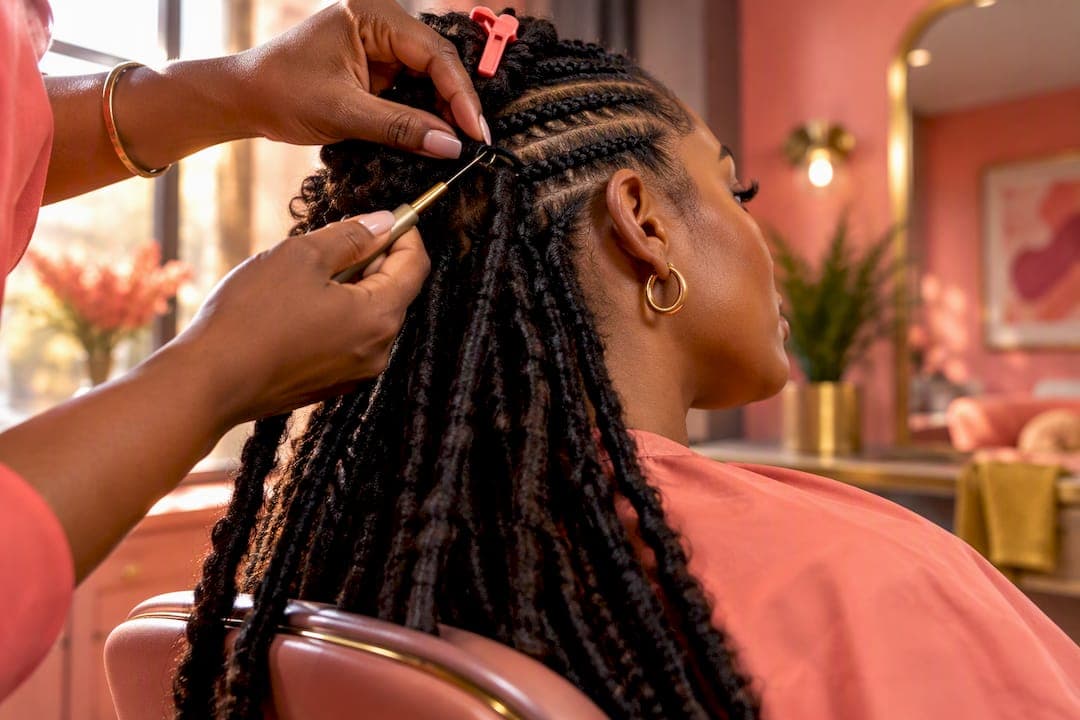
Crochet faux locs are a protective style made by looping or attaching pre-wrapped synthetic or human-hair locs onto cornrows or your natural hair using a latch hook or crochet needle. The four main install methods are latch-hook loop-in, pre-made individual locs, layered goddess installs, and feed-in hybrids. With proper care, the style typically holds for 4 to 8 weeks, and while confident DIYers can manage simpler methods, longer or more detailed installs usually call for a stylist's hands.
TL;DR:
- Properly preparing your hair and choosing the right loc material can significantly impact installation ease and style longevity.
- The crochet loop-in method typically takes 20 to 30 minutes per row and is the most beginner-friendly, while layered styles require more skill.
- Following a consistent scalp-first wash routine and avoiding tight tension extend the style’s lifespan, usually up to 8 weeks.
- Safe removal involves slow detangling, avoiding pulling, and applying conditioning to prevent damage and hair loss.
- Professional installation is recommended for complex or layered locs to ensure proper tension, evenness, and scalp protection.
Table of Contents
- Materials and Prep for Crochet Faux Locs
- Step-by-Step Installation Methods for Crochet Faux Locs
- Styling Ideas Once Your Locs Are Installed
- Aftercare and How Long Crochet Faux Locs Really Last
- Safe Removal and Protecting Your Edges
- Choosing Between DIY and a Salon Install
- Book a Professional Crochet Faux Locs Install
- Sources
- FAQ
Materials and Prep for Crochet Faux Locs
Every great install starts before you ever pick up a hook. The hair you choose sets the tone: pre-made locs give you speed and a uniform finish, while soft loc hair (often a wrapped Marley or kanekalon blend) blends more naturally with your own texture and takes to styling like real locs. Length and thickness both affect bulk, so thinner sections and shorter lengths are easier to manage for a first try.
Before you start, gather your tools and prep your hair properly.
- A latch hook or crochet needle sized for the loc's base
- A rat-tail comb for clean, even parting
- Duckbill clips to section hair as you work
- Edge control and a light styling mousse to seal ends and reduce frizz
- Bobby pins for anchoring layered or goddess-style locs
Prep starts with detangling your natural hair and deciding whether you need cornrow foundations or a no-braid base. Many stylists recommend a pre-wash or apple cider vinegar soak on synthetic loc hair to strip manufacturing residue that can irritate sensitive scalps. Trim split ends and moisturize your natural hair before installing, since faux locs will sit on it for weeks.
One caution matters more than any product: avoid pulling foundation braids too tight. High tension from extensions and tight braiding can lead to scarring alopecia, a permanent form of follicle damage that starts with patchy or shiny bald spots.
Pro Tip: Section hair in quarters first, then subdivide each quarter. It keeps your rows even and saves you from redoing a lopsided install.
Step-by-Step Installation Methods for Crochet Faux Locs
Each method has its own rhythm, and picking the right one depends on your hair, your patience, and how much time you have.
Method 1: Crochet or latch-hook loop-in. This is the classic technique and the one most tutorials teach first.
- Cornrow your natural hair in the direction you want the locs to fall.
- Insert the latch hook under a cornrow, catch the loc's loop, and pull it through.
- Feed the loose ends through the loop to fasten it snugly against the braid.
- Tug gently to test hold, then repeat down the row.
- Tuck any visible knots under the cornrow with the comb's pointed end.
A full head takes roughly 20 to 30 minutes per row depending on density, and it is one of the more beginner-friendly methods once you get the hand motion down.
Method 2: Individual pre-made locs. These come pre-looped and are simply knotted or wrapped onto small sections of your hair rather than cornrows. They install faster than the crochet method, which makes them appealing for a quick weekend project, but blending them seamlessly with your natural hairline takes more finesse. Finish by lightly singeing or wrapping the ends to prevent slipping, and comb through each loc to soften the synthetic sheen.
Method 3: Layered or goddess faux locs. Skip the cornrow foundation entirely and instead wrap sections of natural hair directly with the loc material, layering shorter pieces near the crown and longer ones toward the back. This creates the soft, undone look popular in goddess styles. If lengths end up uneven, trim the synthetic ends after installing rather than before, since shrinkage and gravity change how they hang.
Method 4: Feed-in or hybrid installs. This blends a small amount of natural hair into the braid base before attaching the loc, which reduces bulk at the root and eases tension compared to a straight crochet loop. It is worth choosing when your natural hair is fine or when you want a more gradual, natural-looking root.
Common mistakes across all four methods include pulling too hard when fastening (causing slippage later), leaving knots exposed instead of tucking them, and skipping the sealing step, which invites frizz within days. A little mousse and a steady hand at the base fix most of these before they become a bigger problem.
Styling Ideas Once Your Locs Are Installed
Faux locs are as fun to style as they are to install, and small adjustments change the whole look.
- High bun: Gather all locs at the crown, twist once, and wrap the ends around the base, securing with bobby pins.
- Low wrapped ponytail: Pull locs to the nape, secure with a hair tie, then wrap one loc around the base to hide it.
- Half-up top knot: Section the top third, twist into a small knot, and let the rest fall free for a relaxed everyday look.
- Side-swept style: Pin the front locs to one side using a decorative clip for an easy dressed-up option.
For a goddess-inspired finish, leave a few face-framing locs loose, add small gold cuffs or wooden beads along one or two pieces, and use a silk scarf or wrap for extra texture. Length and thickness both affect how styles hold: thinner, shorter locs pull into buns easily, while longer or bulkier locs may need extra pins to manage weight. Most of these looks take 5 to 15 minutes once you know the steps, so it is worth practicing a couple of times in front of a mirror or recording yourself for reference.
Aftercare and How Long Crochet Faux Locs Really Last
A stylist-vetted, scalp-first wash routine is the difference between locs that look fresh at week six and ones that look tired by week two.
- Dilute your shampoo with water in a spray bottle to reach the scalp without soaking the synthetic hair.
- Section the hair and apply the diluted cleanser directly to the scalp, massaging gently.
- Rinse thoroughly, letting water run through rather than scrubbing the locs themselves.
- Squeeze out excess water with a microfiber towel instead of rubbing.
- Apply a lightweight leave-in or scalp spray to reduce itching without buildup.
- Moisturize the scalp two to three times a week rather than daily to avoid product buildup.
- Wrap hair at night with a silk or satin scarf to reduce frizz and friction.
- Check edges and nape weekly for early signs of tension or thinning.
A stylist-vetted wash and removal routine is designed to keep styles neat for 4 to 6 weeks while protecting the scalp and edges.
Heavy oils, infrequent washing, and tight retouches all shorten a style's lifespan faster than normal wear. Most people can expect their crochet faux locs to last 4 to 8 weeks, sometimes stretching to 3 months with disciplined care and minimal tension at the root.

Safe Removal and Protecting Your Edges
Removal deserves as much care as installation, since rushing this step is where most breakage happens.
- Start by snipping the fastening knot or loop at the base, never the natural hair beneath it.
- Gently unwind or unloop each loc by hand, working from the bottom up.
- Detangle your natural hair section by section with a wide-tooth comb before it dries out.
- Apply a light oil or conditioner to stubborn knots to loosen them without tugging.
- Stop and consult a stylist if a knot resists gentle detangling. Forcing it risks pulling out strands at the root.
- Deep condition immediately after removal to restore moisture stripped during the style's wear.
A 6-step safe removal method built around slow, section-by-section detangling minimizes edge damage more than rushing through with a comb. If you notice shiny, smooth bald patches, redness, or ongoing pain at the scalp after removal, it is worth speaking with a clinician, since these signs point toward tension-related hair loss that a dermatologist or trichologist should evaluate.
Pro Tip: Skip heat and hard yanking on stubborn knots. A drop of conditioner and patience will save far more hair than force ever will.

Choosing Between DIY and a Salon Install
Simple crochet loop-ins are manageable at home, but layered goddess looks, feed-in hybrids, or waist-length locs benefit from a stylist's steady hand and eye for symmetry. Salon-tested installs typically run 2 to 9 hours depending on the method, length, and density chosen, so it helps to know what you're booking before you sit in the chair.
When scheduling, ask your stylist which fastening method they use, what hair type they recommend for your texture, and what the finished length and price will look like. A short consult with reference photos beforehand helps avoid surprises on install day. Salons that specialize in protective styles typically build in a prep playbook covering detangling, hair selection, and aftercare guidance to help the style hold well from day one.
Book a Professional Crochet Faux Locs Install
If you would rather skip the trial and error, a professional salon installs faux locs starting at prices dependent on length and density, using premium hair sourced for a natural, blended finish. Every install comes with the same scalp-first prep and aftercare guidance covered above, so you leave the chair with a style built to last.

- Browse finished looks and pricing on the faux locs portfolio
- Check available times through the online booking page
- Reach out directly through the contact page with questions about hair type or timing
First-timers and anyone attempting a longer or layered style are better served booking a stylist who can protect the edges and get the tension right the first time. For post-removal deep conditioning at home, a rinse-out treatment like the Davroe CURLiCUE Deep Conditioning Rinse pairs well with the routine above.
Sources
The Cleveland Clinic's guide to scarring alopecia backs the tension warnings in this guide. Afro Magic Braiding's own styling tips page informed the wash and styling routines shared above.
- Scarring (Cicatricial) Alopecia: What It Looks Like & Treatment — Cleveland Clinic
FAQ
What is the best faux locs crochet hair to use?
The best choice depends on the finish you want: pre-made locs offer speed and a consistent, uniform look, while soft loc hair blends more naturally with your own texture. Many people rinse or soak synthetic hair in diluted apple cider vinegar first to remove manufacturing residue before installing.
How long do crochet locs last?
With proper care, crochet faux locs typically last 4 to 8 weeks, and sometimes up to 3 months. Wear time depends on how gently the foundation was installed and how consistently you follow a scalp-first wash and moisturizing routine.
How do you crochet faux locs at home?
Cornrow your natural hair first, then use a latch hook to pull the loc's loop through the braid before feeding the loose ends through to fasten it. Repeat row by row, tucking knots under the cornrow, and finish each section with a light mousse to control frizz.
Are crochet faux locs good for beginners?
The basic latch-hook loop-in method is one of the more approachable techniques for a first attempt, especially with shorter, thinner sections. Layered goddess looks and feed-in hybrids ask for more precision, so many beginners choose to book a stylist for those variations.