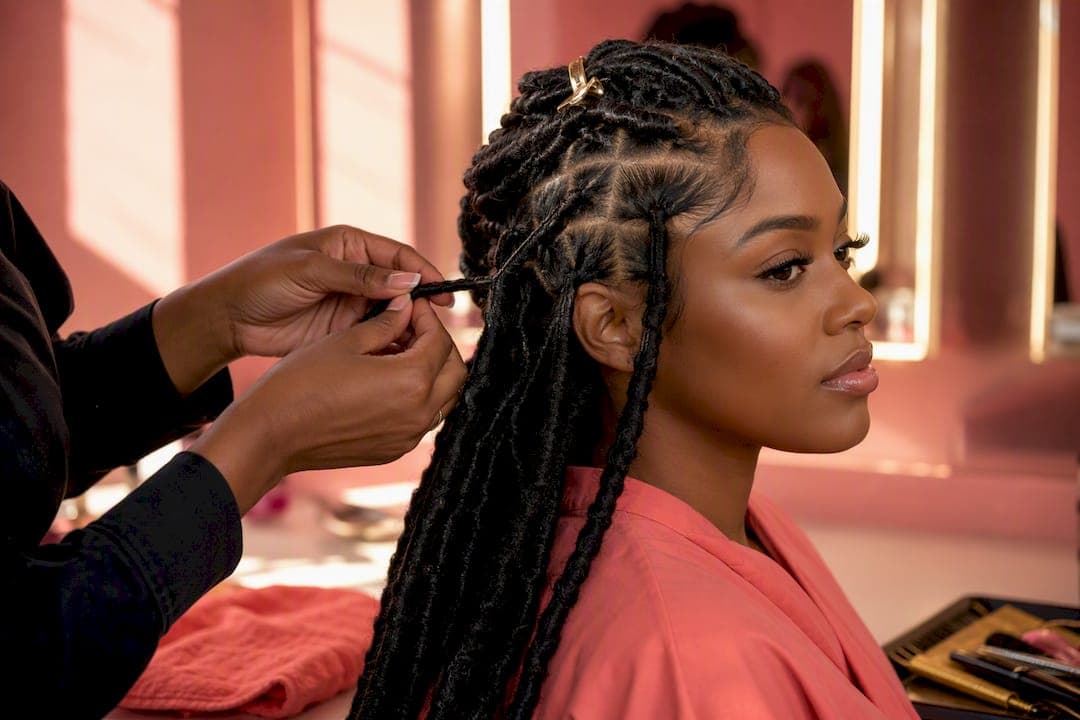
Most faux locs installs take between 2 and 9 hours, and the method you choose is what moves that number more than anything else. Crochet with premade locs is the fastest route, often wrapping up in 4 to 5 hours. Hand-wrapping takes longer but feels more natural. Length, loc size, and how much prep you do before you sit in the chair all shift the timeline, and the time-saving steps below can shave real hours off your appointment.
TL;DR:
- Crochet with premade locs at around 4 to 5 hours for shoulder-length styles, significantly faster than hand-wrapped methods that can take up to 12 hours.
- Thicker, coarser, or longer hair increases installation time, with longer locs and high density adding hours to the appointment.
- Pre-braiding, arriving with clean, detangled, and stretched hair, and choosing larger loc sizes can reduce installation time by several hours.
- First-time installs may exceed typical durations, sometimes up to 10 to 12 hours, but repeat visits usually require less time.
- Faux locs generally last 4 to 8 weeks, with larger locs maintaining their shape longer and proper aftercare essential for longevity.
Table of Contents
- How Long Do Faux Locs Take by Method and Length?
- What Actually Changes Your Install Time?
- How Can You Speed Up Your Faux Locs Appointment?
- What Should You Expect After the Chair?
- The Salon-Tested Way to Cut Chair Time
- Should You Prioritize Speed or a Natural Look?
- Book a Faster, Cleaner Faux Locs Install
- Sources
- FAQ
How Long Do Faux Locs Take by Method and Length?
The method your stylist uses sets the baseline for your whole appointment, and the gap between techniques is bigger than most first-timers expect.
Crochet installs, where premade locs are hooked into cornrows or braided sections, are the quickest path to full locs. Guides from Cosmopolitan put crochet installs at roughly 4 to 5 hours for many clients, while wrapping tends to run 6 to 9 or more hours depending on length and detail. Length changes the math too. CyCrochet reports shoulder-length crochet installs closer to 4 to 5 hours, while waist-length versions can stretch to 7 to 8 hours simply because there is more hair to wrap and seal.
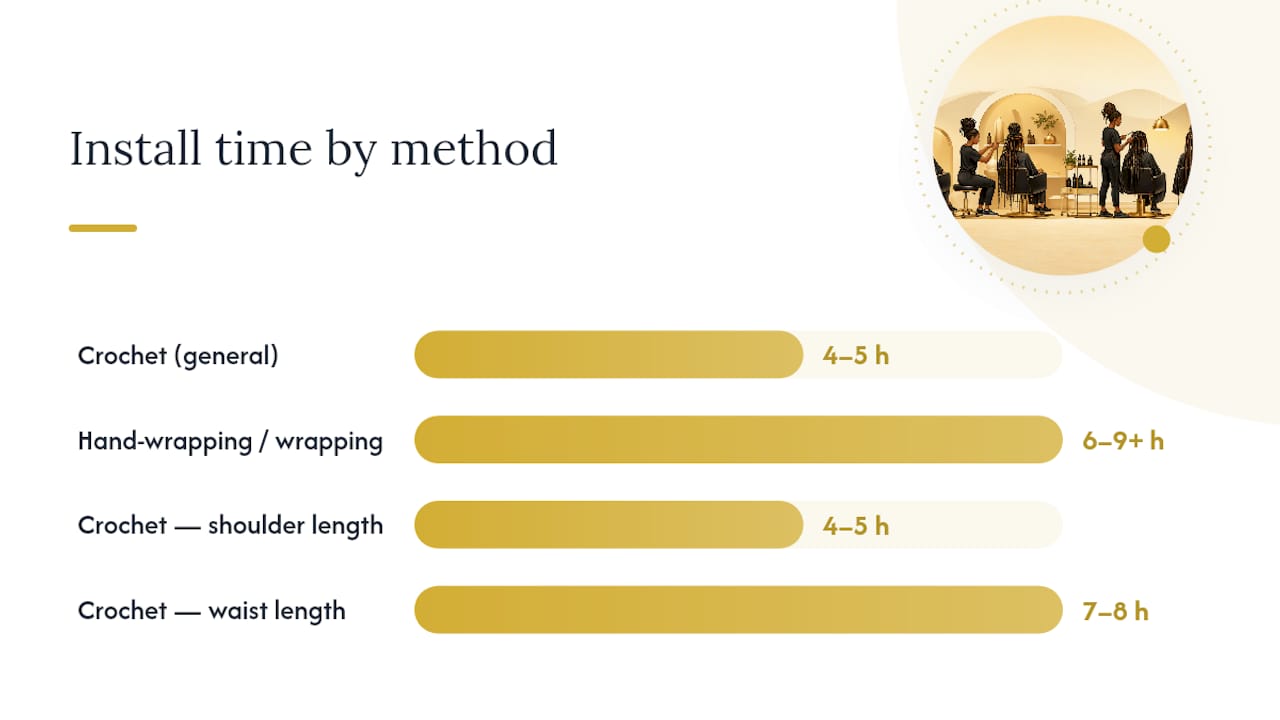
The hand-wrapping technique, where hair is fed through synthetic locking hair and wrapped strand by strand, is the slowest but most seamless-looking option. ShunSalon cites a broad 2 to 9 hour range across salon how-to guides, with long hair pushing appointments toward the top of that window.
Rough time windows by approach:
- Crochet with premade locs, shoulder length: about 2 to 5 hours
- Crochet with premade locs, longer than shoulder: about 4 to 7 hours
- Hand-wrapped/braid-and-wrap technique: about 6 to 12 hours depending on detail
- Distressed or simplified quick styles: about 2 to 3 hours, seen in short-form tutorials
What Actually Changes Your Install Time?
Two people can book the "same" faux locs appointment and walk out four hours apart. The difference almost always comes down to a handful of variables.
- Hair density and texture: thicker, coarser hair needs more sectioning and bulk to cover fully, adding time to any method.
- Loc size: micro locs can nearly double your install time compared with jumbo locs covering the same head, since you are repeating the same motion two or three times as often.
- Loc length: longer locs mean more wrapping or crocheting per section, no matter the method.
- Method chosen: crochet consistently beats hand-wrapping for speed, as covered above.
- Number of stylists: a second braider working alongside your main stylist can cut total chair time meaningfully on larger installs.
- Prep level: hair that arrives clean, detangled, and pre-braided moves through the chair faster than hair a stylist has to prep from scratch.
Cost tends to track time. Installation commonly runs somewhere in the $150 to $300 range across independent how-to guides, and a longer, more detailed install usually lands at the higher end of whatever range your salon quotes. When you book, ask for a time estimate based on your actual hair, not a generic number. That single question saves more disappointment than any prep hack on this list.
How Can You Speed Up Your Faux Locs Appointment?
You have more control over your install time than you might think. A few decisions before you ever sit down can trim hours off the clock.
- Choose crochet with premade locs over hand-wrapping if speed matters more than a fully natural texture.
- Pre-braid at home or ask your stylist about partial pre-braiding the day before, especially for the back sections you can reach yourself.
- Go up a size on loc diameter. Jumbo or large locs cover the same head in fewer strands than micro or medium sizes.
- Shorten your requested length if you are flexible. Shoulder-length installs finish faster than waist-length ones by a wide margin.
- Arrive with clean, detangled, stretched hair. A blowout or light stretch means your stylist spends the appointment installing, not detangling.
- Bring a clear reference photo so there is no back-and-forth mid-install about size or parting pattern.
- Book an experienced stylist, or ask about a two-braider appointment for large jobs where an assistant can handle parting while the lead braider focuses on wraps.
Pro Tip: Wash and deep-condition the night before, then let your hair air-dry to about 80 percent before your appointment. Slightly damp hair grips synthetic locking hair better than bone-dry hair, and it holds a braid base longer without needing rework mid-install.
Speed has a trade-off, though. Crochet and larger locs finish faster but can look a touch less seamless than a carefully hand-wrapped set. Decide what matters more for this particular install before you call the salon.
What Should You Expect After the Chair?
A first faux locs install often takes longer than a repeat visit, since the stylist is learning your density, your part pattern preferences, and how your hair responds to tension. One first-time install reported on Reddit ran 10 to 12 hours including breaks and prep, well above the typical range. Return visits, once your stylist knows your head, usually move faster.
Fresh locs also sit tighter than they will end up. That is normal, not a sign of a bad install.
- Most stylists recommend waiting several days before your first wash to let the base settle, though guidance varies by stylist and install type.
- Faux locs typically begin to loosen and soften somewhere in the 4 to 8 week range, which is also roughly when many people schedule a refresh or removal.
- A proper wash routine matters more than people expect for keeping locs neat as they age. Afromagicbraiding's scalp-first wash guide walks through the order of operations that protects your edges and your base.
- When it is time to take them out, rushing the removal is how edges get damaged. The safe removal guide covers the steps in order.
The Salon-Tested Way to Cut Chair Time
Certain stylists rely on a handful of repeatable habits to keep installs efficient without cutting corners on the finished look.
- Scalp-first prep matters as much as the install itself. A clean, well-detangled scalp goes hand-in-hand with the 8-step wash routine our team recommends between installs, and it sets up a faster, cleaner next appointment.
- Premade locs get used strategically, not just for speed but for consistency in size and finish across a full head.
- Larger jobs get a second set of hands. Pairing an assistant braider with the lead stylist on longer or thicker installs keeps total time reasonable without rushing any single section.
Pro Tip: If you know you want a faster appointment, mention it when you book, not when you sit down. Stylists can plan pre-braiding, staffing, and loc size around that request in advance.
Should You Prioritize Speed or a Natural Look?
Decide this before you book, not while you are sitting in the chair. If you have a wedding or event in three days, crochet with premade locs and a slightly larger diameter gets you a finished look fast, and that trade-off is worth it for a short-term timeline. If you are going for a long-term, everyday style you plan to wear for two months, hand-wrapping's extra hours usually pay off in a more natural finish that holds up better over time. Match the method to the calendar, not the other way around.
— Afro
Book a Faster, Cleaner Faux Locs Install
This salon is an option for readers who would rather book a time estimate than guess at one. Their Faux Locs service runs in a certain price range per install, and stylists will talk through method, loc size, and length with you before you sit down, so the number quoted may match your hair.

If speed is the priority, ask about a crochet install with Rich Coffee Brown Hair Extensions premade locs and request a larger loc size when you book. Arrive detangled and stretched, and bring a reference photo so there's no guessing mid-appointment. Southfield-area clients can browse full results in our portfolio or head straight to booking to lock in an appointment and get a real time estimate for your hair specifically.
Sources
- Faux locs: Your 2022 guide on how to do fake locs — Cosmopolitan
- Crochet faux locs: Time commitment | CyCrochet
- Mastering faux locs: A step-by-step guide for long hair styles | ShunSalon
- First time doing faux locs...jesus christ : r/BlackHair
FAQ
How Long Should I Keep My Faux Locs In?
Most people wear faux locs for 4 to 8 weeks before they start to loosen and need a refresh or removal. Some styles can stretch closer to three months with careful maintenance and a light touch at the roots.
Can I Wash My Hair With Faux Locs In?
Yes, and you should. Most stylists recommend waiting a few days after install before the first wash, then following a scalp-first routine like the 8-step method to keep the scalp clean without unraveling the locs.
How Much Does It Cost to Get Faux Locs Installed?
At Afromagicbraiding, Faux Locs run $170 to $250 depending on length, size, and method. Independent guides cite a broader $150 to $300 range across salons generally.
How Long Do Faux Locs Take to Loosen Up?
Faux locs typically start softening and loosening around the 4 to 8 week mark as the synthetic hair settles and new growth comes in at the root. Thicker, larger locs tend to hold their shape longer than micro sizes.