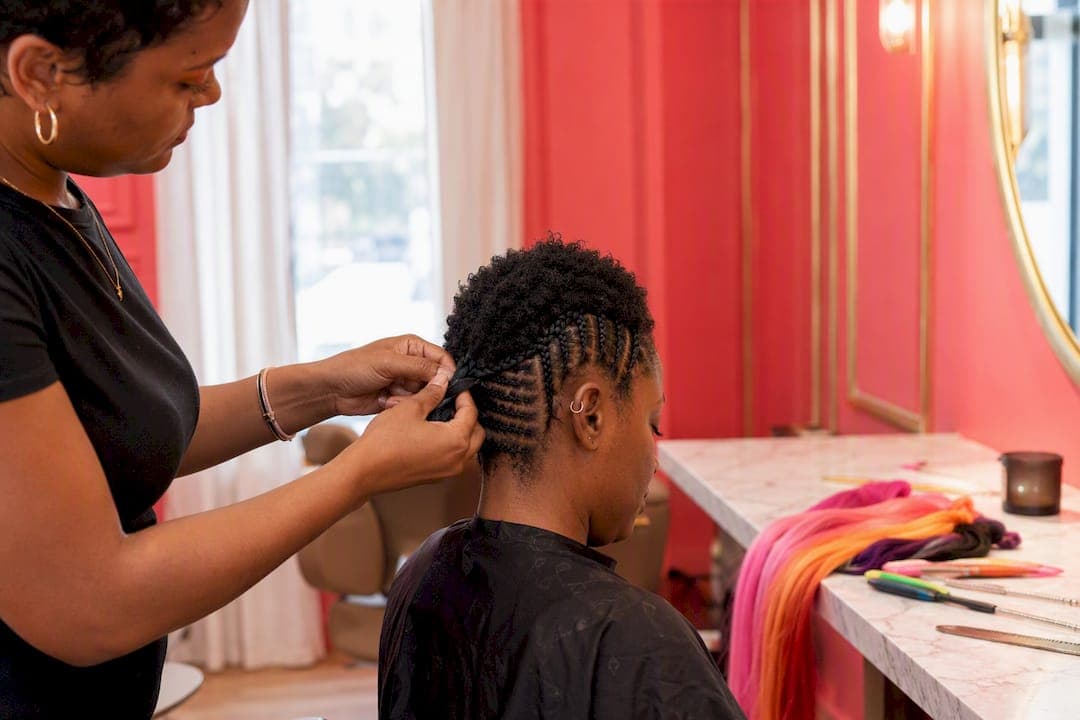
Yes, you can get braids after a big chop, and for most women it's one of the smartest moves for protecting fragile new growth. The safest categories are knotless braids, medium box braids, Senegalese or passion twists, and lightweight crochet or faux locs. The one rule that overrides everything else: avoid heavy, tightly installed styles. Tension and excess weight, not the braids themselves, cause almost all the damage women report after a big chop.
Before you book anything, know this:
- Knotless braids reduce root strain because there's no bulky knot pulling at the base of each strand.
- Medium-sized box braids strike a balance between style versatility and lower follicle stress than micro braids.
- Senegalese and passion twists carry less bulk per section, which matters when your hair is still building strength.
- Lightweight crochet and faux locs let you skip heavy extension bundles entirely while still protecting your ends.
Key Takeaways
Braids protect regrowth only when tension stays low, extension weight stays light, and wear time stays within the recommended window.
| Point | Details |
|---|---|
| Confirm readiness first | Check for roughly 4 to 6 inches of length plus healthy density and elasticity before booking extensions. |
| Choose low-tension styles | Knotless braids, medium box braids, and lightweight twists reduce strain on fragile new growth. |
| Prioritize lightweight hair | Lighter extension fibers and medium braid sizes lower the risk of traction on weak follicles. |
| Respect the wear window | Plan for 4 to 8 weeks, and remove braids sooner if you notice pain, numbness, or a widening part. |
| Get a stylist-led check | Afro Magic Braiding offers a length and density consultation plus a post-install scalp check to catch tension issues early. |
Table of Contents
- Best Braids After Big Chop for Early Regrowth
- How Do You Know Your Hair Is Ready for Braids?
- Choosing Extension Hair That Won't Strain Your Roots
- Caring for Braids Day to Day
- When to Take Braids Out (and Warning Signs to Watch)
- Why Afro Magic Braiding Understands Post-Chop Hair
- What Actually Matters Once the Braids Are In
- Book a Consultation Built Around Your Regrowth Stage
- Sources
Best Braids After Big Chop for Early Regrowth
Not every protective style suits every stage of regrowth, and picking the wrong one can undo months of progress. Here's how the top options stack up for freshly chopped hair.
- Knotless braids. The root stays loose because the stylist feeds in extension hair gradually instead of anchoring it with a tight knot. That looseness is exactly what makes them one of the most protective styles for healthy hair when natural hair is still short and thin at the crown.
- Medium box braids. These work well once your hair has enough length and density to hold a moderate braid size without the parting pulling at the scalp. Skip micro braids for now. Smaller sections mean more braids, more tension points, and more strain on hair that hasn't fully recovered.
- Senegalese or passion twists. Twists distribute weight differently than braids and typically feel lighter on the scalp. They're a solid pick if you want length and movement without the bulk of a full box-braid install.
- Lightweight crochet or faux locs. Crochet methods loop the extension hair through your natural hair rather than braiding tightly from the root, which limits repeated pulling.
- Twist-outs and braid-outs (no extensions). If your hair is shorter than the general guideline, skip extensions altogether. A twist-out gives you texture and definition while your hair keeps growing.
Pro Tip: Ask your stylist to leave the first inch of hair at the root looser than usual. That small adjustment cuts tension at the exact spot where post-chop hair is weakest.
How Do You Know Your Hair Is Ready for Braids?
Length is the first checkpoint, but it's not the only one. Most stylists recommend natural hair reach roughly 4 to 6 inches before adding extensions, though the exact number shifts depending on your hair's density and strength.
- Length: Measure at the crown, not just the front. Crown hair often grows slower and needs the extra check.
- Density: Thin patches or uneven growth areas need looser, smaller sections. Dense hair can handle slightly more braid weight.
- Elasticity: Gently stretch a small section. Hair that snaps easily isn't ready for the pull of an extension.
- Texture: If you have 4-type hair, shrinkage can make your hair look shorter than it measures when stretched. Measure stretched length, not curled length, for an accurate read.
If you're under the 4-inch mark, lean on non-extension styles like twist-outs or two-strand twists until you hit that threshold.
Choosing Extension Hair That Won't Strain Your Roots
The weight of the extension hair matters as much as the braid size itself. Lighter fibers reduce stress on follicles that are still rebuilding strength, so this is not a place to cut corners for the sake of volume.
- Choose lightweight synthetic hair over heavy, tightly wound bundles.
- Stick to small-to-medium braid sizes rather than micro braids, which multiply tension points across the scalp.
- Ask about blending techniques that distribute the extension's weight along the shaft instead of concentrating it at the root.
- If you want a fuller look, add length gradually over a few visits rather than loading maximum extension weight into one install.
For readers comparing extension options in more depth, this breakdown of techniques for blending shorter natural hair with extensions covers the practical side of matching fiber weight to hair length.
Before your appointment, ask your stylist these four questions:
- Will the roots be installed loose or feed-in style?
- What braid gauge (thickness) do you recommend for my current density?
- Is there a weight limit you'd suggest for my hair right now?
- How will you blend the extension to avoid pulling at my edges?
Pro Tip: Bring a photo of your hair from a few weeks ago. Stylists use it to judge growth rate and adjust braid size accordingly, especially around the hairline where breakage shows first.
Caring for Braids Day to Day
Braids protect your hair, but they still need attention. Skipping care routines is how buildup and dryness sneak in.
- Cleanse weekly. Use a diluted shampoo or a scalp spray between washes to lift sweat and product residue without loosening the braids.
- Moisturize with a light hand. An LOC or LCO routine (liquid, oil, cream, or liquid, cream, oil) using lightweight products keeps the scalp from drying out. Limiting heat and using leave-ins supports retention during this stage.
- Protect braids at night. A satin bonnet or scarf prevents friction that frizzes edges and pulls at the root while you sleep.
- Refresh gently. If edges loosen or frizz, smooth them with a small amount of edge control rather than re-braiding the whole section.
- Watch for buildup. Flaking, itching that won't quit, or a heavy feeling at the roots usually means it's time to cleanse or consider an earlier removal.
When to Take Braids Out (and Warning Signs to Watch)
Most protective styles are meant to last 4 to 8 weeks, though heavier or tighter installs should come out closer to the shorter end of that window.
- Persistent pain or tenderness at the scalp, especially around the hairline, is not normal and means the install is too tight.
- Numbness or tingling at the root signals nerve stress from tension.
- A widened part or visible thinning where braids sit is an early sign of traction and needs attention now, not later.
- Sudden, heavier shedding than usual once braids come out can point to an install that was too tight for too long.
If you notice any of these, remove the braids, deep condition, and check in with a stylist before your next install.
Why Afro Magic Braiding Understands Post-Chop Hair
Afro Magic Braiding built its reputation as a premier braiding salon and supply shop by treating early regrowth as its own category, not a smaller version of long-hair styling. That distinction shapes how every consultation runs.
- Every client gets a length and density check before a style is recommended, not after.
- The salon stocks lightweight braiding hair specifically for clients building length after a big chop.
- Knotless and feed-in techniques are the default recommendation for new growth, not an upcharge.
- A post-install scalp check within one to two weeks catches tension issues early, before they turn into breakage.
That follow-up check is a small step most salons skip, and it's often the difference between a braid that heals your hair and one that harms it.
What Actually Matters Once the Braids Are In
Most advice about post-chop hair fixates on the big decision, knotless versus box braids, and skips the part that actually determines whether your hair thrives: what happens after the appointment. The install matters less than the root tension, the follow-up check, and the discipline to take braids out on schedule instead of stretching them past 8 weeks because they still "look fine."
Conventional wisdom oversells the idea that any protective style is automatically good for regrowth. It isn't. A tightly installed box braid on 4 inches of fragile hair does more harm than a loose twist-out. The braid type is a smaller factor than the tension it's installed with and the weight it carries.
If you take one thing from this guide, make it this: ask for a root check, not just a style consultation. A stylist who checks density and elasticity before picking your braid size is protecting your hair before the first section is even parted. That's the difference between a protective style and one that just looks protective.
— Afro
Book a Consultation Built Around Your Regrowth Stage
Afro Magic Braiding gives post-chop clients something most salons skip entirely: a real length and density check before a single braid goes in, instead of a one-size-fits-all consultation. That means fewer redo appointments, less breakage, and a style chosen for the hair you actually have right now, not a generic recommendation.
A consultation covers your current length, density, and elasticity, then narrows down whether knotless braids, twists, or a lightweight faux loc install fits best. From there, you can browse the style portfolio for examples close to your hair type, review available braiding services including lightweight extension options, and book your appointment through the online booking page. Most clients return for a follow-up scalp check within two weeks, then plan their next install around the 4 to 8 week wear window.
Sources
- Understanding traction alopecia
- The Big Chop Regrowth Guide: Styling Your 4C Hair At Every Length.
- How To Care For Hair After Big Chop: Tips For Maintenance, Growth, And Mistakes To Avoid