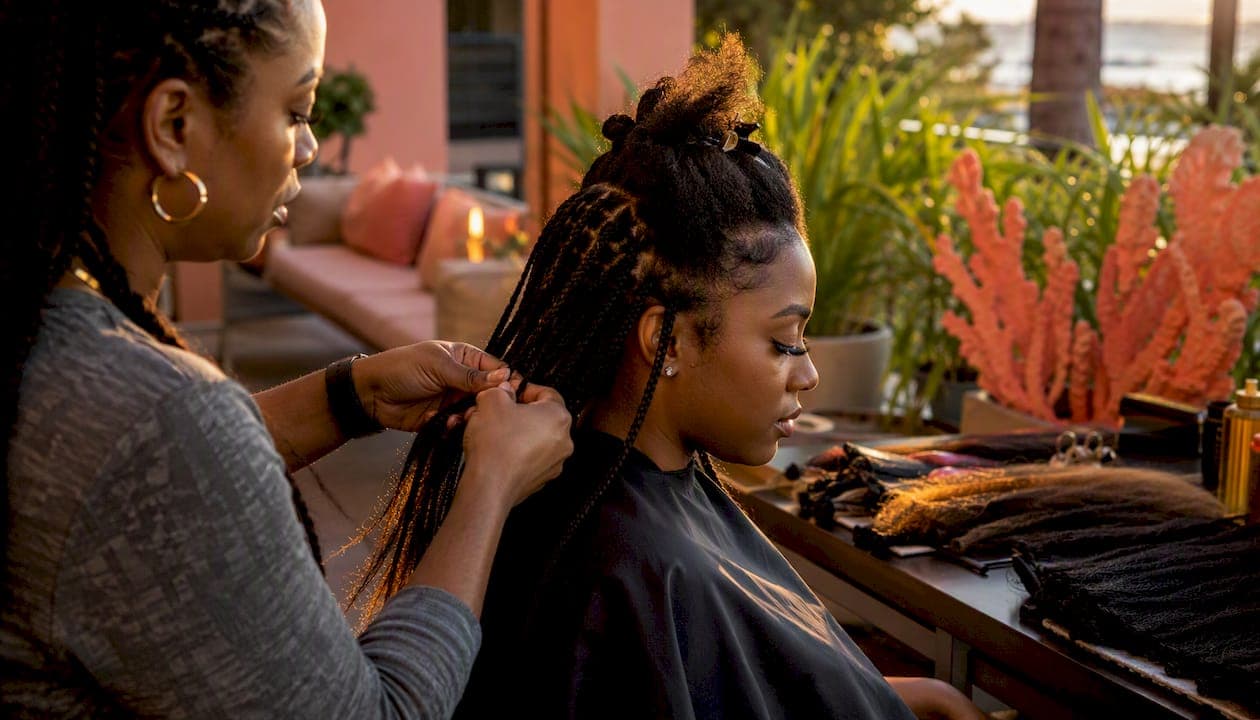
Round faces get more length from vertical or side-swept braids, oval faces can wear almost anything, square faces need softness at the jaw, and heart-shaped faces look best with volume added near the chin. That's the short version. Here's your one-line cheat sheet before we go deeper:
- Oval: Nearly every style works, from box braids to fishtail crowns.
- Round: High braided ponytails and vertical French braids add height.
- Square: Soft side braids and loose crown braids ease the jawline.
- Long/oblong: Shoulder-length knotless braids and side-swept styles add width.
- Heart: Low buns and side-swept braids balance a wider forehead.
- Diamond: Crown braids and side-swept box braids soften cheekbones.
Pro Tip: Face shape sets the direction, but hair density decides the details. Fine, low-density hair holds volume differently than coarse, high-density hair, so the same "best braid" for your shape may need thinner parts or lighter length adjustments to actually look right on you.
Key Takeaways
The right braiding style depends on matching parting, length, and volume placement to your specific face shape and hair density, not on any single "best" braid.
| Point | Details |
|---|---|
| Identify your shape first | Measure forehead, cheekbones, and jaw, or use a straight-on photo with hair pulled back. |
| Oval faces have the most freedom | Nearly any braid style works, from box braids to cornrows to fishtails. |
| Volume placement matters more than technique | Add height for round faces, width for long faces, and softness for square jaws. |
| Protect edges with lighter installs | Fine or tension-sensitive hair does better with knotless styles and shorter wear cycles. |
| Get a personalized read at Afromagicbraiding | A stylist consultation adjusts these general rules to your exact shape and texture. |
Table of Contents
- How Do You Identify Your Face Shape for Braiding?
- Oval Face: Why Most Braids Work Beautifully
- Round Face: Braids That Add Length and Angles
- Square Face: Braids That Soften a Strong Jawline
- Long or Oblong Face: Braids That Add Width
- Heart Face: Braids That Balance Forehead and Chin
- Diamond Face: Braids That Soften Wide Cheekbones
- Choosing Braid Length, Parting, and Volume for Your Shape
- How to Maintain Braided Styles Without Losing the Shape
- Seeing the Shape: How Braid Placement Changes Your Silhouette
- Where Face-Shape Braiding Traditions Come From
- What if Your Face Shape Is Hard to Define?
- Switching Braid Styles Without Losing Your Best Features
- Book a Face Shape-Aware Braid Consultation
- Frequently Asked Questions
- Sources
How Do You Identify Your Face Shape for Braiding?
Grab a measuring tape or just look in the mirror with your hair pulled back completely.
- Measure your forehead at its widest point, from temple to temple.
- Measure your cheekbones, the widest part of your face.
- Measure your jawline at its widest point, below the ears.
- Measure face length from hairline to chin.
Compare the numbers, then check these visual cues:
- Oval: Forehead slightly wider than jaw, length about 1.5 times width.
- Round: Width and length are close, with soft curves and no sharp angles.
- Square: Forehead, cheekbones, and jaw are similar widths, with a strong angular jaw.
- Long/oblong: Face length noticeably exceeds width, with a narrow chin.
- Heart: Wide forehead tapering to a narrow, sometimes pointed chin.
- Diamond: Narrow forehead and jaw with dramatically wide cheekbones.
Cosmopolitan's face-shape mapping guide recommends a straight-on photo with hair fully pulled back for the clearest read, since lighting and hair volume can distort your first impression. If you land between two categories, that's normal. Plenty of faces are a soft blend, and we'll cover exactly how to style that below.
Oval Face: Why Most Braids Work Beautifully
Oval is the shape most stylists consider the most forgiving, because forehead, cheekbones, and jaw sit in near-balanced proportion. Most braided styles are flattering here, and the Zetulo confirms that French braids, Dutch braids, fishtails, crown braids, and classic box braids all work without a lot of adjustment.
Best picks for an oval face:
- Box braids in any length, parted center or side.
- Crown braids that show off cheekbone structure.
- Fishtail braids for texture and movement.
- Cornrows in straight-back, side-swept, or geometric patterns, which Inflexa covers in detail, including accessory placement to highlight cheekbones.
Pro Tip: If your hair is fine and low-density, keep parts thinner and braids smaller so the style doesn't overwhelm your features. Coarse, high-density hair can carry chunkier box braids or a bold, deep side part without looking heavy. For style inspiration, browse box braid styling ideas that adapt easily to an oval shape.
Round Face: Braids That Add Length and Angles
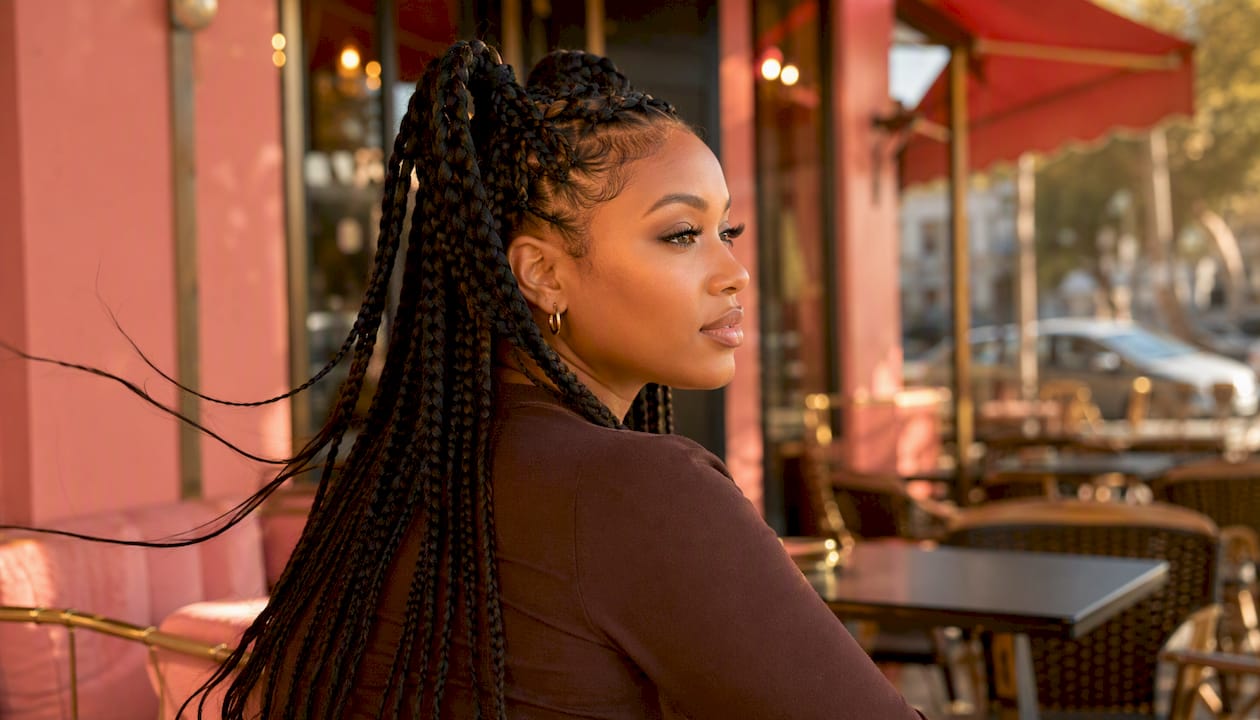
A round face benefits from anything that pulls the eye up and down instead of side to side. Inflexa's round-face braiding guide points to side braids, high braided ponytails, and braided crowns as reliable ways to build vertical lines and visual height. French braids do double duty here: HairSpeaks' analysis of French braids on round faces notes that starting the braid high on the crown, rather than at the nape, stretches the face's apparent length.
Do:
- Choose high ponytails, vertical braid patterns, or side-swept styles.
- Leave a few face-framing pieces loose to soften the hairline.
- Add crown volume to elongate the overall silhouette.
Don't:
- Wear tight, uniform-width braids that circle the whole face evenly. They tend to widen it further.
- Center all volume at the sides, which flattens the vertical line you're trying to build.
Pro Tip: Ask your stylist for a slightly asymmetrical part. A dead-center part on a round face can read as wider than it is, while a soft side part breaks that symmetry in your favor.
Square Face: Braids That Soften a Strong Jawline
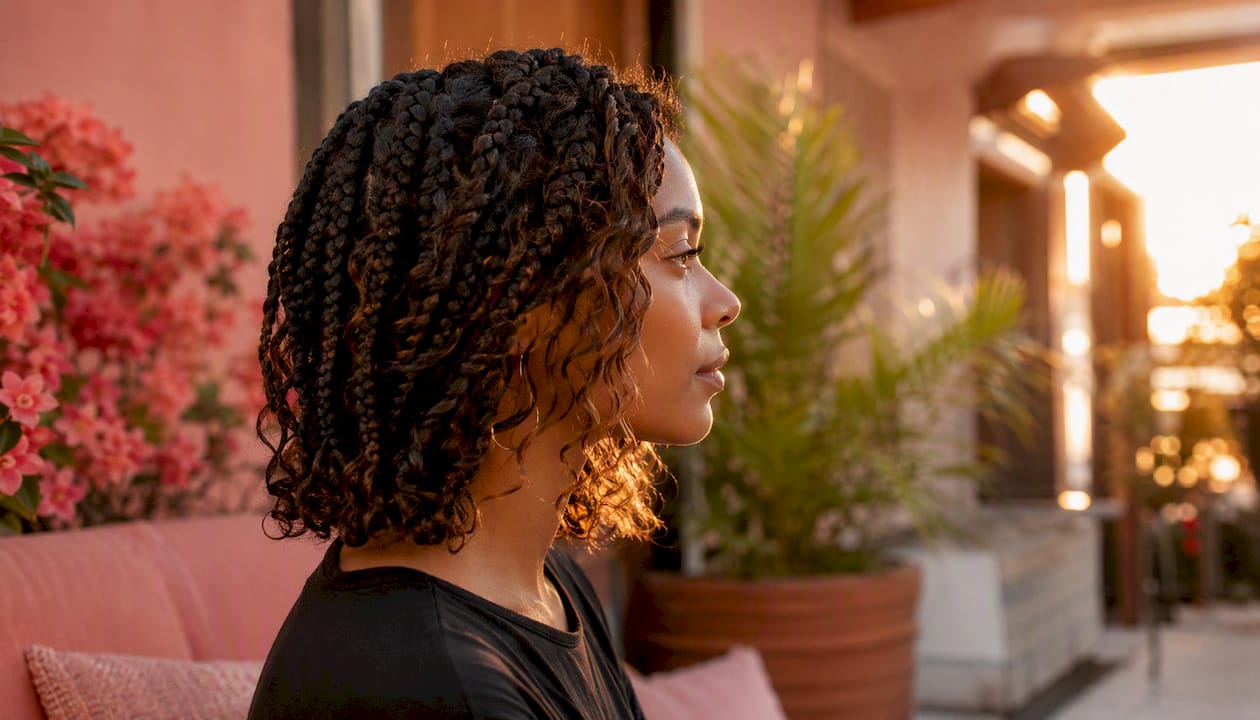
A square jaw is striking, but rigid, close-to-the-scalp braids near the temples can make it look even more angular. The goal here is softness at the edges.
Best options:
- Soft side braids that fall loosely rather than pulling tight.
- Loose crown braids with a bit of give, not a slicked-back finish.
- Braided updos with wispy face-framing pieces left out.
Do: ask for a deep side part and slightly looser tension near the hairline. Don't: request severe, geometric center parts or box braids pulled tight against the temples, since both draw attention straight to the jaw.
Pro Tip: Textured or curly braid ends work as a natural softener. A blunt, straight braid end near the jaw reinforces its angle, while a curly or wavy end breaks that hard line. Jaliza's guide to braids with curls has specific pairings worth trying.
Long or Oblong Face: Braids That Add Width
When face length outpaces width, the fix is horizontal, not vertical. Shoulder-length knotless braids, pigtail braids, and side-swept styles all add visual width and interrupt the long vertical line running down the center of the face.
Parting matters as much as length. A center part on a long face can stretch it further, so most stylists recommend a side part or soft zigzag part that pulls the eye outward instead of straight down.
Where you place volume matters, too:
- Add fullness at the temples and cheek level, not just at the crown.
- Keep shoulder-length or slightly shorter braids rather than extra-long styles that exaggerate length.
- For finer hair, medium-width knotless braids give width without excess weight; for coarser, denser hair, pigtail braids or a low bun with side pieces can add the same balance without pulling on the scalp.
You can explore popular knotless braid lengths to find a length that adds width without overwhelming your natural proportions.
Heart Face: Braids That Balance Forehead and Chin
A heart-shaped face carries width up top and narrows toward the chin, so the styling goal flips from the long-face approach: add visual weight lower down, not higher up.
Best picks:
- Side-swept braids that soften the width of the forehead.
- Low braided buns that sit at the nape, drawing the eye downward.
- Styles with volume built in near the jawline rather than the crown.
Do: leave soft, side-swept bangs or a face-framing piece to break up forehead width. Don't: pile volume at the crown or wear a tight, high braided pony. Both add width exactly where you already have it.
Pro Tip: A little curl or texture at the ends near your jaw creates the same balancing effect Jaliza's curl-placement guide recommends for narrow chins, giving quiet visual weight without a heavy style change.
Diamond Face: Braids That Soften Wide Cheekbones
Diamond faces have dramatic cheekbones with a narrower forehead and jaw, so the styling job is to soften that widest point while still showing it off.
Best picks:
- Crown braids that sit slightly forward, framing rather than emphasizing the cheekbones.
- Side-swept box braids that break the horizontal line across the widest part of the face.
- Styles with a bit of width added above the jaw, balancing the narrower chin below.
A side or slightly off-center part tends to work better than dead center, and a soft face-framing piece near the temple helps ease the forehead's narrowness into the wider cheek area. Coarse, dense hair can carry a fuller crown braid comfortably, while finer hair often looks more balanced with smaller, side-swept sections that don't overwhelm a narrower jaw.
Choosing Braid Length, Parting, and Volume for Your Shape
Face shape tells you the silhouette you want. Hair texture and density tell you how to actually get there without damaging your edges or overloading your scalp.
Longer, heavier braids put more tension on finer hair, so if your hair is fine or has thinning edges, lighter knotless installs or shorter lengths reduce pull while still giving you the shape-flattering silhouette you're after. Coarser, denser hair tolerates more length and volume without added strain.
Parting rules of thumb:
- Round and diamond faces: side or off-center parts break up width.
- Long faces: side parts or soft zigzags interrupt vertical length.
- Square and heart faces: deep side parts soften angles and forehead width.
- Oval faces: almost any part works, so follow personal preference.
Pro Tip: Bring two things to your consultation: a straight-on photo with your hair pulled back, and a note on how your scalp has handled tension in the past. That combination lets your stylist match style to shape without guessing.
If your last install left edges sore or your scalp tender for days afterward, say so upfront. That's a signal for a looser install or a lighter boho braid size rather than repeating the same tension.
How to Maintain Braided Styles Without Losing the Shape
A flattering braid style only stays flattering if the hair underneath stays healthy. That means a consistent care routine, not just a good install.
Daily and weekly habits:
- Cleanse the scalp with a diluted, lightweight shampoo, focusing on the roots rather than the full length.
- Apply a light oil to the scalp a few times a week to prevent dryness without buildup.
- Wrap hair in a satin bonnet or scarf every night to reduce friction and frizz.
- Mist braids lightly with a water-based moisturizer if they start feeling dry or brittle.
Salon pros generally suggest touch-ups or partial re-braids within two to four weeks for tension-heavy styles like cornrows or feed-ins, to protect edges and prevent breakage before it starts. Full re-install timelines vary depending on hair health and maintenance.
- Cleanse gently once a week.
- Oil the scalp two to three times weekly.
- Protect with satin at night, every night.
- Schedule an edge check-in around the three-week mark.
For deeper guidance, how braids protect natural hair walks through the health side of protective styling in more detail, and box braid longevity tips cover style-specific care.
Seeing the Shape: How Braid Placement Changes Your Silhouette
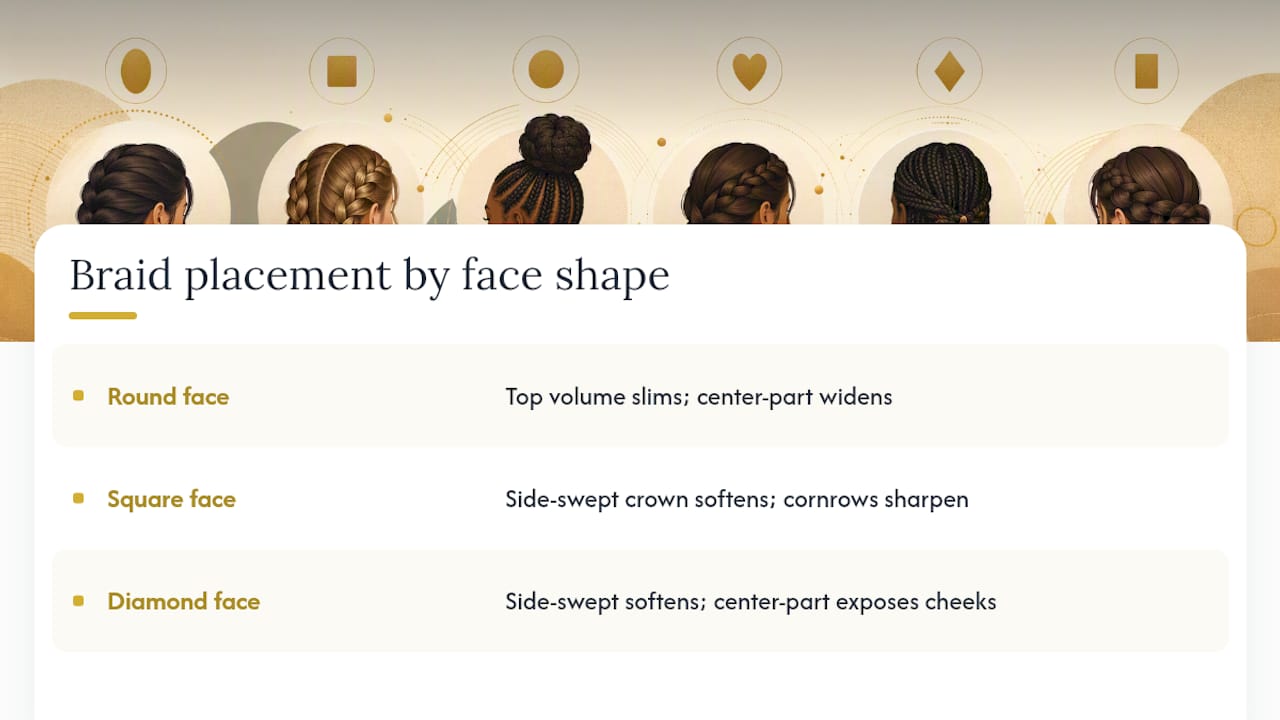
It helps to picture each face shape as a frame, and each braid style as a way of redrawing the lines inside that frame. A round face photographed with a center-parted, uniform braid pattern looks noticeably wider than the same face styled with a high braided pony that pulls hair up and off the cheeks. Side-by-side, the difference isn't subtle. It's the placement of volume, not the braid technique itself, that shifts the visual impression.
The same logic applies across every shape. A square jaw styled with tight, geometric cornrows running straight back looks more angular in photos than the same jaw with a loose, side-swept crown braid and a few soft pieces left at the temple. Diamond-shaped faces show the clearest before-and-after: a center-parted style that exposes the full width of the cheekbones reads very differently from a side-swept box braid style that breaks that horizontal line into two softer sections.
If you're trying to visualize this on your own face, take that straight-back photo mentioned earlier, then compare it against reference images organized by face shape. Look specifically at where the braid pattern starts, where the parting falls, and where volume sits, top, middle, or bottom of the style. Those three variables, more than the specific braid technique, determine whether a style flatters or fights your natural proportions. The portfolio gallery is a useful place to see these placement differences across real installs rather than illustrations alone.
Where Face-Shape Braiding Traditions Come From
Braiding as a technique long predates modern face-shape charts. Cornrows, in particular, carry centuries of history across West African cultures, where pattern and placement communicated identity, region, age, and social status long before anyone framed them as a "flattering" styling choice. The geometric precision that makes cornrows work so well for an oval face today grew out of traditions where the pattern itself was the point and not just a frame for facial features.
Fulani braids carry a similar weight. Named for the Fulani people of West Africa, the style traditionally combines thin cornrows with beads and larger side or center sections, a structure that happens to translate beautifully to modern face-shape guidance because it naturally builds asymmetry and movement. Crown braids and braided updos trace back through multiple African and diasporic traditions as well, often reserved for ceremonies, coming-of-age moments, or community gatherings, which is part of why they still read as more formal or elevated today.
Regional style guides built around weddings and ceremonies, like this face-shape-focused braid guide, show how deeply cultural context and face-flattering technique have always been intertwined rather than separate concerns. Modern face-shape braiding advice isn't inventing something new. It's applying a framework on top of techniques that communities have refined for generations. That heritage is worth carrying forward, not treating as a footnote to a styling trend.
What if Your Face Shape Is Hard to Define?
Plenty of people don't fit neatly into one of six boxes, and that's genuinely common rather than a sign you measured wrong. A round-oval blend or a square-heart combination just means your styling choices have more flexibility, not less.
Start with your most dominant feature. If your jawline is your strongest angular trait but your face length also runs long, prioritize the square-face softening tips (loose crown braids, deep side parts) since a strong jaw tends to read first in photos and in person. If your forehead width and cheekbone width are close but your chin is more rounded than pointed, treat it as an oval-round blend and lean on styles that add gentle vertical lift, like a high braided pony, without going as aggressive as full round-face correction.
Mixed shapes also give you more room to prioritize hair health and texture over strict shape rules. If your hair is fine and doesn't hold heavy styles well, that practical constraint should often outweigh a marginal shape-based recommendation.
When in doubt, bring two or three reference photos to your consultation, one that represents each shape you think you might blend, and let a stylist read your actual proportions in person. Photos flatten depth and can exaggerate or hide angles that show up differently under salon lighting.
Switching Braid Styles Without Losing Your Best Features
Moving from one braid style to another, say, from tight cornrows to loose knotless braids, is a good moment to reassess whether your current style is actually working with your face shape or just familiar.
A few practical transition points:
- If you're moving from a shorter, tighter style to a longer one, add face-framing pieces gradually rather than all at once, so you can judge how much softening your face actually needs.
- Going from a center part to a side part is one of the lowest-risk changes to test shape-flattering advice, since it's reversible with the next re-braid and takes no extra time or cost.
- If you're transitioning from a heavier install to a lighter one for scalp health reasons, use that appointment to also revisit parting and volume placement, since you're already adjusting the base structure.
- When growing out a style you love but that doesn't suit your shape, transition slowly through length rather than abruptly, moving to medium length before committing to a drastically shorter cut.
Keep a simple note on your phone of what worked and what didn't after each install: parting, length, how your scalp felt after two weeks. That record becomes more useful than any general guide once you know your own patterns.
A Stylist's Note From the Chair
Most guests don't say "I have a square face." They say "I want something softer near my jaw" or "I want height." My job is translating that into parting and tension choices. The request I hear most: less pull at the temples, more movement everywhere else.
Book a Face Shape-Aware Braid Consultation
Afromagicbraiding turns this guide into a real conversation, not a checklist you apply on your own. Our stylists read your face shape, hair density, and scalp history in person and adjust parting, length, and tension in ways a written guide simply can't. Whether you want knotless braids, box braids, Fulani, boho, or a custom install built around your proportions, the fit gets decided at your appointment, not guessed at beforehand.
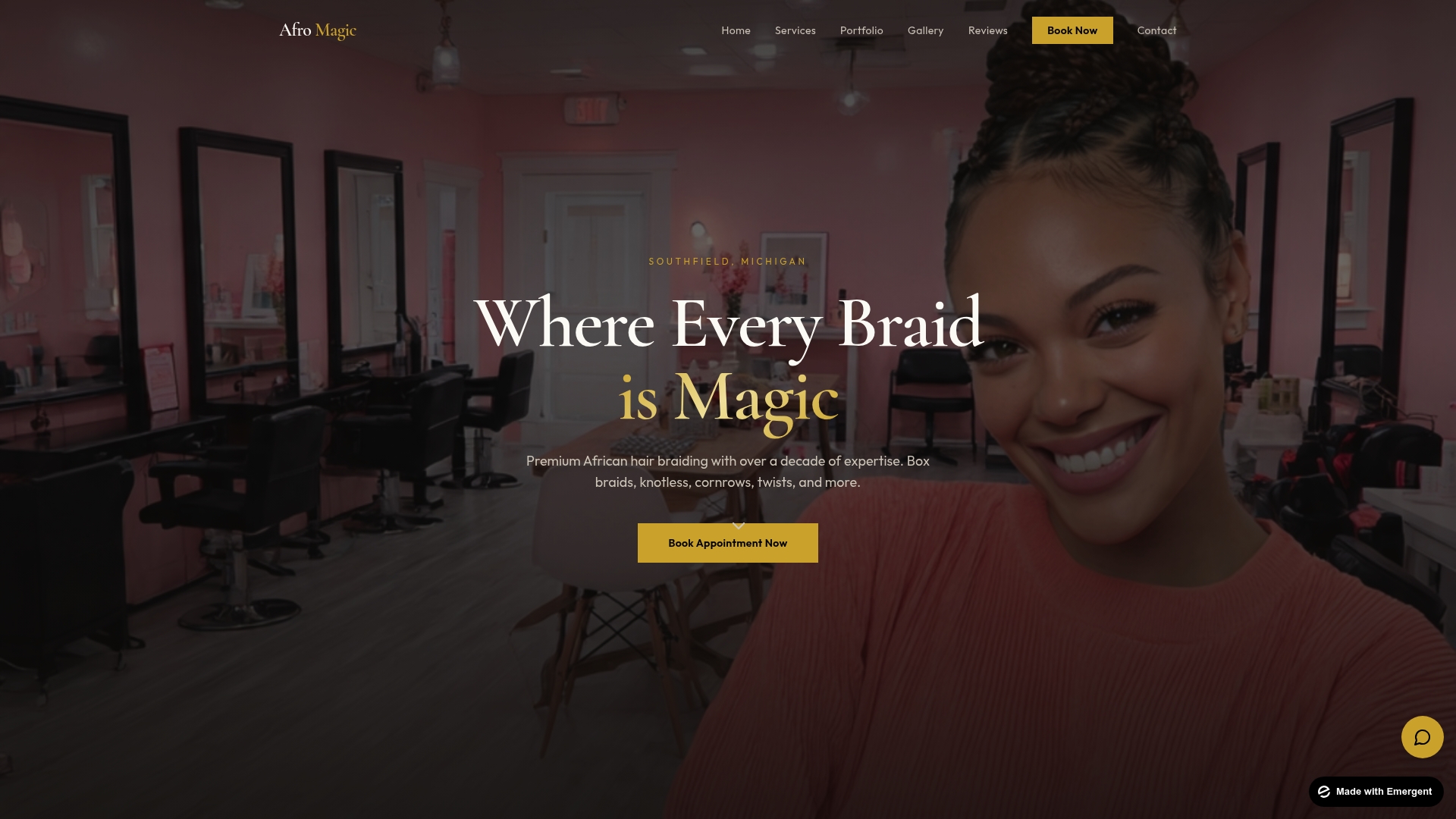
Bring a straight-on photo with your hair pulled back, plus notes on how past installs felt on your scalp and edges. That's enough for us to plan parting and length that actually suit your shape rather than a generic style. Browse our services to see the full range, then book your consultation to get a style plan built around your face, not someone else's.
Frequently Asked Questions
What braiding style suits a round face best? High braided ponytails, vertical French braids, and side-swept styles add the height and vertical lines a round face benefits from most.
Do braids work for every face shape? Most braid types can be adapted to any shape through parting, length, and volume placement, though oval faces have the widest range of styles that work without adjustment.
How do I know my face shape for braiding? Measure your forehead, cheekbones, and jaw width, or take a straight-on photo with hair pulled back and compare it against the six standard shape categories.
What braids flatter a square face? Soft side braids, loose crown braids, and styles with wispy face-framing pieces ease the visual weight of a strong, angular jawline.
How often should braided styles be maintained or redone? Tension-heavy styles like cornrows typically need a touch-up or partial re-braid within two to four weeks, while full timelines depend on hair health and how the style was cared for.
Sources
- Cosmopolitan
- French Braids On Round Faces: The Do's And Don'ts For A Flawless Look - HairSpeaks
- Mastering Cornrow Styles for Your Oval Face Shape