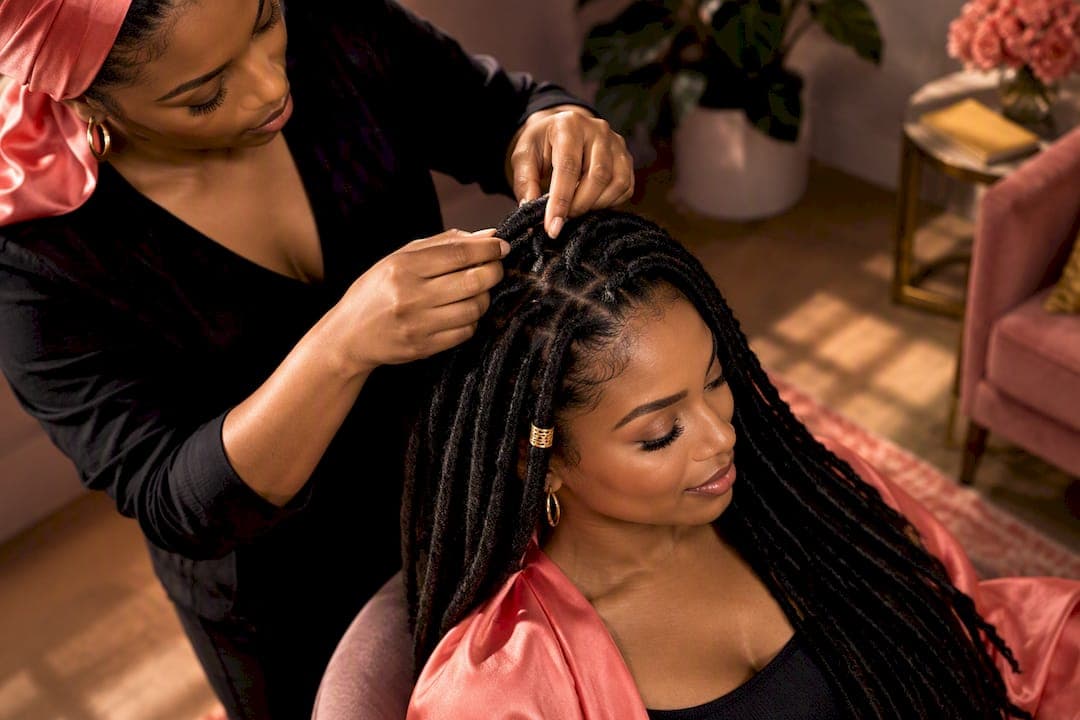
With a scalp-first wash every two to three weeks, light hydration between washes, satin protection at night, and quick palm-rolled touch-ups, faux locs typically stay neat for four to eight weeks. Careful maintenance can stretch that to about ten to twelve weeks, but pushing past roughly twelve weeks invites matting and breakage. The routine that gets you there is simpler than most tutorials make it sound.
TL;DR:
- Faux locs can last four to eight weeks with regular maintenance, and stretching to ten or twelve weeks may be safe if roots are checked frequently.
- Nightly protection with a satin bonnet and spritzing mid-lengths every two to three days are key habits for maintaining locs' neatness and hydration.
- Proper washing involves diluted sulfate-free shampoo applied only to the scalp to prevent buildup and damage, with air-drying taking at least six hours.
- Fixing frizz at home is possible by palm-rolling damp locs, trimming frayed ends, and using alcohol-free products, avoiding heavy oils and waxes.
- Avoid wearing locs longer than twelve weeks without professional checkups to minimize matting, breakage, and traction alopecia risks.
Table of Contents
- How Do You Maintain Faux Locs Day to Day?
- What Is the Right Way to Wash Faux Locs?
- How Do You Fix Frizz Without Redoing the Style?
- Which Products Help and Which Ones Hurt Your Locs?
- How Long Can You Wear Faux Locs Before Refreshing?
- What's the Best Nighttime Routine for Faux Locs?
- What Do Stylists and Dermatologists Actually Recommend?
- What We See in the Chair
- Book a Professional Touch-Up With Afromagicbraiding
- Sources
- FAQ
How Do You Maintain Faux Locs Day to Day?
Faux locs maintenance comes down to two habits done consistently, not one big effort every few weeks. Protect them at night, and hydrate the mid-lengths without soaking the roots.
Daily habits:
- Sleep with a satin bonnet or scarf every night. No exceptions.
- Every two to three days, spritz mid-lengths to ends with a diluted leave-in mix. Skip the roots.
- Style with low manipulation. Loose updos and half styles beat constant restyling.
Weekly check:
- Palm-roll any locs that look fuzzy or split at the ends.
- Run your fingers along the roots and check for looseness or slippage.
- Spot-rewrap two or three loose roots if you find them. Don't wait for a full retwist appointment if only a few are slipping.
If you're sweating heavily from workouts or the scalp feels oily, a light dry shampoo or a thin scalp serum between washes keeps things fresh without adding weight.
Pro Tip: Keep your hydrating spritz in a small travel bottle in your bag. Locs frizz fastest in dry, windy weather, and a 10-second refresh beats waiting until you get home.

What Is the Right Way to Wash Faux Locs?
The biggest mistake in faux locs care is treating a wash like a regular shampoo session. Full-strength product on synthetic hair strips it fast and leaves buildup behind. A scalp-first wash routine protects both your natural hair underneath and the style itself.
The method:
- Mix a sulfate-free shampoo with water at roughly a 1:3 ratio in an applicator bottle.
- Part your hair into sections and apply the diluted mix directly to the scalp, not the locs.
- Massage with the pads of your fingers, never your nails, working in small circles for 60 to 90 seconds per section.
- Rinse thoroughly until the water runs clear. Residue left behind is what causes the itch later.
- Apply conditioner only to mid-lengths and ends, skipping the scalp entirely.
Coarser, curlier hair textures typically need less frequent washing than straighter hair to avoid drying out the scalp, which is part of why every two to three weeks works better than a weekly wash for most people wearing faux locs, according to the Cleveland Clinic.
Drying matters as much as washing does:
- Blot each section with a microfiber towel. Never rub.
- Let locs air-dry completely, which usually takes six to eight hours or longer depending on thickness.
- Don't wrap damp locs in a bonnet. Trapped moisture is how mildew and a musty scalp odor start.
How Do You Fix Frizz Without Redoing the Style?
Frizz on faux locs comes from a short list of predictable causes: friction, dryness, product buildup, harsh washing, and roots that have started to loosen. Because each cause is fixable, most frizz is repairable at home without booking a full reinstall.
- Palm-roll damp locs. Mist the loc lightly, then roll it between your palms from root to tip. This re-seals the twist pattern better than trying on dry hair.
- Use alcohol-free mousse on flyaways. Apply a small amount to damp locs to smooth the surface without stiffening it.
- Trim and seal frayed synthetic ends. A quick trim followed by a careful burn-seal stops splitting from spreading up the loc.
- Rewrap loose roots with small anchor wraps. This secures new growth without redoing the whole head.
Pro Tip: If more than a handful of roots feel loose at once, that's a sign of overall wear, not an isolated problem. A stylist touch-up will save you more time than trying to rewrap ten or fifteen locs yourself.
Which Products Help and Which Ones Hurt Your Locs?
Lightweight and hydrating wins every time with faux locs, especially when enhanced with natural ingredients like maca for hair health. Heavy wins nothing but buildup.
Reach for:
- Sulfate-free shampoo diluted for scalp washing
- A DIY spritz mixing one part leave-in conditioner to two or four parts water
- Products with glycerin, aloe, or other light humectants for hydration without residue
- Alcohol-free mousse for edge and flyaway control
Skip these:
- Heavy oils and butters, which coat the synthetic fiber and attract lint and dust
- Waxes and pomades, which build up at the roots and make rewrapping harder
- Petroleum-based products, which trap moisture against the scalp and encourage odor
Clarifying is rarely necessary with faux locs since you're not applying product to the full length. If buildup does appear, a single diluted clarifying wash focused on the scalp is usually enough. Spot-treat any greasy patches rather than washing the whole head more often than needed.
How Long Can You Wear Faux Locs Before Refreshing?
Four to eight weeks is the standard window most stylists recommend. With strict maintenance, careful sleeping habits, and regular root checks, some people stretch to ten or twelve weeks, but going beyond that raises real risk to your natural hair underneath.
Watch for these red flags that mean it's time to remove or refresh, not push through:
- Persistent scalp pain, not just tightness on day one
- Locs slipping or unraveling at the base despite rewrapping
- Matting where the loc meets the scalp
- Ongoing itching or irritation that doesn't improve after a proper wash
Book your refresh or touch-up before you hit these signs, not after. Giving your scalp a short recovery window between installs also matters more than most people realize.
What's the Best Nighttime Routine for Faux Locs?
Nighttime protection prevents more damage than any daytime product. Friction against a regular pillowcase is one of the fastest ways to frizz a fresh set of locs.
- Wear a satin bonnet or sleep on a satin pillowcase every single night. Cotton pulls moisture out of hair and roughs up the loc surface.
- Loosely tie locs back or pineapple them to reduce tension while you sleep.
- Only cover locs once they're completely dry. Sealing in dampness is how mildew smells start.
- For long or heavy locs, a loose scarf wrap protects length without pulling at the roots.
What Do Stylists and Dermatologists Actually Recommend?
Salon-tested routines and dermatology guidance line up more than most people expect. Both point toward the same core habits: wash the scalp, not the locs, rewrap loose roots early, and trim frayed ends before they spread.
The dermatology side adds an important caution. Repeated tight installs are linked to traction alopecia, a form of hair loss caused by ongoing pull at the follicle, according to the American Academy of Dermatology. Loosening hairline braids, choosing shorter install durations, and giving your scalp breaks between styles all lower that risk.

Pro Tip: If you notice thinning specifically along your hairline or persistent tenderness that doesn't ease after a day or two, see a stylist or dermatologist rather than waiting it out.
What We See in the Chair
The biggest mistake we catch isn't skipping washes. It's overloading locs with heavy oil trying to fix dryness, then skipping the full air-dry time because it's inconvenient. Scheduled touch-ups every four to six weeks catch loose roots before they become a scalp problem.
— Afro
Book a Professional Touch-Up With Afromagicbraiding
Afromagicbraiding is the alternative to guessing your way through frizz fixes and rewraps at home. Our team installs and maintains faux locs starting at $170, using tension-free techniques and the same scalp-first care principles covered above, so your roots stay protected between visits.

A touch-up appointment typically includes a scalp check, rewrapping any loose roots, palm-rolling frizzy sections, and trimming frayed ends before they spread. Regular professional maintenance protects your edges far better than DIY rewraps alone, especially if you're stretching a set toward the ten to twelve week mark. If you're due for a fresh install or a mid-cycle touch-up, book your appointment and let a stylist handle the details you can't see in the mirror.
Sources
Guidance in this article draws on the American Academy of Dermatology, Cleveland Clinic, The Glossy Locks, and wikiHow.
- How to Make Faux Locs Less Frizzy: 7 Easy Tips + Products 2026
- Hairstyles that pull can lead to hair loss
- The dirty truth about washing your hair - Cleveland Clinic
FAQ
How Long Can You Keep Faux Locs In?
Most people wear faux locs for four to eight weeks before a refresh, though careful maintenance can extend that to ten or twelve weeks. Going beyond twelve weeks significantly raises the risk of matting and tension on your natural hair.
Can You Wash Your Hair With Faux Locs In?
Yes, and you should. A scalp-first wash with diluted, sulfate-free shampoo every two to three weeks keeps your scalp clean without soaking or weighing down the locs themselves.
Are Faux Locs Damaging to Your Hair?
Faux locs themselves aren't inherently damaging, but wearing them too tight or too long can lead to traction alopecia, a type of hair loss caused by constant pulling at the follicle. Loosening the hairline, limiting install duration, and giving your scalp recovery time between styles all reduce that risk.
Do You Dip Faux Locs in Hot Water?
Dipping in hot water is a technique some stylists use during installation to help seal certain synthetic hair types, not a routine maintenance step. For day-to-day care at home, stick to air-drying after a scalp-first wash rather than applying heat directly to the locs.