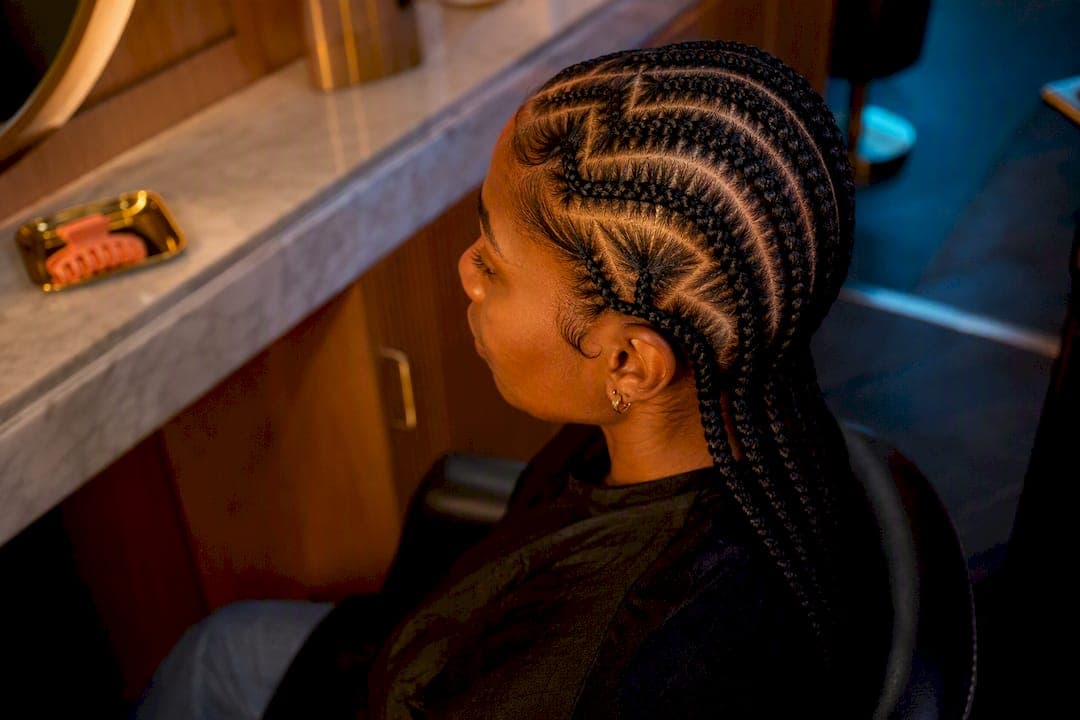
2026 favors geometric, low-tension cornrows: crisp zigzag and swirl partings paired with wearable, feed-in installs that hold up for weeks, not just a photo shoot. If a design catches your eye, save it and bring the picture to your appointment. It is important to ensure that the style is not installed too tight so it can be worn comfortably for several days.
TL;DR:
- Geometric patterns like zigzag, swirl, and starburst are popular, especially when installed with low-tension feed-in techniques to maximize comfort and wearability.
- Combining micro and jumbo braids creates a balance between intricate detail and low-maintenance sections suitable for everyday wear.
- Accessories such as beads, cuffs, and metallic threads are layered onto classic patterns to enhance style without increasing installation tension or complexity.
- Styles that last for four weeks with proper care include straight-back, jumbo, or micro cornrows, which suit most hair textures and lifestyle needs.
- Clients with sensitive scalps should request loose, low-tension feed-in styles and avoid high-density or tight patterns to prevent discomfort and damage.
Table of Contents
- What Cornrow Trends Should You Know for 2026?
- What Are the Best Cornrow Styles to Try in 2026?
- How Do You Choose the Right Cornrow Style for You?
- What Should You Expect at Your Appointment?
- How Can You Customize Your Cornrow Style?
- How Does Afro Magic Braiding Prepare You for a Cornrow Install?
- What Are Clients Actually Asking for This Season?
- Book Your 2026 Cornrow Style at Afro Magic Braiding
- Sources
- FAQ
What Cornrow Trends Should You Know for 2026?
The biggest shift this year isn't a new braid at all. It's how much attention pattern design is getting compared to years when a straight-back part was the default. Editorial coverage now treats the parting itself as the design element, and clients are showing up to appointments with reference photos of shapes, not just braid sizes.
Geometric and zigzag partings are the headline trend. Zigzag, swirl, diamond, and starburst partings show up repeatedly across current gallery collections as the styles clients are requesting most. What makes 2026 different is the pairing: these sharp graphic patterns are increasingly installed using low-tension feed-in techniques rather than the tight, traditional pull that made older geometric cornrows uncomfortable within a day.
Mixed-scale braiding is having a real moment. Instead of committing to all-micro or all-jumbo, stylists are combining thin detail rows with one to three chunkier jumbo braids in the same install. Trend coverage points to this mix-and-match approach as a way to get intricate visual detail up front while keeping sections of the head genuinely low maintenance. You get the editorial look in the crown or hairline and the wearability of a simpler style everywhere else.
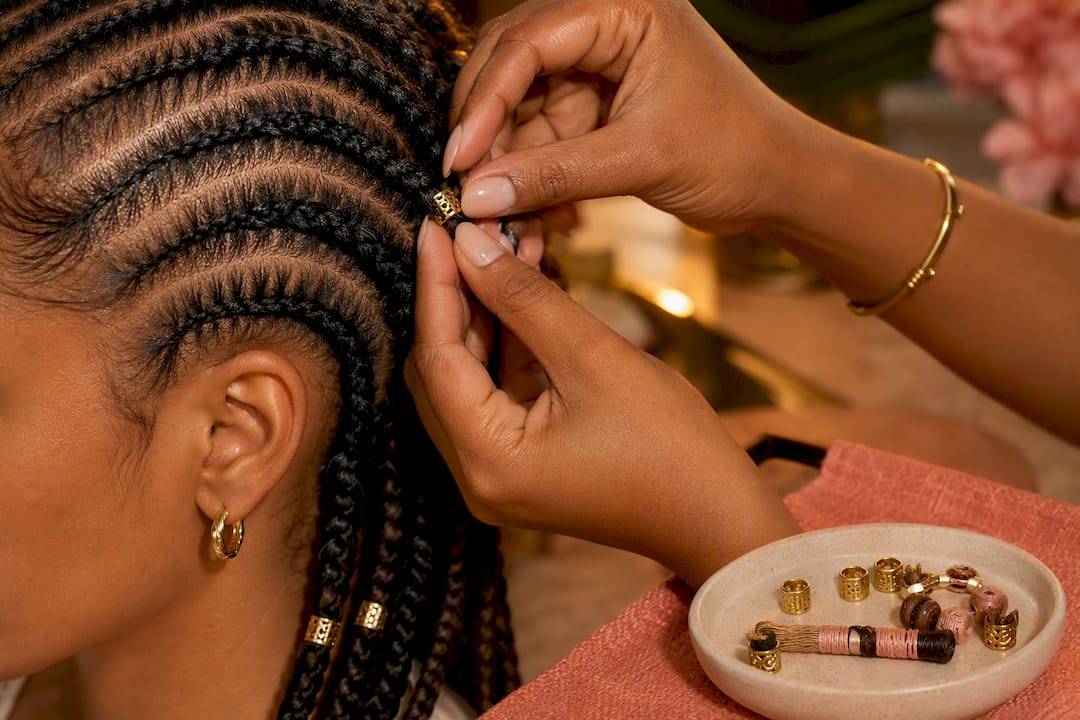
Accessories are doing more of the styling work. Rather than changing the braid architecture, a lot of the 2026 "new look" is coming from beads, metal cuffs, and metallic or colored thread wrapped into existing patterns. This lines up with how accessory-led finishes are being used to modernize familiar cornrow shapes without adding installation complexity or extra tension.
Wearability is winning over pure spectacle. Trend editors describe 2026's strongest cornrow choices as the ones that balance pattern clarity with real-life maintenance, since the most elaborate editorial geometric looks can carry more scalp tension than simpler styles. That framing shows up throughout current trend reporting, and it matches what we hear across the chair: clients want the Instagram version of a style, but they want to sleep, sweat, and go to work in it too.
Here's the short version of what's driving requests this year:
- Sharp geometric partings (zigzag, swirl, diamond, starburst, triangular) installed with feed-in tension control
- Micro-and-jumbo combinations that mix detail with low-maintenance sections
- Bead, cuff, and thread accents layered onto classic patterns instead of new braid shapes
- A clear preference for styles that photograph well and survive a full workweek
- More curved and asymmetrical partings replacing strict straight-back rows
If you're browsing inspiration, look for language like "low-tension feed-in" alongside any pattern name. That phrase, more than the pattern itself, tells you whether a style was designed to actually be worn.
What Are the Best Cornrow Styles to Try in 2026?
Bring one of these to your next consultation, or mix elements from two. Skilled stylists can build most of these styles regularly, and each profile below notes who the style suits and roughly how much upkeep to expect.
-
Classic straight-back cornrows. Straight, parallel rows from front to back remain the foundation style for a reason: they suit any hair length and texture and work for nearly every face shape. Maintenance is low, and this is often the easiest style for a first-time cornrow client to compare against.
-
Zigzag cornrows. Sharp, angular partings replace straight lines for a graphic, modern finish that reads well in photos and in person. Best suited to clients with a few extra minutes for touch-ups around the hairline; maintenance runs medium since zigzag partings show new growth faster than straight rows.
-
Swirl or wave cornrows. Curved partings flow across the scalp instead of cutting straight lines, giving a softer, more organic pattern than the zigzag. This one flatters rounder face shapes especially well and sits at medium maintenance.
-
Diamond pattern cornrows. Braids cross to form repeating diamond shapes across the crown, usually finished into a bun or ponytail at the back. It's a statement look best suited to clients who want a "going out" style rather than an everyday commute look, and it runs medium to high maintenance because of the density of partings.
-
Starburst cornrows. Rows radiate outward from a central point, usually at the crown, creating a sunburst effect. Gorgeous for updos and events, this is a higher-maintenance style best left to occasions rather than a four-week daily-wear plan.
-
Feed-in cornrows. Extensions are gradually added into each row so braids start thin near the hairline and thicken naturally, avoiding the bulky, tight starting point of older cornrow methods. This is the technique underpinning most of 2026's trend list and suits nearly any hair length, including shorter natural hair that needs support to reach longer lengths.
-
Fulani-inspired cornrows. A center part flows into cornrows accented with beads and sometimes a single braid left hanging free at the front. Rooted in West African tradition, this style suits clients who want a cultural, statement look; maintenance is medium, driven mostly by bead upkeep rather than the braids themselves.
-
Lemonade braids. Side-swept cornrows made famous through pop culture, these work best on clients who want an asymmetrical, editorial silhouette rather than a symmetrical part. Medium maintenance, and a strong option for anyone who wants a dramatic look without committing to a full-head geometric pattern.
-
Curved cornrows. Similar to swirl styles but with more deliberate, structured arcs rather than free-flowing waves, often used to frame the face. Best for clients with round or square face shapes who want the part itself to soften their features. Medium maintenance.
-
Micro cornrows. Extremely thin, tightly spaced rows that create a dense, textured look and typically last the longest of any cornrow style. Best suited to clients with a longer timeline before their next appointment and the patience for a longer chair time upfront; low maintenance once installed, but plan for a longer initial session.
-
Jumbo cornrows. Wide, thick rows that install quickly and read as bold and casual rather than intricate. A strong pick for clients who want a low-maintenance protective style with minimal time in the chair; upkeep is low, though the larger rows show new growth sooner than micro styles.
-
Half-up cornrow styles. The front section is braided into cornrows while the back is left loose or in a different texture entirely. This suits clients who want the protective benefit of cornrows without committing their whole head, and it's genuinely low maintenance since only part of the hair is under tension.
-
Cornrow bun or ponytail. Straight-back or patterned cornrows are gathered into a bun or high ponytail at the crown. A dependable choice for anyone balancing gym schedules or workplace dress codes; low to medium maintenance and easy to dress up with accessories for an evening out.
-
Beaded cornrows. Wooden, plastic, or metal beads are threaded onto braid ends, often in patterns or color blocks. Best suited to clients who want texture and sound, quite literally, in their style; maintenance is medium because beads need occasional resecuring.
-
Thread-wrapped cornrows. Colored thread is wrapped around sections of the braid for graphic color blocking without any dye touching the natural hair. A great option for clients who want a bold color statement while keeping their real hair fully protected; low to medium maintenance.
-
Cuffed cornrows. Metal cuffs slide onto braids for a polished, jewelry-like finish, often mixed with beads for texture contrast. Suits clients attending events or wanting an elevated everyday look; low maintenance since cuffs rarely need adjusting once placed.
-
Colored cornrows. Braiding hair in bold or pastel shades is fed into the natural hair for a full color change with zero chemical processing. Ideal for clients who want to experiment with color without any damage risk; maintenance is medium, mostly around edge upkeep as new growth appears.
-
Triangular part cornrows. Triangle-shaped partings create a distinctive geometric grid across the scalp, a favorite in current pattern galleries. This is a statement style suited to clients comfortable with a longer install session; maintenance runs medium to high given the parting density.
-
Heart-shaped cornrows. Playful heart motifs worked into the part, often at the crown or nape. Popular for special occasions, birthdays, and younger clients; medium maintenance and typically styled for a shorter wear window than everyday patterns.
-
Cornrows into faux locs or twists. Cornrows serve as the protective base, with locs or twists installed over the foundation for a completely different finished texture. Suits clients wanting maximum versatility from one install; maintenance is low on the cornrow base itself, since the twists or locs carry most of the visual weight.
-
Cornrow updos for events. Straight-back or patterned cornrows are swept into an elaborate crown, bun, or braided knot for weddings and formal occasions. Best for clients planning around a single big date rather than weeks of daily wear; explore more options in braided updo ideas built specifically for events.
-
Cornrow hairstyles for kids. Simple straight-back or two-strand cornrow patterns, kept looser and shorter in wear time, work well for children's hair, which is typically thinner and more sensitive at the scalp. Low maintenance is essential here, and stylists should always size down tension significantly compared with an adult install.
-
Men's cornrows. Straight-back, curved, or geometric patterns tailored to shorter hair lengths and typically finished without added length. Low to medium maintenance, and a dependable option for clients wanting a clean, low-effort protective style between fades.
-
Asymmetrical cornrows. One side of the head carries a bold pattern while the other stays simpler, an increasingly requested style for clients who want a signature, non-symmetrical look. Medium maintenance, and a strong candidate if you want something that reads as custom rather than off-the-shelf.
How Do You Choose the Right Cornrow Style for You?
Start with three questions before you scroll through another gallery.
First: how long do you need this style to last? If you have four weeks of vacation, workouts, and workdays ahead with no time for touch-ups, lean toward straight-back, jumbo, or micro cornrows. If you're styling for a single event, geometric or updo options make more sense since you're not asking the pattern to survive a full month.
Second: what's your hair's natural length and density? Thinner or shorter natural hair usually does better with feed-in techniques that add support gradually, rather than styles that demand a lot of length upfront, like some jumbo or half-up looks. Denser hair can usually carry more intricate partings, like diamond or starburst patterns, without the scalp feeling overloaded.
Third: how sensitive is your scalp, honestly? If previous braided styles left you with soreness, bumps, or breakage along the hairline, skip anything described as high tension or high density and ask specifically for a low-tension feed-in install.
Once you've answered those, match the category to your life:
- Busy schedule, workplace dress code: straight-back, jumbo, or half-up cornrows
- Active lifestyle, gym or swimming regularly: micro or jumbo cornrows with minimal accessories
- Special event coming up: diamond, starburst, or a cornrow updo
- Want a signature statement without much upkeep: zigzag or curved patterns with accessory accents
- Sensitive scalp or history of tension damage: loose feed-in straight-back or half-up styles only
Bring these questions to your consultation, not just a photo:
- "Is this pattern going to pull at my hairline more than my last style did?"
- "How many hours will this take, and does the price change with added extensions or beads?"
- "What's the realistic wear time before this style needs to come down?"
- "Can you loosen the first row if it feels tight once we start?"
Watch for tension red flags during and after installation: sharp, persistent pain (not just tightness), visible bumps or pulling at the hairline, or headaches that start within hours of leaving the chair. Any of those mean the style needs to be adjusted, not toughed out.
Pro Tip: If you're torn between two styles, ask your stylist which one uses less tension at your hairline specifically. The prettiest pattern in the world isn't worth a receding edge six months from now.
What Should You Expect at Your Appointment?
Book more time than you think you need. Typical cornrow appointments run around two hours, though complex patterns, added extensions, or heavy bead work can extend that window considerably.
What adds time to your appointment:
- Geometric or multi-directional partings (zigzag, diamond, starburst) versus simple straight rows
- Extensions fed in for length or thickness beyond your natural hair
- Beads, cuffs, or thread applied row by row rather than a plain finish
- Detangling and prepping hair that arrives matted or unwashed
Once installed, most cornrow styles hold up as a genuinely low-maintenance look for roughly four weeks before they need to come down or be redone. That timeline assumes reasonable aftercare, not four weeks of ignoring your scalp entirely.
Aftercare that actually extends wear time:
- Apply a light scalp oil two to three times a week to prevent dryness and itching without buildup; for guidance, see this Natural Hair Oil Guide: A Simple Scalp Ritual
- Sleep with a satin or silk bonnet or pillowcase to cut down on frizz and friction at the hairline
- Keep edges moisturized but avoid heavy pomades that trap lint and dust in the part lines
- Rebook or unbraid if you notice the pattern loosening unevenly, which usually signals it's past its useful wear window
If tension feels sharp rather than snug in the first 24 hours, that's your signal to call the salon back, not to wait it out. A style you can't comfortably sleep in wasn't installed the way it should have been.
How Can You Customize Your Cornrow Style?
Customization is where 2026's cornrow trends really separate from previous years. Layer extensions, color, and accessories thoughtfully, and you get a genuinely personal style without compromising the protective benefits cornrows are known for.
Extensions: Knotless feed-in techniques work well for a lighter, more natural-looking finish, while bulkier braiding hair adds the visual weight jumbo styles need. Choosing the wrong fiber weight for your hair's natural strength is one of the fastest ways to add unwanted pull at the roots, so this is worth discussing with your stylist rather than picking based on looks alone.
Color: Colored braiding hair or temporary wraps let you experiment with bold shades with zero chemical processing on your natural hair. This keeps the color change fully reversible and avoids the tension and damage risk that comes with dyeing natural hair directly.
Accessories: Beads, cuffs, and metallic thread should be placed with some intention rather than scattered evenly. Concentrating detail at the part lines, ends, or one accent row creates more visual impact than spreading accessories thin across the whole head, and it keeps added weight manageable.
To keep any of these protective rather than damaging:
- Match extension weight to your hair's actual density, not just the look you want
- Avoid clustering heavy beads or cuffs near the hairline, where tension is already highest
- Choose color methods that don't require bleaching or processing your natural hair directly
- Ask your stylist to check weight distribution once accessories are added, not just at the base install
How Does Afro Magic Braiding Prepare You for a Cornrow Install?
A good cornrow starts well before anyone touches a braid. Afro's pre-appointment checklist keeps installs looking sharper and lasting longer:
- Wash and deep-condition hair 24 to 48 hours before your appointment, not the same morning
- Detangle thoroughly at home so the stylist's chair time goes toward styling, not fighting knots
- Skip heavy leave-in conditioners or oils right before your visit, since residue can make sectioning harder and shorten a style's wear time
- Bring two or three reference photos, including at least one showing the parting pattern clearly from above
On installation day, section planning matters as much as the braiding itself. Stylists typically place wider, sturdier braids near the hairline where comfort tolerances are lowest, and reserve denser micro rows for the crown, where the scalp tends to tolerate more pull. Low-tension feed-in starts reduce focal pressure points, especially on patterns with a lot of parting density, like diamond or starburst designs.
Pro Tip: If you love a dense, editorial pattern but have a sensitive scalp, ask your stylist to concentrate the intricate detail at the crown and keep the hairline simple. You get the statement look in photos without the tension where it hurts most.
What Are Clients Actually Asking for This Season?
Bookings this season lean heavily toward two things at once: a graphic, camera-ready pattern up front, and a promise that it won't feel like a punishment by day two. Clients come in with screenshots of zigzag and swirl designs, but the follow-up question is almost always about comfort, not just looks. That shift tells me the trend isn't really about new shapes. It's about clients finally expecting both style and wearability from the same appointment.
My signature recommendation for anyone torn between fashion and comfort: a mixed-scale install, with a defined geometric pattern concentrated at the crown and simpler, low-tension feed-in rows everywhere else. It photographs like a statement piece and wears like a everyday protective style, which is exactly the balance 2026 seems to be seeking.
— Afro
Book Your 2026 Cornrow Style at Afro Magic Braiding
These patterns, from classic straight-back rows to zigzag, diamond, and mixed-scale designs, are typically installed using low-tension feed-in techniques built to last. Clients can access premium braiding hair, beads, cuffs, and thread in salon for customization.

Bringing reference photos and reading through this guide's questions before you arrive will speed up your consultation considerably. Services often include knotless braids, box braids, Fulani braids, twists, cornrows, and custom combinations, along with direct sales of braiding hair and accessories for customers who want to stock up before appointments. Browse real client installs in our portfolio gallery to find your reference photo, then book your appointment directly online.
Sources
- 50 Stunning Cornrow Hairstyles to Show Your Stylist
- 17 Creative Cornrow Patterns That Go Beyond Straight Back Rows - Sister's Bombshell
- Fashally
FAQ
What are the latest cornrow hairstyles for 2026?
Zigzag, swirl, diamond, and starburst partings lead the pack, especially when paired with low-tension feed-in installs and mixed micro-and-jumbo braid scales for both detail and durability.
What are the hair trends for 2026 overall?
Beyond cornrows, 2026 favors protective styles that photograph well but stay genuinely wearable, with accessory-forward finishes like beads, cuffs, and metallic thread doing more of the styling work than complex new braid shapes.
What are the braid trends for 2026?
Geometric partings combined with low-tension feed-in technique define this year's braid trends, with stylists deliberately balancing pattern clarity against realistic scalp comfort rather than prioritizing one over the other.
How long do cornrows typically last, and how long does installation take?
Appointments run around two hours on average, and most cornrow styles hold up as a low-maintenance look for roughly four weeks with proper aftercare.
Are cornrows a good protective style for kids?
Yes, though children's installs should use looser tension and shorter, simpler patterns than adult styles, since kids' scalps and hair are typically more sensitive to prolonged pulling.
How do I know if my cornrows are too tight?
Sharp, persistent pain, visible bumps along the hairline, or headaches starting within hours of installation are signs the tension needs adjusting, and a good stylist will loosen the affected rows on request.