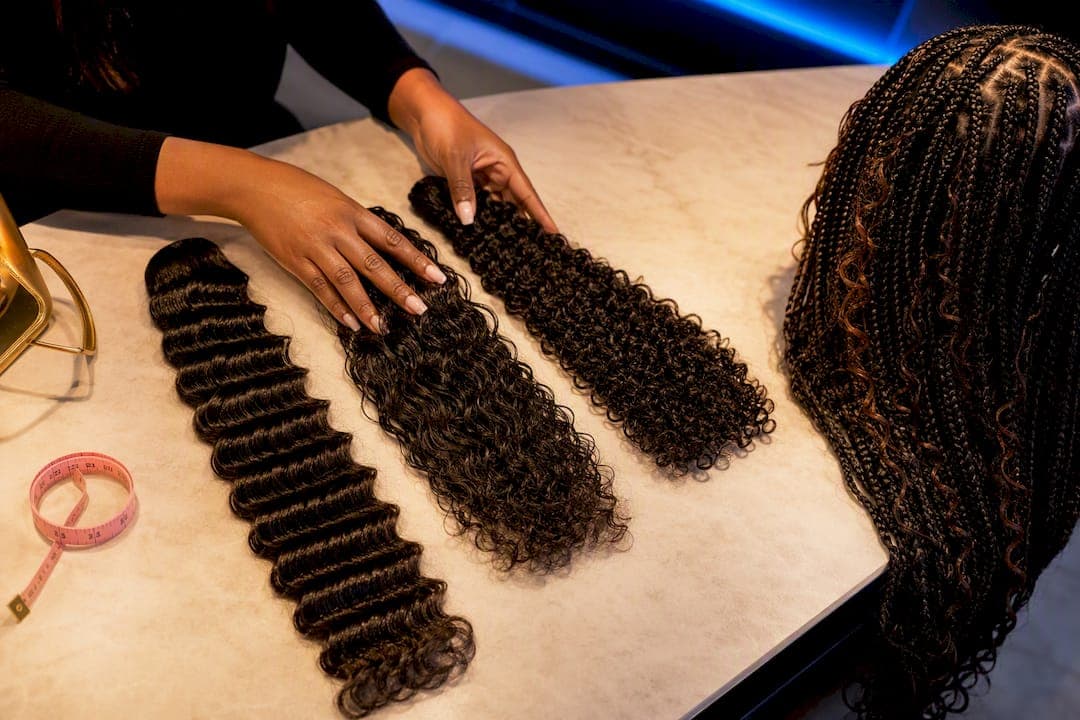
For boho knotless braids, Deep Wave, Water Wave, and Burmese Curly are the human-hair textures that hold the loose, wind-blown movement the style is known for. Plan on 50 to 100 grams per pack depending on the vendor, and expect exact pack counts to depend on length and desired fullness, which the next sections break down.
TL;DR:
- Human hair textures like Deep Wave, Water Wave, and Burmese Curly hold the natural, loose movement essential for authentic boho knotless braids.
- For best results, use remy or virgin human hair with cuticles running in the same direction to prevent tangling and ensure curl retention over weeks.
- Expect to need 2 to 4 packs of 50g or 100g hair, with textured curly types requiring fewer bundles to achieve a full look, depending on length and density.
- Proper installation includes stretching hair, gentle tension near the edges, and tapering braid ends to maintain a soft, natural appearance longer.
- Correct aftercare, like wrapping in satin at night and gentle washing, can extend the style’s lifespan to around two months.
Table of Contents
- Why Human Hair Wins for Boho Knotless Braids
- Step-by-Step Installation Workflow for Boho Knotless Braids
- How Much Hair Do You Need for Full, Lasting Boho Braids?
- How to Keep Boho Knotless Braids Looking Fresh Longer
- Afro Magic Braiding: Salon Expertise and When to Book a Pro
- What Can Go Wrong with Boho Knotless Braids
- Is Boho Knotless Right for Your Hair Type?
- Common Mistakes That Damage Hair or Ruin the Look
- Styling Versatility After Installation
- The Real Trade-Off Nobody Explains Clearly Enough
- Ready for Salon-Quality Boho Knotless Braids?
- Sources
Why Human Hair Wins for Boho Knotless Braids
Synthetic hair fights you the whole way through a boho knotless install. It frizzes fast, holds heat awkwardly, and rarely mimics the soft, undone curl pattern that makes boho braids look effortless. Human hair moves the way your own hair moves, which is exactly the point of a style built around loose, natural-looking waves framing the face.
Deep Wave is the most common starting texture for boho knotless work, and for good reason. It has enough curl memory to hold a wave through weeks of wear, but it is not so tight that it fights the tension of a feed-in braid. Water Wave sits close behind it. Slightly looser and shinier, it gives a beachy finish that photographs well and blends easily with relaxed or heat-trained natural hair. Burmese Curly is the boldest option of the three. It is denser and springier, so it reads as fuller boho volume with fewer bundles, and it holds up well in humidity, which matters if you live somewhere summers get sticky.
Grade matters as much as texture. Look for remy or virgin human hair, meaning the cuticles run in one direction and have not been chemically stripped or over-processed. This is what stops the hair from matting into a tangled mess by week two. Cheaper, non-remy blends tangle faster because the cuticle layers face different directions and grind against each other every time you move. Reviews on bundles marketed for boho braids report good curl retention specifically when buyers stick to 12A or higher virgin grades.
Packaging is the detail most first-time buyers miss. Knotless braiding needs bulk hair, sometimes called off-weft or no-weft hair, because there is no stitched track to feed through. If a bundle arrives sewn onto a weft, you or your stylist will need to cut that weft off before it is usable for a knotless feed-in. Some suppliers now sell bulk human hair pre-cut and ready to use, which saves prep time and reduces waste.
A few features separate a good pack from a frustrating one:
- The top 3 inches should stay straighter than the rest of the bundle. That section is what gets fed into the root, and a straight top gives you a neat, secure base instead of a bulky, uneven start.
- Length should be listed accurately, not rounded up. A pack labeled 18 inches should measure close to that stretched out, not curled.
- Color options should include natural blends (1B, off-black, dark brown), not just jet black, since most natural hair reads warmer than pure black under light.
- A working return or exchange policy matters more than it sounds. Human hair varies batch to batch, and a vendor who won't stand behind a shedding or mismatched pack is a vendor to skip.
Where you buy depends on how hands-on you want to be. Specialized braiding-hair suppliers and salon retail counters, including Burmese Curly bulk options built for bohemian knotless work, tend to carry consistent, curated stock. Online marketplaces carry a wider range of prices and textures, but quality control varies more from seller to seller, so read recent reviews before committing to a bulk order.
Step-by-Step Installation Workflow for Boho Knotless Braids
Boho knotless is a technical style, and rushing the prep is where most home installs go sideways. Here's the workflow a trained stylist actually follows.
- Cleanse and detangle first. Wash natural hair, apply a light leave-in, and detangle section by section with a wide-tooth comb. Skipping this step is the single biggest cause of bumpy, uneven braids later.
- Stretch the hair. Blow-dry on low heat or band the hair overnight so it lays flat. Braiding over shrunken, coily hair without stretching it first creates lumps at the root.
- Prep the bundles. If your hair arrived on a weft, cut it off carefully to create loose, off-weft bulk. Keep the top 3 inches straighter, since that section anchors the root and keeps the base from looking puffy.
- Section with soft, face-framing partitions. Boho parts are looser and more irregular than the sharp, geometric grids used for classic box braids. Curved partings around the hairline are what give the style its undone, natural feel.
- Feed in the human hair gradually. Start the braid with your natural hair only, then feed in small amounts of bulk hair as you go, rather than adding it all at the root. This is the actual technique that makes a braid "knotless," since there's no knot anchoring the extension at the scalp.
- Keep tension light, especially near the edges. Boho styles lean on looser tension anyway, which protects the hairline, but it's worth double-checking around the temples and nape where hair is thinnest.
- Taper the ends. Thin out the tips of each braid slightly so they blend into soft, wispy pieces instead of ending in a blunt, obvious line.
- Finish and texturize. Once all braids are done, apply a lightweight curl refresher to soften the look, then pull a few pieces loose around the face for that classic boho fall.
Pro Tip: Cut and prep your bundles into off-weft sections the night before your appointment (or before you sit down to DIY). It shaves real time off the install and keeps the straight top section from fraying while you work.
A full head typically runs several hours depending on length, density, and how many bundles are being fed in, and that's for someone who already knows the feed-in technique. First-timers attempting this solo should expect it to take considerably longer, and uneven tension is common on a first try. If this is your first knotless install, booking a professional for at least the first round is the safer bet for both your time and your edges. For a walkthrough of prep steps that prevent tangling before you even start braiding, Afromagicbraiding's guide on tangle-free prep for boho and goddess styles covers the detangling stage in more depth.
How Much Hair Do You Need for Full, Lasting Boho Braids?
Pack weight is where most first-time buyers either overspend or run short mid-install. Vendors typically label bulk human hair in 50g or 100g packs, with 100g often split into two 50g bundles inside one package. Knowing that split matters, because "one pack" means different things across different sellers.
As a rule of thumb:
- Micro or small knotless braids: 3 to 4 packs of 50g hair, since smaller braids use less bulk per section but need more sections overall.
- Medium boho braids (the most common size for this style): 2 to 3 packs of 100g, or roughly 3 packs of 50g, depending on your natural hair density.
- Large or extra-full styles: 3 to 4 packs of 100g, adjusted up or down based on texture.
Length changes the math too. Shorter styles, think shoulder length, need visually more hair per braid to avoid a thin, sparse look, since there's less length to distribute the volume across. Longer styles stretch the same amount of hair further but add real time to the install, since every braid takes longer to complete when you're feeding in more length.
Texture is the variable people underestimate most. Deep Wave and Burmese Curly both appear fuller than straighter textures at the same weight, because the curl pattern itself adds visual bulk. That means someone using Burmese Curly might comfortably drop from 4 packs to 3 for the same finished look, while a straighter Water Wave texture may need the higher end of the range to read as equally full.
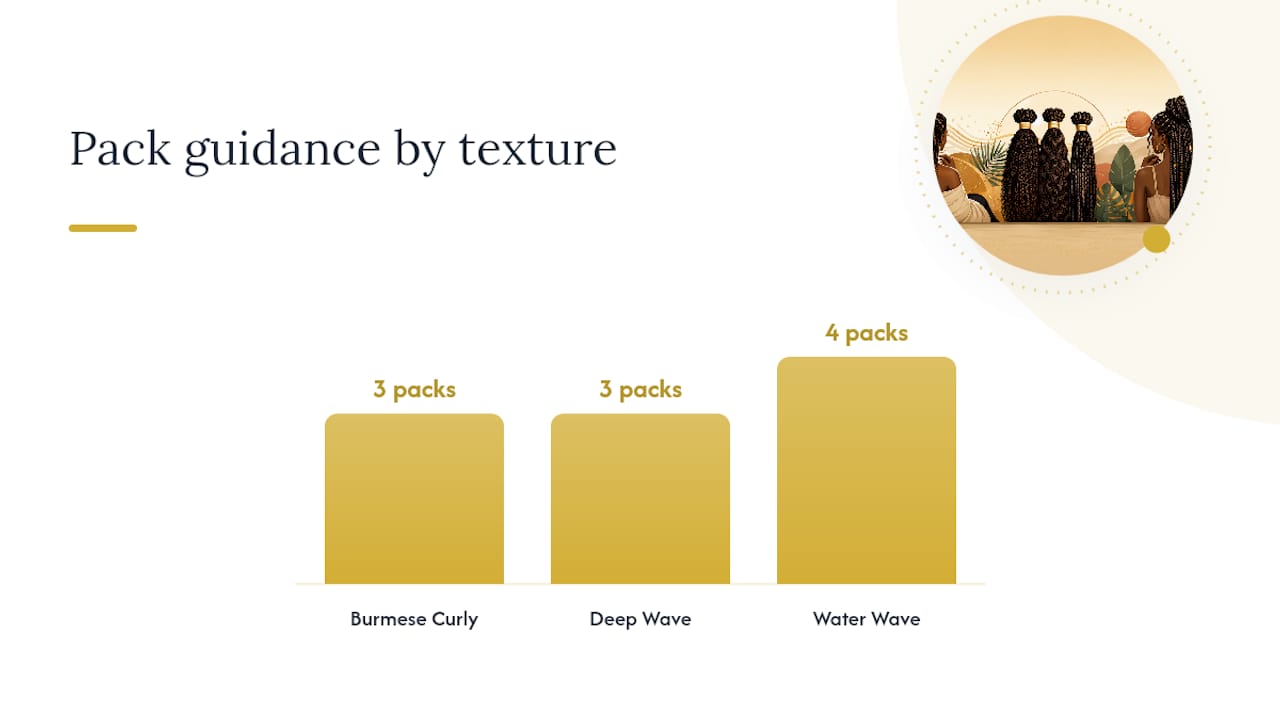
Root neatness comes down to that straight top section again. A bundle with a straighter crown feeds into the base cleanly, which means less hair gets wasted trimming or adjusting a messy root, and your pack count goes further than it would with a fully curly bundle from root to tip. For a closer look at how length choices affect both cost and wear time, Afromagicbraiding's guide to popular knotless braid lengths is worth reading before you check out.
How to Keep Boho Knotless Braids Looking Fresh Longer
The install is only half the equation. How you treat the braids afterward decides whether they last four weeks or eight.
At night, wrap hair in a satin scarf or bonnet before bed. Cotton pillowcases and bare braids pull moisture out of both the extension hair and your natural hair underneath, which is what leads to that dry, frizzy halo around week three. A light water-based moisturizer on the scalp, not the mid-lengths, keeps the roots from getting itchy without weighing down the braids themselves.
Washing needs a gentler approach than you'd use on loose hair. Dilute shampoo in a bottle and apply it directly to the scalp in sections, then rinse thoroughly before it has a chance to travel down and loosen the feed-in points. Heavy conditioning at the root can soften the base of a knotless braid over time, so keep conditioner focused on the lengths and ends.
- Choose residue-free leave-ins and curl-refreshing mists over heavy creams or wax-based gels, which build up fast on braided hair and attract lint and dust.
- Refresh dulled waves with a light steam session or a water-and-mousse spray, focusing on the face-framing pieces that get touched and styled the most.
- Spot-check edges and the nape weekly. These areas take the most tension and show wear first.
Pro Tip: Keep a small spray bottle with water and a drop of light curl mousse in your bag. A thirty-second refresh on face-framing pieces between full wash days keeps the whole style looking intentional instead of tired.
Plan to take the style down after about one to two months, sooner if you notice heavy shedding at the roots or matting near the nape. For the safest removal method, Afromagicbraiding's gentle takedown guide walks through detangling extension hair away from natural strands without excess breakage, and the full care routine breakdown covers product picks in more detail than fits here.
Afro Magic Braiding: Salon Expertise and When to Book a Pro
Afromagicbraiding runs both a working salon and a retail counter stocked with premium bulk human hair, so clients can either buy hair to take home or have the entire boho knotless process handled by a trained stylist in one visit. That dual setup matters because sourcing good hair and installing it well are two separate skills, and getting one right doesn't guarantee the other.
A professional appointment is the smarter call in a few specific situations: your first time trying knotless braids, styling for an event where there's no room for a redo, or protective styling on fragile edges that can't handle uneven DIY tension. Stylists also catch sizing and texture mismatches before they become a wasted pack of hair.
If you're booking, come with your target length, any color reference photos, and let the front desk know if you've already purchased your own hair, since that changes the service pricing. Afromagicbraiding's portfolio of completed boho and knotless work gives a realistic sense of finish quality before you commit to an appointment.
What Can Go Wrong with Boho Knotless Braids
Boho knotless is more forgiving than classic box braids, but it isn't without trade-offs worth knowing before you book or buy.
Install time is the biggest one. Because the feed-in technique is slower than knotted braiding and boho styles often include extra face-framing detail, a full head can run longer than a standard knotless set, especially with longer lengths or denser textures like Burmese Curly.
Cost adds up too. Quality 100% human hair costs noticeably more than synthetic, and depending on length and fullness, a full install can require multiple packs at $20 to $50 each. Weigh that against the fact that human hair lasts longer and looks better doing it, but budget for it honestly.
Human hair also holds curl differently over time than synthetic fiber. Waves loosen gradually with washing and daily movement, so the style looks a bit different at week five than it did on day one, which some clients love and others find disappointing if they expected the exact install-day look to hold indefinitely.
Finally, the loose, undone nature of boho parting means face-framing pieces get more handling than a tightly gridded style, which slightly increases the risk of breakage at the hairline if tension isn't managed carefully during install.
Is Boho Knotless Right for Your Hair Type?
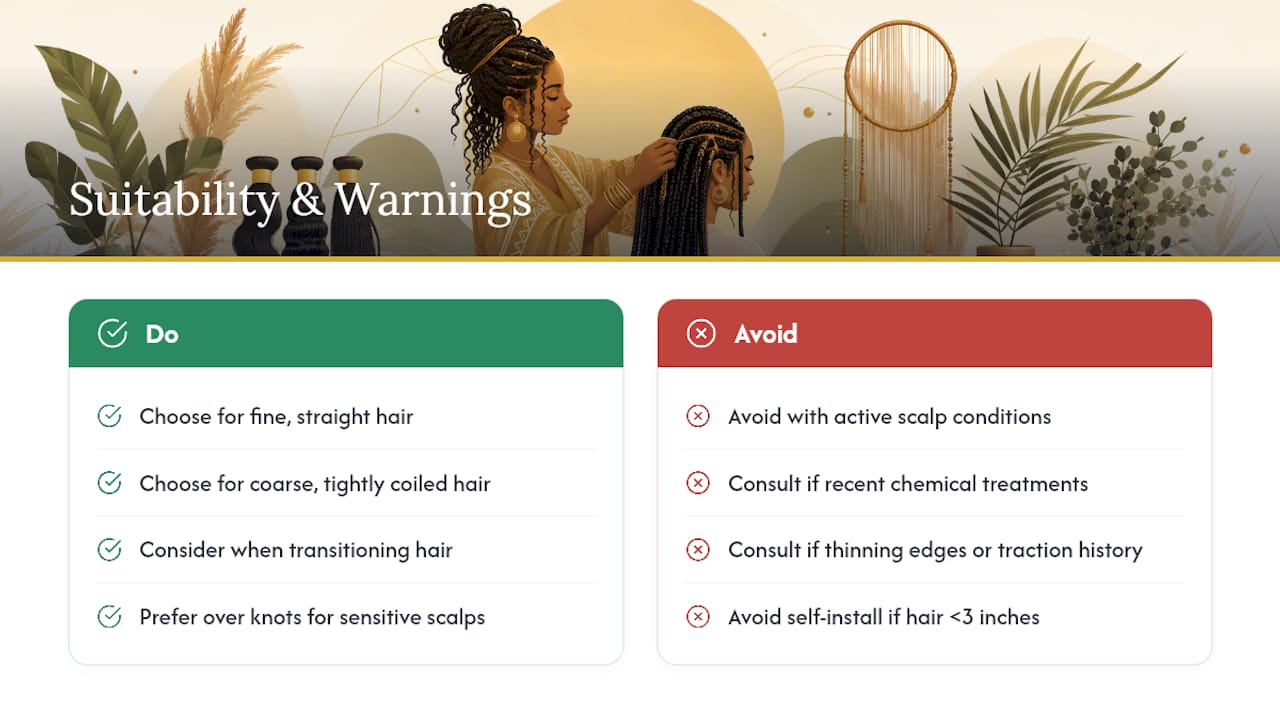
Boho knotless braids work across a wider range of hair types and textures than most protective styles, which is part of why the style has stayed popular. Fine, straight natural hair holds the braids well since there's less bulk fighting the feed-in, while coarser, tightly coiled textures benefit from the technique's lighter tension compared to traditional box braids.
Scalp sensitivity is where real differences show up. If you have a sensitive scalp, tension headaches from past braid installs, or a history of traction alopecia along the hairline, boho knotless is genuinely one of the better options available, since the knotless method distributes weight along the braid rather than concentrating it in a tight knot at the root. That said, "gentler" doesn't mean "risk-free." Anyone with active scalp conditions, recent chemical treatments, or noticeably thinning edges should get a consultation before installing, human hair or not.
People transitioning between natural hair stages, think early locs or post-relaxer growth, also tend to do well with this style because the loose sectioning hides uneven texture better than a rigid, uniform part pattern would. If your hair is very short (under 3 inches), you may need extra feed-in hair higher up near the root to anchor the braid securely, which a stylist can judge better in person than a self-install typically allows.
Common Mistakes That Damage Hair or Ruin the Look
Most boho knotless problems trace back to a handful of repeatable mistakes, not bad luck.
Skipping the stretch step is the top one. Braiding directly over shrunken, unstretched natural hair creates uneven bumps at the root that show through the finished style and often loosen faster than braids started on properly prepped hair.
Overtightening near the edges is a close second. Boho styles are meant to use lighter tension throughout, but people instinctively pull tighter at the hairline for a "cleaner" look, and that's exactly where traction damage starts. If your scalp feels tight or tender for days after installation, that's not normal wear, it's a sign the tension was too aggressive.
Using a fully curly bundle top instead of a straightened one is a subtler mistake that shows up later rather than immediately. A curly root section makes for a bulkier, less secure base that can unravel faster, especially at the nape where movement is highest.
Finally, skipping a patch test or consultation before using a new hair vendor is a mistake that has nothing to do with technique and everything to do with product quality. Shedding, tangling, or an unexpected chemical smell should be caught before a full install, not discovered halfway through one.
Styling Versatility After Installation
One underrated advantage of human hair boho knotless braids is how much they can be restyled after the initial install, something synthetic versions handle far less gracefully.
Half-up styles work especially well since the crown section pulls cleanly without disturbing the tension lower down. Low buns and side-swept ponytails are easy weekend options that take the weight off your neck during hot months. Because the hair takes heat reasonably well in small amounts, you can also curl or crimp loose face-framing pieces for a dressier look without touching the bulk of the braid.
Accessories sit differently on human hair than synthetic too. Gold cuffs, beads, and wrapped thread all slide on more smoothly and stay put better against the natural texture, which is part of why boho styles lean so heavily on that decorative detailing in the first place. For styling combinations that hold up especially well through week three or four, Afromagicbraiding's guide to styling boho braids breaks down a handful of looks worth trying beyond the standard down-and-loose default.
The Real Trade-Off Nobody Explains Clearly Enough
Most guides treat human hair versus synthetic as a simple upgrade decision: pay more, get better hair. That's true as far as it goes, but it skips the part that actually matters for boho knotless specifically. This style lives or dies on movement and curl behavior, not just longevity, and that's where the texture choice, not just the "human versus synthetic" choice, does the heavy lifting.
The conventional advice to "just buy human hair" undersells how much Deep Wave, Water Wave, and Burmese Curly behave differently from each other under tension and humidity. Buying the right grade of the wrong texture still produces a disappointing result. What the research consistently supports is starting with texture and curl pattern first, then filtering for remy or virgin grade within that texture, rather than the reverse.
If there's one place to spend actual attention, it's the straight top section of your bulk hair and the tension at your hairline. Everything else, wave pattern, color, even pack count, is adjustable after the fact. A damaged edge is not.
— Afro
Ready for Salon-Quality Boho Knotless Braids?
Afromagicbraiding gives you the option DIY tutorials can't: professional feed-in technique paired with premium human hair, without guessing at pack counts or hoping your tension holds up for eight weeks.
Pricing is discussed upfront during your consultation, so you know the cost before any hair gets cut or fed in, no surprises at checkout. Bring your target length and any color references, and the team will walk you through texture options in person before you commit to a pack. Ready to see it in person? Book your appointment or browse the portfolio of finished boho knotless styles to find a look worth bringing to your next visit.
Sources
- Human Hair Boho Braids - Lightweight & Natural Style (Loxx of Hair)
- Human Braiding Hair For Boho Braids 20 Inch (Own That Crown)
- VIPbeauty Bora Bora braids — Burmese Curly bulk human hair
- BEEOS human braiding hair product listing