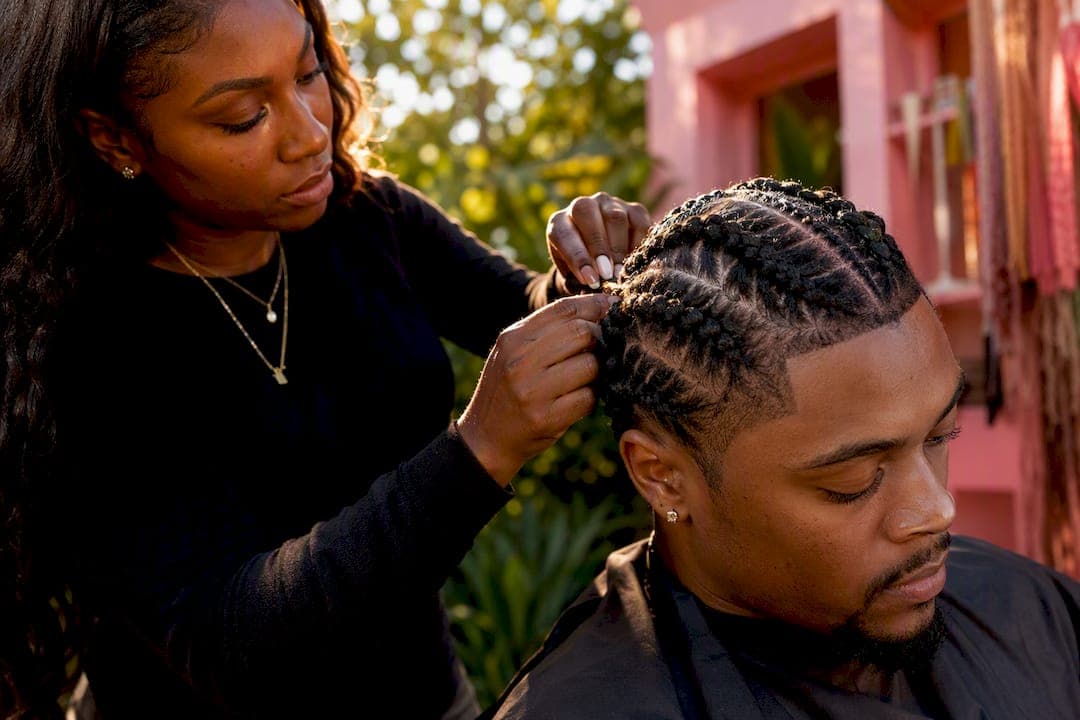
Cornrows, box braids, knotless, two-strand twists, stitch braids, Fulani patterns, and faux locs cover most of what men ask for in the chair, and each one solves a different problem. Cornrows are best for low-profile, fade-ready looks that pair clean with a lineup. Box braids are best for versatility and longer wear. Knotless protects the hairline while still hanging loose. Two-strand twists suit guys easing into protective styling or testing the loc look. Stitch and Fulani patterns bring in geometric artistry for special occasions or just standing out. Wear time varies by style, generally landing somewhere between 2 and 8 weeks depending on size, pattern complexity, and how well you maintain them at home.
- Cornrows — best for: fades, low maintenance (2 to 4 weeks)
- Box braids — best for: versatility, styling variety (4 to 8 weeks)
- Knotless braids — best for protecting the natural hairline and comfort with extended wear
- Two-strand twists — best for: gentle install, loc transition (3 to 6 weeks)
- Stitch/Pop Smoke braids — best for: sharp visual patterns (2 to 4 weeks)
- Fulani/tribal braids — best for: standout occasions (3 to 5 weeks)
Key Takeaways
The right men's braid style comes down to matching braid count, part geometry, and fade height to your hair length and lifestyle.
| Point | Details |
|---|---|
| Match style to wear-time goals | Cornrows last 2 to 4 weeks; box braids and knotless can hold 5 to 8 weeks with proper care. |
| Braid count changes upkeep | Fewer, chunkier braids install faster; micro braids take longer but wear longer between refreshes. |
| Choose knotless for hairline health | Feed-in techniques reduce root tension compared to traditional knotted box braids. |
| Pair fade height with braid pattern | Skin fades highlight cornrow linework; mid fades balance box braid volume. |
| Book with Afromagicbraiding | Afromagicbraiding executes cornrows, box braids, knotless, and twists with portfolio-proven results in Southfield. |
Table of Contents
- Popular Men's Braid Styles You Can Show Your Stylist
- Choosing Box Braids by Count, Part Size, and Length
- Cornrow Patterns and How to Pair Them with a Fade
- Two-Strand Twists and Knotless Braids for a Lighter Feel
- Picking the Right Braid Size and Part Pattern for You
- Making Fades and Beards Work with Your Braids
- Keeping Braids Fresh Without Overcomplicating Your Routine
- Why Afro's Salon Experience Matters for Men's Braids
- How Braiders Actually Build Each Style, Step by Step
- Mistakes That Ruin an Otherwise Good Braid Style
- Talking to Your Stylist So You Get the Look You Want
- Which Hair Types and Lengths Work Best for Each Style
- Adjusting Braid Techniques for Different Hair Textures
- Restyling Your Braids After Installation
- What I Tell Every Client Considering Men's Braids
- Book Your Men's Braids at Afromagicbraiding
- Sources
Popular Men's Braid Styles You Can Show Your Stylist
Every one of these styles reads differently depending on how close the braids sit to the scalp and how much hair hangs free, and knowing that distinction helps you describe exactly what you want.
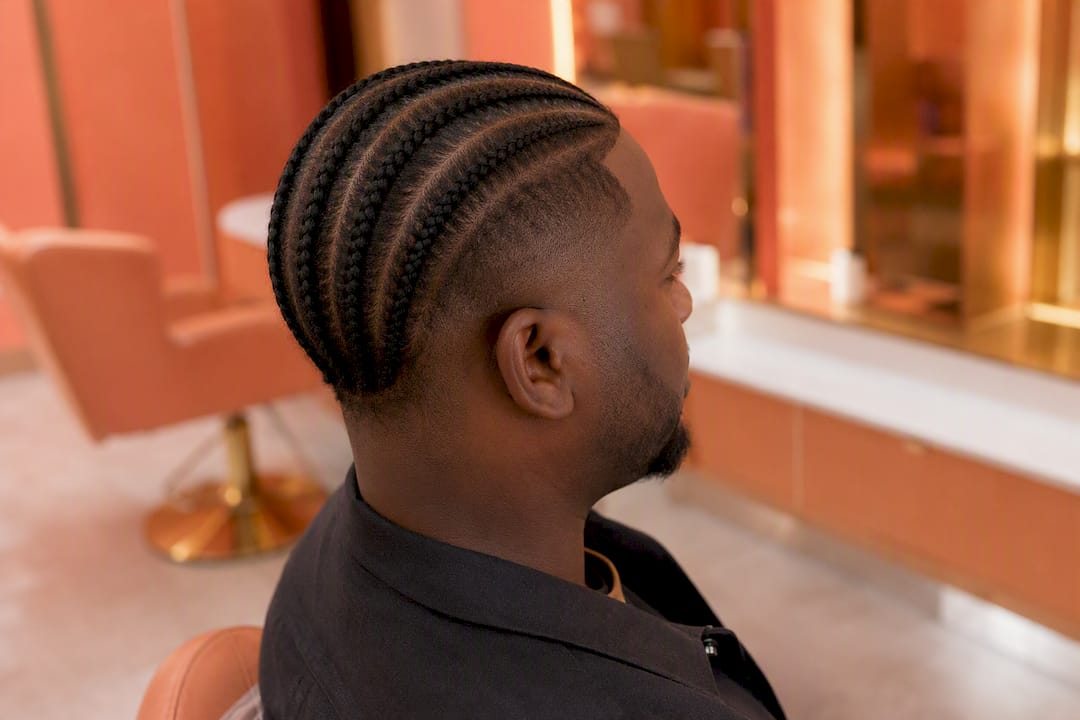
Cornrows lie flat against the scalp in continuous rows, giving a sharp, architectural look that works whether you keep it simple with straight-back rows or get creative with curved patterns. They pair naturally with a taper or skin fade because the exposed sides show off the braid work.
Box braids are individual braids sectioned into square or diamond parts, hanging free from the root. They carry more volume and movement than cornrows, and coarser, kinkier hair textures (typically 4a to 4c) hold the braid structure best without slipping.
Knotless braids start with your natural hair and feed in extensions gradually, which removes the tight knot at the root that traditional box braids require. The result looks less bulky at the hairline and feels lighter on day one.
Two-strand twists use two sections of hair wrapped around each other rather than a woven three-strand pattern, giving a rope-like, textured finish that reads more casual and natural.
Stitch braids (often called Pop Smoke braids after the artist who popularized them) use a feed-in technique to create raised, sculptural lines, often in curved or geometric patterns across the scalp.
Fulani and tribal-inspired braids mix cornrows with accent beads, a center part, or thicker feature braids, borrowing from West African tradition to create a distinctive, decorative crown.
Choosing Box Braids by Count, Part Size, and Length
Box braids come down to three decisions: how many braids you want, how the sections are parted, and how long you're willing to let them hang. Box-braid choices are guided by these three levers, and each one shifts both the look and the upkeep.
- Braid count. Fewer, chunkier braids (think 20 to 40) install faster and read bolder, but they show scalp between rows more visibly. Micro braids (100-plus) take longer to install and wear but create a denser, more uniform look.
- Part geometry. Square or brick-layout parts give a clean, structured grid. Triangle parts prevent visible scalp lines as the braids grow out, which matters more the longer you plan to wear them.
- Length and shaved accents. Shorter box braids (chin-length or above) suit a low-maintenance routine, while longer lengths open up more styling options later. A shaved side or undercut paired with box braids adds contrast without extra chair time.
Install time for chunkier box braids typically runs 1 to 3 hours, while micro or feed-in versions can stretch to 3 to 6 hours or more depending on extensions used.
Pro Tip: Ask your stylist for a "medium" count if you're unsure. It splits the difference between install time and how long the style holds up before frizzing at the roots.
Cornrow Patterns and How to Pair Them with a Fade
Cornrows aren't a single look. The pattern you choose changes both the difficulty of the install and the fade height that flatters it best.
- Straight-back cornrows run front to back in parallel rows. Simple, fast, and forgiving for a first-time braid experience. Pairs well with a mid or low fade.
- Stitch (Pop Smoke) cornrows use precise feed-in partings to create bold curved or angular lines. This pattern demands a skilled braider, so book someone with a strong portfolio. A skin fade makes the linework pop.
- Zig-zag cornrows add visual movement through alternating diagonal partings, working best with a taper fade that doesn't compete with the pattern.
- Feed-in cornrows gradually add extensions as the row progresses, which keeps the front lighter and more natural. This feed-in technique protects the hairline by reducing bulk at the root.
- Fishbone cornrows interlock two thinner rows into one thicker braid for extra texture. A fuller beard balances the added volume up top.
Two-Strand Twists and Knotless Braids for a Lighter Feel
If tension worries you, start here. Two-strand twists are generally quicker to install and create less tension on the scalp than three-strand braids, making them a gentler entry point for men with sensitive hairlines or thinner edges.
- Two-strand twists work well on natural 4a to 4c hair and often serve double duty: some men use twists as a trial run before committing to starter locs.
- Knotless braids feed hair in gradually from the root, avoiding the tight knot that causes tension headaches with traditional braiding.
- Both styles pair cleanly with a low taper or a skin fade with a defined undercut for contrast.
Pro Tip: If your hairline has thinned from previous tight styles, ask specifically for knotless or twists. The reduced root tension gives edges a real chance to recover.
Picking the Right Braid Size and Part Pattern for You
Fewer, larger braids install faster and tangle less during wear, which suits guys who want a quick refresh without long salon visits. Many small braids take longer to install but hold their shape longer, favoring guys who want to stretch the time between appointments.
- Match braid size to your schedule. Chunky braids or cornrows suit a tighter timeline. Micro braids suit someone planning to wear the style for two months or more.
- Balance proportions with your face and beard. A rounder face benefits from a center or side part that adds length visually; a fuller beard balances the volume of larger box braids.
- Bring reference photos. Save two or three images showing the exact braid count, part shape, and length you want, plus your current hair length, so your stylist can quote time accurately.
Making Fades and Beards Work with Your Braids
The fade height and beard shape you choose finish the look as much as the braid pattern itself. A precise fade paired with scalp braiding is one of the most reliable ways to get a clean, masculine result.
- Cornrows pair best with a skin fade or low taper, since the exposed sides highlight the linework.
- Box braids look sharpest with a mid fade, letting the volume up top stand out without the sides feeling busy.
- Knotless braids suit almost any fade height, but a low fade keeps attention on the natural-looking root.
- A fuller beard balances heavier, voluminous styles like box braids; a tighter beard line complements sharp cornrow patterns.
- Small accessories, like a single gold cuff or a subtle beaded accessory, can add personality without overwhelming the braid pattern itself.
Keeping Braids Fresh Without Overcomplicating Your Routine
A basic care routine protects both the style and your scalp underneath it.
- Wash weekly with a diluted shampoo, focusing on the scalp with a light massage rather than scrubbing the braids themselves.
- Dry thoroughly before covering your head. Trapped moisture at the roots is the top cause of mildew smell and frizz.
- Oil the scalp two to three times a week using a lightweight oil to prevent dryness and flaking.
- Sleep in a satin or silk cap to cut down on frizz and friction against cotton pillowcases.
- Watch for red flags. Persistent tightness, small bumps along the hairline, or unusual shedding at the root mean it's time to loosen or remove the style early.
Cornrows typically hold for 2 to 4 weeks with minimal upkeep, while more complex feed-in patterns can stretch closer to the four-week mark before needing a refresh.
Why Afro's Salon Experience Matters for Men's Braids
Afro built Afromagicbraiding on the idea that protective styling should look intentional, not accidental, and that expertise shows in the details: clean parts, even tension, and a fade that actually complements the braid work.
- Browse real client results in the portfolio before your appointment.
- Read deeper technique breakdowns in Explore the Top Braid Types for Healthy Protective Styles.
- When booking, tell your braider your preferred braid count, part shape, and current fade height, that's the fastest way to land on the right quote.
How Braiders Actually Build Each Style, Step by Step
Every style starts the same way: sectioning. A braider parts the hair into clean, even rows or squares before touching a single strand, since uneven sections cause uneven tension later.
For cornrows, the braider picks up small amounts of hair as they move along each row, weaving underneath in a continuous feed-in motion so the braid stays flat against the scalp. Feed-in extensions get added gradually rather than all at once, which is what keeps the front of the row light.
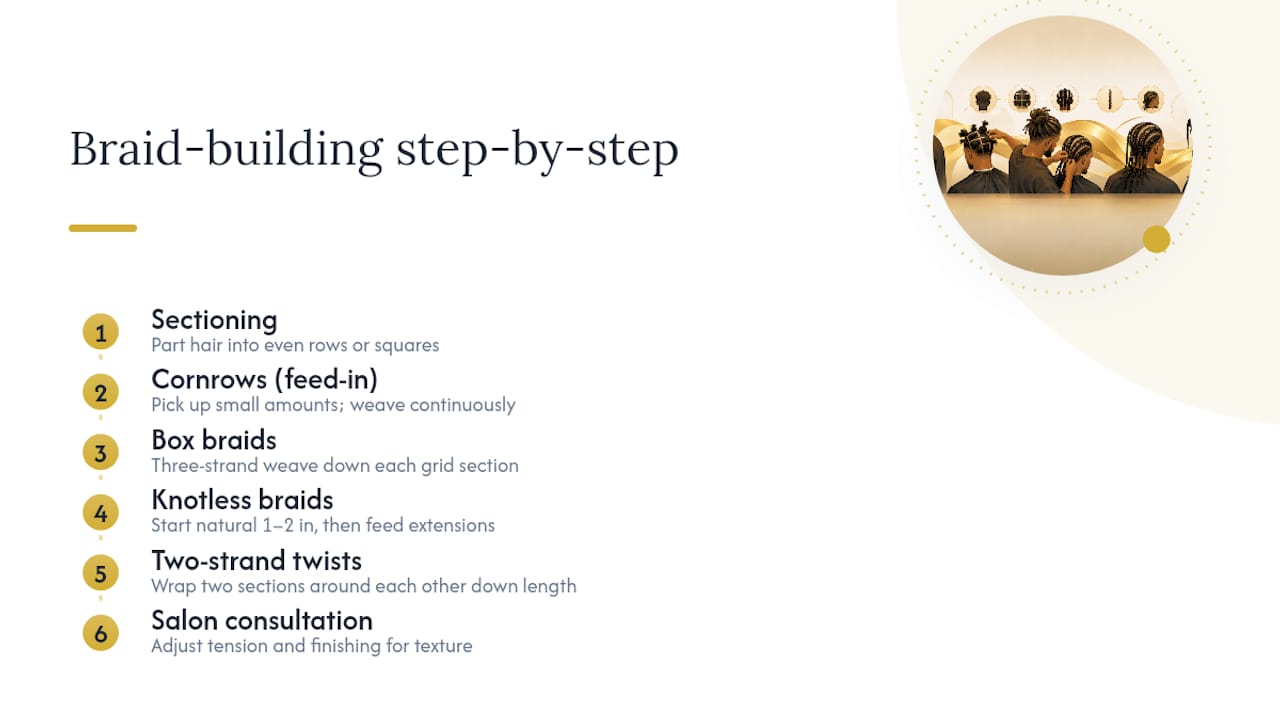
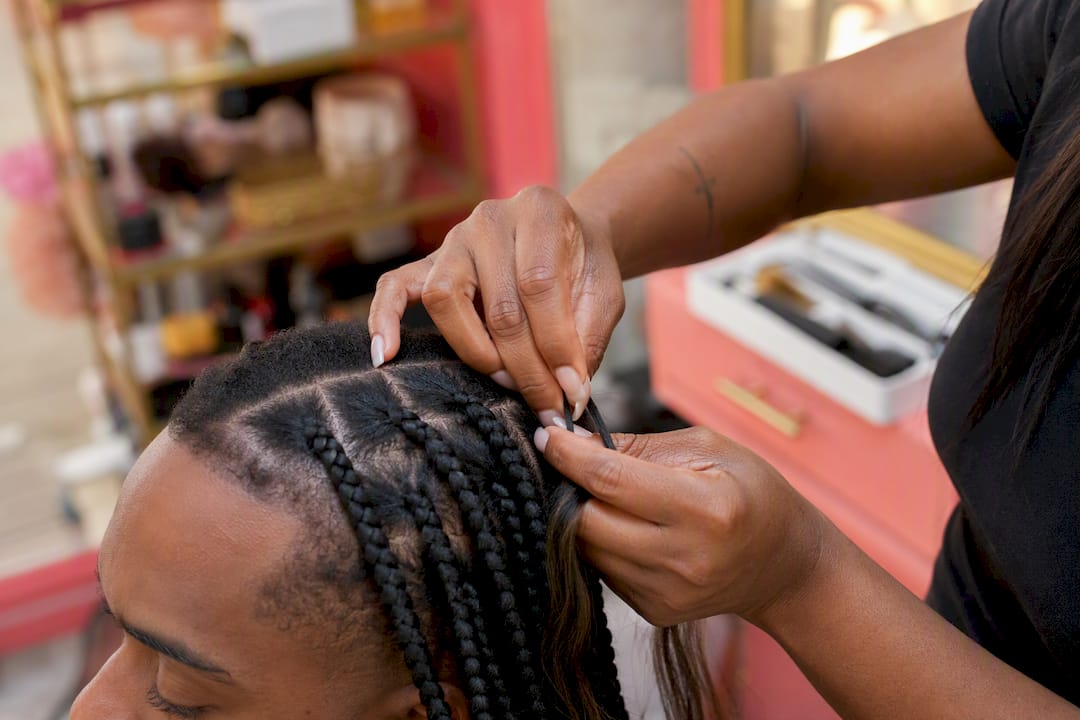
For box braids, the process starts with parting the whole head into the chosen grid, then each section gets three strands woven downward, either with your natural hair alone or extensions clipped in at the base.
Knotless braids follow the same three-strand logic as box braids, but the braider starts with only your natural hair for the first inch or two before feeding in extension hair, which is what eliminates the tight knot at the root.
Two-strand twists are the simplest mechanically. Two sections get wrapped around each other repeatedly down the length of the hair, which takes less time per section than a woven three-strand braid.
Salon consultations remain the most reliable way to see these techniques applied correctly, since tension, sectioning speed, and finishing all vary by hair texture and density in ways a written guide can't fully capture.
Mistakes That Ruin an Otherwise Good Braid Style
The most common mistake is choosing a braid size or pattern that doesn't match your hair length. Thin, short hair pulled into micro braids creates visible stress points and thinning edges within weeks.
Skipping a consultation is another frequent misstep. Walking in and asking for "whatever looks good" leaves too much room for miscommunication about count, size, and part shape, which are the three details that most affect your final result.
Overtightening is a real risk, especially with cornrows and stitch braids. If your scalp feels tight enough to cause a headache on day one, that tension won't ease up. It usually gets worse and can damage the hairline permanently over repeated installs.
Neglecting the two-week mark is also common. Many men wash rarely because they assume braids mean no maintenance, but a dry, product-heavy scalp under braids becomes an itchy, flaky mess by week three.
Finally, ignoring hair length requirements causes disappointment. Styles like Fulani braids or longer box braids generally need at least 3 to 4 inches of natural hair to anchor extensions properly. Going in shorter than that often means a shorter-than-expected wear time no matter how skilled the braider is.
Talking to Your Stylist So You Get the Look You Want
Bring specific language, not vague descriptions. Saying "medium box braids, square part, shoulder length" gives a braider far more to work with than "something like what I saw online."
Ask these questions before the braider starts: How many braids will this take? What part shape works best with my hairline? How long will this realistically last with my hair type? Will this pull more at the temples or nape?
Use the vocabulary this guide covers: braid count, part geometry, feed-in versus traditional, knotless versus knotted. Stylists think in these terms, and using them signals you've done your homework, which usually means a smoother, faster consultation.
If you're unsure about size, ask to see swatches or sample braids in person rather than relying only on photos, since lighting and hair texture in images can be misleading.
Which Hair Types and Lengths Work Best for Each Style
Coarser, kinkier textures (4a to 4c) hold braid structure the longest across nearly every style, since the natural curl pattern grips extensions and keeps braids from slipping loose. Looser curl patterns (3c and below) can still be braided, but styles tend to loosen faster and may need more frequent touch-ups.
Cornrows need at least 1 to 2 inches of length to grip a pattern cleanly. Box braids and knotless braids generally require 3 to 4 inches minimum, since shorter hair struggles to anchor extension hair securely at the root. Two-strand twists are more forgiving, working on hair as short as an inch if you're using your natural hair alone.
Very fine or thin hair, regardless of length, does better with fewer, larger braids rather than micro sizes, which put more stress per strand on limited hair density.
Adjusting Braid Techniques for Different Hair Textures
Wavy or looser-curl hair (3a to 3c) needs extra prep before braiding, usually a light gel or edge control to add grip, since smoother strands slip out of braids faster than tightly coiled hair.
Coarse, kinky hair (4a to 4c) holds braids naturally but can be drier at baseline, so braiders often recommend a leave-in conditioner before installation to prevent brittleness under tension.
Fine, thin hair of any curl pattern calls for lighter tension throughout the install and fewer, thicker braids to distribute weight evenly across the scalp rather than concentrating stress on isolated strands.
Textured hair with uneven density (thicker at the crown, thinner at the temples) benefits from a braider who varies braid size across the head, using smaller sections at the temples and larger ones at the crown to create a uniform finished look.
Restyling Your Braids After Installation
Braids don't have to look the same every day of their wear cycle. Gather box braids or knotless into a half-up bun for a dressier look, or pull them into a low ponytail for workouts. Parting patterns can shift too. Try a deep side part one week and a center part the next without touching the braids themselves.
Accent elements like gold cuffs, beads, or wrapped thread sections add variety midway through the wear cycle. For special occasions, updo-style gathering can turn everyday braids into a more polished, event-ready look, which you can see broken down further in guides on braided updo ideas.
What I Tell Every Client Considering Men's Braids
Most men who sit in the chair aren't chasing a trend, they want something low-maintenance that still looks deliberate. The goal usually isn't standing out for its own sake. It's looking put-together without a 20-minute morning routine.
My honest advice: pick your braid size and part shape before you worry about the trendiest pattern. A well-executed straight-back cornrow with a clean fade beats a rushed stitch pattern every time. Browse real results in the gallery before you book, and bring specifics, not just inspiration.
— Afro
Book Your Men's Braids at Afromagicbraiding
Afromagicbraiding turns everything covered here into an actual appointment instead of a guessing game. You've read about braid count, part geometry, and fade pairing. Our chair time is where those decisions get executed with even tension and a clean finish, whether you want fast cornrows before a weekend event or knotless braids meant to hold for two months.
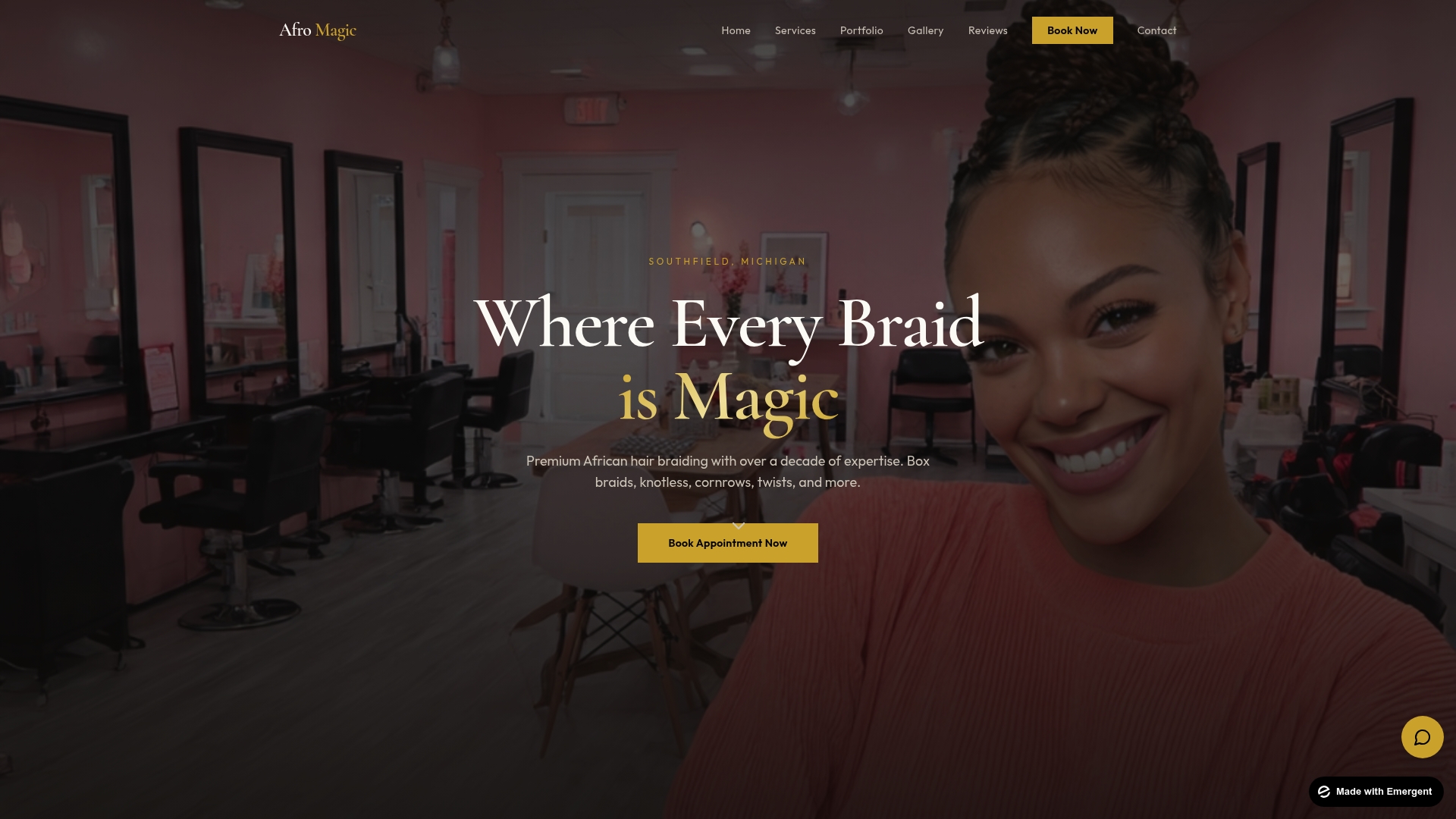
Bring two or three reference photos, your current hair length, and a general idea of how long you want the style to last. That's enough for us to recommend the right braid size and part shape for your hair type. Our services cover cornrows, box braids, knotless, twists, and Fulani-inspired patterns, matching most of the chair times discussed above. Check real client work in the portfolio, then lock in a time through our booking page to get styled by a team that treats every braid as a finished look, not just a protective one.
Sources
- How to Do Cornrows: Step-by-Step Guide for Men
- Two Strand Twist Men: The Ultimate Guide to Stylish and Confident Looks