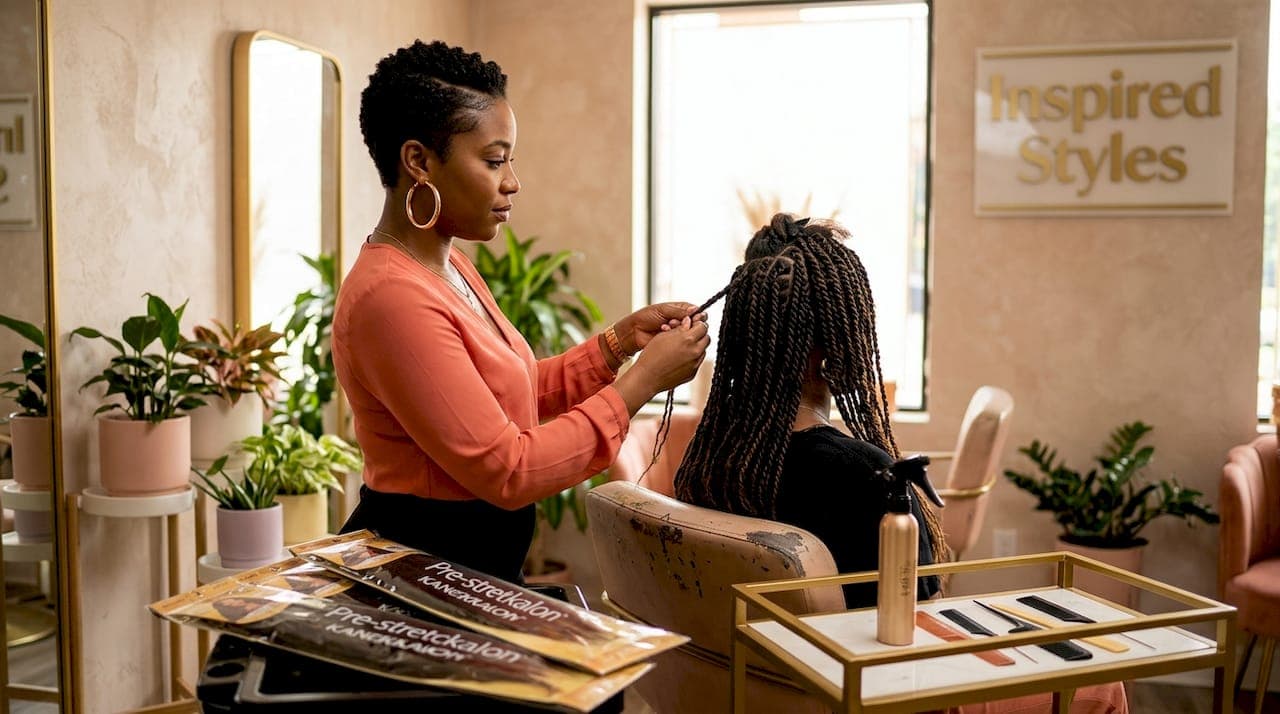
Most people assume protective styles mean heavy, bulky hair that pulls at your scalp from day one. Senegalese twists quietly prove that assumption wrong every single time. These sleek, rope-like twists are created by tightly twisting two strands of hair, often with pre-stretched Kanekalon synthetic extensions, from root to tip for a polished, structured finish. Unlike some protective styles that overwhelm your natural hair, Senegalese twists are known for their lighter weight, refined appearance, and genuine protective benefits. This guide covers everything you need to know, from installation to salon selection, so you can walk into your next appointment fully informed and completely confident.
Table of Contents
- What is a Senegalese twist?
- How Senegalese twists are installed
- How Senegalese twists compare to passion twists and box braids
- Benefits, risks, and maintenance of Senegalese twists
- Choosing a salon for Senegalese twists: What to look for
- Our real talk: What most salons don't tell you about Senegalese twists
- Ready for your best Senegalese twists? Choose expert salon care
- Frequently asked questions
Key Takeaways
| Point | Details |
|---|---|
| Signature rope look | Senegalese twists use two-strand technique with straight extensions for a sleek, rope-like appearance. |
| Professional installation matters | Correct prep and experienced stylists help your twists last longer and protect your hair. |
| Versus other styles | Senegalese twists are lighter and sleeker than box braids or passion twists. |
| Care and longevity | Good maintenance can keep twists looking fresh for up to 10 weeks while protecting your scalp. |
| Choose quality salons | A trusted salon ensures comfort, healthy tension, and long-lasting results for your Senegalese twists. |
What is a Senegalese twist?
Now that you know Senegalese twists are more than just a trend, let's look at what truly sets them apart from other styles.
Senegalese twists are a beloved protective hairstyle rooted in West African hair traditions. The style gets its name from Senegal, a country in West Africa where intricate twisted and braided hair has long been a form of cultural expression and identity. Each twist is formed by wrapping two strands tightly around each other, creating a smooth, rope-like cylinder that runs from the scalp all the way down to the tip. The result is a sleek, structured style that reads as both elegant and effortless.
What makes these twists stand out in a crowd of protective options is the material and method. Traditional Senegalese twists were done using only natural hair, but modern installations almost always incorporate extensions to add length, volume, and durability. Pre-stretched Kanekalon is the most popular choice because it mimics the texture of natural hair without the bulk and frizz of unprocessed synthetic fibers. The pre-stretching process removes extra crimping, which means the finished twists sit smoother and feel lighter on your scalp.
Here is what makes Senegalese twists a standout protective style:
- Sleek, rope-like appearance that stays neat longer than many other twist styles
- Lightweight feel compared to heavier braided alternatives
- Versatile length options, from shoulder-length to waist-length and beyond
- Compatibility with a range of natural hair textures, including 3C through 4C coils
- Cultural significance that honors a rich West African hair heritage
- Low daily manipulation, which gives your natural hair a real chance to retain length
"Every braid tells a story, and Senegalese twists carry a legacy of beauty, strength, and tradition that spans generations."
You can see a range of beautiful Senegalese twist outcomes in our braiding style portfolio, where every twist reflects that same commitment to craftsmanship.
How Senegalese twists are installed
Understanding the definition is just the start. Learning about installation turns knowledge into action, and knowing what happens in the chair helps you show up prepared and leave satisfied.
A proper Senegalese twist installation is a detailed process that requires skill, patience, and quality materials. The technique involves sectioning clean, stretched natural hair, folding extension hair in half, looping it around the natural hair at the root, and then twisting two equal sections tightly while maintaining consistent tension and direction for a smooth finish. That consistency is everything. A single twist done with uneven tension can create a lump or weak point that shortens the life of your entire style.
Here is the full installation process broken down step by step:
- Wash and detangle your natural hair thoroughly before your appointment
- Stretch your natural hair using a blowout, banding method, or African threading
- Section the hair into small, even parts based on your desired twist size
- Prepare the extension hair by cutting Kanekalon to length and pre-stretching if not already done
- Loop the extension hair around the natural hair at the root, creating a secure anchor
- Divide the combined hair into two even sections
- Twist each section around the other using the double-twist method, where each strand is also twisted within itself to create that signature rope texture
- Seal the ends with warm water or the cool setting on a blow dryer to prevent unraveling
| Installation step | Estimated time |
|---|---|
| Hair wash and stretch | 45 to 90 minutes |
| Sectioning | 30 to 45 minutes |
| Preparing extension hair | 15 to 20 minutes |
| Installing all twists | 4 to 7 hours |
| Finishing and sealing ends | 30 to 45 minutes |
| Total estimated time | 7 to 10 hours |
A full head installation typically requires 7 to 10 hours when done properly, with 80 to 120 individual twists needed to achieve even tension and lasting results. Rushing the process is one of the most common causes of poor durability and scalp damage.
Pro Tip: Always ask your stylist if they use pre-stretched Kanekalon extensions. Pre-stretched hair reduces bulkiness at the root, minimizes installation time, and creates a more comfortable finish with less pulling on your scalp.
DIY installations are possible for experienced naturals, but the challenge is maintaining consistent tension across 80 to 120 twists for hours on end. A professional stylist has the muscle memory and technique to deliver uniform results that a first-time installer simply cannot replicate. You can book a braiding session with our team and see the difference a trained hand makes.
How Senegalese twists compare to passion twists and box braids
Now that you know what goes into each twist, let's see how Senegalese twists stack up against other salon favorites.
Not all twists and braids are created equal. Understanding the differences helps you choose the style that fits your lifestyle, hair goals, and aesthetic preferences.
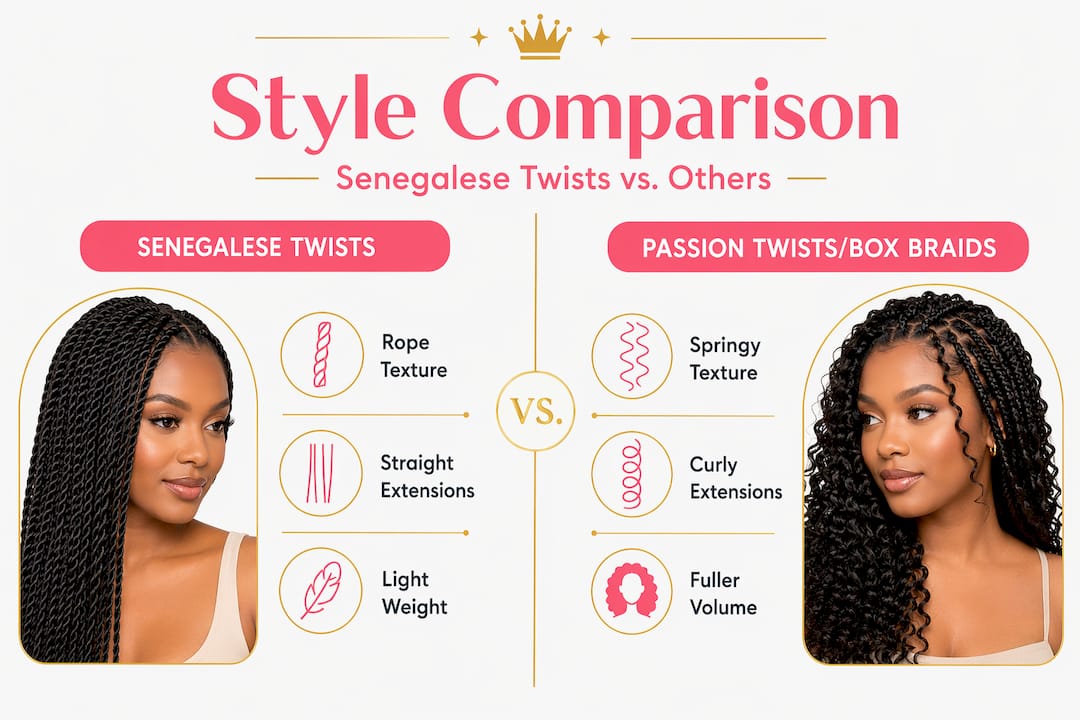
Senegalese twists differ from passion twists by using straight or silky extensions for a thicker, sleeker rope look, while passion twists use curly or wavy extensions for a bouncier, more textured finish. Box braids, on the other hand, involve three-strand braiding rather than twisting, which creates a different visual geometry entirely.
| Style | Extension type | Texture | Weight | Best for |
|---|---|---|---|---|
| Senegalese twists | Straight, silky Kanekalon | Smooth, rope-like | Light to medium | Sleek, polished looks |
| Passion twists | Curly or wavy hair | Bouncy, textured | Medium | Natural, romantic styles |
| Box braids | Straight synthetic hair | Uniform, structured | Medium to heavy | Long-term protection |
Here is a quick breakdown of when each style wins:
- Choose Senegalese twists when you want a sleek, lightweight style that stays neat for weeks and gives you a refined finish for professional settings
- Choose passion twists when you want a more carefree, textured look with a bohemian feel that celebrates your natural curl pattern
- Choose box braids when you want maximum longevity and a bold, classic braid aesthetic that can be styled in endless updos and ponytails
Pro Tip: If you are new to protective styles, Senegalese twists are an excellent starting point because their lighter weight and smooth texture tend to feel more comfortable during the adjustment period compared to heavier box braid installations.
Our twist and braid gallery shows real client results for each of these styles so you can compare them side by side before committing.
Benefits, risks, and maintenance of Senegalese twists
Knowing how styles compare is valuable, but real success depends on keeping your hair healthy before, during, and after your twists.
Senegalese twists offer a powerful combination of aesthetic appeal and genuine hair health benefits. When installed correctly and maintained well, this style gives your natural hair a real break from daily manipulation, heat, and environmental damage.
Key benefits of Senegalese twists:
- Length retention: Tucked ends are protected from friction and breakage, helping your natural hair grow without constant setbacks
- Scalp accessibility: The rope-like structure keeps twists separate, making it easier to moisturize and treat your scalp between appointments
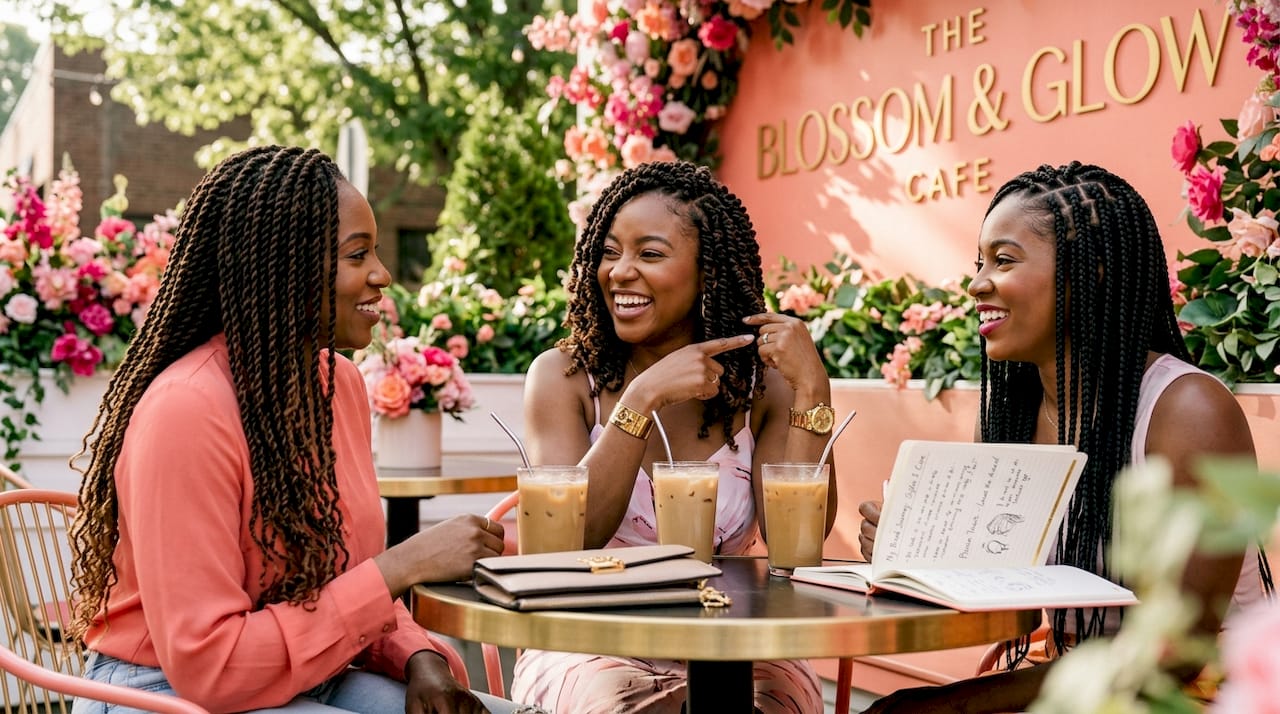
- Style versatility: Wear your twists loose, in a high bun, half-up, or adorned with gold cuffs for an entirely different look without reinstalling
- Lighter weight: Compared to box braids, Senegalese twists put less daily strain on your hairline and scalp
- Long wear time: Senegalese twists typically last 4 to 10 weeks depending on your hair growth, maintenance routine, and the quality of your installation
However, the risks are real and worth taking seriously. Scalp tension, breakage, and traction alopecia are all possible if twists are installed too tightly or left in beyond 8 weeks without any maintenance. Traction alopecia, which is gradual hair loss caused by repeated tension on the hairline, is one of the most preventable issues in protective styling. It requires a stylist who prioritizes your scalp health over speed.
"Protective styling is only truly protective when it respects the limits of your hair and scalp. Tension is the enemy of retention."
Maintenance routine that actually works:
- Moisturize your scalp every 5 to 7 days using a lightweight oil or scalp spray
- Wrap your hair in a satin scarf or bonnet every night to reduce friction and preserve your edges
- Avoid heavy butters or thick creams directly on the twists, as product buildup attracts lint and speeds up frizz
- Gently cleanse your scalp every 2 to 3 weeks using a diluted shampoo or scalp rinse
- Take down your twists by week 8 to avoid matting and excessive tension at the roots
Your specialty protective styles should always begin with a consultation about your hair's current health so your stylist can tailor the technique to what your scalp actually needs.
Choosing a salon for Senegalese twists: What to look for
With your priorities in mind, the next step is finding a salon you can trust to bring your style vision to life.
Not every braider who offers Senegalese twists has the skill level to execute them properly. The double-twist method that creates the signature rope texture requires specific hand technique, and using pre-stretched hair is essential to avoid bulkiness at the root. These are not small details. They are the difference between a style that lasts 8 weeks and one that starts unraveling in 3.
Here is your checklist for choosing the right salon:
- Ask to see a portfolio of Senegalese twist work specifically, not just general braiding
- Inquire about the extension hair they use and whether it is pre-stretched Kanekalon
- Ask about their installation technique, including how they handle tension at the root
- Check client reviews for mentions of scalp health, comfort, and longevity
- Confirm they offer a consultation before the appointment to assess your hair's current condition
- Look for stylists who provide aftercare guidance, including maintenance tips and recommended products
- Trust your gut during the consultation: a stylist who listens to your concerns is a stylist who values your hair health
Pro Tip: Ask to see photos of previous Senegalese twist work on clients with a similar hair texture to yours. Extension behavior and twist density can look very different depending on the natural hair underneath, so matching your texture gives you the most accurate preview.
Read what real clients say in our client reviews and browse our style gallery to see the quality of work we bring to every appointment.
Our real talk: What most salons don't tell you about Senegalese twists
With all the practical steps covered, let's get candid about what really makes or breaks your twist experience, because the conversation in most salons stops short of the whole truth.
Here is something we have learned from years on the salon floor: the brand of extension hair matters far less than most clients believe. Clients often spend significant energy researching which hair brand to purchase, but the stylist's technique, communication, and attention to tension will determine your comfort and the health of your hair every single time. A mediocre install using premium hair still results in scalp damage. A skilled install using a mid-range extension brand can last beautifully for weeks.
We also want to normalize something: installation discomfort is common, but pain is not acceptable. There is a difference between the slight tightness of a fresh install and the searing scalp tension that signals trouble. You have every right to speak up during your appointment and ask your stylist to loosen a section. A professional will listen. A stylist who dismisses your discomfort is one you should not return to.
The other myth worth dismantling is the idea that paying more automatically means a healthier result. Price is not a proxy for hair health. A longer-lasting install done with careful technique and genuine scalp awareness is worth more than a premium price tag without the substance behind it. Ask questions. Expect answers. Your hair deserves that level of advocacy.
Finally, maintenance after installation is just as important as the installation itself. We see clients who invest in a beautiful set of twists and then skip the satin bonnet, use heavy oils on the roots, and wonder why their style looks tired by week three. The advanced twist results you admire online are the product of both a skilled stylist and a client who follows through on care at home. Installation and maintenance are partners, not separate events.
Ready for your best Senegalese twists? Choose expert salon care
You now know what Senegalese twists are, how they are installed, how they compare to other styles, and what to look for in a salon. The next step is experiencing the difference that real expertise and genuine client care make in person.
At Afro Magic Braiding, we combine skilled technique with premium pre-stretched extensions to give you a result that is sleek, comfortable, and built to last. Our stylists prioritize your scalp health from the first section to the final seal. You can explore braid styles to find the look that speaks to you and then book your session through our seamless online system. A personalized consultation is part of every appointment because your hair story is uniquely yours, and we treat it that way.
Frequently asked questions
How long do Senegalese twists last?
When properly installed, Senegalese twists last 4 to 10 weeks depending on your hair growth rate, daily maintenance routine, and the quality of your install. Consistent scalp care and nightly satin wrapping help you reach the longer end of that range.
Are Senegalese twists good for your hair?
Yes, when done with proper tension and quality technique, this style reduces daily manipulation and protects your ends. However, traction alopecia and breakage are real risks if the twists are installed too tightly or left in beyond 8 weeks without care.
How many packs of hair do you need for Senegalese twists?
Most full head installations require 5 to 8 packs of pre-stretched Kanekalon to complete 80 to 120 individual twists with even coverage. The exact number depends on your desired twist thickness and the length you are going for.
How do you keep Senegalese twists neat for longer?
Moisturize your scalp every 5 to 7 days, sleep in a satin bonnet every night, avoid heavy products directly on the twists, and plan your takedown before the 8-week mark to prevent matting and unnecessary tension at the roots.
Recommended
- Best Hair Braiding in Southfield Michigan | Afro Magic Braiding Hair - Knotless Braids Southfield
- Best Hair Braiding in Southfield Michigan | Afro Magic Braiding Hair - Knotless Braids Southfield
- Best Hair Braiding in Southfield Michigan | Afro Magic Braiding Hair - Knotless Braids Southfield
- Best Hair Braiding in Southfield Michigan | Afro Magic Braiding Hair - Knotless Braids Southfield